


Introduction
Most businesses treat transportation logistics as a scheduling problem: book the carrier, confirm the pickup, track the delivery. But the companies that consistently outperform on freight efficiency are not simply better at planning. They make better decisions at every stage of the shipping process. From carrier selection to issue resolution, the quality of those decisions determines freight costs, service reliability, and ultimately customer satisfaction. Understanding logistics as a decision-making system, rather than a task checklist, is the shift that separates reactive shippers from strategic ones.

The Decision Landscape Inside a Logistics Workflow
A single shipment involves more decision points than most operations teams consciously recognize. Carrier selection, rate negotiation, transit time trade-offs, documentation accuracy, and exception handling are all judgment calls, and each one carries downstream consequences. When those decisions are made with incomplete information or under time pressure, the errors compound quickly.
Where Poor Decision Quality Shows Up
Poor logistics decisions rarely announce themselves immediately. They surface later, as unexpected surcharges, missed delivery windows, or strained carrier relationships that limit your options the next time you need capacity. Recognizing the patterns early is the first step toward addressing them.
- Carrier selection by habit: Defaulting to a familiar carrier without comparing alternatives often means overpaying or accepting slower transit times than the market offers.
- Reactive issue management: Finding out a shipment is delayed from a customer complaint rather than a proactive alert is a sign of a visibility gap, not just a carrier problem.
- Fragmented rate data: Making booking decisions from memory or a single quote means you are not seeing the full picture of what freight rates are actually available.
- Manual process overhead: Coordinating shipments through email threads and phone calls introduces error and delay that a structured workflow would eliminate.
- Inconsistent documentation: Freight claims and billing disputes are frequently traced back to documentation errors that stem from rushed or informal processes.
What Strong Decision Quality Actually Looks Like
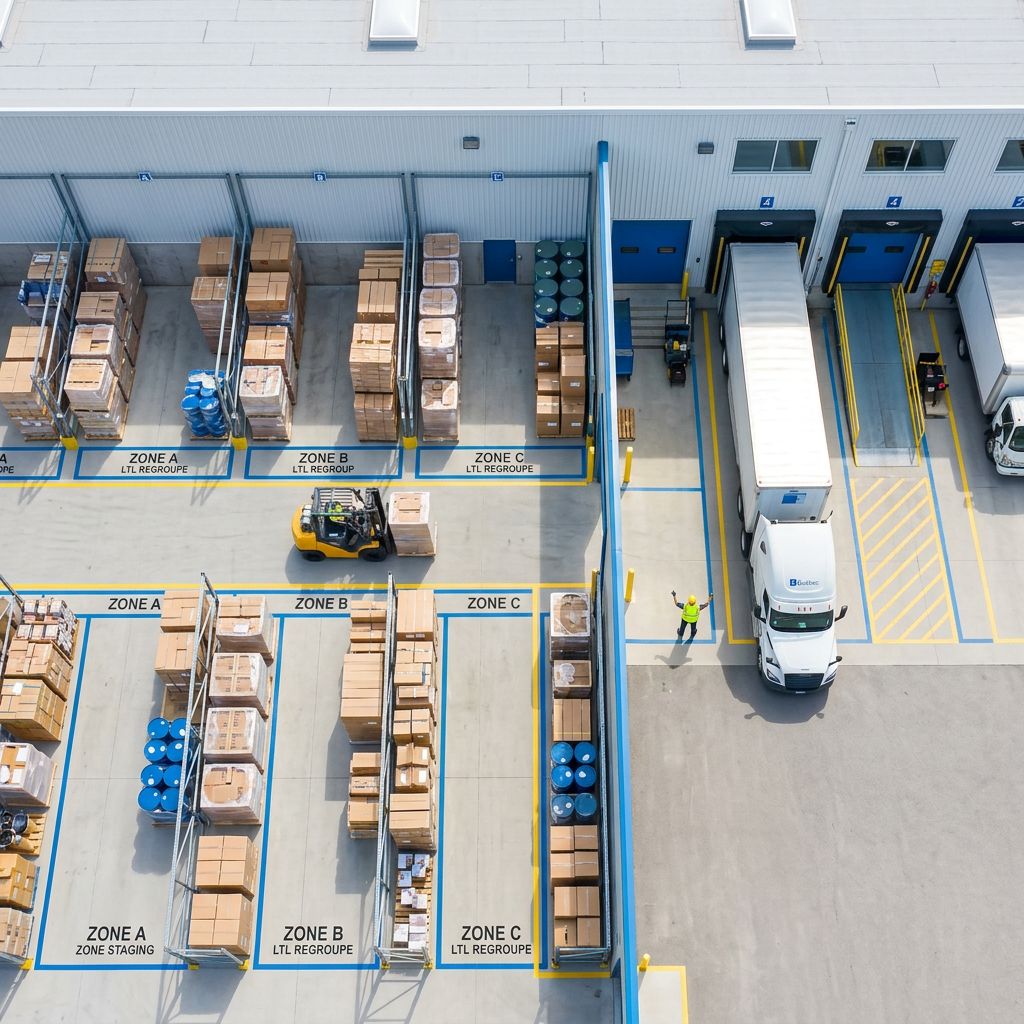
Strong logistics decision-making is not about being perfect. It is about being informed. Operations managers who consistently make good freight decisions have access to real-time shipment tracking data, can compare carrier options side by side, and operate within standardized workflows that reduce the cognitive load on each individual decision. The infrastructure around the decision matters as much as the decision itself.
The Strategic Role of Carrier Selection
Carrier selection is arguably the highest-leverage decision in any freight workflow. Choose the wrong carrier, and you are managing the consequences for the entire transit cycle. Choose well, and most of the downstream risk dissolves before it materializes. Yet many businesses still treat this as a formality rather than a deliberate, comparative process.
Why Comparison Is Non-Negotiable
The gap between the highest and lowest quote for an identical LTL shipment in Canada can be significant, sometimes ranging from 20 to 40 percent depending on the lane and carrier capacity at the time of booking. Businesses that compare freight carriers systematically, rather than defaulting to a single vendor, consistently capture savings that others leave on the table. This is not about being cheap. It is about having accurate market information before committing.
Carrier Quality Beyond the Rate
Rate is only one dimension of carrier quality. Transit reliability, claims handling, and communication responsiveness all factor into the true cost of a logistics relationship. A carrier that is five per cent cheaper but delivers late 20 per cent of the time is not a savings, it is a liability. LTL carrier selection should always incorporate performance data alongside price, and that data needs to be current, not based on an impression formed months ago.
Visibility as a Decision-Making Input
You cannot make good decisions on information you do not have. This is why freight visibility is not a convenience feature. It is a core operational input. Businesses that lack real-time data on shipment status are permanently in a reactive posture, responding to problems rather than preventing them.
The Cost of Visibility Gaps
A visibility gap is not just an inconvenience. According to recent supply chain research, companies with limited shipment visibility experience significantly higher rates of freight exceptions and customer service escalations. When operations teams cannot see where a shipment is, they cannot intervene early, cannot communicate proactively with customers, and cannot identify patterns that would inform better carrier decisions in the future.
Building a Visibility Infrastructure
Effective end-to-end freight visibility means having a single view of every shipment in motion, with automated alerts for status changes and a clear escalation path when something goes wrong. This does not require enterprise-level software. A well-designed digital freight marketplace in Canada can provide this visibility to a small business with five active shipments just as effectively as to a large shipper managing fifty.
Transportation Logistics in Ontario and Quebec: Regional Considerations
Logistics decisions do not happen in a vacuum. The regulatory environment, carrier density, and lane economics in transportation logistics Ontario and freight logistics services Quebec each carry their own operational context. Businesses that understand the regional dynamics make more informed routing and carrier decisions than those applying a one-size-fits-all approach.
Navigating Cross-Provincial Complexity
Shipments crossing between Ontario and Quebec involve considerations around provincial trucking regulations, bilingual documentation requirements, and carrier network coverage that can vary significantly between providers. Transport Canada's National Supply Chain Office has highlighted interprovincial freight coordination as a key area for improvement in Canadian logistics infrastructure. Businesses operating in both markets benefit from working with carriers and platforms that have demonstrated cross-provincial experience, not just broad geographic claims.
Aligning Logistics Strategy With Business Goals
Regional complexity also highlights the importance of aligning freight strategy with business goals rather than optimizing for a single metric. A business prioritizing speed to market in Toronto has different carrier priorities than one focused on cost efficiency for Quebec distribution. Decision quality means knowing which variable you are optimizing for before you start comparing options.
From Broker Dependency to Direct Decision-Making
Many small and medium-sized businesses in Canada rely on freight brokers as an intermediary layer between themselves and carriers. While brokers can add value in complex scenarios, they can also introduce opacity into the pricing and carrier selection process. Understanding when a broker serves your needs and when they obscure your decision-making is itself a logistics judgment call.
What Direct Access Changes
When a business can book freight without a broker, the decision-making moves closer to the person with operational context. Rate transparency improves, carrier accountability becomes more direct, and the feedback loop between shipping outcomes and future booking decisions shortens. Research on supply chain intermediaries consistently finds that reducing information asymmetry between buyers and service providers improves both price outcomes and service quality. That principle applies directly to freight.
How Truxweb Supports Better Logistics Decisions
Platforms built for direct carrier access, like Truxweb, are designed around reducing the friction in each decision point. Instant quote comparison, vetted carrier ratings, and consolidated shipment tracking put the information a logistics coordinator needs to make a confident decision in one place, without the back-and-forth of traditional freight booking. For businesses shipping LTL freight across Ontario and Quebec, this kind of infrastructure changes the quality of decisions that are possible.
Standardization as a Decision-Quality Multiplier
One underappreciated driver of logistics decision quality is process standardization. When every shipment follows the same documentation, booking, and communication workflow, the cognitive load on each individual decision drops, and the error rate drops with it.
Consistent Processes Create Better Data
Freight standardization does more than reduce mistakes. It creates consistent data that can be used to evaluate carrier performance, identify cost trends, and improve routing decisions over time. A business that books freight the same way every time, through the same platform with the same documentation process, accumulates institutional knowledge about its logistics performance. That knowledge is a competitive asset. Businesses still relying on ad hoc workflows are generating noise, not data.
Conclusion
Transportation logistics is not a background function. It is a decision system that runs in parallel with every other operational process in your business, and its output quality depends directly on the information and infrastructure you give it. Businesses that reframe logistics as a strategic decision-making function, rather than a cost to manage reactively, consistently outperform those that do not. Better carrier selection, better visibility, better process consistency: each improvement compounds. The goal is not to eliminate uncertainty from freight, but to make better calls when it shows up. Truxweb was built on exactly that premise, giving businesses across Canada the tools to compare, book, and manage freight with the clarity that confident decisions require.
Ready to raise the quality of your freight decisions? Start comparing carriers and booking smarter on Truxweb today.
Frequently Asked Questions (FAQs)
What is transportation logistics and why does it matter for small businesses?
Transportation logistics is the system of decisions, processes, and infrastructure that governs how goods move from origin to destination, and for small businesses it directly determines freight costs, delivery reliability, and the ability to scale operations efficiently.
How does decision-making in transportation logistics affect freight costs?
Every key decision point in a logistics workflow, from carrier selection to route planning, carries direct cost implications, and businesses that make those decisions with accurate, comparative data consistently achieve lower freight costs than those operating reactively.
What makes a transportation logistics company reliable in Canada?
A reliable transportation logistics company in Canada demonstrates consistent on-time performance, transparent pricing, proactive communication on shipment exceptions, and compliance with both federal and provincial safety regulations.
How do digital tools improve transportation and logistics services?
Digital tools improve transportation and logistics services by centralizing shipment data, enabling real-time tracking, automating status alerts, and giving shippers the ability to compare carrier options and make faster, more informed booking decisions.
What is the difference between reactive and proactive logistics management?
Reactive logistics management responds to problems after they occur, while proactive logistics management uses real-time visibility, standardized workflows, and performance data to identify and address issues before they affect delivery outcomes.