

Introduction
Shipping costs eat into margins fast when you are moving partial loads across Canada's busiest corridors. For small and medium-sized businesses that regularly ship between 1 and 8 pallets, paying for unused trailer space on every run is an expensive habit. Shipment consolidation offers a practical alternative: combining multiple smaller loads into a single shared truck so every shipper pays only for the space they actually use. The strategy works especially well on high-volume lanes like Toronto to Montreal or Vancouver to Calgary, where carrier capacity is abundant, and consolidation opportunities are frequent. What most shippers underestimate is just how much per-unit cost drops once loads are bundled efficiently across these routes.
How Freight Consolidation Works and Why It Saves Money
Freight consolidation is the process of grouping several smaller shipments headed in the same direction into one truck. Instead of each shipper booking an individual LTL haul, a carrier or platform bundles compatible loads together, filling the trailer more completely and splitting the cost among multiple shippers. The result is a lower rate per pallet for everyone involved, and the carrier benefits from higher trailer utilization on each run.
The Mechanics Behind Consolidating Multiple Shipments
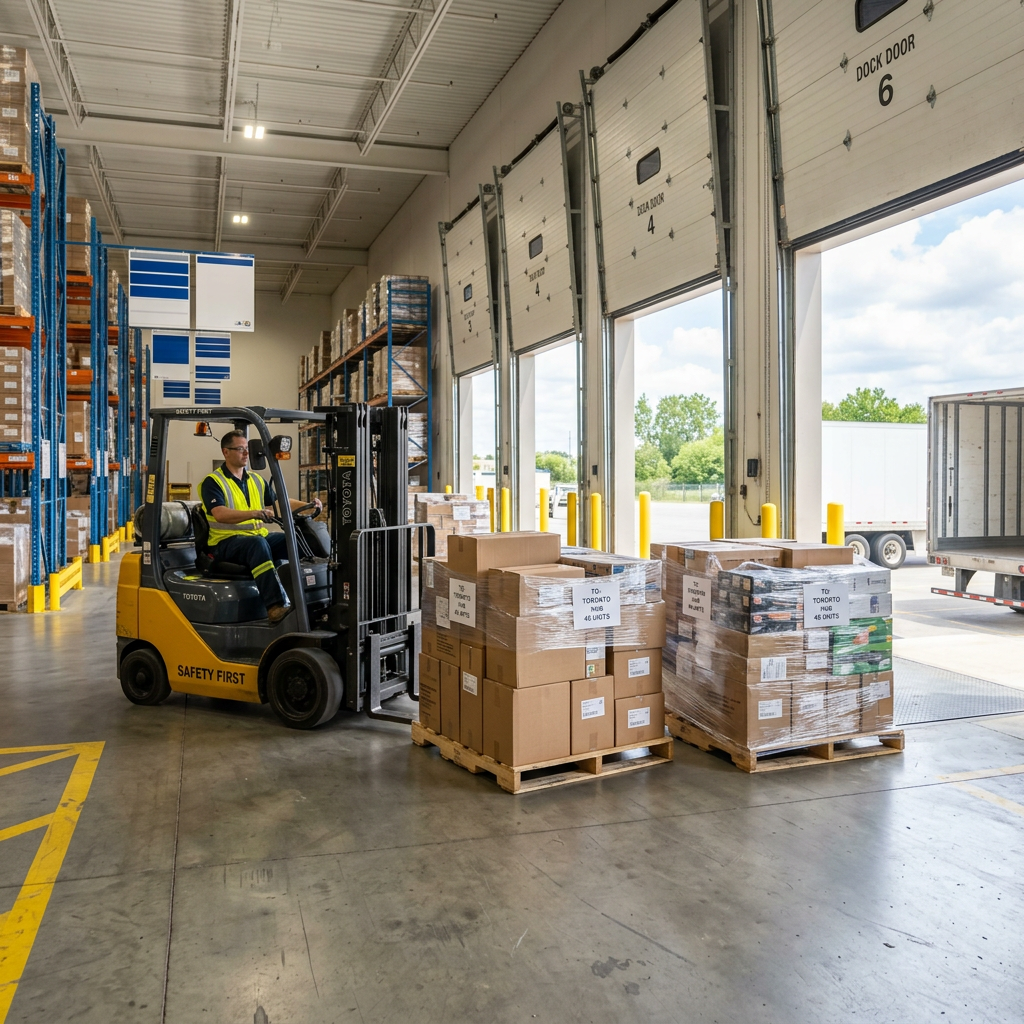
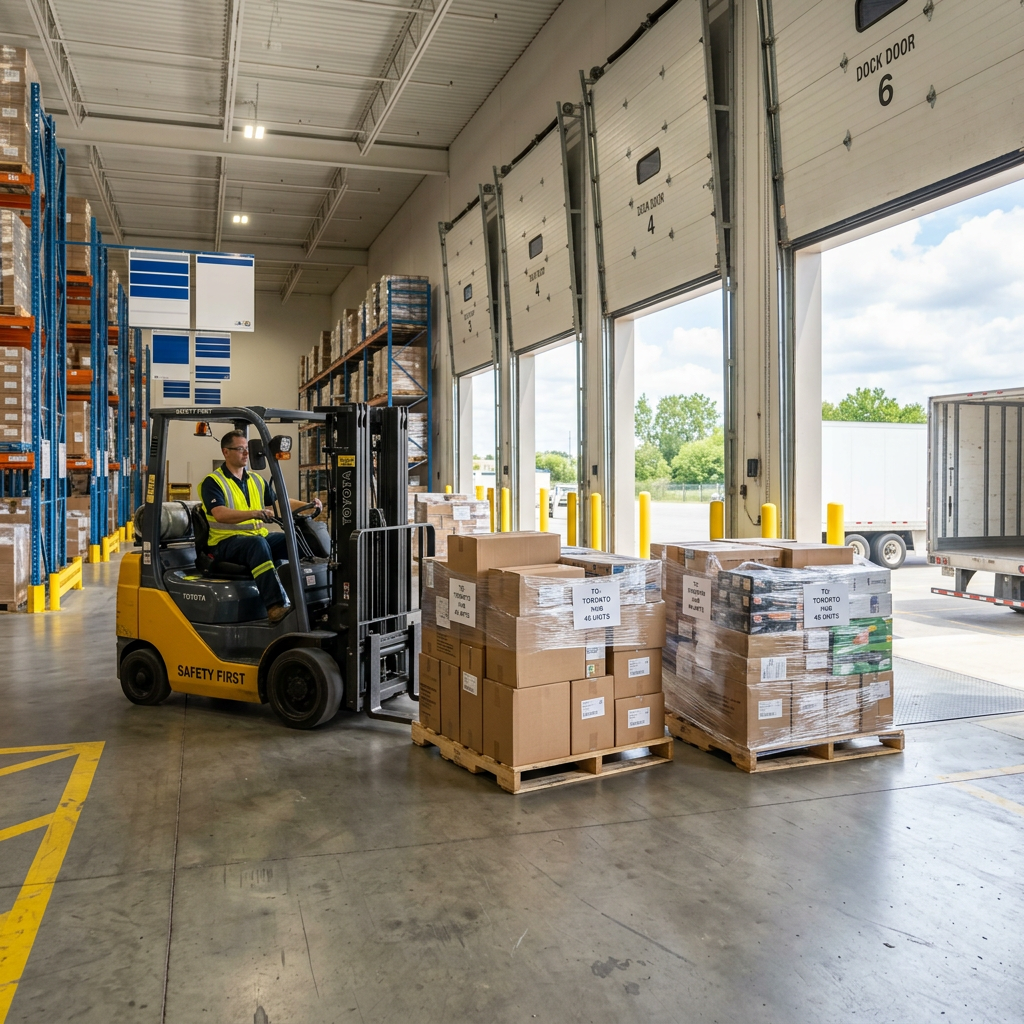
When you consolidate small shipments, the logistics follow a straightforward process. A carrier collects freight from multiple origins (or a central staging point), organizes the loads by destination corridor, and dispatches a single truck along the shared route. Here is what makes it work in practice:
Origin grouping: Shipments from nearby pickup locations are collected within a tight window, typically the same day or overnight, to minimize dwell time at the terminal.
Lane matching: Only shipments moving along the same corridor or to compatible destinations are grouped, ensuring no unnecessary detours add transit time.
Weight and space optimization: Carriers calculate how pallets stack and fit together so the trailer hits its optimal load factor, usually above 85% capacity.
Cost allocation: Each shipper is charged based on the space and weight their freight occupies, not the full cost of the truck, which is where the savings come from.
Consolidation vs. Standard LTL Pricing
Standard LTL pricing is based on freight class, weight, and distance, with surcharges layered on for fuel, residential delivery, liftgate service, and more. Every individual shipment gets assessed independently, and LTL shipping rates can fluctuate significantly depending on the carrier capacity that week. Consolidation changes the math by letting you share base costs like fuel and driver wages with other shippers on the same lane. Freight consolidation typically delivers 15% to 40% savings compared to booking the same pallets individually through standard LTL, depending on the lane and load volume. The busier the route, the more opportunities exist to match your freight with complementary loads.

Where Consolidation Delivers the Biggest Impact in Canada
Not all freight lanes offer equal consolidation potential. The savings depend heavily on carrier density, shipping volume, and how often trucks are already running partial loads along a given corridor. Understanding which lanes are ripe for consolidation helps you plan shipments strategically rather than reactively.
High-Volume Lanes Between Ontario and Quebec
The Ontario-to-Quebec corridor is one of the busiest freight lanes in the country. Thousands of trucks move between Toronto, Montreal, and surrounding cities every day, creating a dense carrier network with consistent capacity. For businesses shipping 2 to 6 pallets between these regions, freight consolidation in Ontario and Quebec is particularly effective because carriers already run frequent routes and actively look for loads to fill remaining trailer space.
A manufacturer in Mississauga shipping 4 pallets to a distributor in Laval, for example, can see freight consolidation rates drop by 20% to 30% when their load is paired with compatible freight heading to the same terminal. The key is timing. Shipping mid-week when carrier dispatch schedules are fullest tends to produce the best consolidation matches. Businesses that can flex their pickup windows by even 24 hours often unlock significantly better pricing. Cross-country routes from Ontario to British Columbia or Alberta also present strong consolidation opportunities, though cross-Canada trucking routes require more planning around transit times.
When Consolidation Makes More Sense Than Full Truckload
The decision between consolidation and full truckload comes down to volume and frequency. If you are consistently filling 20 or more pallets per shipment, a dedicated FTL booking is almost always more cost-effective. But most small businesses do not ship at that scale on every order. When your shipment falls in the 1 to 8 pallet range, you are paying for space on a full truck. That is precisely where less-than-truckload shipping and consolidation strategies become essential. A useful freight cost comparison between LTL and FTL can help clarify where the breakeven point sits for your specific shipping profile. For many Canadian SMBs, consolidation fills the gap between overpaying for FTL and accepting inconsistent standard LTL rates.
Making Consolidation Work for Your Business
Knowing that consolidation saves money is one thing. Actually implementing it across your supply chain requires a few operational adjustments and the right tools to match your freight with available capacity efficiently.
Practical Steps to Start Consolidating Freight
The first step is auditing your current shipping patterns. Look at the last 90 days of shipments and identify which lanes you use most frequently, what your average pallet count is per order, and how often you ship partial loads. This data reveals where consolidation can have the biggest impact. If you are sending 3 pallets to Montreal every Tuesday and 2 pallets to Quebec City every Thursday, those shipments may be candidates for a single consolidated run.
Next, work with carriers or platforms that actively offer consolidation options on your lanes. Traditional freight brokers sometimes bundle loads behind the scenes, but the process is opaque, and the savings do not always reach the shipper. Digital platforms make this far more transparent. Truxweb, for instance, connects shippers directly with carriers who have available trailer space on specific routes, letting you compare consolidation-friendly rates in real time. The ability to see how digital platforms reduce LTL costs makes it easier to choose the most efficient option for each shipment without picking up the phone.
Avoiding Common Pitfalls
Consolidation is not a universal solution, and using it incorrectly can create problems. Time-sensitive shipments with rigid delivery windows are poor candidates because consolidated loads sometimes involve an extra stop or a slightly longer route. Fragile or hazardous freight that requires special handling may also be incompatible with shared trailer space. Always confirm with the carrier how your freight will be loaded relative to other shipments to avoid freight consolidation challenges like damage from shifting loads.
Another common mistake is assuming consolidation rates are static. Like all freight pricing, they fluctuate with demand, fuel costs, and seasonal volume. Businesses that ship regularly on the same lanes benefit from building carrier relationships through consistent booking patterns. Truxweb's platform helps here by tracking your shipping history and surfacing carriers who have previously quoted competitive rates on your preferred corridors. Over time, this consistency leads to more predictable freight cost management and better planning.
Conclusion
Shipment consolidation is one of the most practical ways for Canadian SMBs to reduce per-pallet shipping costs on high-traffic freight lanes. By combining smaller loads into shared trucks, businesses avoid paying for empty trailer space and gain access to rates that were previously reserved for high-volume shippers. The strategy works best on busy corridors like Ontario to Quebec, where carrier density creates frequent consolidation opportunities. Whether you ship 2 pallets a week or 20, auditing your lanes, flexing your pickup windows, and using a transparent booking platform can turn consolidation from an occasional tactic into a reliable cost-reduction strategy.
Compare consolidation-friendly carrier rates across Canada's busiest freight lanes at Truxweb and start reducing your per-shipment costs today.
Frequently Asked Questions (FAQs)
What is freight consolidation?
Freight consolidation is the practice of combining multiple smaller shipments heading in the same direction into a single truck, allowing each shipper to pay only for the trailer space their freight occupies.
How does shipment consolidation work?
A carrier or logistics platform groups compatible loads by destination corridor, picks up freight from multiple shippers, and dispatches one truck along the shared route, so costs are split based on each shipper's space and weight.
Can consolidation reduce shipping costs?
Yes, consolidation typically reduces per-pallet shipping costs by 15% to 40% compared to booking individual LTL shipments, with savings depending on the lane, load size, and carrier availability.
When should I use freight consolidation?
Freight consolidation is most effective when you are shipping between 1 and 8 pallets on high-traffic lanes, and your delivery timelines allow for slight flexibility in pickup or transit windows.
Is freight consolidation worth it for small businesses in Canada?
Absolutely, because small businesses that regularly ship partial loads on busy corridors like Ontario to Quebec stand to save significantly by sharing truck space instead of paying standard individual LTL rates.