


Introduction
When shipments arrive late, docks back up, and warehouse teams scramble to rearrange priorities, the instinct is to blame carriers or traffic. But the real culprit behind most warehouse logistics breakdowns is far less dramatic: poor freight scheduling. For small and medium-sized businesses across Ontario and Quebec handling regular shipment volumes, scheduling gaps quietly erode efficiency, inflate costs, and create a ripple effect that touches every part of the supply chain. The difference between a warehouse that runs smoothly and one stuck in constant firefighting mode almost always traces back to how (and when) freight pickups and deliveries get booked.
How Poor Freight Scheduling Disrupts Warehouse Operations
Freight scheduling is the connective tissue between warehouse activity and the broader transportation network. When scheduling falls apart, it does not just delay one shipment. It creates a chain reaction of operational problems that compound throughout the day, the week, and eventually the quarter.
The Most Common Scheduling Failures
Operations managers and shipping coordinators deal with a predictable set of scheduling-related headaches. These issues may seem minor in isolation, but together they form a pattern that drains both time and money from freight throughput and warehouse productivity.
- Missed pickup windows: Carriers arrive outside expected timeframes because booking confirmations were vague or manual, forcing dock crews to hold freight longer than planned.
- Overlapping dock appointments: Without centralised scheduling visibility, multiple shipments get assigned to the same dock door at the same time, creating bottlenecks that slow everything down.
- Last-minute booking scrambles: Reactive scheduling means coordinators spend hours chasing carrier availability instead of planning proactively, often settling for higher rates or slower transit.
- Misaligned inbound and outbound timing: When receiving schedules do not account for outbound pickup windows, warehouse teams waste labor hours shuffling inventory between staging areas.
- Inconsistent carrier communication: Phone-and-email booking workflows leave gaps in confirmation records, making it difficult to hold carriers accountable for no-shows or late arrivals.
The Financial Cost of Scheduling Gaps
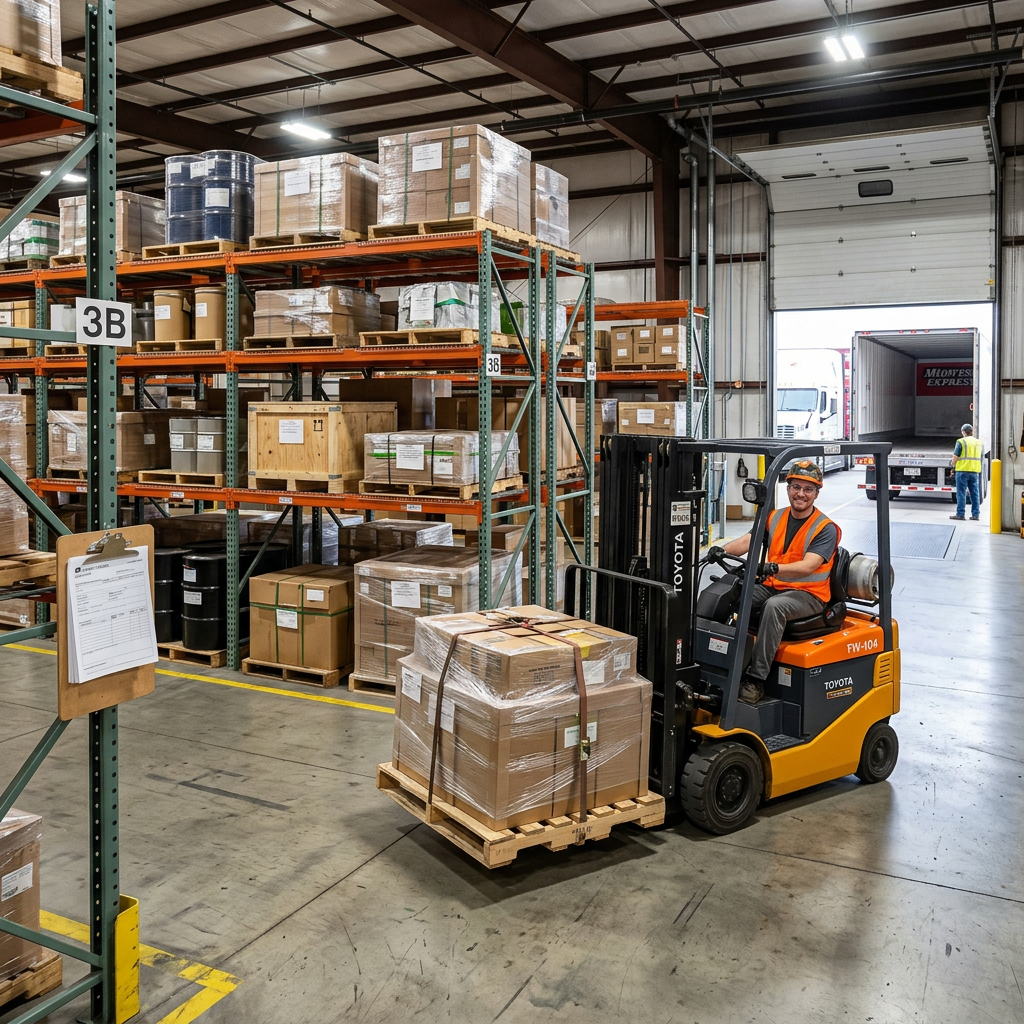
Loading dock congestion alone can add hours of unproductive labor per week as workers wait for delayed pickups or rearrange freight to accommodate schedule changes. When docks are blocked, inbound receiving slows down, too, which delays put-away and makes inventory counts unreliable.
The less obvious cost sits in freight rates themselves. Businesses that book reactively, scrambling for carriers a day or two before a shipment needs to move, consistently pay more than those who plan. Carriers price urgency into their rates. For companies running regular LTL shipping in Ontario or Quebec, even a modest rate premium on rushed bookings adds up to thousands of dollars over a fiscal year. That money disappears without ever showing up on a line item labeled "poor scheduling," hiding instead inside inflated freight spend that leadership assumes is simply the cost of doing business.
Fixing Freight Scheduling to Restore Warehouse Efficiency
The good news is that scheduling problems are solvable without warehouse renovations or massive technology investments. They require visibility, consistency, and the right digital tools to replace manual workflows that were never designed for the volume and speed modern logistics management demands.
The shift from reactive to proactive scheduling starts with freight forecasting. Businesses that track their shipping patterns over time can predict demand with reasonable accuracy. Knowing that warehouse distribution volumes spike every second and fourth week of the month, for example, allows coordinators to pre-book carrier capacity before rates climb and availability tightens.
Centralizing all booking activity into a single platform eliminates the fragmented communication that causes most scheduling breakdowns. When every quote request, booking confirmation, and dispatch update lives in one place, there is no ambiguity about what is scheduled, when it is scheduled, and which carrier is responsible. A structured logistics scheduling approach replaces the guesswork that makes warehouse management unpredictable. This is where a transportation management system or a digital freight booking platform becomes essential rather than optional, because the manual method of emailing three carriers separately and tracking responses in a spreadsheet does not scale for businesses moving freight weekly or more frequently.
Building a Proactive Scheduling Framework
Digital freight platforms address the root causes of scheduling failure by compressing the booking cycle and adding transparency at every step. Instead of spending 30 to 60 minutes per shipment requesting quotes by phone, coordinators using platforms like Truxweb can send quote requests to multiple carriers simultaneously and receive competitive responses within minutes. That speed advantage directly improves scheduling precision because bookings get confirmed earlier, giving both the warehouse team and the carrier more lead time to prepare.
End-to-end freight visibility is the other critical piece. When a shipping dashboard shows every active shipment's status in real time, with automated alerts for dispatch, pickup, and delivery milestones, coordinators can adjust dock schedules proactively instead of reacting to surprises. This level of visibility also makes it possible to identify patterns: which carriers consistently hit their windows, which lanes experience the most delays, and where the warehouse team should build in buffer time.
For businesses comparing freight platforms, the differentiators that matter most for scheduling discipline are carrier response time, booking confirmation speed, and the quality of real-time tracking tools. A marketplace that connects shippers directly with vetted logistics providers in Ontario and Quebec, rather than routing everything through a broker, removes a layer of delay that often contributes to scheduling misalignment.
Truxweb's model is built around exactly this principle. With 92% of carriers responding to quote requests within 30 minutes and a single-click booking confirmation process, the platform compresses the scheduling timeline from hours (or days) to minutes. For warehouses that manage multiple LTL shipments per week, that compression translates directly into fewer missed windows, less dock congestion, and more predictable freight efficiency.
There is also a cost optimization dimension worth noting. When coordinators can compare rates, transit times, and carrier ratings side by side before confirming a booking, they make better decisions. They are not just picking the cheapest option; they are picking the option that fits the warehouse schedule, which is a fundamentally different and more valuable way to approach logistics optimization.
In the end, warehouse logistics issues are often scheduling issues in disguise. When freight is booked late, confirmed inconsistently, or managed across disconnected tools, the result is predictable: congestion, wasted labor, and higher transportation costs. A proactive, digital-first scheduling process gives warehouse teams the visibility and control they need to keep freight moving on time and keep operations predictable.
For shippers ready to replace reactive booking with a faster, more reliable workflow, the next step is simple: centralize scheduling, compare carrier options earlier, and use a platform that makes confirmations and tracking easy. That is how warehouses reduce disruption and build a more efficient freight operation.
Conclusion
Warehouse logistics problems rarely originate on the warehouse floor itself. They start upstream, in the gaps between when freight should be scheduled and when it actually gets booked. For Canadian businesses handling regular shipment volumes, replacing manual, reactive freight scheduling with a structured, digital-first approach is the single highest-impact change available. The tools exist today to compress booking timelines, gain real-time visibility, and align carrier pickups precisely with dock availability. The only question is whether operations teams will keep absorbing the hidden cost of poor scheduling or take the steps to fix it.
Ready to bring scheduling discipline to your freight operations? Compare carrier rates and book in minutes on Truxweb.
Frequently Asked Questions (FAQs)
How does warehouse logistics work?
Warehouse logistics encompasses the planning, coordination, and execution of receiving, storing, and shipping goods, with freight scheduling serving as the critical link between warehouse operations and carrier networks.
What causes freight scheduling delays?
Freight scheduling delays typically stem from manual booking processes, fragmented carrier communication, last-minute shipment requests, and a lack of centralized visibility into dock availability and carrier confirmation status.
How does poor scheduling affect warehouse logistics?
Poor scheduling creates dock congestion, misaligns inbound and outbound freight timing, increases labor waste from idle workers waiting on delayed pickups, and drives up freight costs through reactive, premium-priced bookings.
LTL shipping vs full truckload: which is better for warehouse scheduling?
LTL shipping offers more scheduling flexibility for businesses moving 1 to 8 pallets at a time because it allows frequent, smaller shipments that align with warehouse throughput rather than requiring enough volume to fill an entire truck.
How does a freight marketplace improve warehouse scheduling efficiency?
A freight marketplace improves scheduling efficiency by enabling shippers to compare multiple carrier quotes instantly, confirm bookings in a single click, and track every shipment in real time, which eliminates the delays and miscommunication inherent in phone-and-email workflows.