
Shipping Crated Machinery, HVAC and Industrial Equipment via LTL
A practical guide for shippers moving crated machinery, HVAC units, and industrial equipment on how freight class, crating, and dock access affect an LTL shipment.
By Mathieu van Gent · 9 min read ·

Quick Answer#
Crated machinery, HVAC units, compressors, and shop equipment can move by LTL shipping when the shipment is securely packaged, accurately measured, and assigned the correct freight class. Your booking decision turns on NMFC freight classification, density, dimensions, handling access, declared value, and whether the crate can safely withstand terminal transfers.
Introduction#
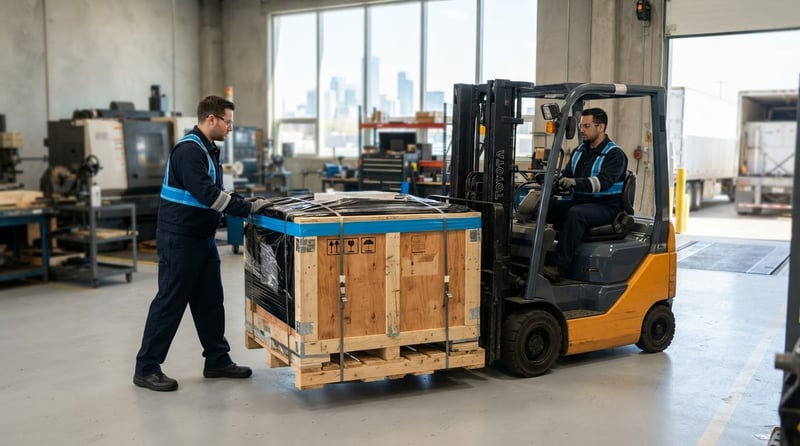
For most industrial shippers, LTL is practical when equipment occupies part of a trailer and can travel upright in a secured crate or on a reinforced pallet. Freight class affects the rate, while packaging and accessorial needs determine whether the carrier can pick up and deliver without costly changes. A laser cutter, rooftop HVAC component, or crated compressor should be booked only after you document its packed size, total weight, commodity details, and pickup conditions. The costly mistakes happen when a shipment description says “machinery” but the crate, density, and site access tell a different story.
Key Takeaways:
Accurate dimensions, weight, and commodity details prevent freight-class rebills.
Crating must immobilize equipment and protect vulnerable controls, panels, and fittings.
Liftgate needs and declared value should be confirmed before the shipment is booked.
Freight Class for Crated Machinery and HVAC Equipment#
Freight class is not a label to estimate from the product name alone. Carriers assess the packed shipment under the applicable NMFC item, then consider characteristics such as density, stowability, handling, and liability. For industrial equipment, the final class can change when a unit is loose, mounted on a pallet, enclosed in a crate, or shipped with exposed components.
Document the shipment before requesting a rate#
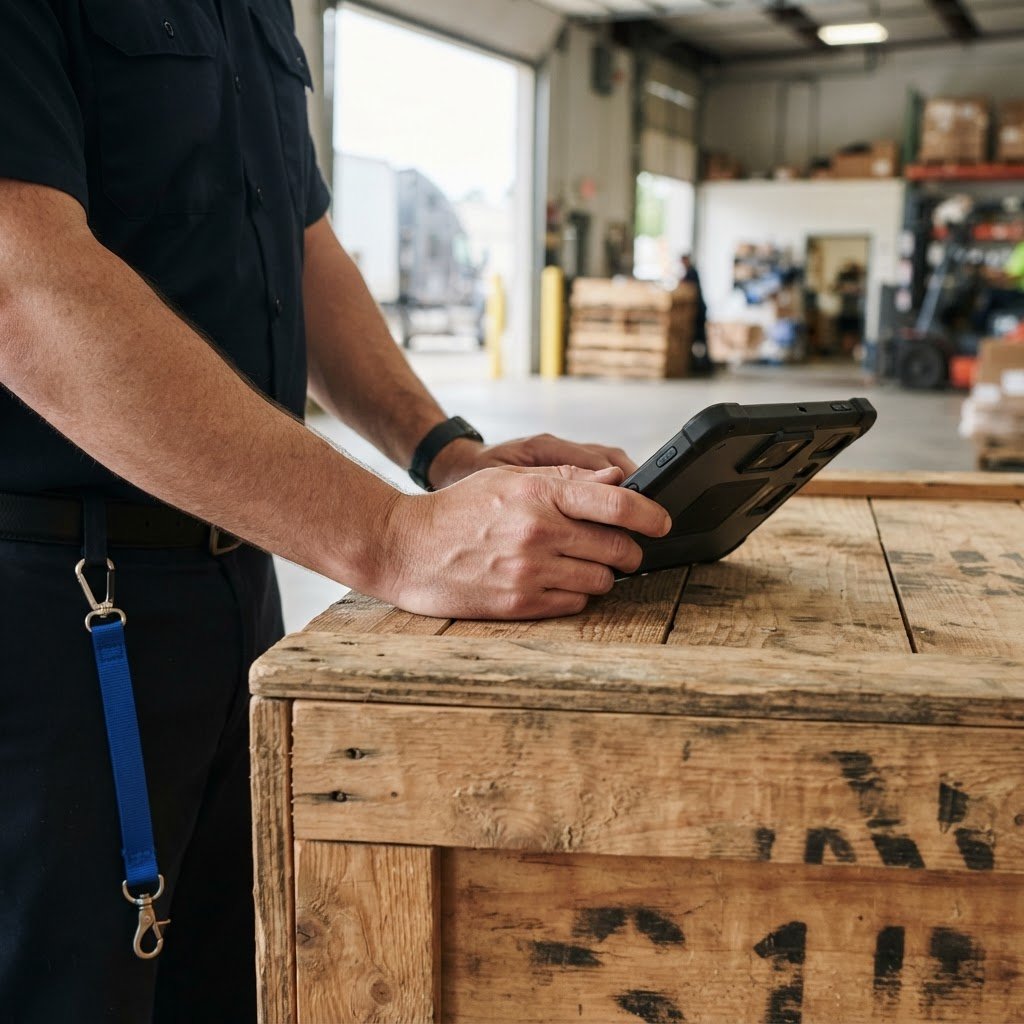
The cleanest way to avoid a correction is to build the shipment record from the finished package, not the machine specification sheet. Measure the outermost points of the crated load, weigh it after blocking and bracing, and describe the commodity in terms a carrier can match to its classification rules. A detailed freight class determination process gives the carrier enough information to price the shipment before pickup.
Commodity: Name the equipment and its operating condition.
Dimensions: Record packed length, width, and height.
Weight: Include crate, pallet, blocking, and accessories.
Density: Divide total weight by cubic volume.
Handling: Note forklift pockets, lifting points, and stackability.
Why density and packaging change the booked class#
Freight class depends partly on density, but density alone does not settle every machinery shipment. A dense compressor in a compact crate may handle differently from an oversized HVAC cabinet with delicate coils, even if both travel on pallets. Use an LTL freight class chart to understand the class range, then verify the exact commodity description before tendering the freight.
Do not rely on “industrial equipment” as a catch-all description. The carrier needs to know whether the item is new or used, operational or non-operational, crated or exposed, and whether it includes parts that create special handling concerns.
Crating Standards That Reduce Damage Claims#
Good packaging makes LTL workable because terminal handling exposes freight to forklift movement, trailer vibration, and transfers between equipment. The crate should function as a protective structure, not as a cosmetic shell around the machine. If a unit shifts inside its crate, the outer package may arrive intact while the equipment is damaged or out of alignment.
Build a crate around the shipment’s weak points#
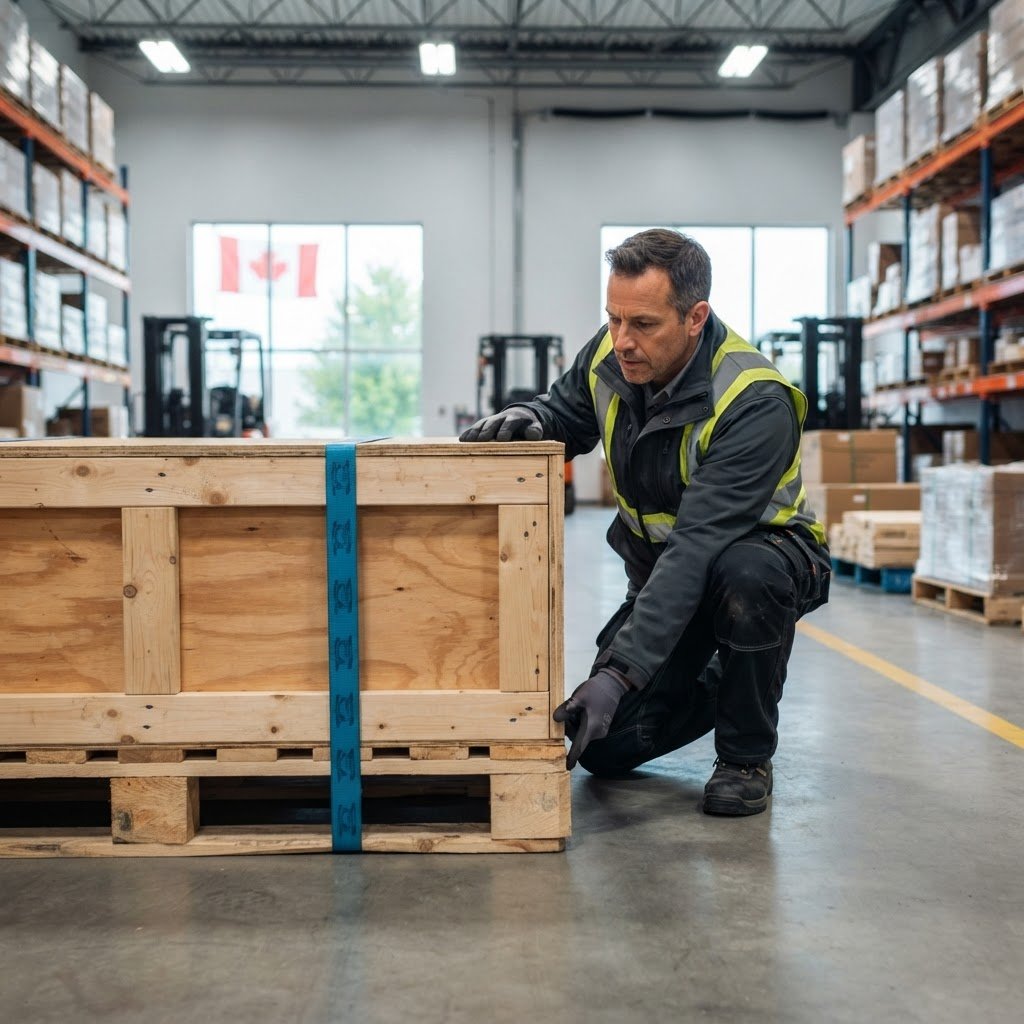
Secure the equipment to a stable base before enclosing it, then brace it so it cannot move in any direction. Protect control panels, coils, glass, precision rails, hoses, and protruding fittings from contact with crate walls or adjacent freight. For large equipment, crate or pallet selection should reflect durability, reusability, and the level of protection required.[1]
For cross-border loads, confirm whether solid-wood packaging requires ISPM 15 treatment and marking before pickup.[2] That detail matters before pickup, because packaging documentation and markings can affect whether the load moves smoothly across the Canada-U.S. border.
Use pallets only when the equipment can travel safely exposed#
A reinforced pallet can work for sturdy, regular-shaped equipment that has no exposed controls or fragile surfaces. Add corner protection, banding, stretch wrap, and a clear “do not stack” instruction when appropriate, but do not mistake stretch wrap for structural restraint. The relevant LTL packaging requirements should be met before the shipment reaches the dock.
Movement inside a crate can create significant downstream cost, since equipment that requires recalibration, repair, or replacement after transit damage adds both direct expense and extended downtime, which is why internal blocking deserves as much attention as the exterior crate.
When LTL Stops Being the Practical Shipping Method#
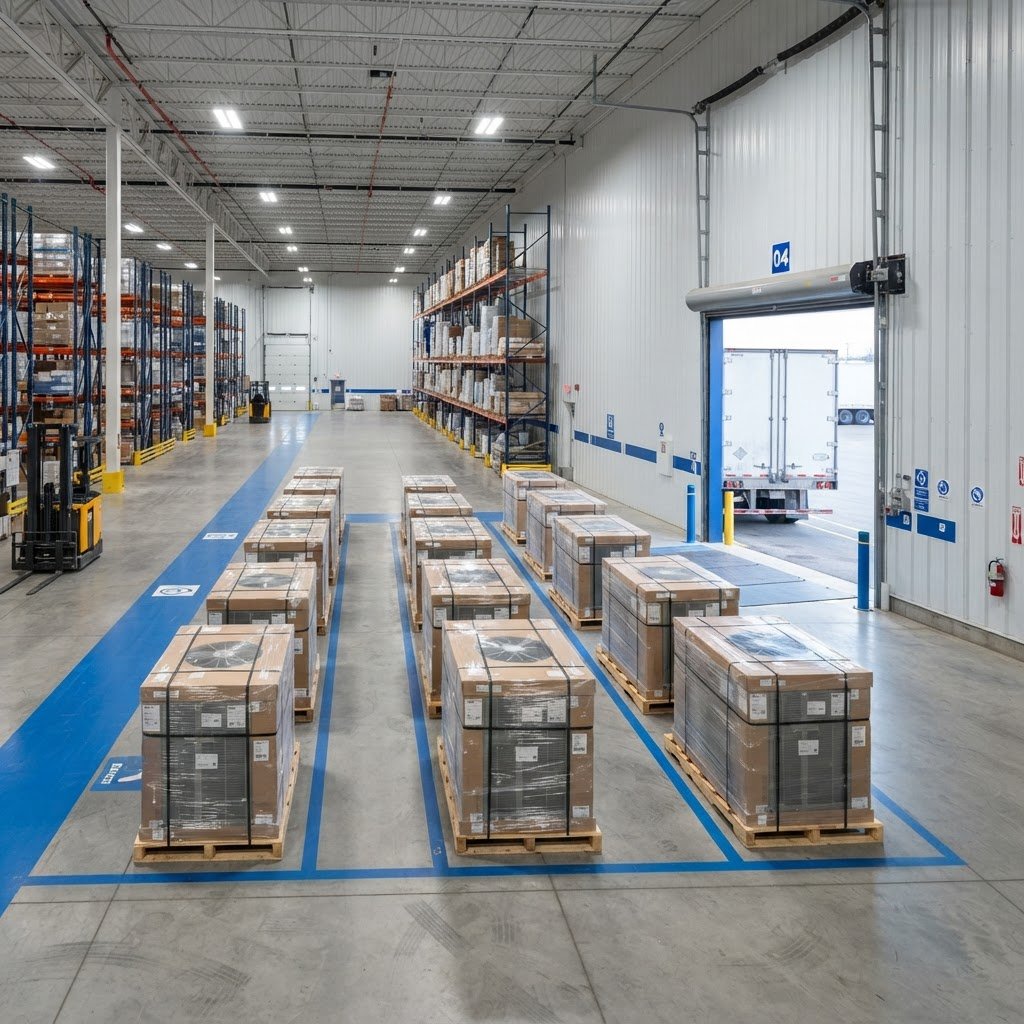
LTL works best when the freight can be safely handled within a shared trailer network and your shipment does not require dedicated equipment or exclusive space. Oversize dimensions, unusual loading needs, extreme fragility, or a shipment footprint that dominates the trailer can change the calculation. A rate can look attractive until accessorial charges, delayed handling, or a rejected pickup undermine the plan.
Assess dimensions, weight, and handling as one decision#
Dimensional and weight thresholds are carrier-specific, so there is no universal cutoff that automatically turns an LTL shipment into a full-truckload move. Evaluate the finished crate against the carrier’s accepted freight profile, then consider whether it can be moved with standard dock equipment. A NMFC classification guide can help confirm the commodity details, while a large LTL freight review is especially useful when the crate is long, tall, non-stackable, or difficult to position in a terminal.
Choose a dedicated or specialty solution when the equipment needs controlled loading, cannot tolerate terminal transfers, requires unusual securement, or cannot fit safely through ordinary dock workflows. That is a protection and handling decision, not simply a weight decision.
Plan liftgate and dock access before pickup#
Liftgate service and dock access require a realistic view of both ends of the move. A liftgate can assist when no loading dock is available, but it does not solve every heavy or awkward machine shipment because the crate must still fit and remain stable during lowering. Tell the carrier whether a forklift, dock, receiving hours, appointment requirement, or limited-access site affects pickup or delivery.
At machine shops, confirm the path from truck to receiving area as well as the dock itself. Narrow doors, uneven pavement, restricted turning space, and no forklift can turn a routine delivery into a failed attempt or a rebooked service.
Protecting High-Value Equipment During an LTL Move#
Carrier liability and cargo insurance are not the same protection. Liability may be limited by the carrier’s tariff and freight terms, while cargo coverage addresses the value you want protected if the shipment is damaged or lost. High-value industrial equipment needs a value discussion before it enters the network, not after a damage report is filed.
Match declared value and coverage to the equipment at risk#
Protecting high-value shipments with cargo insurance starts with an accurate invoice value, serial-number record, photographs, and a clear condition report before pickup. Keep copies of the bill of lading, crate photos, packing details, and any delivery exceptions, because claims depend on evidence that shows the item’s pre-shipment condition and packaging.
Published liability limits can be far below the replacement value of machinery, since many carrier tariffs calculate the cap by weight rather than by the equipment’s actual replacement value. Confirm your carrier’s specific per-pound liability limit before tendering high-value freight, and treat that figure as a floor to insure above, not a guarantee of full recovery.
Inspect immediately and preserve the record#
Inspect the crate at delivery before signing a clean receipt, and note visible damage or shortage on the delivery document. Photograph broken boards, punctures, shifted blocking, wet packaging, and damaged seals while the driver is present whenever possible. U.S. interstate shipments give carriers 30 days to acknowledge a claim and 120 days to pay, decline, or make an offer under the Carmack Amendment.[3] Canadian domestic moves follow different carrier-specific claim terms, so confirm those terms and keep your documentation ready either way.
For active shippers in Quebec and Ontario, Truxweb lets shippers compare carrier quotes, transit times, ratings, and booking fees before confirming a shipment. That visibility helps you assess the service details that matter for a crated industrial load instead of choosing from a single opaque quote.
Conclusion#
Ship LTL freight for machinery or HVAC equipment only after the packed crate, freight class, site access, and coverage requirements are fully documented. Accurate measurements and a commodity-specific classification reduce rebills, while internal bracing and clear delivery instructions reduce avoidable handling risk. For SMEs moving palletized industrial freight across Canada or into the United States, Truxweb is the practical choice when you need direct access to carrier quotes and transparent booking details for the lane. Treat the crate and shipment record as part of the equipment’s protection plan, not as paperwork added after booking.
Ready to compare options for your shipment? Get an instant LTL quote with Truxweb and review direct-carrier options before you book.
Frequently Asked Questions (FAQs)#
What is LTL shipping for industrial equipment?
LTL shipping for industrial equipment is a shared-trailer service for crated or palletized freight that does not require exclusive truck capacity, provided the equipment can be safely handled through the carrier’s terminal network and is described accurately on the bill of lading.
How is freight class determined for crated machinery?
Freight class for crated machinery is determined from the applicable NMFC item and shipment characteristics, including density, handling, stowability, and liability, so the finished crate’s dimensions and total weight must be used instead of bare equipment specifications.
Can HVAC equipment ship on a pallet instead of in a crate?
HVAC equipment can ship on a pallet when it is durable, stable, and adequately protected, but units with exposed coils, controls, fittings, or surfaces vulnerable to forklift contact should be enclosed in a properly braced crate.
How do I calculate shipping costs for pallets?
Shipping costs for pallets depend on the origin and destination, packed dimensions, total weight, freight class, service needs, and accessorials such as liftgate or appointment delivery, which is why complete shipment details produce more reliable quotes.
Do I need a liftgate for crated machinery?
You need a liftgate for crated machinery when either location lacks a loading dock or forklift capable of safely transferring the shipment, although the crate’s dimensions and stability must also be suitable for liftgate handling.
Is carrier liability enough for high-value machinery?
Carrier liability is often not enough for high-value machinery because tariff limits may be calculated by weight rather than replacement value, so shippers should evaluate cargo insurance or declared-value protection before tendering the equipment.
Sources#
- Packaging Practices: The Good, the Bad, and the Ugly — NMFTA ↩
- ISPM 15: Regulation of Wood Packaging Material in International Trade — IPPC ↩
- 30 days to acknowledge a claim — jjkellercompliancenetwork.com ↩
About the author

 Quebec City to Gatineau/Ottawa LTL: Rates and Transit
 Best LTL Rates for Food and Pet Food Shippers to the U.S.
 Freight Transportation Services for Distribution Growth