


Introduction
Quick Answer
Cross-border LTL freight moving between Canada and the US in 2026 must ship on a compliant pallet (standard 48x40 inch GMA or 48x48 inch Canadian block), be shrink-wrapped with a minimum of five full rotations, weigh no more than 2,200 lb per skid, and carry a bill of lading, commercial invoice, and country of origin marking that matches CUSMA requirements. Miss any one of these and you invite damage claims, reweigh fees, or a customs hold at the border.
LTL freight takes a beating. A single skid moving from Montreal to Chicago is handled at three or four cross-docks, stacked under other freight, and shuffled across trailers before it reaches the consignee. Carriers report that roughly 70% of damage claims trace back to packaging failures, not driver handling, and cross-border shipments face the added risk of a CBP or CBSA officer opening a shipment that lacks proper markings. The rules for 2026 have not changed dramatically from previous years, but tighter carrier tariffs on non-conforming freight and stricter CUSMA origin verification mean that shippers now pay a real financial penalty for cutting corners.
Key Takeaways:
Use a 48x40 inch or 48x48 inch pallet in good condition, with freight that does not overhang the deck.
Wrap freight with at least five full turns of 80-gauge stretch film and secure it to the pallet with corner boards or banding.
Every cross-border LTL shipment needs a bill of lading, commercial invoice, and clear country of origin marking that matches your CUSMA certification.
Pallet Standards and Load Building for Cross-Border LTL
The pallet is the foundation of every LTL shipment, and carriers judge your freight the moment it hits the dock. A splintered stringer, a missing deck board, or a load that overhangs by two inches gives the carrier grounds to reclassify your shipment, add a reweigh and reinspection fee, or refuse the pickup outright. Getting the base right protects both the freight and the invoice.
Choosing the Right Pallet Size and Grade
North American LTL runs on two dominant pallet footprints, and choosing between them affects freight class, cube utilization, and how easily the receiver can unload. For a deeper look at how dimensions feed into pricing, our freight class explained breakdown covers the density calculations behind each class.
GMA 48x40 inch: The default for US-bound freight, four-way entry, rated for 2,500 lb dynamic load.
Canadian 48x48 inch block pallet: Common in Quebec and Ontario manufacturing, better for square or drum-shaped loads.
Euro 1200x800 mm: Only use if the consignee specifically requests it, otherwise expect handling surcharges at US cross-docks.
Heat-treated (HT stamp): Required for all wood pallets crossing the border under ISPM 15, non-negotiable.
Grade A condition: No cracked stringers, no missing deck boards, no protruding nails.
Building a Stable Load
Freight should sit fully within the pallet footprint with zero overhang on any side. Overhang exposes corners to forklift damage and is the single most common reason for freight damage claims on cross-border lanes. Stack heavier cartons on the bottom, distribute weight evenly across the deck, and cap the top with a flat layer so the load can be double-stacked safely in the trailer. Loads taller than 72 inches should be flagged as "do not stack" with a printed cone label, since carriers will otherwise assume the shipment is stackable and cube-share the trailer accordingly. For a step-by-step walkthrough of building a compliant skid from scratch, the Truxweb pallet shipping guide is a useful companion to this checklist.
Protective Packaging, Weight Limits, and Damage Prevention
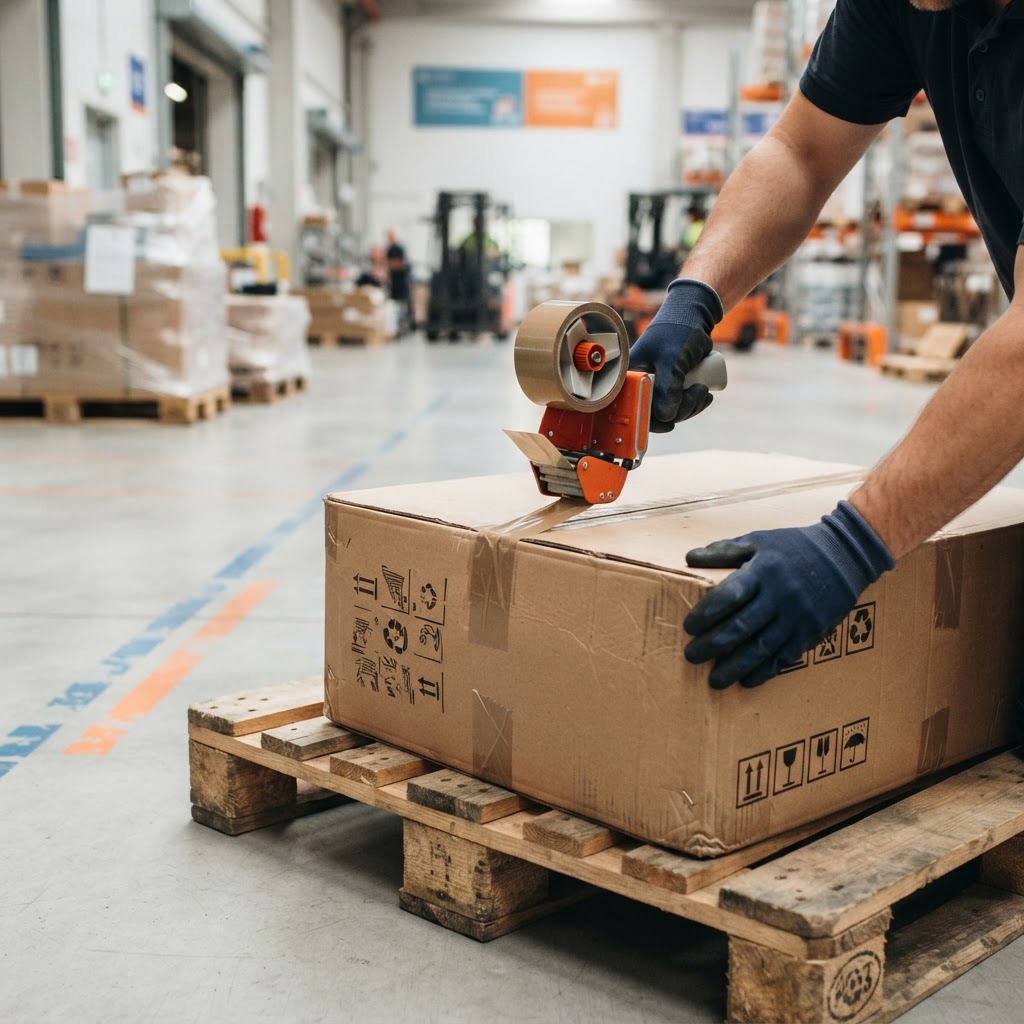
Once the pallet is loaded, the job is to lock everything in place and armor the freight against the physical stress of a cross-border trip. Between Toronto and Dallas, an LTL shipment is typically handled seven to nine times, spends up to 96 hours in transit, and can see temperature swings of 40 degrees Celsius. The packaging has to survive all of that without shifting, tipping, or crushing.
Wrapping, Strapping, and Corner Protection
Stretch film alone is not enough on heavy freight. Carriers want to see a combination of wrap plus mechanical reinforcement, and follow packing requirements for export deliveries established by federal trade guidance.
- Stretch film: Minimum 80-gauge, five full turns from the base of the pallet to the top of the load, with the film locked into the pallet deck.
- Corner boards: Vertical edge protectors on all four corners for any shipment over 500 lb or with fragile edges.
- Banding or strapping: Two horizontal poly or steel straps for freight over 1,000 lb, run through the pallet deck slots.
- Void fill: Foam, air pillows, or corrugated inserts inside cartons to eliminate internal movement.
- Moisture barriers: Poly sheeting between the pallet and the freight if the shipment crosses in winter or spring conditions.
Weight, Dimension, and Density Limits
Cross-border LTL carriers enforce hard limits on a per-skid basis, and exceeding them triggers accessorial charges that can add 30% to your invoice. Density also drives freight class, which is why undersized packaging on a heavy shipment often costs more than a properly built skid. Truxweb's marketplace surfaces carrier-specific limits at the quote stage, so shippers moving 1 to 8 pallets can see the pricing impact before they book. The current 2026 benchmarks most Canadian carriers apply are as follows.
- Maximum weight per skid: 2,200 lb for a standard pallet, 4,000 lb if palletized with a heavy-duty deck and pre-approved by the carrier.
- Maximum height: 96 inches from the ground including the pallet, though 72 inches is preferred for double-stacking.
- Maximum length: 96 inches without incurring an overlength surcharge.
- Density floor: Freight under 6 lb per cubic foot is often reclassified upward, raising the freight class and the rate.
Labeling, Documentation, and Common Mistakes at the Border
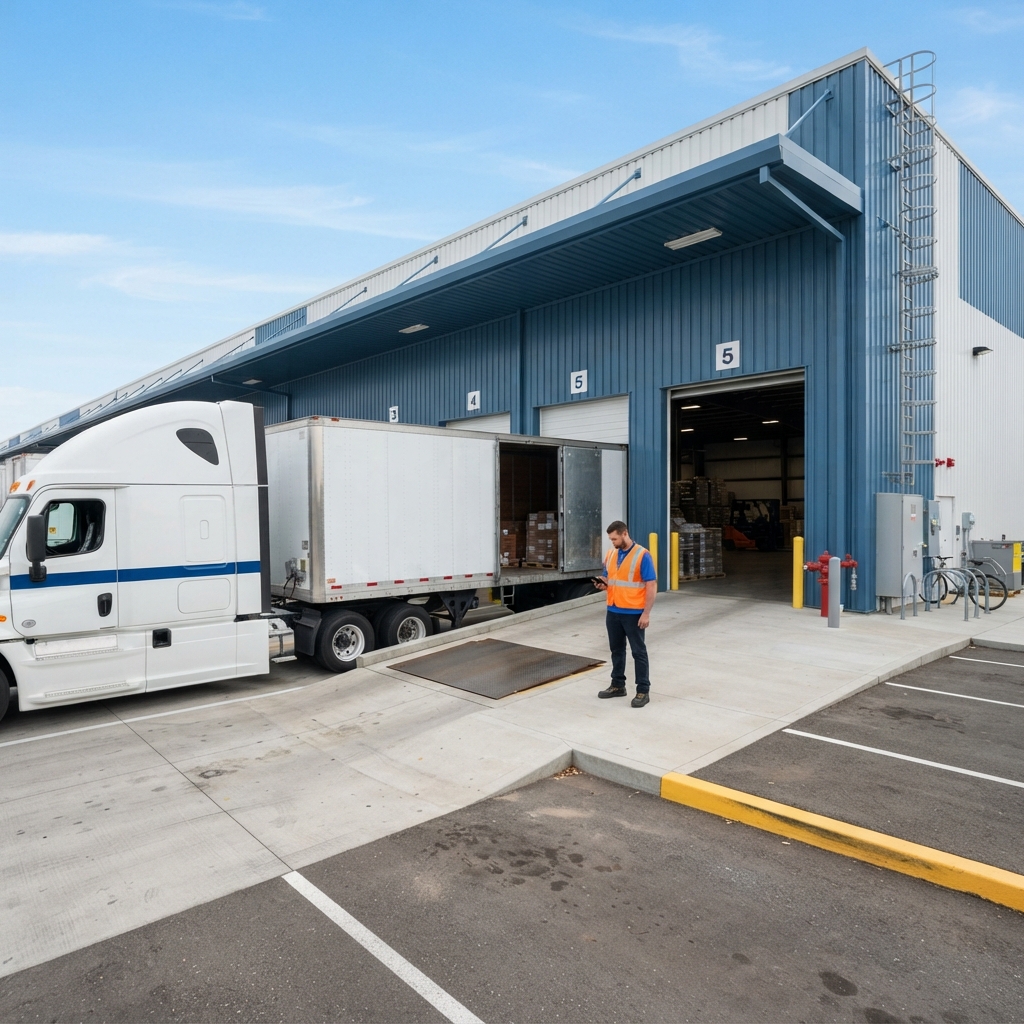
Packaging is only half of what customs and carriers evaluate. The other half is whether the shipment is clearly identified, correctly documented, and traceable at every scan point. Missing paperwork is the single most common reason a cross-border LTL shipment sits at the border for 24 hours or more, and it is entirely preventable.
Labels That Meet Carrier and Customs Requirements
Every skid needs both shipping labels and origin markings. The label goes on two adjacent sides of the pallet at eye level so a forklift operator can read it without repositioning the freight. Country of origin marking follows the rules set out in the CBSA's country of origin marking memorandum and must match what appears on your commercial invoice. For US-bound shipments, the Canadian labeling requirements guide from the US Department of Commerce covers accuracy and substantiation standards. Required elements on every cross-border label include shipper name and address, consignee name and address, PRO number or tracking barcode, piece count and total weight, country of origin ("Made in Canada" or as applicable), and handling instructions such as "This Side Up" or "Do Not Stack."
Documents Every Shipment Needs
Paperwork gaps are what trigger customs holds, and a broker cannot clear a shipment that is missing a signature or an HS code. For a complete list of forms and when each one applies, review our guide on the cross-border freight documents shippers need and pair it with the LTL documentation checklist for domestic Canadian legs of the trip. At minimum, every cross-border LTL move requires a bill of lading with accurate NMFC class and weight, a commercial invoice listing each SKU with HS codes and declared value, a CUSMA certification of origin when claiming preferential tariff treatment, a packing list matching the invoice line by line, and a Canada Customs Invoice or ACE eManifest depending on the direction of travel.
Common Mistakes That Delay Freight
Most cross-border problems repeat themselves, and avoiding the following list of customs clearance mistakes will resolve the majority of delays SMBs face on the lane.
Loose boxes on a pallet: Cartons that are not banded or wrapped shift during transit and are the top driver of damage claims.
Mismatched weights: Weight on the BOL that does not match the reweigh scale triggers automatic reclassification and fees.
Missing HS codes: A commercial invoice without HS codes cannot be pre-cleared through ACE or CBSA, adding hours or days at the border.
Non-heat-treated pallets: Untreated wood pallets are refused at the border under ISPM 15 with no exceptions.
Illegible labels: Handwritten or smudged labels get scanned as exceptions and diverted to the terminal manager for manual handling.
Conclusion
Cross-border LTL packaging is not complicated, but it is unforgiving. A properly built skid with the right pallet, five turns of stretch film, corner boards, accurate labels, and a complete document set will move from a Quebec warehouse to a Texas distribution center without a single accessorial charge. Skip any one of those elements and the shipment becomes a candidate for reweigh fees, damage claims, or a border hold. The businesses that ship consistently well are the ones that treat packaging as a repeatable process rather than a last-minute task at the dock.
Ready to move your next cross-border shipment with less friction and better rates? Compare instant LTL quotes on Truxweb and connect directly with vetted carriers that know the Canada-US lane inside out.
Frequently Asked Questions (FAQs)
How do I properly package freight for an LTL shipment?
Palletize the freight on a heat-treated 48x40 or 48x48 inch pallet, wrap it with at least five full turns of 80-gauge stretch film, add corner boards and banding for loads over 500 lb, and label two adjacent sides with shipper, consignee, weight, and country of origin.
What are the requirements for pallet shipping in Canada?
The pallet must be structurally sound with no broken stringers or missing deck boards, carry an ISPM 15 heat treatment stamp for cross-border moves, and support the load without overhang on any side.
Can I ship loose boxes on a pallet?
Only if they are wrapped, banded, and secured as a single unit, since loose boxes are the leading cause of LTL damage claims and will often be refused at pickup.
What is the maximum weight for a standard pallet in LTL shipping?
Most Canadian LTL carriers cap a standard skid at 2,200 lb, with heavy-duty exceptions up to 4,000 lb available only with prior carrier approval.
How do I measure a pallet for freight shipping?
Measure the longest length, the widest width, and the total height from the floor to the top of the freight including the pallet itself, then round each dimension up to the nearest inch.
What documents are required for cross-border LTL shipments?
You need a bill of lading, a commercial invoice with HS codes, a packing list, a CUSMA certification of origin when claiming preferential tariff treatment, and either a Canada Customs Invoice or an ACE eManifest depending on the direction of the shipment.
Is shrink wrapping enough to protect freight during transit?
Shrink wrap alone is sufficient only for light, low-value loads, and any shipment over 500 lb or with fragile edges needs corner boards and banding in addition to the film.
About the Author
Daniel Park is a freight logistics analyst covering LTL shipping, carrier performance, and supply chain operations across Ontario and Quebec. His work focuses on helping SMB logistics managers navigate freight pricing, carrier selection, and digital freight platforms with data-backed guidance.