


Quick Answer
Food and pet food shippers can secure more competitive LTL shipping rates by providing precise shipment details, choosing carriers equipped for food-grade handling, and comparing all-in quotes before booking. For Canada-U.S. LTL shipping, the lowest initial quote is only useful when it also accounts for customs readiness, appointment requirements, and any temperature-control needs.
Introduction
Competitive freight shipping rates for food and pet food depend on more than pallet count and distance. Canadian SMEs shipping into the United States need a carrier that can move the freight safely while supporting accurate border documentation and realistic delivery commitments. LTL pricing can change when freight class, density, accessorial services, fuel, handling needs, and border processes change. A missed document or unsuitable trailer can turn an apparently low rate into a costly exception.
Key Takeaways:
Accurate dimensions and freight details reduce avoidable LTL quote adjustments.
Food-grade handling and border paperwork should be checked before booking.
Compare total charges, transit expectations, and carrier terms side by side.

What Builds the Final Price for Food and Pet Food LTL Shipping?
LTL shipping rates are built from the shipment’s physical profile and the service required to move it, not from a single published rate card. For Canadian exporters, shipping freight from Canada to the U.S. also introduces border coordination, customs documentation, and carrier network coverage that can affect the final booked price.
Shipment details that carriers price first
Carriers need complete shipment data before a quote can be trusted: origin and destination postal codes, pallet count, dimensions, actual weight, commodity description, pickup and delivery conditions, and required dates. Under the NMFC system, freight class is a standardized pricing method tied to how easily freight moves, and food items can be classified differently from other products because handling requirements vary.
Dimensions: Measure every pallet after stretch-wrapping and corner protection.
Weight: Use actual scale weight, not an estimate.
Freight class: Confirm the commodity’s NMFC classification before tendering.
Handling: Declare temperature, sanitation, or segregation requirements.
Site access: Identify liftgate, appointment, or limited-access conditions.
Why food freight receives extra scrutiny
Food and beverage freight shipping is often sensitive to trailer condition, odors, cross-contamination risk, product integrity, and delivery timing. Temperature-controlled LTL shipping adds equipment and capacity constraints, so describe the required temperature range, whether continuous monitoring is needed, and whether the product can share a trailer with other freight before comparing quotes. For additional planning considerations, review temperature-controlled LTL guidance before requesting service.
Current market conditions also matter. A 2026 LTL market review reported general rate increases of 4.9% to 5.9% on line-haul charges, while accessorial fees rose 8% to 12%. An LTL freight rates guide likewise notes that distinct charges combine to form the final invoice balance. That makes quote discipline especially important when a shipment needs liftgate service, inside delivery, appointments, or other nonstandard handling.
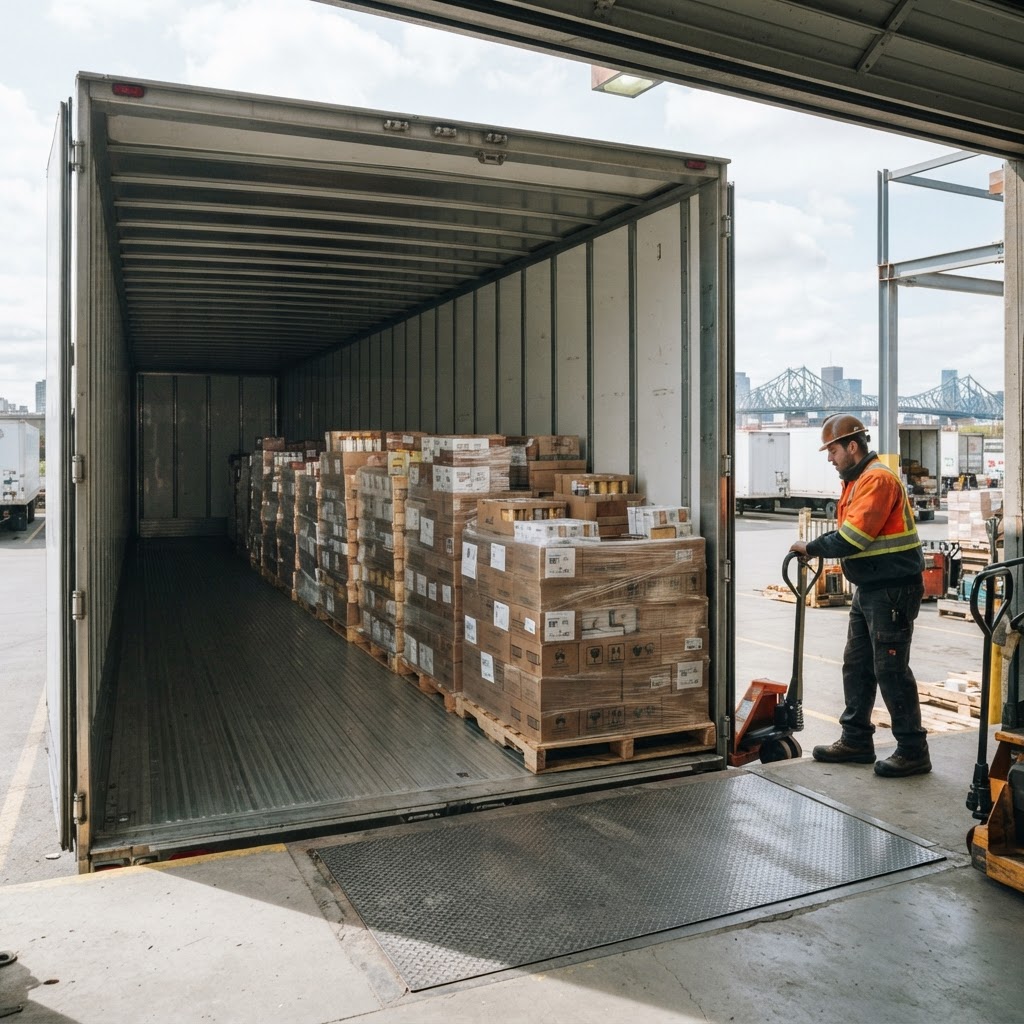
Cross-Border Shipping Solutions Canada-US Shippers Need Before Pickup
Cross-border shipping solutions for Canada-U.S. exporters should begin before freight reaches the dock. The carrier moves the shipment, but the shipper remains responsible for ensuring commercial information, commodity descriptions, consignee details, and supporting records align with the goods being exported.
Build a border-ready document package
A commercial invoice should clearly identify the seller, buyer, goods, quantity, value, country of origin, and terms of sale. The bill of lading must match the freight actually tendered, including pallet count, weight, commodity description, and special handling instructions, because mismatches can trigger delays, corrections, or billing disputes.
For qualifying goods, review CUSMA shipping requirements early rather than treating origin support as a last-minute formality. A customs broker selection process should also confirm who files the entry, who receives release updates, and who can resolve a classification or document question while freight is in transit.
Pet food records require disciplined retention
Pet food freight shipping may require product-specific export records in addition to standard commercial documents. The Canadian Food Inspection Agency explains that pet food exports may require an export certificate, an exporter declaration, and supporting documentation depending on the importing country's requirements.
For raw pet food exports, facility approval is also material: export requirements can include country-specific certification and supporting documentation. Review the pet food export certificates requirements before booking so the shipping team is not asked to reconstruct records after pickup.

Comparing a Marketplace With Traditional Freight Arrangements
The practical difference between an LTL shipping marketplace and a traditional broker arrangement is how many carrier options and fee details the shipper can review before accepting a booking. This is particularly relevant for freight shipping providers in Toronto and Montreal serving recurring U.S. lanes, where service availability can differ by destination and shipment requirements.
Compare the whole shipment cost, not the line-haul quote
A cross-border LTL shipment should be evaluated on total expected cost, carrier suitability, visibility, and document coordination. Published industry guidance notes that freight pricing follows a standardized weight structure and that final invoices combine several distinct charges, which is why a seemingly low base rate should never be the only comparison point.
Decision factor | Traditional broker process | Direct-to-carrier marketplace process |
|---|---|---|
Quote collection | Broker obtains carrier options | Shipper reviews carrier quotes in one workflow |
Rate visibility | Fee structure may be bundled | Booking fees shown before confirmation |
Carrier comparison | Depends on broker communication | Rates, transit times, and ratings displayed side by side |
Booking administration | Calls and email coordination | Digital confirmation and shipment dashboard |
Food freight review | Special requirements relayed manually | Requirements entered with the quote request |
The decision point is not whether a process has a middle party, but whether the shipper can validate all expected charges and carrier conditions before freight is tendered. For many one-to-eight-pallet shipments, direct comparison makes it easier to identify a quote that reflects the required service rather than only the base transportation charge.
Use quote comparison to prevent avoidable accessorials
To compare LTL shipping rates online effectively, provide photos when pallet condition or loading access may be unclear, then ask whether the quote includes appointments, liftgate requirements, residential conditions, border-related handling, and temperature instructions. Confirm whether the quoted carrier accepts the commodity and whether the consignee can receive during the proposed delivery window.
Temperature-controlled LTL requests should include the product’s required conditions at the time of booking, not after dispatch. Food shippers should also use cross-border packaging requirements to verify that pallets are stable, labeled, protected from damage, and ready for multiple handling points.
How to Lower Cross-Border LTL Costs Without Adding Risk
The cheapest way to ship pallets is rarely the lowest quote displayed before shipment details are verified. The more reliable approach is to prevent reclassification, reweighing, accessorial charges, delivery failures, and border holds that can erase an initial price advantage.
Standardize recurring lanes and shipment profiles
Create a shipment profile for each regular SKU group that includes dimensions, weight, pallet type, freight class, packaging method, temperature notes, consignee hours, and document requirements. This gives carriers consistent information and helps logistics teams identify when an unusual quote reflects a true service difference instead of incomplete shipment data.
ET Transport lists typical cross-border LTL freight in a range of $300 to $800, while total Canada-U.S. shipping can range from $20 for small parcels to $5,000 or more for full truckload freight. Those broad figures are not a pricing promise for food products, but they illustrate why shipment mode, size, and service requirements must be separated before cost comparisons are made.
Book with carrier fit and operational control
For Quebec and Ontario SMEs seeking affordable LTL shipping, Truxweb lets shippers submit one request to carriers serving the lane and compare rates, transit times, carrier ratings, and booking fees before confirming. The platform reports that 92% of carriers respond within 30 minutes during business hours, while its concierge team can help address operational issues that arise around pickup, dispatch, or delivery.
Truxweb also states that its carrier network is monitored daily through SaferWatch and requires carriers to maintain a minimum 95% satisfaction rating to remain on the platform. That carrier-vetting approach matters when food shipments require careful handoffs, because a rate should be evaluated alongside the operational controls supporting the move.
Conclusion
Reliable Canada-U.S. food freight begins with accurate shipment data, a complete document package, and a carrier that can meet the commodity’s handling conditions. Compare all-in pricing rather than line-haul alone, and confirm every accessorial or temperature requirement before confirming pickup. For Quebec and Ontario SMEs moving food or pet food shipments, Truxweb offers direct carrier comparison, transparent booking fees, and practical operational support in the same workflow. Consistent records and disciplined quote review protect both margins and delivery performance.
Ready to review carrier options for your next cross-border shipment? Get an instant quote with Truxweb and compare booking details before pickup.
Frequently Asked Questions (FAQs)
How to ship LTL freight efficiently?
To ship LTL freight efficiently, provide exact pallet dimensions, verified weight, freight class, commodity details, pickup conditions, consignee receiving hours, and document requirements before requesting a quote, because complete information reduces rework, reclassification disputes, missed pickup instructions, and unexpected service charges after the carrier has accepted the shipment.
What are the benefits of a digital freight marketplace?
The benefits of a digital freight marketplace include reviewing multiple carrier quotes, transit times, ratings, and booking charges in one place, which reduces the manual calls and email chains that can slow down a time-sensitive food shipment and make it harder to identify whether service terms match the quoted price.
Can small businesses save money on pallet shipping?
Small businesses can save money on pallet shipping by standardizing pallet sizes, measuring shipments after packaging, declaring accessorial needs in advance, and comparing all-in carrier quotes, because invoice corrections often result from inaccurate weight, dimensions, freight class, delivery conditions, or commodity handling instructions rather than from the base transportation charge.
Is shipping freight between Canada and the US difficult?
Shipping freight between Canada and the US is manageable when commercial documents, commodity descriptions, consignee information, customs responsibilities, and carrier instructions are prepared before pickup, but it becomes difficult when the shipment reaches the border with incomplete or inconsistent records that require clarification while freight is already moving.
What documentation is needed for cross-border shipping?
Documentation needed for cross-border shipping generally includes a commercial invoice and an accurate bill of lading, along with origin support or product-specific records when applicable, because the documents must identify the goods, value, parties, shipment details, and any information required to support customs processing and regulatory compliance.
How does temperature-controlled LTL freight work?
Temperature-controlled LTL freight works by assigning a shipment to equipment and handling procedures suited to the product’s stated temperature conditions, so the shipper should declare the required range, monitoring expectations, loading limitations, delivery schedule, and commodity sensitivity before the carrier accepts the booking.
About the Author
Sarah Bennett is a Cross-Border Trade & Customs Specialist focused on freight compliance, customs clearance, and Canada-U.S. shipping between Ontario, Quebec, and key American markets. Her work emphasizes practical documentation controls and carrier coordination that help SMEs move goods across the border with greater confidence.