


Introduction
If your freight is headed to California, the truck carrying it must meet California Air Resources Board (CARB) emission rules, or it can be turned back at the state line, fined, or blocked from registration renewal. That reality now sits at the center of every California-bound shipment leaving Ontario or Quebec, whether it moves as a full truckload or a single LTL pallet. The Advanced Clean Truck regulation California introduced has tightened engine model-year requirements, expanded reporting, and pulled non-compliant equipment out of service faster than many Canadian shippers expected. Small and mid-sized businesses are often the most exposed, because they rely on third-party carriers whose fleet mix they do not directly control. A rejected load in Sacramento is not just a delivery problem, it is a customer relationship problem that starts long before the truck ever crosses the border.
Key Takeaways:
California CARB trucking regulations apply to any diesel truck over 14,000 lbs operating in the state, including Canadian carriers hauling cross-border freight.
Non-compliance can trigger fines, DMV registration blocks, and rejected shipments, with costs that flow back to shippers through surcharges and delays.
Canadian shippers can protect their California lanes by verifying carrier CARB status before booking and building compliance checks into carrier selection.
What CARB Trucking Regulations Are and Who They Apply To
The California Air Resources Board trucking rules are a set of state-level emissions requirements that govern which diesel trucks can legally operate on California roads. They sit on top of federal EPA standards and, in many cases, go further, which is why EPA vs CARB truck emission standards is a distinction Canadian shippers need to understand before booking a California lane. If a carrier is EPA-compliant but not CARB-compliant, that truck can move freight almost anywhere in North America except inside California.
The core rule: 2010 or newer engines
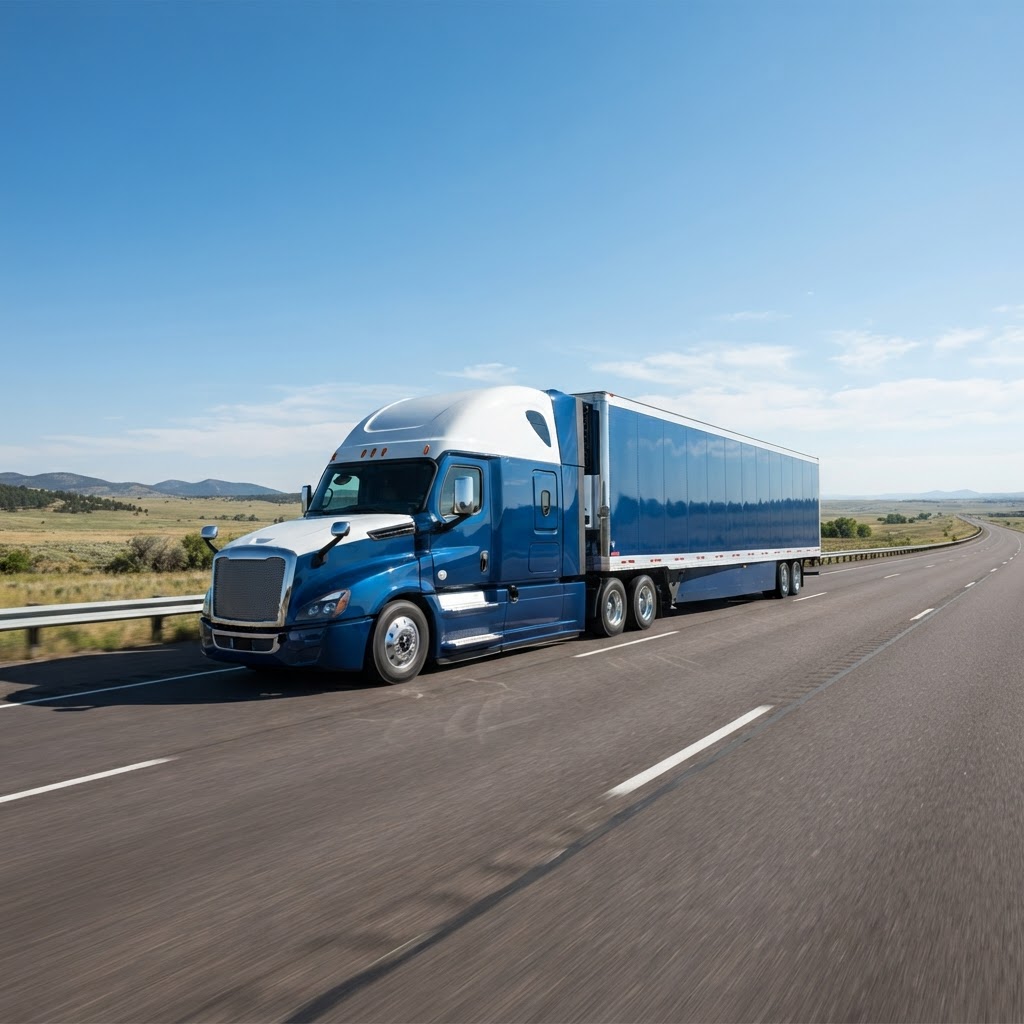
The baseline of the California CARB trucking regulations is straightforward. Under the Truck and Bus Regulation, nearly all diesel-powered vehicles over 14,000 lbs GVWR operating in California must have a 2010 model-year engine or newer, or an equivalent retrofit that meets 2010 emission levels. This applies whether the truck is registered in California, another U.S. state, or a Canadian province. A tractor plated in Ontario pulling a load into Long Beach is treated the same as one plated in Los Angeles.
- Vehicle scope: Diesel trucks and buses over 14,000 lbs GVWR, including on-highway tractors used for cross-border freight.
- Engine standard: 2010 or newer engine, or a verified diesel emission control retrofit.
- Geographic trigger: Any operation on California roads, even a single delivery or pickup.
- Fleet ownership: Applies to Canadian, U.S., and Mexican-domiciled carriers equally.
- Reporting obligation: Fleet operators must report vehicles through CARB systems and maintain records of compliance.
Layered rules and the shift under Advanced Clean Trucks
On top of the base engine rule, CARB has added programs like Clean Truck Check and the Advanced Clean Trucks regulation, which push manufacturers toward zero-emission sales and require periodic emissions testing for heavy-duty vehicles. For Canadian carriers, the practical impact is more frequent inspections, higher compliance costs, and stricter documentation. Shippers moving shipping freight to California should expect their carriers to face rising CARB-related overhead, which eventually shows up in lane pricing. Understanding trade compliance risks at the state level, not just the federal level, is now part of responsible carrier management.
Compliance Requirements, Penalties, and Carrier Documentation
Once a Canadian shipper understands that CARB applies to their carriers, the next question is what compliance actually looks like on paper. This is where a solid CARB compliance checklist for freight carriers becomes essential, because it turns a vague regulation into something you can verify before you book a load.
What compliant carriers must have in place
A CARB-compliant carrier running into California should be able to produce documentation showing that each tractor meets the 2010-or-newer engine standard, is registered in CARB's reporting systems, and, where applicable, has completed Clean Truck Check emissions testing. Under the heavy-duty vehicle requirements, carriers also need to meet NOx and diesel particulate matter limits and keep records available for inspection. For Canadian fleets, that means understanding how to register trucks with CARB, keeping VIN-level records, and being prepared to show a certificate of reported compliance on request.
Documentation is not just a CARB issue, it overlaps with border paperwork. Canadian shippers should treat CARB compliance as part of the same discipline as their freight documentation requirements and their standard import documentation checklist. A driver who is missing CARB paperwork is functionally in the same position as a driver missing a customs form: the load stops moving.
Penalties, fees, and financial exposure
Penalties for non-compliance are not theoretical. Under the Clean Truck Check compliance fee update, carriers face annual fees plus escalating fines for missed testing or unreported vehicles, and CARB can coordinate with the California DMV to block registration renewals for out-of-state fleets that operate persistently non-compliant equipment in the state. California truck registration penalties CARB imposes can run into thousands of dollars per vehicle, per violation, and repeat offenders face higher tiers.
Comparing compliant vs non-compliant carrier costs
When shippers compare shipping rates: compliant vs non-compliant carriers, the CARB-compliant option is often quoted slightly higher on the surface. That gap usually reflects newer equipment, higher maintenance standards, and compliance overhead. The non-compliant option is not really cheaper once you factor in the risk of a rejected load, an emergency reload with a different carrier, and the customer service cost of a missed delivery window. A useful lens here is that CARB compliant vs non-compliant trucking costs should be evaluated on landed risk, not just line-haul rate. This is exactly the kind of trade-off that carrier selection decisions should account for, especially on high-value California lanes.
Practical Steps for Canadian Shippers Moving Freight into California
The good news for Ontario and Quebec shippers is that CARB compliance is verifiable. You do not have to guess whether a carrier meets the standard, and you do not have to become an emissions expert. What you do need is a repeatable process that sits alongside your existing cross-border workflow.
Verify carriers before you book
The most reliable way to answer the question "is my current fleet CARB compliant for California routes" is to use CARB's own tools. The board publishes a compliance status lookup that lets you check a fleet's reported status and confirm certificates. Before awarding a California lane, ask carriers to confirm their CARB reporting ID, share proof of Clean Truck Check registration where required, and identify which specific tractors they intend to assign to your shipments. This is particularly important for long-haul trucking CARB compliance in Ontario and Quebec, where fleets may run mixed equipment across multiple U.S. lanes.
Adjust your LTL and cross-border strategy
For importing LTL freight into California CARB rules add a layer of complexity, because LTL shipments often move through interlined carriers and terminal networks. Your booking may start with a CARB-compliant regional carrier in Quebec, transfer through a linehaul partner, and finish on a delivery unit inside California. Every leg that touches California soil must be compliant. That is why understanding the full impact of CARB regulations on Canada-US freight means asking not just about the carrier you book, but about their partners on the final mile. Building this into your cross-border freight strategies reduces the chance of a surprise at destination.
Digital marketplaces make this verification easier because carrier credentials, ratings, and safety data are already centralized. Platforms like Truxweb aggregate vetted LTL carriers and monitor safety and compliance signals daily, which shortens the diligence work you would otherwise do carrier by carrier. Combined with a strong grasp of carrier performance metrics and realistic cross-border freight rates, that gives Canadian shippers a clearer view of which options can actually deliver into California without incident.
Conclusion
California CARB trucking regulations are no longer a niche concern for large fleets, they are a baseline requirement for anyone shipping into the state from Canada. For Ontario and Quebec businesses, the operational shift is manageable, but only if compliance is treated as a booking decision rather than a paperwork afterthought. Verifying carrier engine standards, checking Clean Truck Check status, and aligning California lanes with vetted partners protects both delivery timelines and customer relationships. The shippers who adapt now will see fewer rejected loads, more predictable transit, and steadier pricing on their most demanding lanes. Those who ignore CARB will keep discovering it the hard way, one delayed shipment at a time.
Ready to move California-bound freight with carriers that meet the standard? Book your next shipment with Truxweb and compare vetted, compliance-monitored LTL carriers in minutes.
Frequently Asked Questions (FAQs)
What are the California CARB trucking regulations?
The California CARB trucking regulations are state-level emissions rules requiring most diesel trucks over 14,000 lbs operating in California to use 2010 or newer engines and meet ongoing NOx, particulate, and reporting requirements.
How does CARB compliance affect Canadian carriers?
Canadian carriers hauling freight into California must meet the same CARB emission standards for commercial trucks as U.S. domestic fleets, which means registering equipment, tracking engine model years, and passing periodic Clean Truck Check inspections.
Do all trucks need to be CARB compliant in California?
Almost all diesel trucks over 14,000 lbs GVWR operating on California roads must comply, with only narrow exemptions for specific vehicle types, so any tractor pulling a Canadian load into the state is effectively in scope.
What happens if a truck is not compliant with CARB standards?
Non-compliant trucks can be fined, blocked from California DMV registration renewal, and turned away from loads, which often results in rejected shipments and additional costs passed back to the shipper.
How do CARB rules impact LTL shipping costs?
How do CARB rules impact LTL shipping costs?
CARB rules raise LTL shipping costs on California lanes because carriers must invest in newer equipment, emissions testing, and reporting, and those overheads are gradually reflected in linehaul rates and fuel-related surcharges.
Can you ship to California without CARB compliance?
You cannot reliably ship into California without CARB-compliant carriers, because non-compliant equipment risks fines, delivery refusals, and long-term restrictions that make the lane commercially unworkable.
How can Ontario and Quebec shippers verify carrier CARB compliance?
Ontario and Quebec shippers can verify carrier CARB compliance by requesting the carrier's CARB reporting ID and Clean Truck Check status, then confirming it through CARB's public compliance lookup tool before booking a California-bound load.