


Introduction
Trade compliance and customs compliance are two terms that get tossed around interchangeably in the freight industry, but they represent fundamentally different regulatory frameworks. For Canadian businesses shipping LTL freight across the Canada-US border, confusing one for the other can lead to unexpected penalties, shipment holds, and costly delays. Trade compliance covers the full scope of international trade law, from export controls to sanctions and product standards. Customs compliance, by contrast, zeroes in on the specific procedures, documentation, and duties required to move goods through a border crossing. Knowing exactly where each framework applies is the first step toward building a shipping operation that runs without disruption.
Key Takeaway: Trade compliance is the broader regulatory umbrella governing how goods are traded internationally, while customs compliance is a focused subset dealing specifically with border procedures and import/export documentation. Canadian shippers need both to avoid fines and freight delays.
What Trade Compliance Really Covers
International trade compliance is the broader of the two frameworks, and it extends well beyond what happens at the border. It encompasses every law, regulation, trade agreement, and government program that governs how goods are manufactured, classified, sold, and shipped between countries. For Canadian businesses, this means navigating federal export controls, economic sanctions lists, product safety standards, and bilateral trade agreements like the Canada-United States-Mexico Agreement (CUSMA).
Core Components of Trade Compliance
Understanding trade compliance starts with recognizing the distinct regulatory pillars it rests on. Each component carries its own set of rules, and overlooking any one of them can trigger enforcement actions or block a shipment entirely.
Export Controls: Restrictions on which goods, technologies, or data can leave Canada, governed by the Export and Import Permits Act
Sanctions and Embargoes: Prohibitions on doing business with specific countries, entities, or individuals flagged by Global Affairs Canada or allied agencies
Trade Agreements: Preferential tariff programs under CUSMA and other agreements that require origin certification and trade documentation requirements
Product Standards: Labelling, safety, and environmental regulations that goods must meet before they qualify for import or export
Controlled Goods: Registration and handling requirements for defence-related or strategically sensitive products under the Controlled Goods Program
Why Trade Compliance Extends Beyond the Border
One of the most common misconceptions is that trade compliance only matters at the point of crossing. In reality, compliance obligations begin long before a shipment reaches a port or border checkpoint. A business that fails to screen a buyer against the cross-border compliance sanctions list, misclassifies a product's Harmonized System code, or ships a restricted item without the proper permit has already violated trade law, regardless of whether the shipment clears the border.
For SMBs in Ontario and Quebec shipping LTL freight to the United States, trade compliance also means understanding which informed compliance publications from US authorities apply to their product categories. The scope is wide, and that is precisely why businesses often confuse it with the narrower discipline of customs compliance.
What Customs Compliance Requires at the Border
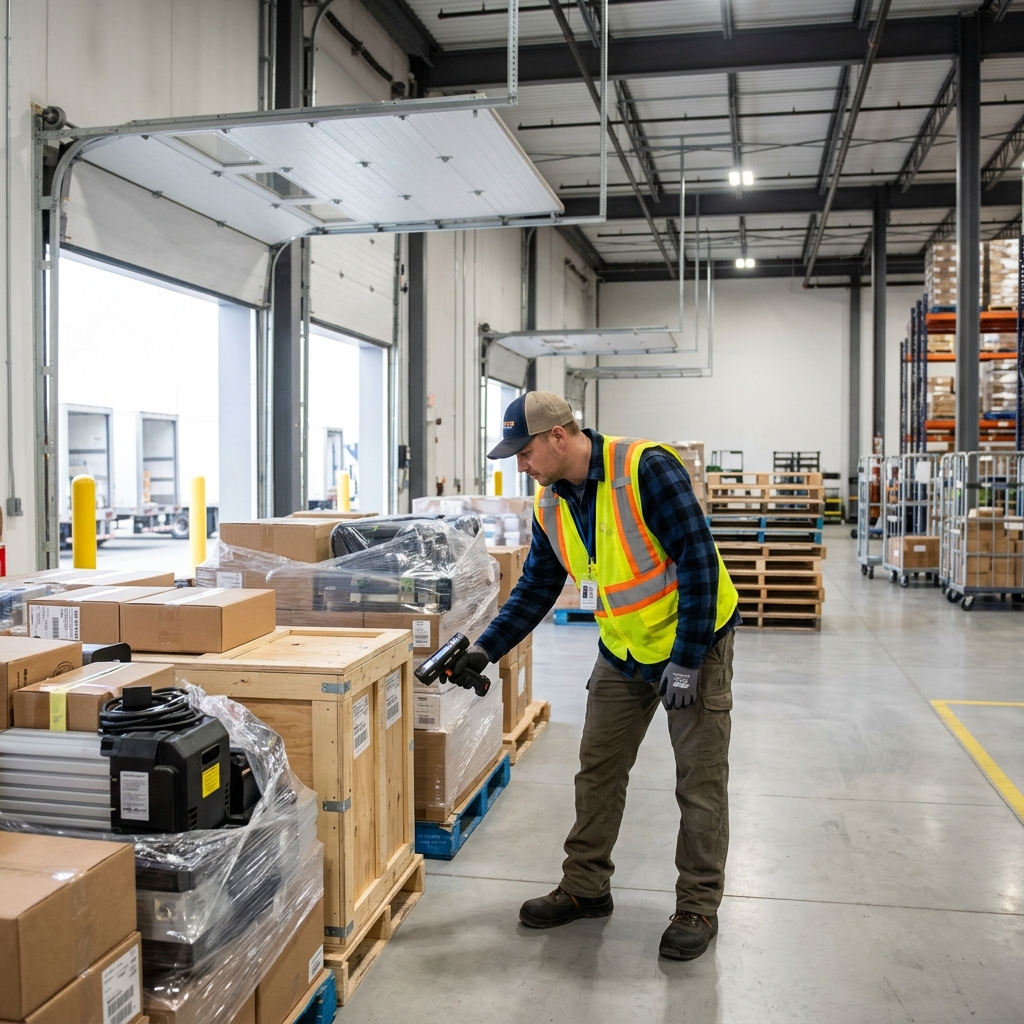
Customs compliance is the operational side of moving goods across a national border. Where trade compliance sets the legal playing field, customs compliance is about executing the specific steps that border authorities require before they release a shipment. In Canada, the Canada Border Services Agency (CBSA) administers this framework, and non-compliance triggers tangible consequences including administrative monetary penalties, shipment seizures, and audit escalations.
Documentation and Reporting Obligations
Customs compliance in Ontario and the rest of Canada starts with accurate, complete documentation. Every commercial import requires a Canada Customs Invoice or commercial invoice, a bill of lading, and proper freight documents for a Canada-US shipment. The CBSA's Customs Self-Assessment program and the Advance Commercial Information requirement both demand that data about incoming goods be transmitted electronically before arrival.
Errors in Harmonized System tariff classification, incorrect valuation of goods, or incomplete country-of-origin declarations are among the most frequent triggers for CBSA enforcement action. Even small discrepancies on a shipping compliance checklist can result in a shipment being held at the border while corrections are processed. For LTL shippers moving partial loads, the risk compounds because a single non-compliant pallet can delay the entire trailer.
Duties, Taxes, and Border Procedures
Beyond documentation, customs compliance requires correct calculation and payment of applicable duties and the Goods and Services Tax (GST) on imported goods. The CBSA's commercial importing process outlines step-by-step what importers must do, from pre-arrival reporting through final accounting. Duty rates depend on tariff classification, country of origin, and whether any preferential trade agreement rates apply.
Canadian businesses that consistently meet their customs obligations build a track record that can qualify them for trusted trader programs, reducing inspection frequency and accelerating clearance times. Those that do not face a graduated enforcement system where repeated violations lead to steeper penalties and increased scrutiny on future shipments. Freight compliance monitoring becomes essential in this context, because a clean record is a competitive advantage that translates directly into faster transit times and lower costs.
Drawing the Line: Trade Compliance vs Customs Compliance
The distinction between trade compliance and customs compliance comes down to scope and timing. Trade compliance is the strategic layer that governs whether a transaction is legal, whether the parties involved are permitted to trade, and whether the goods meet all regulatory requirements for movement across borders. Customs compliance is the tactical execution of getting those goods through the border checkpoint with the right paperwork, correct classification, and proper duty payments.
Where the Two Frameworks Overlap and Diverge
The overlap happens at the border itself. When a shipment arrives at a Canada-US crossing, customs officers verify documentation that was shaped by both frameworks. The Harmonized System code, for example, is a trade compliance decision (correct classification under international standards) that directly feeds into customs compliance (tariff rate calculation and reporting). A CUSMA certificate of origin is generated under trade agreement rules but consumed at the customs level for preferential duty treatment.
The divergence is clearer when you look upstream. Screening buyers against sanctions lists, verifying export permit requirements, and ensuring product labelling meets destination-country standards are all trade compliance activities that happen before the goods are even tendered to a carrier. Customs compliance, by contrast, activates at the point of border interaction. Businesses that prevent customs clearance delays successfully tend to be the ones that treat both layers as complementary rather than interchangeable.
Why Canadian SMBs Need Both
For small and medium-sized businesses in Canada, the practical risk of confusing these frameworks is real. A company might have perfect customs documentation but still violate trade compliance by shipping a controlled product without the required export permit. Conversely, a business might have all its trade agreements and sanctions screening in order but face border delays because customs documentation errors slipped through.
Truxweb addresses one important piece of this puzzle through its daily carrier compliance monitoring via SaferWatch, ensuring that every carrier on the platform meets federal and provincial safety regulations. While shippers still own their import export compliance obligations around documentation, classification, and sanctions screening, working with carriers that maintain verified compliance ratings removes one layer of risk from the equation. Platforms like Truxweb give SMBs confidence that the carrier side of cross-border shipping compliance meets enforceable standards.
The bottom line is that trade compliance and customs compliance are not competing priorities. They are sequential layers in the same process. Getting trade compliance right upstream makes customs compliance smoother at the border, and maintaining both protects businesses from cross-border LTL shipping delays that erode margins and damage customer relationships.
Frequently Asked Questions (FAQs)
What is trade compliance?
Trade compliance is the full set of laws, regulations, trade agreements, and government programs that govern how goods are manufactured, classified, and shipped between countries, including export controls, sanctions, and product standards.
What does customs compliance include?
Customs compliance includes the documentation, tariff classification, duty payments, and reporting procedures required by border authorities like the CBSA to legally move goods across a national border.
What is the difference between trade compliance and customs compliance?
Trade compliance is the broader regulatory framework covering all aspects of international trade law, while customs compliance is a focused subset that deals specifically with meeting border crossing requirements and procedures.
What documentation is needed for trade compliance?
Trade compliance documentation typically includes export permits, certificates of origin, sanctions screening records, Harmonized System classification records, and product safety or labelling certifications required by destination countries.
How to ensure customs compliance?
Ensure customs compliance by accurately classifying goods under the Harmonized System, preparing complete commercial invoices and bills of lading, submitting advance electronic data to border agencies, and calculating duties correctly before the shipment arrives.
How to comply with cross-border shipping?
Comply with cross-border shipping by addressing both trade compliance obligations (sanctions screening, export controls, trade agreements) and customs compliance requirements (documentation, duties, electronic reporting) before tendering freight to your carrier.
What are customs compliance requirements in Ontario?
Ontario businesses importing goods must follow CBSA requirements including advance commercial information reporting, accurate tariff classification, proper invoicing, GST payment on imports, and compliance with any applicable CUSMA preferential duty rules.
Conclusion
Trade compliance and customs compliance serve different functions, but both are essential for Canadian businesses moving LTL freight across the Canada-US border. Trade compliance sets the legal boundaries for what can be shipped, to whom, and under which agreements. Customs compliance ensures the shipment clears the border with the correct documentation, classification, and duty payments. Treating these as two layers of the same process, rather than interchangeable terms, is what separates businesses that ship smoothly from those that face recurring penalties and delays.
Get instant quotes from compliance-monitored carriers on Truxweb and simplify your cross-border LTL shipping today.