
LTL Shipping for Furniture and Home Goods Brands in Canada
A practical guide to freight classification, packaging, delivery service levels, and claims for Canadian furniture and home goods brands shipping LTL freight.
By Mathieu van Gent · 9 min read ·

Quick Answer
Furniture brands should treat LTL shipping as a specialized freight process, not a standard pallet move. Correct classification, protective packaging, and the right residential delivery service reduce preventable damage, accessorial charges, and claim disputes. The final-mile plan matters as much as the line-haul rate when a shipment contains bulky, finished, or fragile goods.
Introduction
Furniture and home goods create higher operational risk in LTL shipping because their size, low density, finished surfaces, and residential destinations complicate every handoff. A boxed dining table and a pallet of commercial parts may occupy similar trailer space, but they do not require the same packaging, freight class review, or delivery appointment. Canadian LTL shipping becomes more predictable when shippers document dimensions, handling needs, and destination constraints before booking. A missed detail, such as stairs, no dock, or exposed glass, can turn a low freight quote into an expensive customer-service problem.
Key Takeaways
Accurate dimensions and packaging determine classification, rates, and claim defensibility.
Curbside delivery and white-glove service solve different final-mile responsibilities.
Consolidation can reduce trailer waste while improving per-unit freight economics.
LTL Shipping for Furniture Starts With Freight Classification
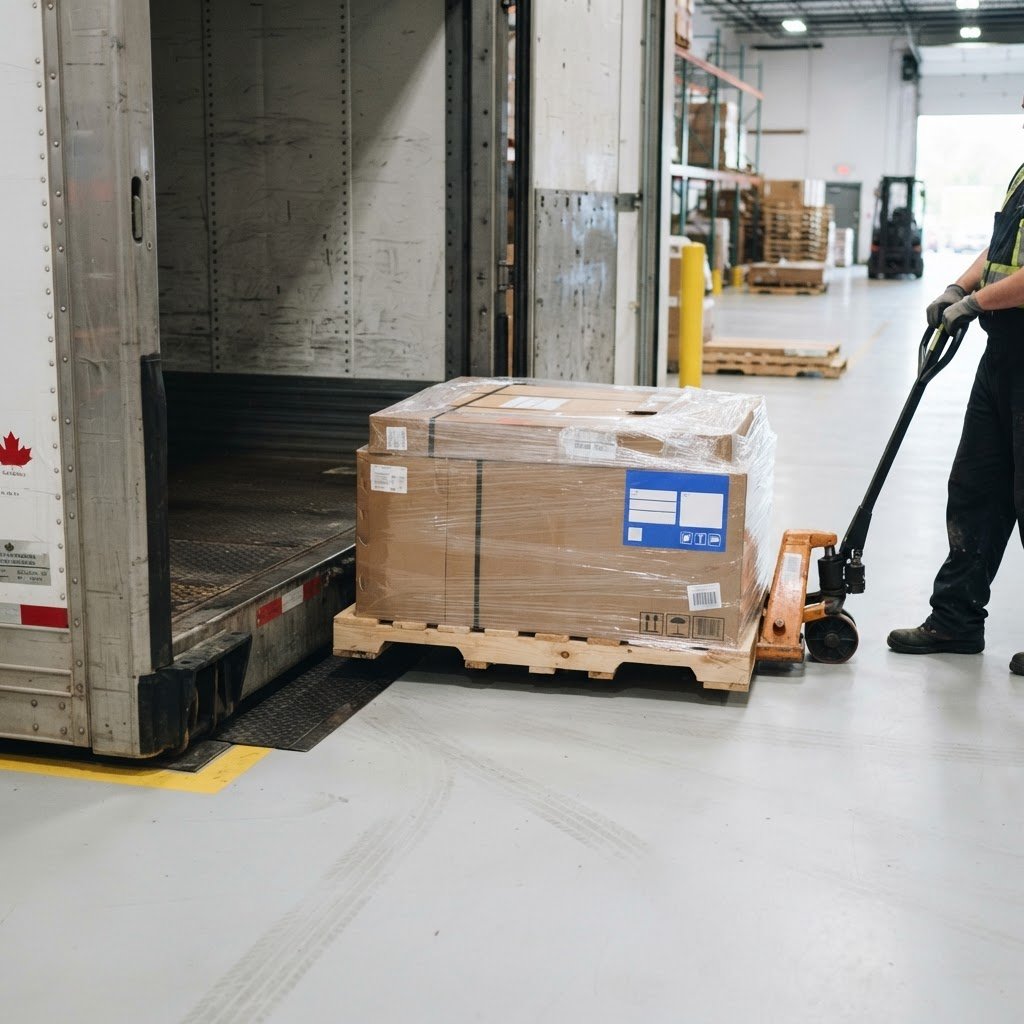
Freight classification decisions for furniture should begin with what the carrier will actually handle: the packaged dimensions, total weight, density, fragility, stackability, and any special loading requirements. Furniture often takes more cubic space than its weight suggests, while sofas, cabinetry, glass tables, mirrors, and upholstered pieces may also need handling protection that ordinary boxed freight does not. A shipment described only as "furniture" leaves too much room for reclassification after pickup.
Build a shipment record before requesting quotes
Use a consistent shipping specification for every SKU or shipment group. It gives carriers enough information to quote accurately and gives your warehouse a repeatable packing standard. For small-business pallet shipments, record the final packaged dimensions, not the unboxed product dimensions from a catalogue.
Dimensions: Measure each pallet after corner protection and stretch wrap.
Weight: Use the total shipment weight, including skids and crating.
Density: Divide shipment weight by its occupied cubic volume.
Handling: Flag glass, loose components, overlength pieces, and non-stackable freight.
Destination: Confirm docks, appointments, liftgate needs, and access restrictions.
Why density and handling change the rate
Density affects LTL freight rates because carriers sell limited trailer space as well as transportation capacity. A dense pallet of hardware may use little floor area relative to its weight, while a lightweight sectional, lamp assortment, or boxed décor shipment can consume substantial space. LTL freight shipping quotes should therefore match the freight's actual packaged footprint, because a carrier may revise charges when the shipment tender differs from the bill of lading.
Use a written classification rationale whenever an item combines low density and fragile construction. That record should include photographs, dimensions, weight, packaging description, and the product's vulnerability to crushing or stacking. It also helps your team challenge an incorrect adjustment with operational facts rather than assumptions.

Package Furniture for Repeated LTL Handling
Furniture rarely moves from origin to destination untouched. It may be transferred across terminals, loaded beside unrelated freight, and moved by forklifts or pallet jacks, so packaging must protect the product through multiple handling events. A box that looks presentable at pickup can still fail if it lacks internal restraint, edge protection, or a stable pallet base.
Prevent surface damage and shifting inside the packaging
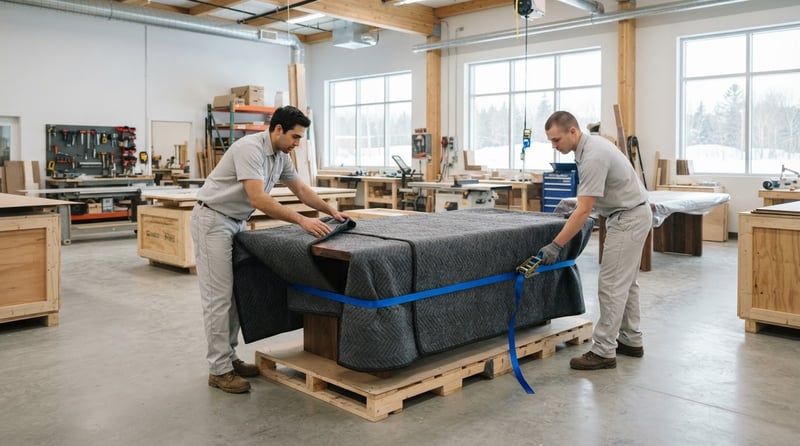
Protect finished wood, fabric, metal, and glass separately before enclosing the product. Use cushioning that prevents movement, corner guards that absorb edge impacts, and bracing that keeps components from striking one another. A packaging program with clear material, padding, bracing, and labelling instructions reduces ambiguity at the warehouse and helps limit costly damage claims.
Crate or reinforce items that cannot tolerate compression, especially glass panels, stone surfaces, mirrors, and delicate case goods. Palletize cartons so the load has a square footprint, no unsupported overhang, and a stable centre of gravity. Stretch wrap secures the unit load, but it does not replace internal protection or a rigid base.
Make claims documentation part of outbound shipping
Freight claims and liability depend on proving the condition of goods at tender, the packaging used, and the condition at delivery. Photograph finished pallets from multiple angles, retain packing records, capture serial numbers where relevant, and instruct receivers to note visible damage before signing. If a customer accepts damaged furniture without notation, the carrier's inspection process becomes harder to establish later.
Carrier liability is not the same as full product replacement value. Review the carrier's terms before shipment, assess declared-value or cargo coverage options for higher-value pieces, and keep invoices available for claim support.[1] The cheapest quote becomes costly when it leaves a high-value dining set or custom cabinet underprotected.
Choose Residential Delivery Service Before Booking
Residential furniture delivery is a service design decision, not an afterthought. A commercial receiver may have a dock, staff, and equipment, while a residential delivery may involve a driveway, condominium loading rules, a narrow entry, or a staircase that affects access and handling. LTL carriers need these requirements at booking because a driver cannot reliably solve them at the curb.
Compare curbside, threshold, and white-glove responsibilities
The difference between white-glove and curbside delivery comes down to who takes responsibility after the truck reaches the address. Curbside service generally leaves the shipment at the accessible delivery point, while inside or white-glove service adds controlled placement and may involve appointment coordination. Final placement in Southern Ontario can require planning because narrow entries, older staircases, urban access, and newly completed finishes create handling constraints.
Service level | Carrier responsibility | Best operational use | Cost visibility |
|---|---|---|---|
Curbside | Delivers to an accessible exterior point | Customers can move packaged goods independently | Quote must identify residential and liftgate requirements |
Threshold | Moves goods to the entry point | Heavy items where exterior drop-off is insufficient | Custom by carrier and destination |
White-glove | Scheduled inside placement by trained teams | Awkward, fragile, assembled, or high-touch products | Many white glove services cost about $100 to $250 per shipment.[2] |
White-glove service adds control, but it should be reserved for deliveries that require scheduled appointments, trained teams, and inside placement. These requirements change the work from basic transport into a controlled final-mile process.
Use a cost comparison that reflects real shipment risk
Consider two comparable palletized bedroom sets bound for residential customers. The first is accurately measured, braced, corner-protected, marked non-stackable when necessary, and booked with the required delivery service. The second is quoted from product dimensions, packed with insufficient internal restraint, and booked as curbside despite a destination that needs inside placement.
The first shipment can be priced against its true space and handling needs before pickup. The second can trigger reclassification, additional delivery charges, a failed-delivery attempt, or a damage claim where inadequate packaging complicates recovery. This is why a lower initial quote is not a useful comparison unless both shipments carry the same classification, packaging standard, and final-mile scope.

Lower Furniture Freight Costs Through Consolidation and Carrier Access
Consolidating compatible orders can lower cost per unit because it improves trailer-space utilization and reduces repeated pickup and terminal handling. Trucks often operate at 60% to 80% utilization, and intelligent consolidation can meaningfully reduce that wasted trailer space.[3] That gap describes a general freight opportunity, not a guaranteed result for any furniture lane.
Consolidate without creating a fragile mixed load
Group orders by destination region, delivery window, and handling profile rather than combining every available SKU. Pair stable cartons with compatible goods, protect fragile pieces from movement, and avoid placing heavy or sharp-edged cartons against upholstered or finished products. Fewer shipments can save money only when the combined pallet remains stable, accurately declared, and appropriate for the chosen service level.
For recurring Quebec and Ontario lanes, Montreal-Toronto LTL freight planning can combine scheduled replenishment with customer orders when delivery commitments allow. This approach can reduce repeated pickups and make it easier to establish a consistent packaging and documentation workflow.
Compare carrier options on service details, not rate alone
When comparing LTL carriers, evaluate whether a carrier can accept the freight as described, communicate exceptions, and handle the destination service requested. Compare shipping rates only after confirming that each quote includes the same freight details and delivery scope. Review transit expectations, residential accessorials, appointment procedures, claim terms, equipment availability, and carrier ratings alongside the quoted amount. Broad carrier network coverage matters when furniture brands need options across Quebec, Ontario, Canada, and cross-border lanes.
Truxweb gives SME shippers a direct-to-carrier marketplace where one request reaches carriers servicing the lane, allowing rate, transit-time, rating, and booking-fee comparisons before confirmation. Its direct-to-carrier marketplace approach can be practical for shippers that need to compare operational fit without relying on phone and email chains.
Conclusion
Furniture LTL succeeds when the shipment description, packaging, and delivery service all reflect the actual product and destination. Measure finished pallets, protect vulnerable surfaces, preserve claim documentation, and specify residential requirements before a carrier arrives. For Canadian brands moving regular pallet freight, Truxweb is a practical choice when direct carrier comparison, transparent booking details, and shipment visibility matter. Use Canadian LTL shipping options to compare services, then verify that the selected quote includes the classification and final-mile scope your customer experience requires. Brands that also move building materials can review our guide to doors, windows and flooring freight.
Frequently Asked Questions (FAQs)
What freight class is furniture shipped under?
Furniture freight class depends on the finished packaged shipment's density, dimensions, handling characteristics, liability exposure, and stowability, so a shipper should confirm the carrier's applicable rating method or tariff rather than assigning one class to every furniture SKU.
How does density affect LTL freight rates?
Density affects LTL freight rates because carriers must recover the cost of trailer space used by lightweight, bulky freight, making accurate post-packaging dimensions and total shipment weight essential to a reliable quote.
What is white glove delivery and when is it needed?
White-glove delivery is a scheduled, higher-touch final-mile service that uses trained teams for inside placement, and it is needed when bulky or fragile furniture cannot safely remain at an accessible exterior delivery point.
Are there hidden fees in LTL freight shipping?
Unexpected LTL charges usually result from missing shipment or access details, including incorrect dimensions, residential delivery, liftgate needs, appointment requirements, reclassification, or additional handling identified after pickup.
How do carrier liability limits work for furniture claims?
Carrier liability limits define the carrier's potential responsibility under its terms and may not equal retail replacement value, so furniture shippers should review coverage, retain condition evidence, and consider declared-value or cargo protection options.
What is the best way to ship furniture LTL in Quebec?
The best approach is to palletize or crate the finished shipment, document its dimensions and condition, confirm destination access and delivery scope, and compare carriers that can handle the lane and required residential service.
Sources
- Why LTL Shippers Need Additional Insurance Coverage — FreightWaves ↩
- What Is White Glove Delivery in Southern Ontario? — Critelli Furniture ↩
- Maximizing Trailer Utilization: Why Is It So Hard? — FreightWaves ↩
About the author

 Shipping Bikes, Kayaks and Fitness Gear LTL: A Shipper’s Guide
 LTL Shipping for Auto and Truck Parts: Bumpers, Tires, Engines