
LTL Shipping for Auto and Truck Parts: Bumpers, Tires, Engines
Shipping engines, bumpers, or tires? Discover the LTL freight classification, packaging, and carrier equipment rules that protect your shipment coast to coast.
By Mathieu van Gent · 6 min read ·

Quick Answer#
LTL shipping for engines, bumpers, and tires succeeds when the packaging matches the part's density, shape, finish risk, and pickup equipment. Engines need contained, secured skids or crates; bumpers need rigid edge and finish protection; tires need stable, banded pallet loads with dimensions declared accurately.

Introduction#
LTL shipping services can move large automotive parts across Canada reliably, but a generic pallet setup creates avoidable reclassification, handling, and damage exposure. An engine moving from Ontario to Western Canada behaves very differently in a carrier network than a bumper moving from Quebec to Atlantic Canada. Tires can take more floor space than their weight suggests, while a dense engine can exceed safe liftgate handling thresholds on a single pallet. The bill of lading must describe the shipment carriers will actually see at pickup.
Key Takeaways:
- Secure engines to leak-contained skids or crates before carrier pickup.
- Protect bumpers with edge guards, surface barriers, and rigid outer support.
- Declare tire dimensions and accessorial needs before booking the shipment.
LTL shipping requirements for engines, bumpers, and tires#
Freight class and handling requirements should follow the physical characteristics of each load, not the broad label "auto parts." A dense engine, an oversize bumper, and a stack of tires create separate risks for terminals and drivers, so freight classification must reflect accurate dimensions, packaging, and stackability before dispatch.
Prepare engines for secure terminal handling#
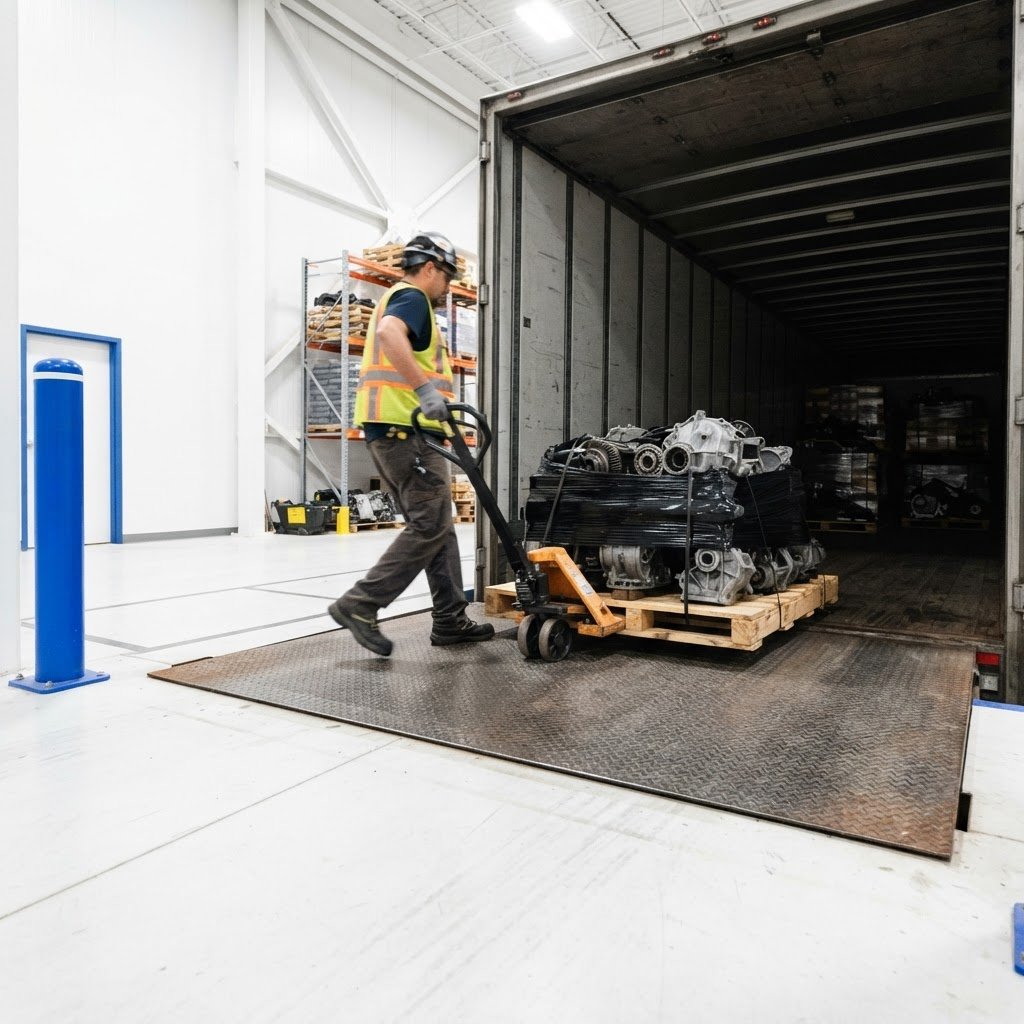
Engines require a forklift-ready skid or enclosed crate that prevents shifting, protects mounting points, and contains residual fluids. Drain fluids where appropriate and plug openings before tendering the shipment to a carrier.
- Skid base: Use a rigid base sized beyond the engine footprint.
- Containment: Add absorbent material and leak-resistant protection.
- Securement: Strap through approved anchor points to prevent movement.
- Crate walls: Use rigid protection when exposed components could be struck.
- Documentation: Record weight, dimensions, and non-stackable status accurately.
Classify dense freight without overlooking its footprint#
An engine's density can support a different freight class than a bulky tire load, but an oversized crate still affects trailer space and handling. Use the applicable freight class chart and confirm the correct NMFC freight classification from the shipment's actual description, packaging, density, and liability characteristics. A low-profile engine skid may fit a standard dry van, while a tall crate may require extra clearance or a carrier that accepts non-stackable freight.
Prevent cosmetic damage and space-related charges#
Bumpers and tires are often damaged or repriced because they are treated as ordinary pallet shipping rather than irregular freight. The shipper should communicate whether the shipment can be stacked, whether it has exposed edges, and whether its final dimensions change once wrapping, guards, or crating are applied.
Protect bumpers from edge strikes and compression#
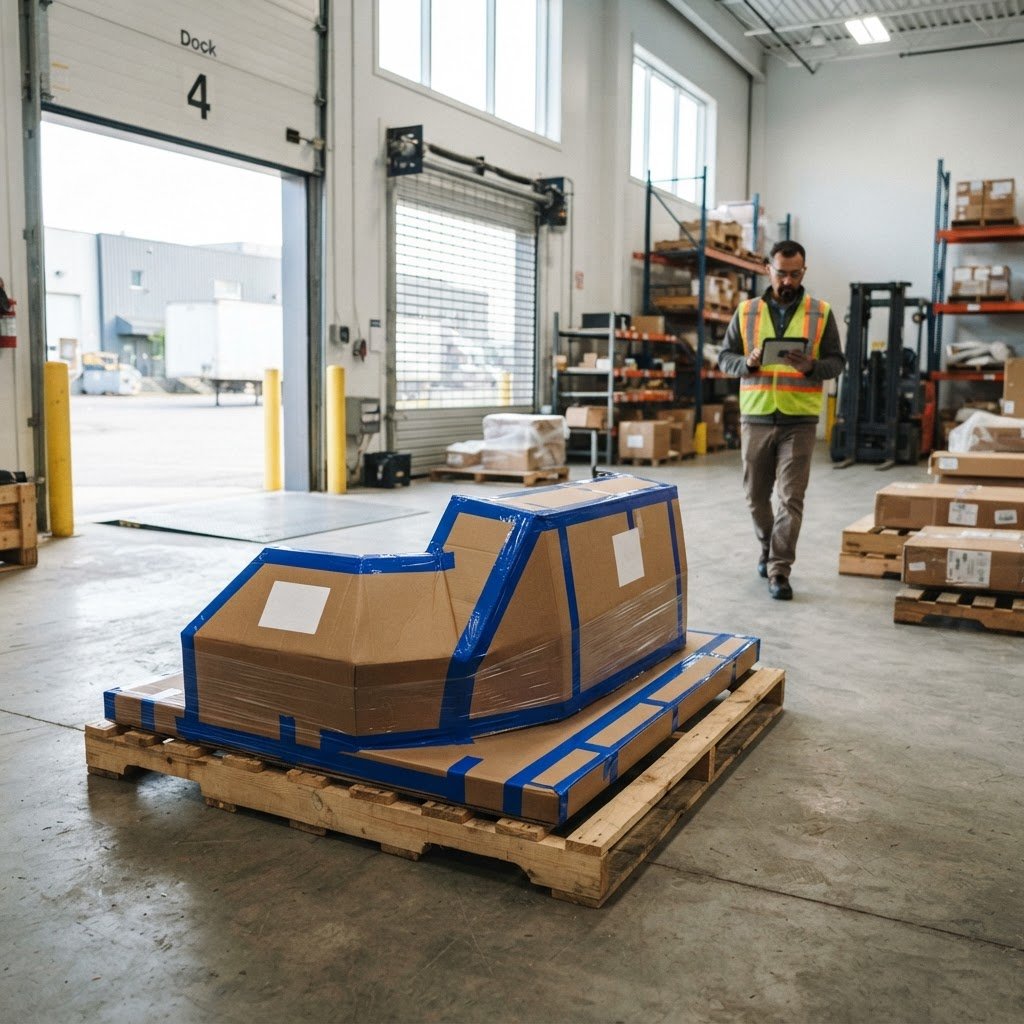
Bumpers need a clean surface barrier, reinforced edge guards, and a rigid frame or crate that prevents other freight from contacting the finished surface. Automotive pallet packaging standards can also help inform crating and palletization decisions for tires, bumpers, and engines. Wrap alone does not prevent fork impacts or compression, particularly on long interprovincial moves from Quebec through Ontario or from Ontario to Atlantic Canada. A documented LTL packaging checklist helps the shipping team verify corner protection, securement, labels, and visible condition before pickup.
Manage tire dimensions, stacking, and banding#
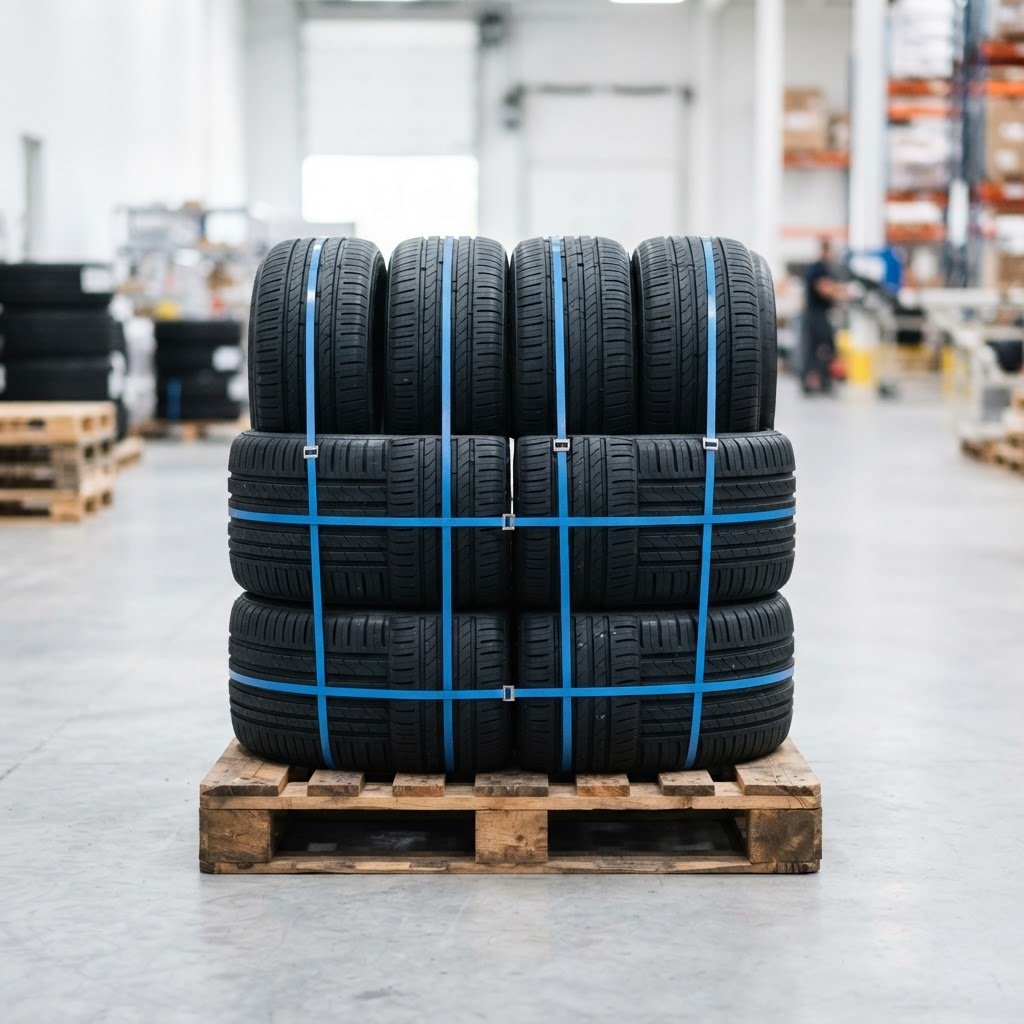
Tires should be loaded in uniform, stable layers, banded to the pallet, and wrapped so the load cannot roll or spread during cross-docking. Their billed space can rise through dimensional weight rules, even when the shipment does not feel heavy, because carriers must allocate trailer cube around round, non-cartonized freight. Measure the completed pallet, including tire overhang and protective material, rather than relying on a catalogue specification.
Book the right carrier equipment and site services#
Carrier selection should start with the load's final packed form and the conditions at both docks. A standard dry van works for many crated engines, protected bumpers, and banded tire pallets, but irregular freight may require different equipment or an appointment that matches the receiver's unloading capability.
Specify liftgate delivery and appointments before dispatch#
Request liftgate delivery when neither location has a forklift or loading dock, and place that requirement directly on the bill of lading. Standard liftgates typically have a lifting capacity between 1,000 lb and 3,000 lb (453–1,360 kg), according to liftgate loading guidance, so a heavy engine pallet above that range needs dock access, a forklift, or other planned unloading equipment. Appointment delivery also matters when a receiver needs staff present to inspect a high-value or finish-sensitive bumper before signing.
For shipments that exceed dry-van dimensions or cannot be safely loaded through standard doors, ask carriers about flatbed freight shipping and required securement before booking. Flatbeds expose freight to weather and require different load protection, so they are not a substitute for proper crating. For large LTL freight moving across Quebec, Ontario, Western Canada, or Atlantic Canada, record every accessorial requirement at booking rather than leaving the driver to resolve it at the curb.
Use complete shipment data to prevent reclassification#
Provide final length, width, height, weight, packaging type, stackability, and pickup constraints in the initial request. On Truxweb, an auto-parts distributor can compare carrier quotes, transit times, ratings, and booking fees after supplying those details, making equipment constraints visible before acceptance. Re-measure after crating an engine or building a tire stack, because the shipping configuration, not the part alone, determines carrier handling.
Conclusion#
Reliable LTL shipping for automotive parts starts with packaging that tells the carrier exactly how the freight can be moved. Crate and contain engines, rigidly protect bumper finishes, and band tire pallets after measuring their final footprint. Add liftgate, appointment, and equipment requirements before pickup so the right truck arrives for the job. For Canadian SMEs moving one to eight pallets, Truxweb is a practical way to compare carrier options while keeping shipment specifications visible at booking.
Need a carrier plan for irregular automotive freight? Compare shipping options with Truxweb before scheduling pickup.
Frequently Asked Questions (FAQs)#
What is LTL shipping?#
LTL shipping is a freight service in which multiple shippers' palletized loads share trailer capacity, making it suitable for automotive parts that do not require a full dedicated truck.
How are LTL shipping rates calculated?#
LTL shipping rates are calculated from factors such as shipment weight, dimensions, freight class, lane, accessorial services, and whether the load requires special handling or equipment.
How does freight class affect shipping cost for heavy parts?#
Freight class affects shipping cost for heavy parts because density, handling difficulty, liability, and stowability influence how a carrier prices space and operational risk.
What is dimensional weight in freight shipping?#
Dimensional weight in freight shipping is a space-based billing consideration that can increase charges when a bulky shipment occupies substantial trailer cube relative to its physical weight.
Do I need a liftgate for heavy pallet delivery?#
You need a liftgate for heavy pallet delivery when the pickup or receiving location lacks a dock or forklift and the pallet remains within the carrier's liftgate capacity.
How do I ship an engine by LTL freight?#
You ship an engine by LTL freight by draining and containing residual fluids as needed, securing it to a forklift-ready skid or crate, and declaring its final dimensions, weight, and handling requirements.
What is the best way to ship tires on a pallet?#
The best way to ship tires on a pallet is to build uniform layers, use bands and stretch wrap to prevent shifting, and measure the completed load including any overhang.
About the author
