
What Is Dimensional (DIM) Weight in Freight?
Learn what dimensional (DIM) weight means in freight shipping, how it's calculated, and how it impacts your LTL freight costs on every pallet shipment.
By Mathieu van Gent · 5 min read ·

Quick Answer#
Dimensional (DIM) weight is a carrier pricing method that converts the space a shipment occupies into a billable weight. For LTL freight, carriers may use DIM weight or actual weight, whichever is greater, so light but bulky pallets can cost more than their scale weight suggests.
Introduction#
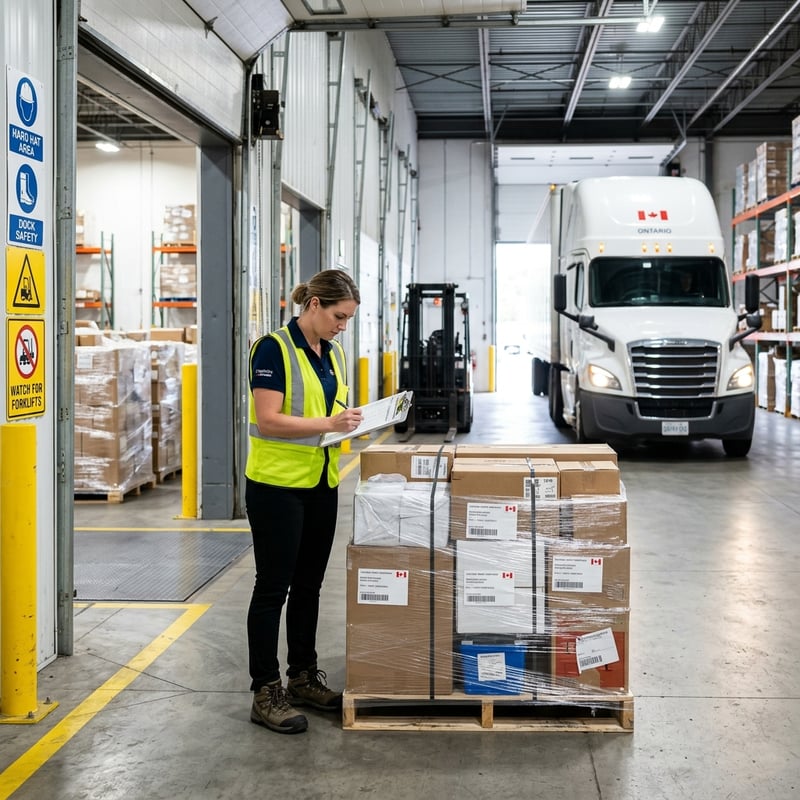
DIM weight matters because it can change an LTL shipping quote after a carrier measures the freight at pickup or at a terminal. The calculation starts with the pallet’s outside dimensions, including packaging, overhang, and stretch wrap, then compares its space-based weight with its actual weight. For Quebec and Ontario SMEs, accurate measurements protect budgets and reduce avoidable invoice corrections. A pallet that appears inexpensive to move can become costly when oversized packaging lowers its density.
Key Takeaways:
DIM weight charges for shipment space when it exceeds actual weight.
Accurate pallet dimensions help prevent unexpected LTL invoice adjustments.
Density and freight classification can both influence the final carrier charge.

How DIM Weight Affects LTL Freight#
DIM weight represents what a shipment would weigh at a carrier’s minimum accepted density. This protects carrier capacity because a low-density pallet can consume the same trailer space as a much heavier pallet, while generating less revenue if billed only by scale weight. The rule is straightforward: the carrier prices the greater of dimensional weight and actual weight.
How the dimensional weight calculation works#
A dimensional weight calculation uses length, width, and height to determine cubic volume, then applies the carrier’s conversion factor. Carriers set their own factors and may apply them differently by mode, lane, tariff, or freight agreement, so the booking quote should always reflect the dimensions actually tendered. A carrier's minimum accepted density determines when space becomes more important than actual weight.
Measure outside edges: Include skids, cartons, wrap, and any overhang.
Record actual weight: Weigh the complete, ready-to-ship pallet.
Calculate cubic space: Multiply length, width, and height.
Compare billable weights: The higher result drives the charge.
Actual weight versus DIM weight on a pallet#
Consider a pallet of lightweight foam products that occupies a large footprint but weighs far less than dense metal parts on an equally sized pallet. The carrier can apply dimensional weight because the larger cube consumes trailer space, handling capacity, and network capacity, even though the scale weight is low. This distinction belongs in every review of true LTL shipping costs because a base quote can change when declared dimensions do not match the freight.
Billing basis | What the carrier measures | Most affected freight | Cost implication |
|---|---|---|---|
Actual weight | Scale weight of the shipment | Dense, compact pallets | Weight drives billable amount |
DIM weight | Outside pallet dimensions | Bulky, lightweight pallets | Space-based weight may exceed scale weight |
Freight class | Commodity and handling characteristics | All classified LTL freight | Classification affects the rate structure |
The practical test is density: compact freight is less likely to trigger DIM billing, while large, light freight deserves extra measurement before booking. When a package falls below a carrier’s minimum density, the carrier may charge based on that minimum density rather than on actual weight.

Freight Class, Density, and Final Invoice Accuracy#
DIM weight is not the same as freight class, but both can affect what an LTL carrier charges. Freight class considers the commodity’s transportability, including density, handling, liability, and stowability, while DIM weight focuses on the shipment’s physical cube. Understanding LTL freight class helps shippers separate a classification issue from a dimension issue.
Why NMFC classification and dimensions work together#
NMFC freight classification is the commodity coding system, and freight class is the pricing tier that results from it. Dimensions help establish density, which can influence class for density-based freight, making correct measurements important beyond DIM pricing. Use an density calculator alongside the product description, packaging details, and weight when preparing a quote.
A carrier can reweigh or remeasure freight that differs from the booking details, then apply an adjustment. A current NMFC classification guide and a freight class chart reduce the risk of entering a class that does not match the commodity.
Ways to lower dimensional exposure before pickup#
Start by selecting a pallet that supports the load without unnecessary empty perimeter, then stack cartons to reduce unused height and secure them without creating overhang. Appropriate pallet sizing is especially important for freight packaging optimization, since the carrier measures the shipment’s external cube rather than the product volume inside. Also confirm that no paperwork, loose materials, or protective wrapping extends beyond the declared dimensions.
Conclusion#
DIM weight rewards accurate measurements and efficient packaging, especially for low-density pallet freight. Measure the finished pallet, compare its actual weight with its likely space-based weight, and verify that the declared freight class matches the commodity. For SMEs that need to compare LTL carrier rates online, Truxweb lets shippers compare rates, transit times, carrier ratings, and booking fees before confirming freight. That visibility helps logistics managers identify cost differences before a pallet reaches the dock.
Need clearer LTL pricing before pickup? Compare freight options and book with complete shipment details.
Frequently Asked Questions (FAQs)#
What is DIM weight in shipping?#
DIM weight in shipping is a calculated billable weight based on package volume, and carriers use it when that result exceeds the shipment’s actual scale weight because low-density freight consumes disproportionate trailer space.
How is dimensional weight calculated?#
Dimensional weight is calculated by multiplying a shipment’s outside length, width, and height, then applying the carrier’s conversion factor, which varies by carrier, service, lane, and transportation mode.
How does DIM weight affect freight cost?#
DIM weight affects freight cost by replacing actual weight as the billing basis when a pallet’s space-based weight is higher, which can create an adjustment if quoted dimensions differ from measured freight.
Is DIM weight used for LTL freight?#
DIM weight is used for LTL freight when carriers price a low-density shipment by the trailer space it occupies, although the exact calculation method and applicability depend on the carrier’s tariff and service.
How to reduce LTL shipping costs?#
To reduce LTL shipping costs, measure finished pallets accurately, eliminate unnecessary packaging volume, select the correct freight class, and provide complete pickup and delivery details before requesting carrier quotes.
What documents are needed for LTL shipping?#
LTL shipping generally requires a bill of lading with shipper and consignee details, commodity description, piece count, weight, dimensions, freight class when applicable, and any special handling information.
About the author
