LTL Montreal to Cornwall and Hawkesbury: Eastern Ontario Pallets
Shipping LTL freight from Montreal to Cornwall and Hawkesbury? Learn transit times, provincial-line tips, and freight types for this Eastern Ontario corridor.
By Max Gravel · 7 min read ·

Quick Answer#
LTL shipping from Montreal to Cornwall or Hawkesbury is a short domestic interprovincial move, so it does not involve customs clearance, but it still requires accurate pickup details, consignee hours, freight classification, and carrier scheduling. For shippers moving palletized goods, the practical goal is to secure a carrier whose linehaul and terminal schedule can meet the delivery appointment rather than assuming a short distance guarantees same-day service.
Introduction#
Eastern Ontario and West Quebec businesses need LTL freight service that reflects the realities of the Montreal-Cornwall-Hawkesbury corridor, not a generic GTA route plan. This is domestic LTL shipping, yet the provincial line can affect carrier coverage, dispatch handoffs, and delivery-day sequencing. Manufacturers, agricultural suppliers, wholesalers, and regional distributors commonly need controlled pickup and delivery windows for palletized inventory. A missed receiving window can create more disruption than the driving distance suggests.
Key Takeaways:
Domestic provincial freight does not require customs documentation.
Carrier schedules matter more than route distance for delivery timing.
Sound pallets and complete shipment details reduce avoidable exceptions.

LTL shipping for the Montreal-Eastern Ontario corridor#
Montreal to Cornwall and Hawkesbury is an interprovincial domestic lane, not an international border movement. That distinction removes customs brokerage and border-release steps, but it does not remove the operational need to match freight to a carrier serving both origin and destination. Shippers should request rates for Quebec-Ontario LTL shipping with exact postal codes, ready time, dimensions, weight, and accessorial needs because those details shape the available service options.
What moves on this short regional lane#
The corridor supports recurring B2B replenishment rather than only long-haul freight. Common loads include packaged food inputs, agricultural supplies, industrial components, finished manufactured goods, retail replenishment, and distribution-centre transfers. Businesses shipping one to eight pallets should provide the same shipment discipline as a national move because LTL freight shares trailer space and handling points with other consignments.
Manufactured components: Securely banded or wrapped for shared-trailer handling.
Agricultural goods: Clearly declare temperature or timing requirements.
Retail stock: Include receiving hours and appointment instructions.
Industrial supplies: Record dimensions, weight, and freight class accurately.
Why transit time is not just a mileage question#
Short regional distance can support fast service, but pickup cutoff times, terminal consolidation, carrier route design, dock availability, and appointment restrictions determine the actual transit commitment. Ask for the published or quoted delivery window before booking, especially for Friday pickups, limited receiving hours, or urgent production replenishment. Truxweb’s online LTL marketplace lets shippers compare carrier transit times alongside rates, which is useful when delivery timing matters as much as the freight charge.

How to prepare LTL freight for Ontario delivery#
Accurate documentation and packaging protect a short-haul shipment from delays that have nothing to do with the provincial line. The bill of lading should match the freight actually tendered, including pallet count, commodity description, dimensions, weight, freight class, pickup contact, delivery contact, and any required services. Carrier operations across provinces remain subject to commercial vehicle oversight, making clear shipment records and safe loading practices part of reliable freight execution.
Class, packaging, and delivery access affect the quote#
Freight class is a pricing and handling input, not an administrative afterthought. The NMFC System provides a standardized method for cargo pricing, and lower merchandise classes generally carry lower transportation costs than higher classes. Fragility, density, dimensions, handling difficulty, and liability can all affect how a carrier classifies freight.
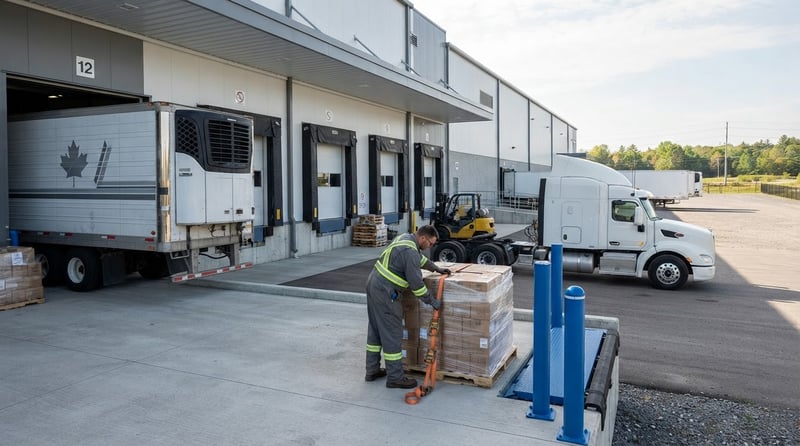
Packaging must withstand forklift handling, trailer movement, and terminal transfers. A structurally sound pallet has no broken deck boards, split stringers, or protruding nails, and freight should not overhang the pallet edge. Use enough stretch wrap passes to keep the load stable under transit vibration and handling, checking that the film holds all layers together before pickup. Check that cartons are stable, labels are visible, and the shipment is ready when the driver arrives; terminal handling can expose weak packaging that may not be apparent at pickup. If a packaging failure is found at a terminal, a carrier may refuse to continue moving the freight or charge a repackaging, reconditioning, or handling fee when its tariff allows it.
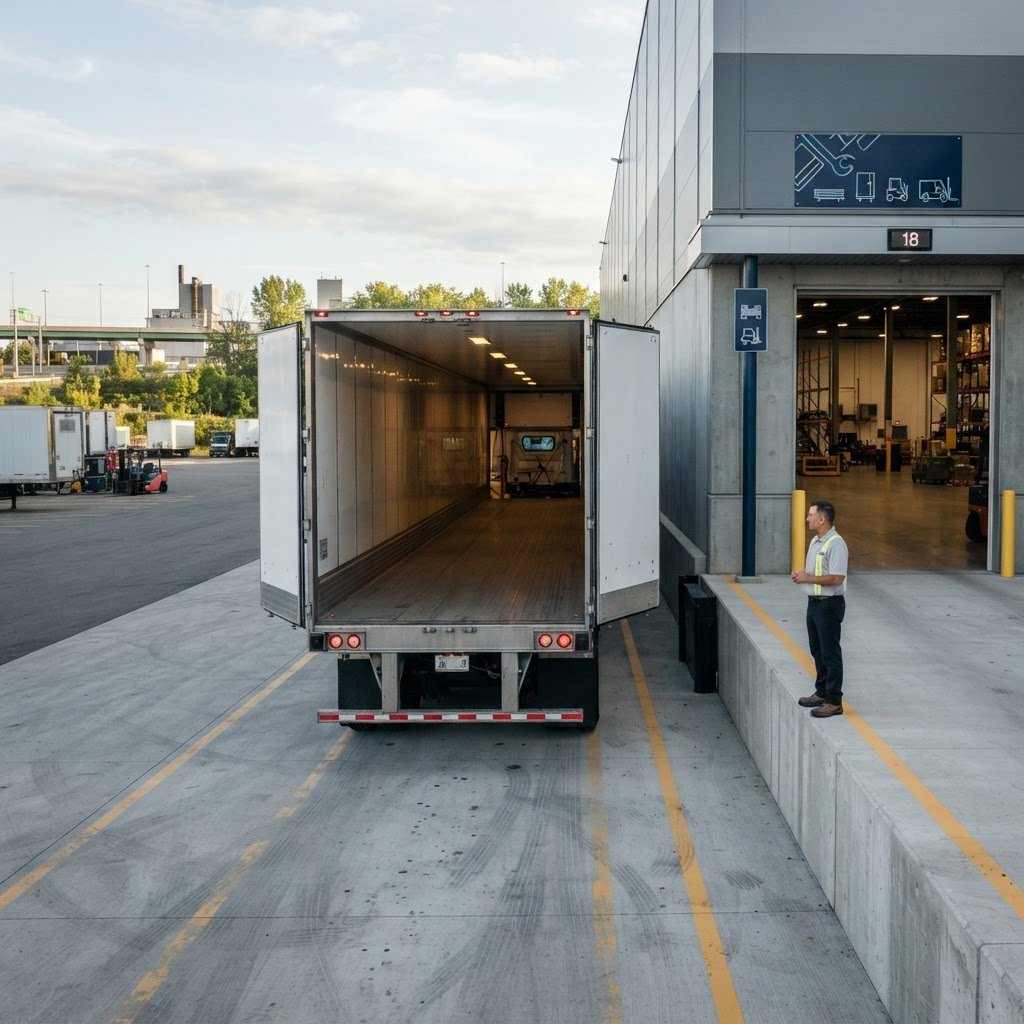
Receiving access also changes the booking requirements. A commercial dock, warehouse contact, and flexible delivery hours generally create fewer complications than a site without unloading equipment, where liftgate or dock delivery requirements must be stated before dispatch. For a fuller breakdown of quote inputs, review the factors that affect Canadian pallet shipping costs.
Comparing service approaches for regional pallet freight#
The choice is usually between a single-carrier arrangement, a traditional broker workflow, and a carrier marketplace. The key comparison is visibility before booking, since rate detail, transit commitments, and available carrier coverage can vary by shipment.
Approach | Rate and transit visibility | Carrier access | Booking process |
|---|---|---|---|
Truxweb marketplace | Carrier quotes, transit times, ratings, and booking fees shown side by side | Regional carrier network | One request, then online booking |
Single-carrier account | Carrier-specific pricing and schedule | One carrier | Direct carrier booking |
Traditional broker | Quote details depend on the broker process | Broker-selected carrier options | Phone or email coordination |
A marketplace approach is particularly practical when a shipper has variable lane demand and needs to compare options without treating one carrier’s schedule as the only available plan. For recurring manufacturing loads, LTL solutions for manufacturers can also help align pickup readiness with production and receiving schedules.
Use tracking to manage exceptions before delivery#
Shipment tracking should be paired with a named consignee contact and a response plan for missed pickups, damaged packaging, or an unavailable receiver. Before tendering, confirm who can approve a delivery change, receive a status update, and provide revised appointment instructions if needed. Truxweb provides a 360-degree dashboard, real-time email alerts, and carrier-dispatch chat, while its concierge team can help address operational issues. For an SME, that visibility is useful when a pallet shipment supports a customer order, plant maintenance requirement, or time-sensitive replenishment.
Conclusion#
Montreal to Cornwall and Hawkesbury is a domestic LTL lane, but reliable execution still depends on carrier scheduling, correct freight details, secure packaging, and confirmed receiving conditions. Do not equate a short drive with automatic same-day delivery, particularly when consolidation and terminal routing are involved. Build each request around verified pallet counts, dimensions, weights, freight class, pickup readiness, and destination access, then compare the service details before confirming the booking. For Eastern Ontario and West Quebec businesses that need to compare carrier options before tendering freight, Truxweb is a practical choice because it displays rates, transit times, ratings, and booking fees before confirmation. Use complete shipment data to avoid reclassification, accessorial changes, and preventable delivery exceptions.
Need a clearer view of regional carrier options? Compare pallet freight with Truxweb before scheduling your next shipment.
Frequently Asked Questions (FAQs)#
What is LTL shipping?#
LTL shipping is a freight service in which multiple shippers’ palletized loads share trailer capacity, allowing a business to pay for the space and handling its shipment requires rather than reserving an entire truck.
How are LTL freight rates calculated?#
LTL freight rates are calculated from shipment characteristics such as origin, destination, weight, dimensions, freight class, density, handling needs, delivery access, and carrier capacity, so an accurate quote requires complete pallet information. Under the NMFC System, lower freight classes generally have lower transportation costs, while higher classes generally cost more because their characteristics can require additional care or handling.
Is shipping freight within Canada easy?#
Shipping freight within Canada is straightforward when shipment information, packaging, contacts, and receiving conditions are complete, although interprovincial carrier schedules and service coverage still need confirmation before pickup is booked. For this corridor, provide exact addresses and postal codes, pickup and receiving hours, pallet specifications, and any special equipment or appointment requirement early in the quote process. Clear instructions help the carrier assess whether the shipment can move through its normal terminal and delivery network without an avoidable exception.
What should I look for in an LTL carrier?#
An LTL carrier should provide service coverage for the exact lane, a clear transit commitment, suitable equipment for pickup and delivery access, responsive dispatch communication, and shipment visibility that supports fast exception management. Ask whether the quoted service reflects the origin and destination postal codes, whether an appointment or accessorial is required, and what process applies if the shipment is inaccessible or packaging needs attention. Confirm that the carrier follows applicable commercial-vehicle requirements; Transport Canada provides information on motor carriers, commercial vehicles, and drivers.
How does the Ontario-Quebec border crossing affect LTL transit times?#
The Ontario-Quebec provincial crossing does not create international customs processing, but it can affect LTL transit times through carrier territory planning, terminal sequencing, dispatch cutoffs, and the availability of routes serving the consignee’s postal code.
What freight moves between Cornwall, Hawkesbury and Montreal?#
Freight moving between Cornwall, Hawkesbury, and Montreal commonly includes palletized manufacturing inputs, finished goods, food-related supplies, agricultural products, industrial parts, wholesale inventory, and retail replenishment that requires commercial delivery coordination.
About the author