Introduction
Quick Answer
The fastest way to optimize your supply chain is to focus on four operational levers: automated freight booking, side-by-side carrier rate comparison, real-time shipment visibility, and load consolidation. Together, these strategies typically cut freight spend by 20 to 40 percent while improving on-time delivery, and each can be implemented without hiring a full logistics team.
Most small and medium-sized shippers do not lose money on freight because rates are too high. They lose it in the gaps: the hour spent emailing three carriers for quotes, the pallet that shipped half-empty because no one had time to consolidate, the missed delivery that only surfaced when the customer called to complain. Rising fuel surcharges and tighter capacity in Ontario and Quebec have made those gaps expensive enough that ignoring them is no longer an option. Supply chain optimization is often framed as a strategic overhaul, but for a business shipping 1 to 8 pallets at a time, it is really a series of small, concrete decisions about how each shipment gets booked, tracked, and paid for. The businesses pulling ahead in 2026 are not the ones with the biggest logistics budgets. They are the ones who replaced manual friction with fast, transparent tools.
Key Takeaways:
Automating freight booking removes hours of manual quoting per shipment and unlocks better rates through competitive bidding.
Real-time visibility across every shipment is the single biggest driver of delivery reliability and customer satisfaction.
Consolidating loads and comparing carrier rates side by side can lower LTL spend by up to 40 percent without changing service quality.
Automate the Booking Process Before Anything Else
The single biggest source of hidden cost in most SME supply chains is not the freight rate itself, it is the time spent booking each shipment. A logistics coordinator who spends 45 minutes emailing three carriers for quotes, comparing responses in a spreadsheet, and confirming pickup by phone is burning labor hours that never show up on the freight invoice. Automation replaces that entire sequence with a single request that reaches multiple carriers at once and returns comparable quotes in minutes.
What Automated Freight Booking Actually Does
Modern automated freight booking tools take a shipment's dimensions, weight, origin, and destination and instantly push that request to a pre-vetted network of carriers. Instead of chasing responses, shippers receive a ranked list of quotes with transit times, carrier ratings, and total costs visible on one screen. Case studies from enterprise supply chain cost reduction projects consistently show that removing manual quoting steps is one of the highest-return changes a shipping team can make.
Speed: Quotes return in minutes rather than the half-day traditional email cycles require.
Competition: Multiple carriers bid on the same lane, which naturally pushes rates down.
Consistency: Every quote uses the same shipment data, eliminating errors from re-keying details into different carrier portals.
Audit trail: Every request, quote, and booking is logged automatically for later analysis and dispute resolution.
Where Automation Pays Off Most
Businesses that ship even five LTL loads a week recover several hours of coordinator time each week once booking is automated, and those hours compound into faster response times for customers and cleaner data for rate negotiations. For growing SMEs in Ontario and Quebec, this is often the first strategy worth implementing because it requires no capital investment and produces measurable savings within the first month.
Compare Carrier Rates on Every Single Shipment
Locking in a single carrier for every lane feels efficient, but it quietly costs money on the shipments where that carrier is not the best fit. Rates fluctuate based on lane density, equipment availability, and season, and no single carrier is competitive across every route. Comparing quotes shipment by shipment turns that volatility into a savings opportunity.
Why Rate Comparison Matters More Than Ever
LTL shipping rates in Canada have been shaped by fuel volatility, driver shortages, and shifting capacity across the Windsor-Quebec City corridor. A carrier rate comparison tool exposes that variability so shippers can capture the lowest available rate on every lane rather than accepting whatever the incumbent quotes. Data from SMB-focused logistics benchmarks shows that shippers who compare three or more carriers per shipment consistently pay 15 to 25 percent less than those who default to a single provider.
Truxweb's marketplace was built around this principle: businesses send one request and receive competing quotes from top-rated Canadian carriers, with 92 percent of responses arriving within 30 minutes during operating hours. That means comparison is no longer a Friday-afternoon project. It happens on every shipment, by default.

Build Real Visibility Into Every Shipment
Visibility is the difference between finding out about a late delivery from your carrier and finding out about it from your customer. For SMEs, that gap is usually the single largest source of reputational damage in the supply chain. Getting real-time tracking data into one place is not a luxury tier feature anymore, it is the baseline expectation for anyone shipping to modern B2B customers.
Move From Reactive to Proactive Operations
Most shippers still rely on carrier tracking pages, one per carrier, each with a different login and a different data format. A unified dashboard that pulls status updates from every carrier into one view changes how the team operates. Instead of reacting to a customer complaint, dispatch can see a pickup that has not been scanned, ping the carrier through real-time visibility tools, and resolve the issue before the customer notices anything.
Unified dashboard: All shipments visible in one screen, regardless of which carrier is moving them.
Automated alerts: Dispatch, pickup, in-transit, and delivery notifications sent by email or in-platform, so no one has to refresh a tracking page.
Direct communication: Chat with carrier dispatch inside the platform instead of calling and leaving voicemails.
Exception flagging: Shipments that miss a milestone surface automatically so the team can act before delays cascade.
The Downstream Impact of Better Visibility
360-degree visibility also produces cleaner data for the rest of the business. Customer service teams can answer status questions instantly. Finance can reconcile invoices against actual delivery events. Operations can identify which lanes and carriers are consistently late and adjust the routing guide accordingly. What began as a tracking upgrade becomes the foundation for continuous improvement across the entire shipping function.
Consolidate Shipments Whenever the Numbers Support It
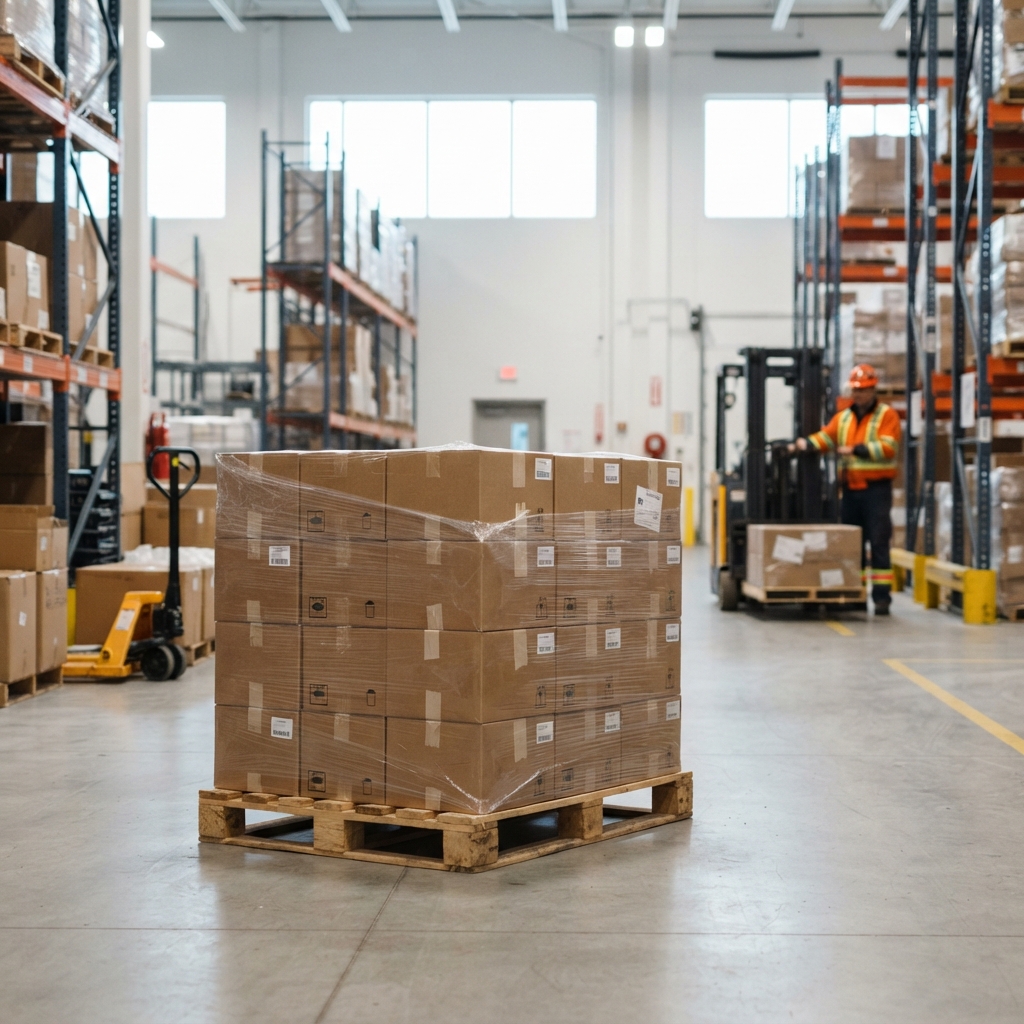
Shipping two partial pallets on Tuesday and two more on Thursday almost always costs more than shipping four together on Wednesday. LTL pricing rewards density, and a shipper who plans around that reality can shave meaningful cost off the freight budget without changing carriers or negotiating new rates.
How Consolidation Actually Works in Practice
Consolidation is not just about waiting to build a bigger load. It is about matching order timing, pickup windows, and destination clusters to reduce the number of shipments moving through the network. Effective shipment consolidation strategies combine order-cycle adjustments, better cutoff times, and destination-based batching to convert several small shipments into fewer, denser ones. According to Canadian logistics sector research, technology adoption among Canadian SMEs is the leading factor separating consistent freight savers from businesses whose costs keep drifting upward.
For Ontario and Quebec shippers moving between 1 and 8 pallets at a time, this is where the largest percentage savings often live. Two lightly loaded pallets combined into one full pallet can cut the linehaul cost roughly in half, and denser loads also tend to move faster because they are easier for carriers to plan around.

Choose the Right Marketplace and Manage Your Data
Every strategy above depends on choosing the right platform to execute it. A freight marketplace is not simply a booking tool, it is the infrastructure that decides how fast quotes come back, how many carriers compete for your freight, and how much visibility you have once a shipment is in motion. Selecting the wrong platform locks in inefficiencies that no amount of internal process improvement can overcome.
Marketplace, Broker, or Direct Carrier
Traditional brokers add margin between the shipper and the carrier, while going direct to a single carrier removes competition from the equation. A marketplace model sits between the two, giving shippers direct access to multiple vetted carriers without a broker markup. Understanding the differences between digital freight marketplaces and traditional models is the clearest starting point when evaluating options, because the underlying commercial structure affects both price and service.
Truxweb operates as a Canadian LTL marketplace where shippers connect directly with carriers that meet a minimum 95 percent customer satisfaction rating, with daily safety compliance monitoring built in. That combination of competitive pricing and enforced quality standards is what allows businesses on the platform to save up to 40 percent on freight without trading off reliability.
Use Your Data as a Continuous Improvement Loop
Once bookings, quotes, and tracking events flow through a single platform, the resulting dataset becomes the most valuable asset in the supply chain. Reviewing it quarterly reveals which carriers deliver on time, which lanes are trending more expensive, and where consolidation opportunities are being missed. Small SMEs rarely have dedicated analysts, but even a 30-minute monthly review of platform data is enough to identify one or two adjustments per quarter that keep freight spend moving in the right direction.
Conclusion
Supply chain optimization does not require a consulting engagement or a new ERP system. It requires picking the right levers and pulling them consistently: automate booking, compare rates on every shipment, invest in real visibility, and consolidate loads whenever the timing allows. Businesses that treat these as ongoing operational habits rather than one-time projects are the ones that see freight spend fall while service reliability rises. The tools to execute all four are already available, affordable, and designed specifically for SMEs shipping between 1 and 8 pallets at a time.
Ready to put these strategies into practice on your next shipment? Get instant LTL quotes with Truxweb and see how a Canadian freight marketplace can cut your shipping costs and simplify every booking.
Frequently Asked Questions (FAQs)
How can small businesses optimize supply chain costs?
Small businesses see the fastest cost reduction by automating freight booking, comparing carrier rates on every shipment, and consolidating loads whenever timing allows.
Why is 360-degree visibility important in supply chain management?
360-degree visibility lets teams catch delays before customers do, which protects both delivery reliability and long-term customer relationships.
What are the benefits of automated freight booking?
Automated freight booking cuts quoting time from hours to minutes, forces carriers to compete on price, and removes manual errors from every shipment.
Is a freight marketplace better than a traditional carrier relationship?
A marketplace usually delivers better pricing because multiple carriers bid on each shipment, while a single-carrier relationship offers less flexibility and no built-in rate competition.
What factors impact LTL shipping costs in Ontario and Quebec?
LTL costs are driven by lane density, freight class, weight, dimensions, fuel surcharges, and how quickly the shipment can be picked up and delivered.
Can digital platforms measurably improve freight logistics efficiency?
Yes, digital platforms reduce quoting time, expose lower rates through carrier competition, and centralize tracking so exceptions get resolved before they become problems.
How often should shippers review their freight data?
A monthly 30-minute review of quotes, on-time performance, and lane spend is enough for most SMEs to catch drift and adjust their routing guide accordingly.
About the Author
Marcus Holt is a supply chain operations writer focused on freight booking efficiency, shipment visibility, and cost control for growing Canadian businesses. He writes about the operational levers that separate profitable shipping programs from ones that quietly bleed margin, with particular attention to cross-border and LTL freight.