


Introduction
Cross-border shipping between Canada and the United States accounts for billions of dollars in freight movement each year, yet border regulations remain one of the most misunderstood elements for small and medium-sized businesses. Getting a competitive rate and a fast transit time means nothing if a shipment sits at the border for hours or days due to a documentation error or a compliance gap. For shippers in Ontario and Quebec moving LTL freight southbound, the regulatory landscape spans customs documentation, carrier safety certifications, dangerous goods protocols, and food inspection requirements. A single missing field on a commercial invoice can trigger a customs hold that cascades into missed delivery windows and unexpected storage fees.
Customs Documentation and Border Manifest Requirements
Every cross-border shipment begins and ends with paperwork. Canadian and American customs agencies each maintain their own documentation standards, and shippers who treat them as interchangeable quickly discover how different the requirements actually are. Understanding what each agency expects, and preparing those documents well before a truck reaches the border, is the single most effective way to prevent clearance delays.
Essential Documents for Every Cross-Border Shipment
The documentation stack for cross-border LTL shipping rules differs significantly from what domestic shipments require. Missing even one form can result in a freight hold at the port of entry, and reassembling paperwork while a truck idles at the border is both expensive and avoidable. Here are the core documents every shipper should have ready before dispatch.
- Commercial Invoice: Must include the Harmonized System (HS) tariff code, country of origin, value of goods, and buyer/seller details as outlined in U.S. customs valuation requirements
- Bill of Lading (BOL): Acts as the freight contract and must match the commercial invoice details exactly, including weight, piece count, and commodity description
- Canada Customs Invoice (CCI): Required by the Canada Border Services Agency for goods returning into Canada or for Canadian exports that require proof of origin
- PARS/PAPS Numbers: Pre-Arrival Processing System (Canada) and Pre-Arrival Processing System (U.S.) numbers that allow customs brokers to pre-clear freight before it reaches the border
- Certificates of Origin: Required under CUSMA (formerly NAFTA) to qualify for preferential tariff treatment on eligible goods
How Documentation Errors Create Costly Delays
A mismatched HS code between the commercial invoice and the customs declaration is one of the most common triggers for a secondary inspection. When this happens, the shipment gets pulled from the queue and held until the discrepancy is resolved, sometimes adding 24 to 48 hours to the transit time. For perishable goods or time-sensitive manufacturing components, that delay can mean spoiled inventory or a halted production line.
Weight discrepancies between the BOL and the actual freight are another frequent issue. Customs officers compare declared weights against weigh station data, and a significant mismatch raises a red flag that can lead to a full inspection. Shippers who rely on estimated weights instead of certified scale tickets expose themselves to this risk on nearly every load. Taking the time to verify every field before dispatch is far cheaper than paying detention fees and re-brokerage charges after the fact. Many of these customs documentation errors are entirely preventable with a pre-shipment review process.
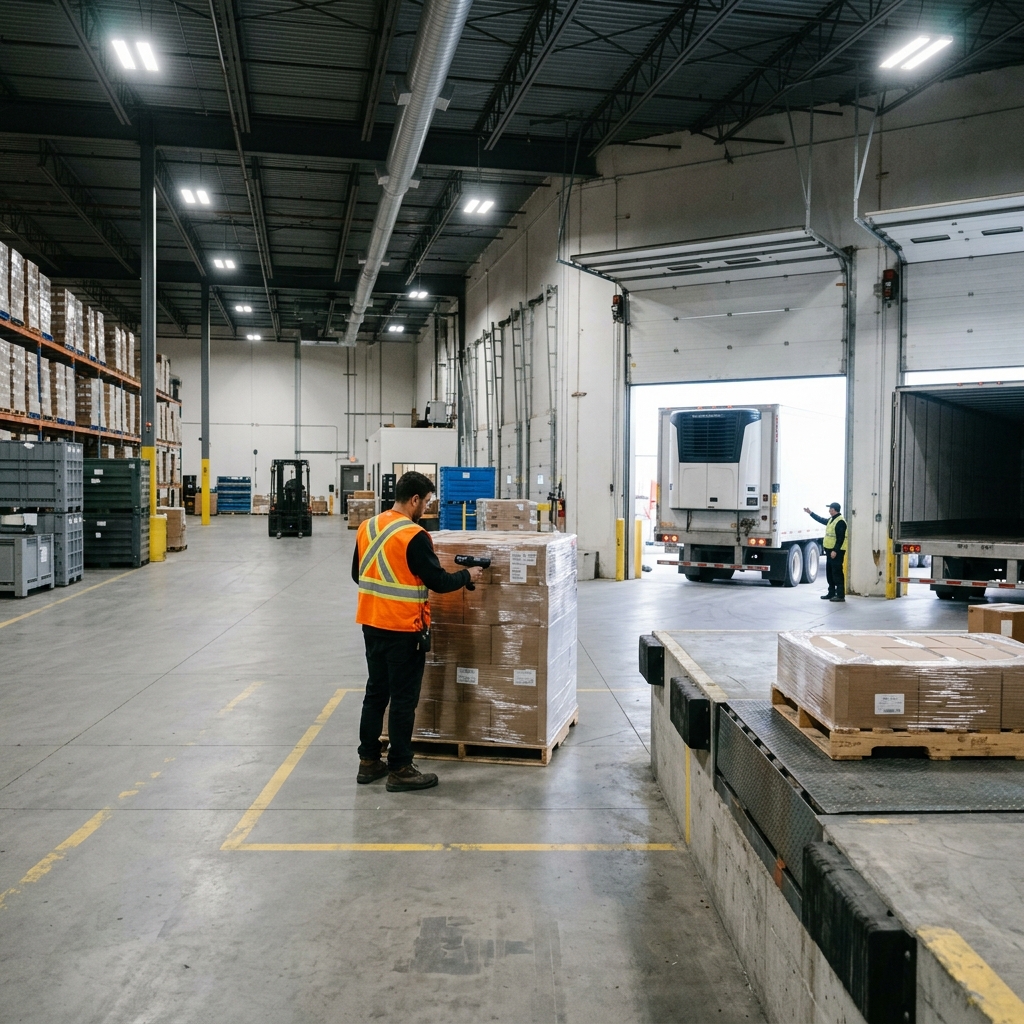
Carrier Compliance, Safety Standards, and DOT Requirements
Documentation gets freight through customs, but carrier compliance determines whether the truck is even allowed to cross the border in the first place. Both Canada and the United States enforce strict safety and operational standards on motor carriers engaged in cross-border logistics. A shipper who books with a non-compliant carrier risks having the entire load turned back at the port of entry, regardless of how perfect the paperwork is.
Safety Certifications and Regulatory Requirements for Cross-Border Carriers
In Canada, carriers must comply with the National Safety Code, which sets minimum standards for driver qualifications, vehicle maintenance, hours of service, and cargo securement. Carriers operating across provincial lines between Ontario and Quebec must hold valid operating authority in both provinces, and those crossing into the United States need additional registration under the FMCSA (Federal Motor Carrier Safety Administration).
On the American side, DOT requirements for cross-border trucking include a valid USDOT number, a satisfactory safety rating, and compliance with hours-of-service regulations that differ slightly from Canadian rules. Carriers must also maintain adequate insurance coverage that meets both countries' minimums. A carrier with a conditional or unsatisfactory safety rating from the FMCSA can be denied entry at the border, stranding the freight and forcing the shipper to arrange an expensive transfer to a compliant carrier on short notice.
How to Verify Carrier Compliance Before Booking
Shippers should never assume a carrier is border-ready just because they operate domestically. Verifying compliance means checking the carrier's safety rating through FMCSA's SAFER system, confirming their Canadian safety fitness certificate is current, and ensuring their insurance covers cross-border operations. This due diligence step is especially important for shippers shipping to the USA from Canada for the first time.
Platforms like Truxweb simplify this process by monitoring carrier compliance daily through SaferWatch integrations and requiring all listed carriers to maintain a minimum 95% customer satisfaction rating. This removes the manual verification burden from shippers and reduces the risk of booking with a carrier that could be flagged at the border. When comparing carriers for a cross-border freight shipment, compliance status should carry at least as much weight as price.
Regulated Goods, Inspections, and Practical Compliance Steps
Beyond standard customs clearance and carrier safety, certain categories of goods face additional layers of regulation that can catch unprepared shippers off guard. Food products, hazardous materials, and controlled substances each carry their own inspection and documentation requirements that operate independently from standard customs processes. Knowing whether your freight falls into a regulated category, and preparing accordingly, is what separates smooth border crossings from expensive delays.
Special Requirements for Regulated and Restricted Commodities
Food and agricultural products crossing the Canada-U.S. border must comply with inspection requirements from both the Canadian Food Inspection Agency and the U.S. FDA or USDA, depending on the product type. Fresh produce, dairy, and meat products are subject to phytosanitary certificates, prior notice filings, and potential physical inspections at the port of entry. Shippers moving these commodities need to build extra buffer time into their cross-border transportation planning to account for inspection queues.
Dangerous goods add another dimension of complexity. Any shipment containing hazardous materials must comply with Transport Canada's Transportation of Dangerous Goods (TDG) regulations on the Canadian side and the U.S. DOT's Hazardous Materials Regulations (HMR) on the American side. Proper placarding, safety data sheets, and specialized packaging are non-negotiable. A TDG violation discovered at the border can result in the entire truck being turned away, plus significant fines for both the shipper and carrier. These requirements highlight why LTL freight between Canada and the U.S. differs from domestic shipping in meaningful ways.
Building a Pre-Shipment Compliance Checklist
The most effective way to stay compliant is to treat border preparation as a standardized process rather than a last-minute scramble. A pre-shipment compliance checklist should cover document verification (commercial invoice, BOL, certificates of origin), carrier qualification (safety rating, insurance, operating authority), and commodity-specific requirements (inspection certificates, dangerous goods documentation, CUSMA eligibility).
Shippers who regularly move cross-border LTL shipments benefit from creating commodity-specific templates that pre-populate recurring fields like HS codes, supplier information, and standard packaging descriptions. This approach reduces the chance of human error and speeds up the booking process. Truxweb's digital platform supports this kind of streamlined workflow by consolidating carrier communication, booking confirmation, and shipment tracking into a single logistics dashboard, making it easier to keep every shipment's compliance documentation organized and accessible. Reviewing customs clearance mistakes that commonly slow down freight is another practical step toward building a reliable compliance routine.
Conclusion
Canada US border regulations touch every stage of a cross-border shipment, from the documents prepared before pickup to the carrier's safety certifications verified at the port of entry. Shippers who invest time in understanding customs documentation, carrier compliance, and commodity-specific inspection requirements position themselves to avoid the delays and penalties that derail less-prepared competitors. Building a repeatable compliance process, verifying carrier qualifications before every booking, and using digital tools to centralize shipment data transforms border crossing from a bottleneck into a predictable, manageable step in the supply chain.
Ready to simplify your cross-border shipping? Get started with Truxweb and connect with compliant, top-rated carriers for your next Canada-U.S. LTL shipment.
Frequently Asked Questions (FAQs)
What documents are needed for cross-border freight in Canada?
Every cross-border freight shipment requires a commercial invoice, bill of lading, Canada Customs Invoice or U.S. customs entry documents, PARS or PAPS pre-clearance numbers, and a CUSMA certificate of origin if the goods qualify for preferential tariff treatment.
What are customs requirements for LTL shipments?
LTL shipments must clear customs with accurate commodity descriptions, HS tariff codes, declared values, and pre-arrival processing numbers, and each individual shipment on a consolidated load requires its own separate customs entry documentation.
How do border regulations affect freight costs?
Non-compliance with border regulations can add detention fees, re-brokerage charges, storage costs, and penalty fines that frequently exceed the original shipping cost of the load itself.
How long does border clearance take for freight?
With proper pre-clearance documentation and a compliant carrier, freight can clear the border in under an hour, but missing paperwork or secondary inspections can extend clearance to 24 to 48 hours or longer.
How do cross-border shipping regulations compare to domestic rules?
Cross-border shipments require customs brokerage, dual-country safety compliance, border manifest filings, and commodity-specific inspections that domestic shipments within Canada or the United States do not face.