LTL for Sporting Goods: Shipping Bikes, Kayaks, Fitness Gear
A practical LTL freight guide for sporting goods shippers: how bikes, kayaks, and fitness equipment each need different packaging approaches.
By Max Gravel · 8 min read ·

Quick Answer#
LTL shipping for bikes, kayaks, and fitness equipment succeeds when the packaging matches the product’s shape, weight distribution, and handling points. Bikes need protected protrusions, kayaks need rigid support across their length, and dense fitness gear needs immobilization that prevents pallet movement and load shift.
Introduction#
Sporting goods LTL freight is not one packaging problem with three product labels. A pedal can puncture a bike carton, a kayak can flex between support points, and unsecured weight plates can turn a stable pallet into a dangerous load. Freight class and carrier pricing also reflect density, dimensions, handling difficulty, and liability, so a measurement error or weak crate can create charges and claim disputes after pickup. The practical objective is to deliver a shipment that a terminal can move safely without guessing where it can be lifted, stacked, or restrained.
Key Takeaways:
- Bikes require protection for frames, forks, handlebars, pedals, and shifting components.
- Kayaks need long, rigid support to prevent flexing and side-impact damage.
- Fitness equipment needs balanced pallets, blocked components, and secure weight distribution.
LTL Shipping for Irregular Sporting Goods#
LTL shipping works for sporting goods when the shipment is built for repeated terminal handling rather than a single direct delivery. The carrier sees the full shipping unit, including pallet footprint, crate height, overhang, exposed surfaces, and stability, not merely the retail product inside. Accurate dimensions should be captured after final wrapping and bracing because the finished unit is what drives carrier acceptance and quoted freight rates.
How Freight Class Applies to Shape and Handling#
Freight class is influenced by density, stowability, handling, and liability, meaning two sporting goods shipments with similar weights can move differently through an LTL network. Use the freight class factors and an NMFC classification guide as planning frameworks, then describe protrusions, unusual length, crating, and stackability accurately when requesting a quote.
- Density: Low-density freight occupies disproportionate trailer space.
- Stowability: Long or non-stackable units restrict trailer loading.
- Handling: Fragile shapes require more careful terminal movement.
- Liability: Damage-prone goods can affect classification and pricing.
Measure the Finished Shipping Unit#
Measure length, width, height, and total weight only after the product is palletized or crated, with no compression of protective material. Dimensional weight calculations matter especially for low-weight, long freight such as kayaks, while dense strength-training equipment may be driven more by its actual mass and footprint. Moving a shipment into a higher freight class increases its per-hundredweight rate, which is why classification details must be correct before tendering.
Use the freight class system to frame the request, but do not assign a class from the product name alone. According to NMFTA's classification guidance, correctly classing a shipment helps secure the best possible rate, while misclassification can raise its shipping cost. The packing method changes density, dimensions, handling exposure, and sometimes the applicable commodity description.
Bike, Kayak, and Fitness Gear Packaging Methods#
Each category needs a different restraint strategy because the main risk is different. Bikes are vulnerable at outward-facing components, kayaks are vulnerable along their unsupported span, and fitness equipment is vulnerable when concentrated mass shifts through packaging during a turn, dock transfer, or forklift movement.
Pack Bikes Around Their Protruding Parts#
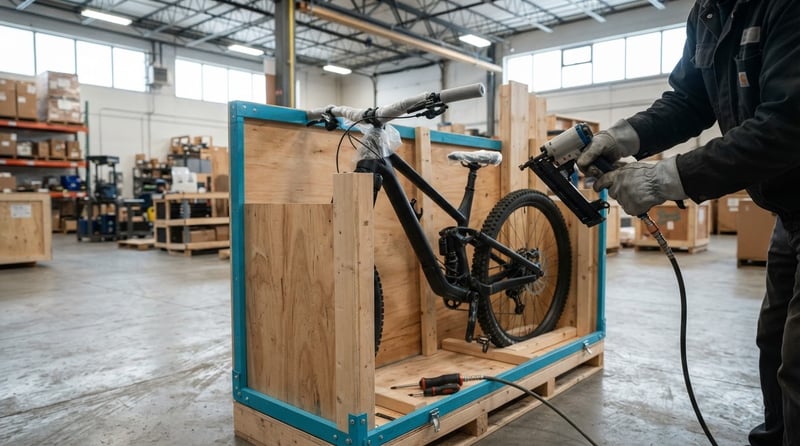
For bicycles, reduce the profile before boxing or crating: secure the fork, immobilize the handlebars, protect the derailleur area, and prevent pedals or chainrings from contacting the carton wall. A rigid outer carton can work for a properly disassembled bike, but a reusable crate is more appropriate when the bike has high-value components, limited internal clearance, or a route involving multiple handling events. Keep accessories in separate internal cartons so loose tools, wheels, and hardware cannot strike the frame.
Label lift-sensitive areas and place the bike upright only if the packaging is designed to preserve that orientation. The most common claim issue is visible external damage paired with poor internal restraint, where a carrier can reasonably argue that the product was free to move inside its own package. Reference an LTL freight class chart only after confirming the completed unit’s density and commodity details.
Crate Kayaks to Control Flex and Length#
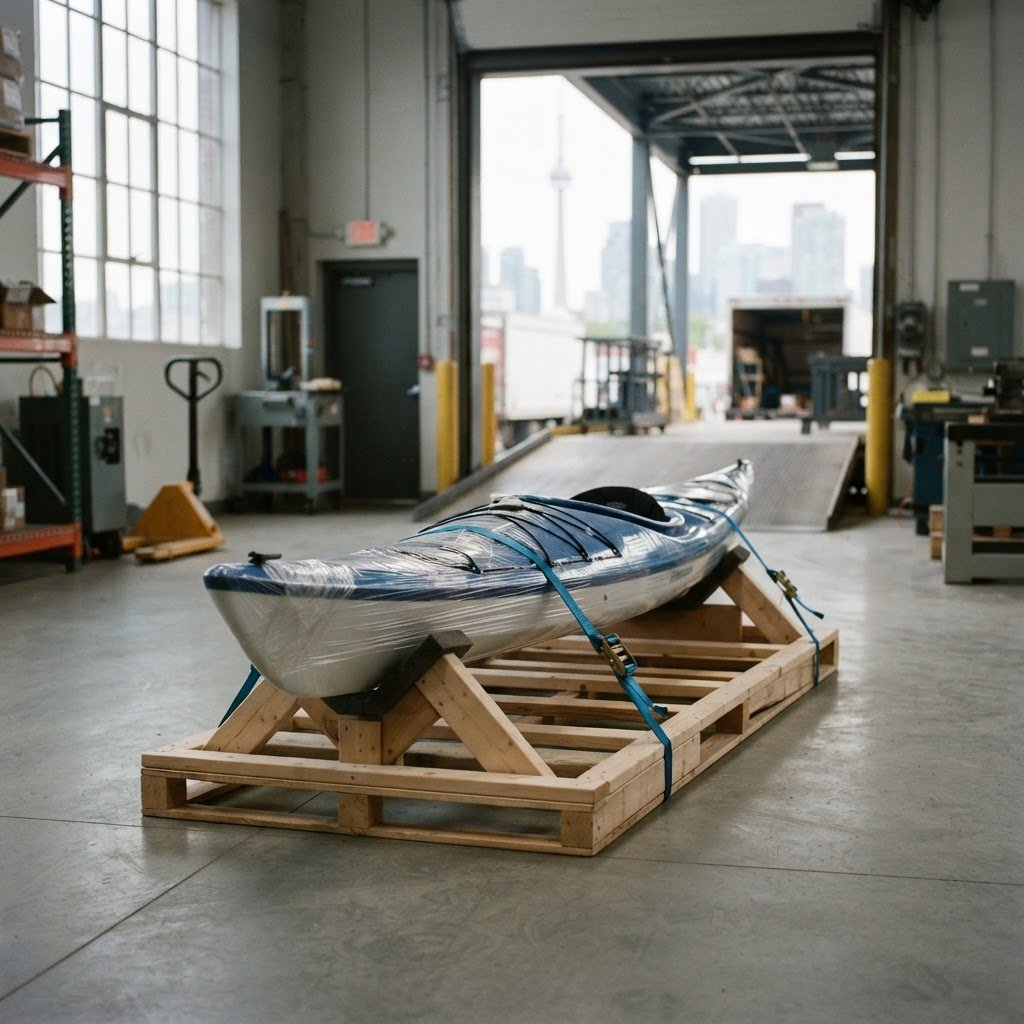
Kayaks should sit in a long, rigid cradle with support placed under structurally strong areas rather than suspended from thin hull sections. Use shaped foam or padded blocks to stop lateral rolling, then attach the kayak to the base without overtightening straps that could deform the hull. Cap or shield bow and stern areas, and ensure no strap, rack edge, or pallet board can rub through the finish during vibration.
A kayak’s low weight-to-size ratio makes it difficult to stow beside compact freight, so oversized freight crating should make the load clearly forkable and resistant to side contact. Do not allow the hull, bow, stern, or protective wrap to extend beyond an unprotected base where a forklift, pallet jack, or adjacent shipment can catch it.
Preparing Dense Fitness Equipment for Pallet Freight#
Fitness gear often looks simpler to ship because it is compact and heavy, but concentrated mass raises the consequences of poor pallet construction. A pallet that is adequate for cartons may fail under a squat rack component, exercise bike, stack of plates, or machine base when the load is not distributed evenly across the deck.
Build a Stable, Non-Shift Pallet#
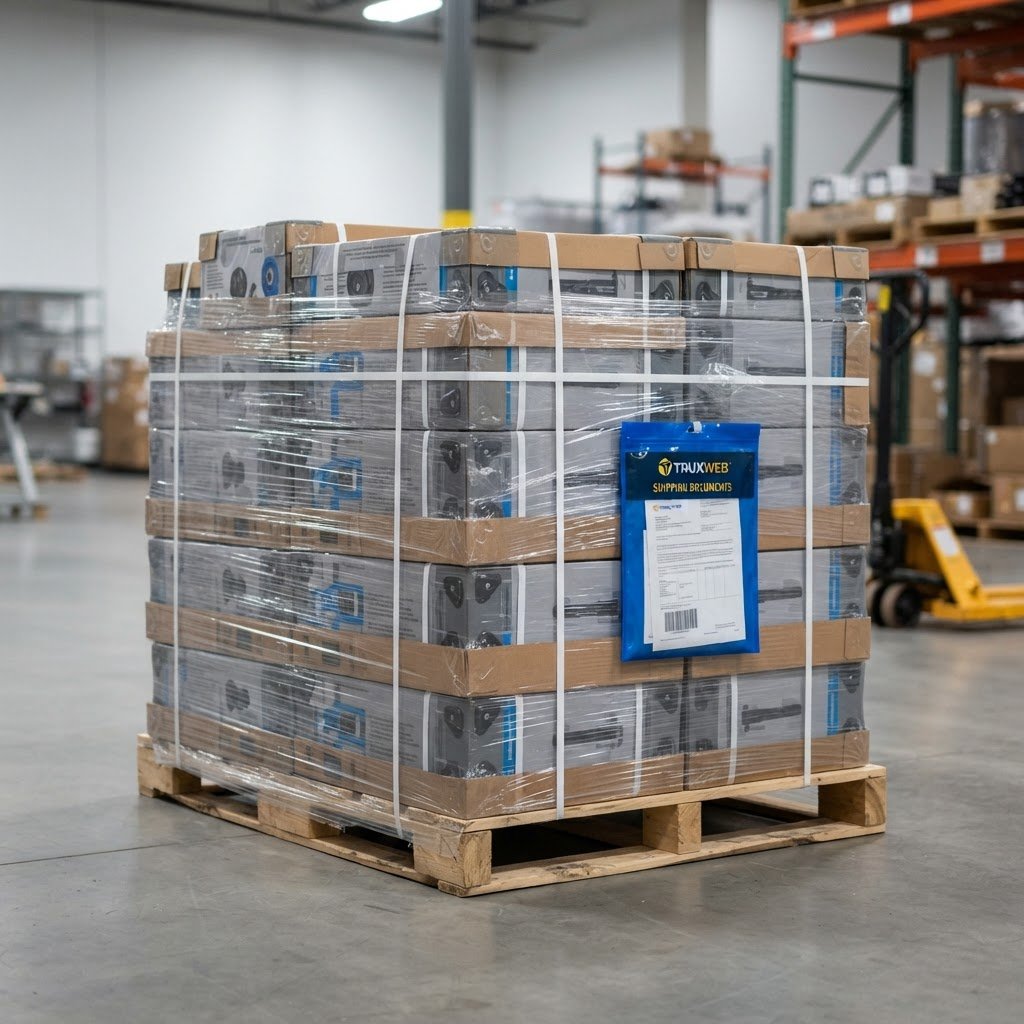
Place the heaviest components low and centered, with weight plates, kettlebells, and metal assemblies blocked against movement. Use an appropriately rated pallet, corner protection, banding, stretch wrap, and a rigid top cap where it helps keep cartons together. Packaging for fragile components such as consoles, cables, screens, and adjustment mechanisms should be kept separate from dense metal parts, even when both ship on the same pallet.
For an exercise cycle or other assembled machine, remove or protect movable accessories and prevent rolling casters from migrating during transit. Consult an NMFC codes chart when framing the commodity description, but the final freight description still needs the actual packed dimensions, total weight, and packaging method. For loads moving between Canada and the United States, the LTL packaging requirements should be reviewed alongside the commercial documents because damaged or inaccessible packaging can delay inspection and release.
Compare the Packaging Decisions Before Booking#
The table below separates the operational decisions that change most across the three product types. It is not a substitute for a carrier quote, since pricing is custom to the lane, final dimensions, weight, commodity description, and service requirements.
| Product type | Primary packaging method | Freight-class pressure | Most important damage control |
|---|---|---|---|
| Bikes | Reinforced carton or rigid crate | Protrusions and handling complexity | Immobilize derailleur, pedals, bars, and frame |
| Kayaks | Long cradle crate or supported base | Length and low density | Prevent hull flexing and lateral movement |
| Fitness gear | Blocked, banded pallet or crate | Dense weight and load stability | Center mass and isolate fragile components |
The common rule is simple: make the shipping unit behave like a stable, rectangular load wherever possible. Rectangular containment does not eliminate classification concerns, but it gives the carrier safer lift points and reduces exposure from odd shapes.
For Quebec and Ontario businesses, Truxweb broadcasts one quote request to every carrier on the network servicing the lane, letting shippers compare transit times, ratings, and booking fees side by side after entering the finalized pallet or crate specifications. This matters when a kayak crate or multi-pallet gym shipment requires a carrier that can accept the actual dimensions instead of an estimate based on the product catalogue.

Conclusion#
Sporting goods freight is easier to control when packaging is designed around the item’s failure point, not its retail presentation. Protect bike protrusions, build rigid longitudinal support for kayaks, and stabilize dense fitness equipment from the pallet deck upward. Document finished dimensions and weight before booking, photograph the secured load, and keep the shipping description aligned with the unit the carrier will collect. For SMEs moving one to eight pallets across Canada or into the United States, Truxweb is the practical choice when direct carrier comparison and final shipment details need to be handled in one workflow.
Ready to quote a properly prepared sporting goods shipment? compare LTL options with Truxweb using your final pallet or crate dimensions.
Frequently Asked Questions (FAQs)#
How is LTL freight class determined for irregular items?#
LTL freight class for irregular items is determined by the completed shipment’s density, stowability, handling requirements, and liability exposure, so an item’s bare product weight or catalogue dimensions cannot reliably establish its classification before it is packed.
What freight class is a bike or kayak?#
The freight class for a bike or kayak depends on its commodity description and final packaged density, dimensions, and handling characteristics, which is why a boxed bicycle and a long crated kayak should not be assigned a class solely from their product category.
How do I calculate freight shipping costs for oversized items?#
Freight shipping costs for oversized items are calculated from the carrier’s quoted lane, final dimensions, weight, classification, and service needs, while long crates and non-stackable designs can increase the space and handling constraints reflected in the quote.
How do I package a kayak for LTL shipping?#
Packaging a kayak for LTL shipping requires a rigid supported base, padded hull contact points, restrained lateral movement, protected ends, and fork-safe clearance so the hull does not flex, roll, or contact handling equipment during terminal transfers.
How do I prevent bike damage during LTL shipping?#
Preventing bike damage during LTL shipping requires immobilizing the frame and wheels, protecting pedals and the derailleur, securing handlebars, and using internal bracing that stops components from striking the carton or crate during handling.
Is LTL shipping safe for fragile sporting goods?#
LTL shipping can be safe for fragile sporting goods when the shipment is engineered for repeated handling with rigid containment, internal restraint, protected edges, clear lift access, and documented pre-pickup condition, rather than relying on retail packaging alone.
How much does it cost to ship a kayak by freight in Ontario?#
The cost to ship a kayak by freight in Ontario varies by origin, destination, crate dimensions, weight, carrier capacity, and accessorial needs, so an accurate price requires a quote based on the finished protected shipping unit rather than the kayak alone.
About the author