
LTL Rates for Shopify Stores: Shipping Pallets to Retailers and 3PLs
A breakdown of how retailer and 3PL receiving requirements, not carrier choice, drive LTL pallet shipping costs for growing Shopify wholesale sellers.
By Max Gravel · 6 min read ·

Quick Answer
For Shopify stores moving wholesale orders, LTL shipping costs are often determined by the receiving location's rules, not simply the carrier's rate. Retail distribution centres and 3PL warehouses can add appointment, compliance, receiving, and rework costs when a pallet arrives outside their required process.
Introduction
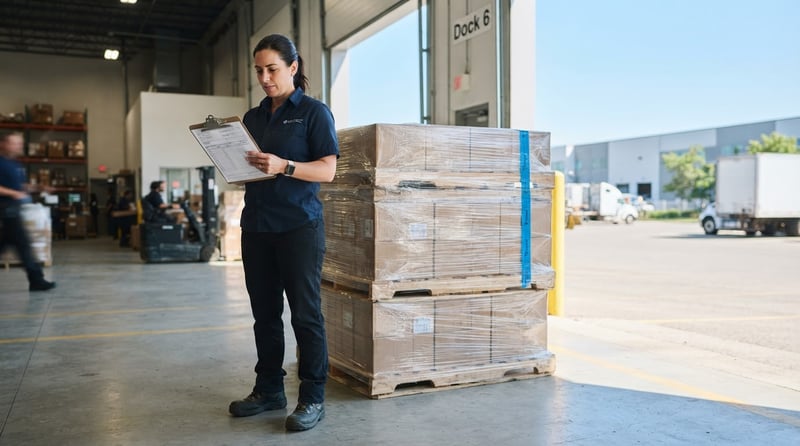
Pallet shipping changes the operating model for a growing Shopify seller because the shipment must satisfy the destination before it can be accepted. A retailer may require a booked delivery window, precise labels, matching purchase-order data, and a prescribed pallet build. A 3PL may charge for inbound handling, inspection, storage preparation, or pallet rework. The truck can arrive on time and still create an avoidable cost if the load is not ready for the receiving dock.
Key Takeaways
- Destination requirements can outweigh the quoted linehaul rate.
- Retailers focus on routing-guide compliance and delivery appointments.
- 3PLs focus on efficient inbound receiving and pallet readiness.
LTL Shipping Starts With the Receiving Location
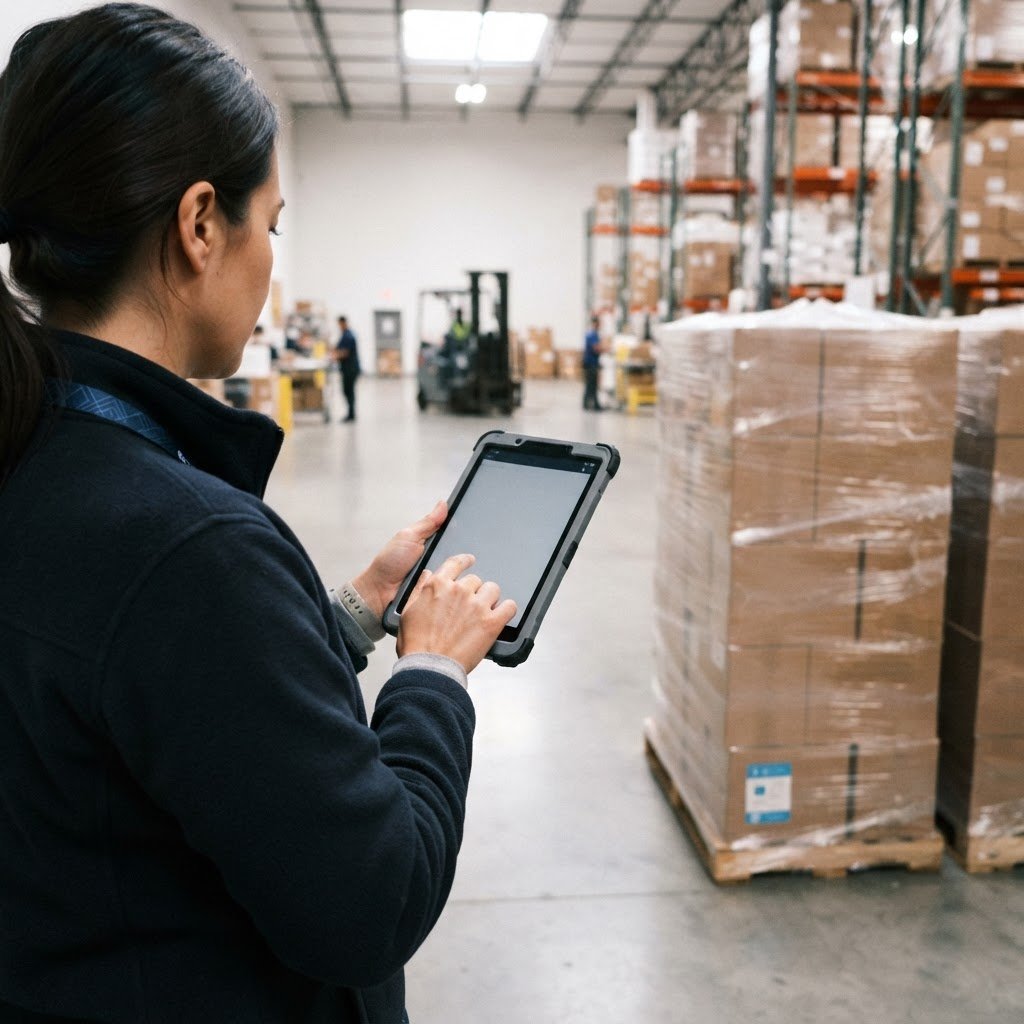
Parcel workflows are built around individual orders and carrier pickup scans, while wholesale LTL freight is built around receiving rules, dock availability, and document accuracy. Before booking pallet freight, obtain the retailer routing guide or the 3PL inbound guide, then compare every instruction with the purchase order and pallet specification.
What Must Change From a Parcel Workflow
Wholesale freight requires the shipper to manage information that a consumer parcel label rarely captures. Treat the destination guide as an operating instruction, because it can govern carrier selection, acceptable delivery windows, label locations, and how cartons are arranged on a pallet.
- Purchase order: Match every label and document to it.[1]
- Appointment: Confirm who books the delivery slot.
- Labels: Use required barcode format and placement.
- Pallet build: Verify carton count, TI-HI, and stability; HI is the number of layers stacked within the maximum height.
- Dock access: Confirm receiving hours and equipment needs.
Why Pallet Details Affect the Final Bill
Incorrect dimensions or an unstable load can trigger handling delays, rework, or refusal at the dock. A pallet configuration calculator illustrates the commercial effect of poor cube use: one example shows TI = 16 and HI = 3, or 48 cartons per pallet, while a separate example in the same tool shows a 480 lb pallet calculating to 7.2 lb/ft³ density.[2] Confirm dock delivery requirements before dispatch, including whether the consignee has a staffed dock and can unload the shipment.
Retailer Requirements Create LTL Shipping Risk
Retailers receive high volumes against tightly controlled purchase orders, so they use routing guides to make inbound freight predictable. For distributors replenishing retailers through LTL shipping, a missed appointment or non-conforming pallet can become a chargeback even when product quality is not in question.
Appointments, Labels, and Chargebacks
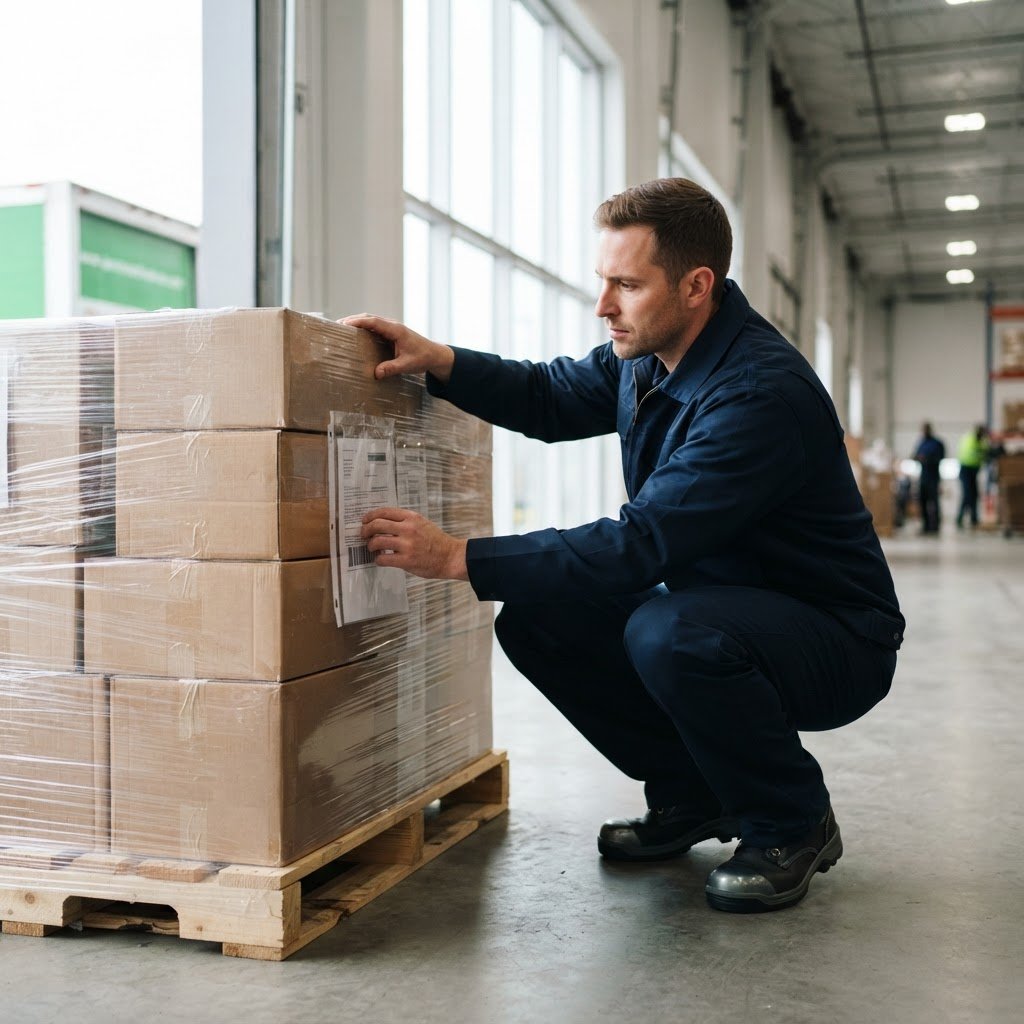
Retailer guides can specify which carriers may be used, how appointments are booked, and the delivery windows a supplier must meet. They can also require cartons and pallets to carry data that matches the purchase order exactly, including prescribed label locations. Routing-guide compliance failures, such as missed appointments or mismatched labels, are a recurring source of retailer chargebacks for suppliers shipping into distribution centres.
Barcode compliance is equally operational: a label may scan successfully but still create a chargeback if its placement, barcode type, or printed content differs from the guide. Use GS1 barcode requirements to align product identification before the shipment reaches the dock.[3]
Retail Delivery Versus 3PL Inbound Receiving
These destinations are not interchangeable. A retailer is checking a supplier against a purchase order and routing guide, while a 3PL is receiving inventory into an operational warehouse flow that may involve unloading, counting, inspection, and put-away.
| Destination | Main control point | Common cost exposure | Shipment preparation |
|---|---|---|---|
| Retailer distribution center | Appointment and routing guide | Chargebacks or delivery exceptions | PO-matched labels and approved pallet pattern |
| 3PL warehouse | Inbound receiving procedure | Receiving, rework, or handling fees | Accurate pallet count, TI-HI, and inventory documents |
The practical difference is accountability: retailer shipments must conform to vendor rules, while 3PL shipments must arrive in a condition the warehouse can receive efficiently.
How to Prepare Pallets for a 3PL
3PL inbound costs are usually driven by the work needed to turn an arriving pallet into available inventory. Ask for the inbound schedule, receiving instructions, documentation requirements, and any fees for unloading, inspection, relabelling, restacking, or special handling before freight shipping is booked.
Build a Receiving-Ready Inbound File
Send the 3PL the expected arrival details, purchase order or inbound reference, pallet count, SKU and carton information, and any special handling notes. If a pallet must be rebuilt because cartons exceed the approved pattern or labels cannot be scanned, the warehouse has to spend labour correcting a supplier-side issue.
For marketplace-bound inventory, fulfillment center shipping needs the same discipline: the destination reference, pallet count, labels, and delivery booking should agree before pickup. This matters most for marketplace programs with strict inbound windows, where one missing scan or mismatched label can push the appointment to a later date.
Use the Destination Guide Before Comparing Quotes
Rate comparison is useful only after the shipment profile is accurate. Compare retail replenishment shipping requirements and accessorial freight charges before evaluating quotes. Truxweb lets Quebec and Ontario SMEs compare carrier quotes, transit times, ratings, and detailed booking fees, while its concierge team can help resolve operational issues that arise between shipper, carrier, and receiving facility.
Conclusion
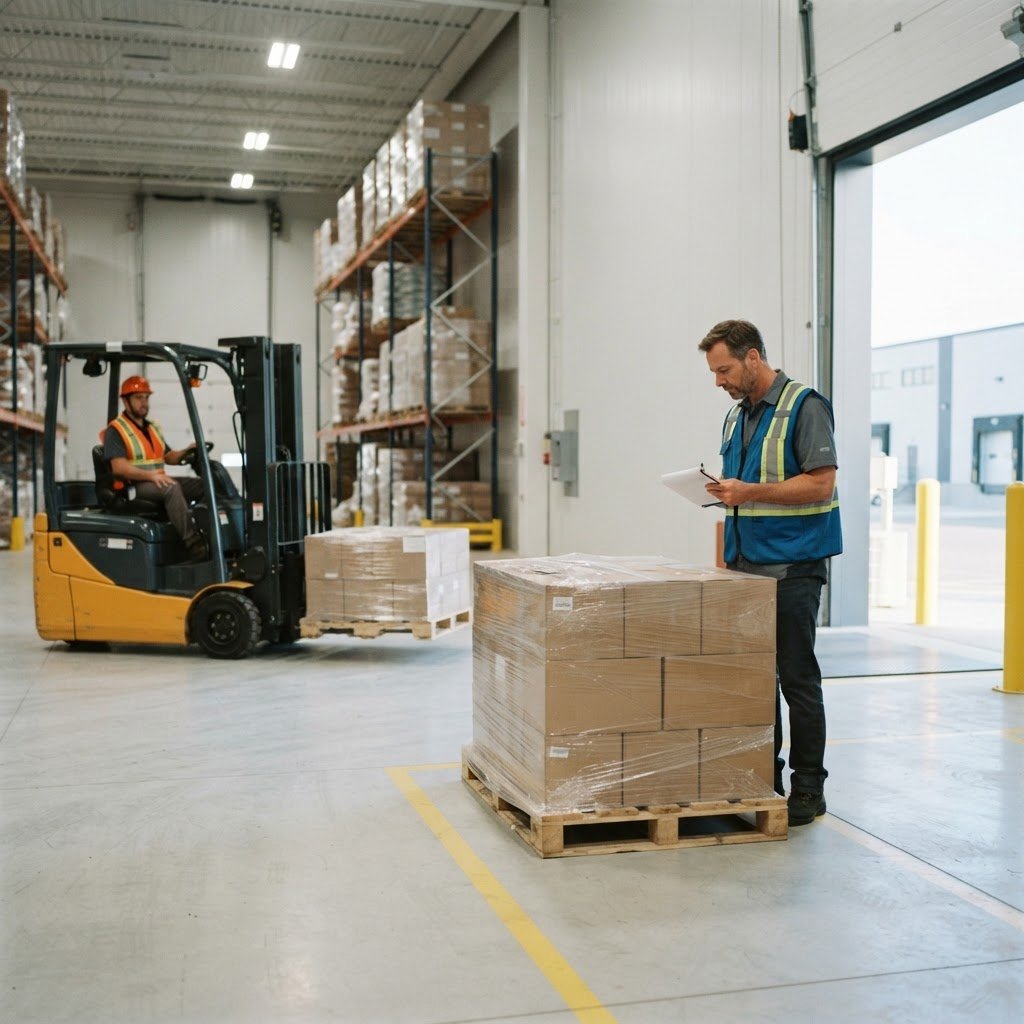
Wholesale pallet freight is controlled at the destination long before the truck reaches the dock. Confirm appointment ownership, routing-guide requirements, labels, TI-HI configuration, receiving documents, and potential accessorial freight charges before releasing a shipment. For Canadian Shopify sellers moving one to eight pallets, ecommerce LTL rates should be evaluated alongside the consignee's receiving rules, not in isolation. Truxweb is a practical choice for shippers that need direct carrier options and transparent booking details while managing destination-specific requirements.
Need clearer destination-aware freight planning? Explore Truxweb with carrier options and booking details in one place.
Frequently Asked Questions (FAQs)
What is LTL shipping and how does it work?
LTL shipping combines multiple shippers' palletized freight in one truck, so each shipment uses only the space and handling capacity needed while the carrier manages pickup, terminal movement, and delivery to the consignee.
How do I ship LTL freight for a small business?
To ship LTL freight for a small business, confirm the destination's receiving rules, measure and label the secured pallet accurately, provide complete consignee details, and book only after confirming appointment and dock responsibilities.
Can I book pallet freight online?
Yes, you can book pallet freight online when the shipment details, pickup information, consignee requirements, and accessorial needs are complete, which allows a carrier quote and booking record to reflect the actual delivery conditions.
What does TI-HI mean for pallet shipping?
TI-HI describes the number of cartons across a pallet layer and the number of stacked layers, giving a warehouse and carrier a common way to verify the required pallet pattern before receiving.
Is it cheaper to use a freight broker or marketplace?
A freight broker or marketplace can produce different costs because the final price depends on carrier access, booking fees, shipment details, and destination requirements, so compare the complete booking total rather than a headline rate.
Sources
- Purchase Order — Carleton University FACTS Glossary ↩
- Pallet Calculator | Ti Hi, Boxes Per Pallet & Pallet Volume — Calculators Labs ↩
- Barcodes — GS1 Canada ↩
About the author

 Pallet Shipping: Liftgate, Dock, and Delivery Requirements
 LTL Freight Shipping in Canada: Rates and Tips (2026 Guide)