
LTL Freight to Michigan’s Auto Plants: Border Guide
A practical look at moving LTL freight through the Windsor-Detroit border into Michigan's automotive plants without missing delivery appointments.
By Max Gravel · 8 min read ·

Quick Answer
For Michigan auto-plant freight, choose an LTL carrier with Windsor-Detroit crossing and appointment-delivery experience. The Ambassador Bridge is the usual commercial-truck route, while the Detroit-Windsor Tunnel prohibits commercial trucks carrying hazardous-material placards. Complete documentation before pickup to avoid a missed dock appointment.
Introduction
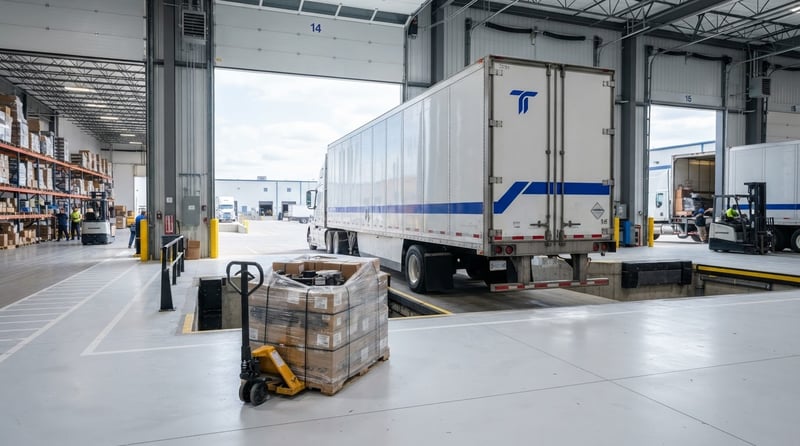
Windsor-Detroit is not a routine cross-border LTL lane when the pallet is feeding a Michigan production schedule. Just-in-time and just-in-sequence automotive operations leave little room for an invoice correction, a customs question, or a carrier that arrives after the assigned receiving window. Suppliers shipping from Ontario or Quebec need a lane plan that connects customs readiness, crossing selection, dispatch visibility, and plant-specific delivery instructions. A low rate loses its value when a shipment reaches Michigan without a workable appointment plan.
Key Takeaways:
- Use the Ambassador Bridge for commercial freight planning on this corridor.
- Complete customs documents before freight reaches the border staging area.
- Confirm plant appointments and receiving rules before booking pickup.

Windsor Detroit border crossing freight requires a lane-specific plan
Freight crossing the Windsor-Detroit border travels a short distance but can have significant operational consequences. A shipment can be physically close to its destination yet unavailable to the plant because the carrier is waiting for clearance, resolving a document discrepancy, or arriving outside the consignee's receiving schedule. Treat the crossing and the final dock handoff as one continuous movement, not two separate tasks.
Choose the crossing that fits commercial freight
Commercial route selection should be confirmed with the carrier before pickup, since disruptions can change the plan. The Detroit-Windsor Tunnel serves passenger traffic and has freight restrictions: commercial trucks displaying hazardous-material placards are prohibited, as are vehicles transporting hazardous materials or radioactive substances.[1] Dispatch should confirm the carrier's planned crossing, trailer suitability, and any commodity restrictions before the freight is tendered.
- Bridge routing: Confirm commercial crossing plans before pickup.
- Tunnel restriction: Placarded hazardous-material trucks, vehicles carrying radioactive substances, and motorcycles cannot enter.
- Route status: Monitor disruptions before dispatching plant freight.
- Driver instructions: Share consignee contacts and appointment details.
Build buffer time into the transit commitment
There is no fixed border-wait promise for this corridor because processing conditions, inspection activity, traffic volume, and local disruptions can change the trip. Avoid quoting a precise transit range that the carrier cannot control. Instead, ask how the carrier handles delayed clearance, whether dispatch monitors the crossing, and when the plant will be notified if the scheduled delivery window is at risk. For cross-border LTL freight between Canada and the US, a buffer is a service-control measure, not wasted time.
During a disruption, Transport Canada and CBSA updates can identify bridge closures and alternate commercial-crossing instructions, so dispatch should monitor official notices before tendering time-sensitive freight. Review Transport Canada updates on commercial vehicle border movement updates when an interruption could affect a time-sensitive pickup or delivery.[2]

Documentation and plant delivery controls for cross-border LTL shipping Canada to USA
Cross-border LTL shipping Canada to USA succeeds when shipment data is accurate before the carrier departs. The commercial invoice, consignee details, commodity description, value, origin information, broker instructions, and shipment references must agree across the documents and the freight. A mismatch discovered at the border is harder to repair than one caught at the shipping desk.
Prepare CUSMA records before the shipment moves
To claim preferential tariff treatment under CUSMA, a certification of origin is required. The certification has no prescribed format, but it must contain the required minimum data elements, and a blanket certification for identical goods can cover a period of up to 12 months.[3] Keep the product classification and origin support accessible to the people who prepare invoices and respond to broker questions.
Do not use an outdated template simply because the part number has shipped before. Confirm the importer of record, purchaser and producer details where applicable, and ensure the goods description matches the commercial invoice. Clear ownership of CUSMA documentation prevents the common situation where a carrier is at the crossing while several parties search for a missing declaration.
Compare carrier capability before accepting the lowest quote
Price matters, but plant-bound LTL requires proof of operating discipline. The following comparison separates the questions a shipper should ask of a general cross-border provider from the controls needed for automotive freight.
| Decision point | General cross-border LTL | Automotive-plant-bound LTL |
|---|---|---|
| Crossing plan | Border routing confirmed | Commercial route and escalation plan confirmed |
| Document review | Invoice and customs data collected | CUSMA, broker, and part references checked pre-pickup |
| Delivery instruction | Street address and contact | Appointment, dock rules, and receiving reference |
| Delay response | Status update after disruption | Plant contact and recovery action defined |
The critical difference is accountability before pickup. A carrier that cannot confirm appointment handling, customs handoff, and exception communication is not providing the operational control this lane requires.
Protect the Michigan automotive plant delivery appointment
Michigan automotive plant delivery appointments are part of the shipment specification, not an administrative detail added after booking. Provide the appointment reference, receiving hours, dock entrance, packaging constraints, contact method, and any unloading instructions before dispatch. If a delay threatens the window, the carrier or logistics team needs authority to communicate with the receiving location early, rather than leaving a driver to arrive without confirmation.

How to vet LTL freight transport services for this automotive lane
Ask every prospective carrier the same operational questions: How frequently do you run Windsor-Detroit? Who checks customs readiness? How are border exceptions escalated? Can you deliver against a named plant appointment? These answers reveal more than a generic promise of fast delivery because they show whether the carrier has a repeatable process for this exact movement.
Use direct carrier information to make the booking decision
Ontario auto-parts shipping benefits from seeing service variables before the booking is confirmed. Ontario auto-parts shipping teams can compare carrier quotes, transit information, ratings, and detailed booking fees through Truxweb while keeping the final decision tied to the shipment's appointment and customs requirements. The marketplace model is useful when the objective is to identify a carrier already active on the lane rather than relying on a single generalist option.
For cargo characteristics, accurate handling details matter as much as destination data. Dimensions, weight, pallet count, stackability, securement needs, and whether the freight includes components such as engines, tires, or bumpers should be communicated during booking. Use the same discipline applied to LTL shipping for auto parts for every recurring Michigan lane.
Set an exception plan before pickup day
Assign one internal owner for shipping documents and one for consignee communication, then give both names to the carrier or booking team. Truxweb's dashboard alerts and in-platform carrier-dispatch communication can help keep pickup, dispatch, and delivery updates visible, but the shipper must still provide complete plant instructions. The useful test is simple: if clearance or traffic changes the plan, everyone should know who can release documents, notify the plant, and approve a revised delivery action.
Conclusion
Michigan-bound automotive LTL freight needs a carrier plan built around the Ambassador Bridge, pre-cleared documentation, and a verified plant appointment. Confirm the crossing route, validate commercial invoices and CUSMA records before pickup, and define the escalation path for a border delay. For Ontario and Quebec suppliers feeding production schedules, Truxweb is a practical choice when its carrier comparison and direct dispatch communication help identify a vetted regional provider with relevant lane capability. Prioritize established Windsor-Detroit experience and appointment-delivery control over the cheapest general cross-border quote.
Need more control over Michigan-bound shipments? Compare LTL carriers before confirming your next plant delivery.
Frequently Asked Questions (FAQs)
What is LTL shipping and how does it work?
LTL shipping combines freight from multiple shippers on one trailer, so an auto-parts supplier pays for the pallet space used while the carrier consolidates compatible shipments and manages pickup, terminal handling, linehaul, border processing, and final delivery.
How long does it take to cross the Windsor-Detroit border with freight?
Crossing time through Windsor-Detroit varies with traffic, inspections, document readiness, and disruptions, so plant-bound shippers should obtain a carrier-specific transit commitment that includes a contingency process rather than relying on a fixed public estimate.
What documents are needed for cross-border LTL freight to Michigan?
Cross-border LTL freight to Michigan generally needs a complete commercial invoice, shipment and consignee details, broker instructions, and a CUSMA certification of origin when preferential tariff treatment is claimed for qualifying goods.
Is the Ambassador Bridge or the tunnel used for commercial freight?
The planned commercial crossing should be confirmed with the carrier before pickup, while the Detroit-Windsor Tunnel prohibits commercial trucks displaying hazardous-material placards and vehicles transporting hazardous materials or radioactive substances.
How do I choose the best LTL carrier for automotive plant deliveries?
Choose an LTL carrier for automotive plant deliveries by verifying frequent Windsor-Detroit service, customs escalation ownership, real-time exception communication, and documented ability to deliver against the plant's appointment, dock, and receiving-reference requirements.
How does CUSMA affect auto parts shipments to the US?
CUSMA affects qualifying auto-parts shipments by allowing a claim for preferential tariff treatment when a certification of origin with the required data elements supports the goods' origin, including blanket coverage for identical goods within the permitted period.
Sources
About the author

 Toronto to Los Angeles LTL Shipping: What to Expect
 LTL Shipping: Montreal to Champlain & Mooers NY