Intermodal Rail or LTL Trucking: Best Savings for Canada
Intermodal rail or LTL trucking? Discover which shipping method offers better rates, faster transit, and more savings for Canadian SME shippers.
By Sarah Bennett · 7 min read ·

Quick Answer#
For Canadian SMEs moving one to eight pallets, LTL trucking usually saves more overall because it provides door-to-door pickup, flexible scheduling, and rate comparison without terminal drayage. Intermodal freight shipping can reduce linehaul costs on long, predictable lanes with freight that can tolerate less schedule flexibility, but rail access and additional handling can outweigh those savings on smaller shipments.

Introduction#
LTL trucking can suit Quebec and Ontario shippers whose freight must arrive at a customer, warehouse, or U.S. consignee on a defined delivery schedule. Rail intermodal is valuable when volume, distance, and timing align, but it is not simply a lower-cost replacement for truck service. For cross-border LTL shipments to U.S. destinations, the operational question is whether the shipment can move through terminals and scheduled rail departures without creating customs or delivery risk. A pallet that misses a handoff can turn an apparently lower linehaul quote into an expensive service failure.
Key Takeaways:
LTL trucking gives SMEs direct pickup and delivery for smaller pallet shipments.
Intermodal rail works best on long, predictable lanes with flexible delivery windows.
Total freight cost must include handling, drayage, timing, and border documentation.

LTL Trucking Costs for Canadian Pallet Freight#
The lowest quoted transport mode is not always the lowest landed freight cost. For Canadian businesses shipping pallet freight, LTL consolidates shipments from multiple customers onto a truck network, allowing a shipper to pay for the space and service required rather than an entire trailer. This matters when a Montreal manufacturer sends a few pallets to Toronto or a Quebec distributor replenishes a customer in the northeastern United States. For shipment profiles that do not fit shared-capacity service, review LTL shipping alternatives alongside the same pickup, delivery, timing, and handling requirements.
What drives the total cost of each mode?#
Intermodal pricing can look favourable on a long corridor because rail performs the central linehaul, while LTL pricing reflects pickup, consolidation, terminal sorting, linehaul, and final delivery. The useful comparison is the all-in quote: accessorial charges, origin and destination drayage, delivery appointment requirements, and the cost of delay all belong in the decision.
Shipment density: Heavier, denser pallets use trailer space more efficiently.
Lane length: Longer predictable corridors can improve rail economics.
Terminal access: Rail requires trucking to and from intermodal terminals.
Delivery urgency: Time-sensitive freight favours scheduled truck networks.
Freight class: Class and dimensions influence LTL rate factors.
Why published savings claims need context#
Moving freight by rail instead of truck can reduce greenhouse gas emissions by up to 75%, according to the Association of American Railroads, though that figure reflects train-scale freight movement rather than a typical SME pallet order. That reduction makes rail worth pricing on a stable, long-haul lane, but it does not establish a cost savings percentage for an individual LTL shipment with terminal transfers. To identify the variables that affect a truck quote, review these LTL rate factors before comparing modes.
Diesel reached 163.9 cents per litre nationally by the end of January 2026, according to Kalibrate's Canadian fuel price data, and fuel surcharges can affect truck quotes. That cost pressure affects truck quotes, yet it should be evaluated beside the added drayage and handling associated with rail, not in isolation.
Intermodal Freight Shipping Versus LTL Service#
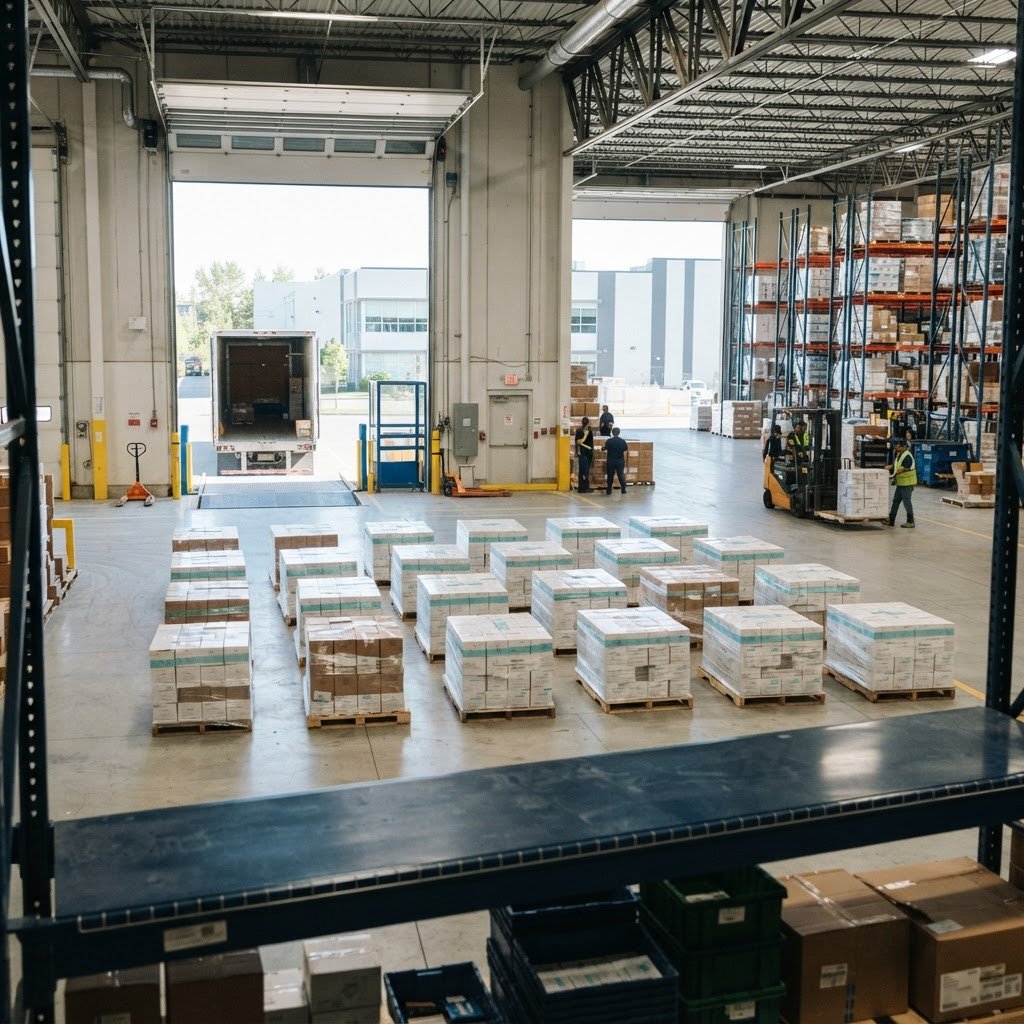
These modes differ in kind. LTL trucking moves a pallet through a carrier terminal network and delivers it by truck, while rail intermodal combines truck drayage with rail linehaul and another truck movement at destination. Planning for intermodal freight starts with terminal availability, whereas LTL begins with pickup and consignee requirements.
Side-by-side operational differences#
Use this comparison to assess the shipment conditions that affect a Quebec-Ontario lane or a cross-border move, rather than assuming one mode is cheaper in every case.
Decision factor | Intermodal rail | LTL trucking |
|---|---|---|
Core movement | Truck drayage plus rail linehaul | Truck pickup, terminal network, and delivery |
Pickup and delivery | Uses origin and destination drayage via rail terminals | Door-to-door carrier service |
Schedule control | Dependent on rail departures and transfers | Based on carrier network schedules |
Smaller pallet shipments | Can require extra coordination | Built for shared trailer capacity |
Emissions potential | AAR cites a 75% reduction | Varies by route and carrier operations |
The deciding trade-off is handling versus flexibility. A shipper with a predictable replenishment move between major terminals may accept transfers, while a shipment with an appointment, residential delivery, liftgate need, or time-sensitive customer order benefits from a truck carrier's door-to-door control.
Transit time and cross-border control points#
For freight crossing from Ontario or Quebec into the United States, customs documentation must be complete before the shipment reaches the border process, regardless of whether rail or truck performs the linehaul. Road freight accounted for 91.09% of the U.S.-Canada cross-border freight market in 2025, according to the cross-border freight market, while LTL is projected to grow at a 3.84% CAGR through 2031.
Before booking, confirm the commercial invoice, commodity description, consignee details, customs broker instructions, and any required import documents. A rail schedule cannot compensate for incomplete paperwork, and a truck appointment cannot compensate for a border hold. Freight mode information can provide additional context when reviewing how freight moves across Canada.

Choosing the Right Mode for a Quebec or Ontario Shipment#
Choose rail intermodal when freight moves over a long, repeatable corridor, has a flexible receiving window, and can be coordinated through rail terminals without disrupting the consignee. Choose LTL trucking when shipment sizes vary, delivery addresses are dispersed, freight needs direct handling, or a customer expects a dependable pickup-to-delivery plan. For a closer look at the rail workflow, this resource on rail intermodal shipping explains the Canadian operating model.
Practical lane scenarios for SMEs#
A Montreal supplier sending recurring, non-urgent freight toward a major Ontario terminal may have a workable intermodal case if the receiving operation can absorb the schedule. A smaller order moving from Laval to a Toronto retailer, or from Mississauga to a U.S. customer with a delivery appointment, usually needs the responsiveness of LTL carriers and local pickup coverage. This is why freight terminal requirements should be considered before treating rail as a simple substitute for a truck lane.
How digital comparison changes the LTL decision#
A digital marketplace makes LTL freight pricing more transparent because the shipper can compare carrier rates, transit times, ratings, and booking fees before confirming a load. Truxweb broadcasts one request to carriers serving the lane, which is useful for SMEs that need to compare direct carrier LTL shipping without repeating the same shipment details by phone and email.
For a one-to-eight-pallet shipment, compare like-for-like service levels and confirm every pickup, border, delivery, and accessorial requirement in writing. Document the requested pickup date, delivery appointment, equipment needs, freight class, dimensions, weight, commodity description, and broker instructions so each provider prices the same scope. Confirm whether quoted transit reflects pickup, terminal processing, border clearance, rail departures where applicable, and final delivery rather than only the linehaul segment. Lower cost is meaningful only when the freight arrives intact, clears correctly, and meets the consignee's receiving rules.
Conclusion#
Intermodal rail can lower costs and emissions on long, predictable freight corridors, especially when terminal transfers and delivery timing are manageable. LTL trucking remains the more accessible operating model for SMEs moving smaller pallet shipments across Quebec, Ontario, and the United States because it supports door-to-door movement and carrier-network flexibility. For SMEs that need comparable carrier quotes, direct-to-carrier access, and practical control over LTL service details, Truxweb is a practical option. Price both modes when rail conditions are favourable, but judge the result by total cost, customs readiness, and delivery reliability.
Need a clearer way to compare pallet freight options? Compare LTL quotes with Truxweb before booking your next shipment.
Frequently Asked Questions (FAQs)#
What is LTL in shipping?#
LTL in shipping means less-than-truckload service, where several customers' shipments share trailer capacity and each shipper pays for the portion of transport service required rather than reserving a full trailer.
Is it cheaper to ship LTL or full truckload?#
Whether LTL or full truckload is cheaper depends on freight volume, lane, dimensions, timing, and accessorial needs, because LTL shares capacity while a full truckload reserves the entire trailer for one shipment.
Why use LTL for small shipments?#
LTL is useful for small shipments because it provides carrier-network pickup and delivery without requiring the shipper to purchase unused trailer capacity, although freight class and handling requirements still affect the quote.
How can I compare LTL freight rates in Canada?#
You can compare LTL freight rates in Canada by providing identical shipment dimensions, weight, postal codes, pickup requirements, delivery needs, and service timing to each carrier so the quotes reflect the same operational scope.
How does a digital freight marketplace work?#
A digital freight marketplace works by distributing shipment details to participating carriers and presenting available rates, transit information, and booking terms in one place, allowing the shipper to select and confirm a suitable service.
How do I calculate LTL shipping costs for pallets?#
You calculate LTL shipping costs for pallets by obtaining a carrier quote based on origin, destination, freight class, weight, dimensions, density, pickup and delivery conditions, and any required additional services.
About the author