Introduction
Quick Answer
Intermodal freight transport moves standardized containers using two or more modes, most often rail for the long haul and trucks for the first and last mile, without unloading the cargo between modes. For Canadian SMBs shipping full containers over long distances, it typically reduces cost per kilometre compared to truckload, though it adds transit time and requires careful scheduling around rail ramps.
Canadian businesses shipping goods between Ontario, Quebec, and the rest of the country face a constant tension between price and speed. Intermodal shipping services promise lower rates on long-haul lanes by moving containerized cargo transport on rail flat cars, then handing it off to trucks for local delivery. Statistics Canada reported that in 2022, 36.5 million tonnes of freight moved across the country on intermodal rail flat cars, a scale that reflects how deeply this model is embedded in national supply chains. Yet many small and medium-sized shippers still default to truckload or LTL out of habit or unfamiliarity. The real question is whether the savings justify the additional planning, and the answer depends on lane length, volume, and how tightly your delivery windows are set.
Key Takeaways:
Intermodal freight transport combines rail and trucking to move containers over long distances at lower cost per kilometre than truckload.
Transit times run one to three days longer than direct truckload, so intermodal fits shipments where delivery windows have flexibility.
Canadian intermodal operations are regulated by the Canadian Transportation Agency, with specific dispute and service provisions for rail-based freight.
How Intermodal Freight Transport Works in Canada
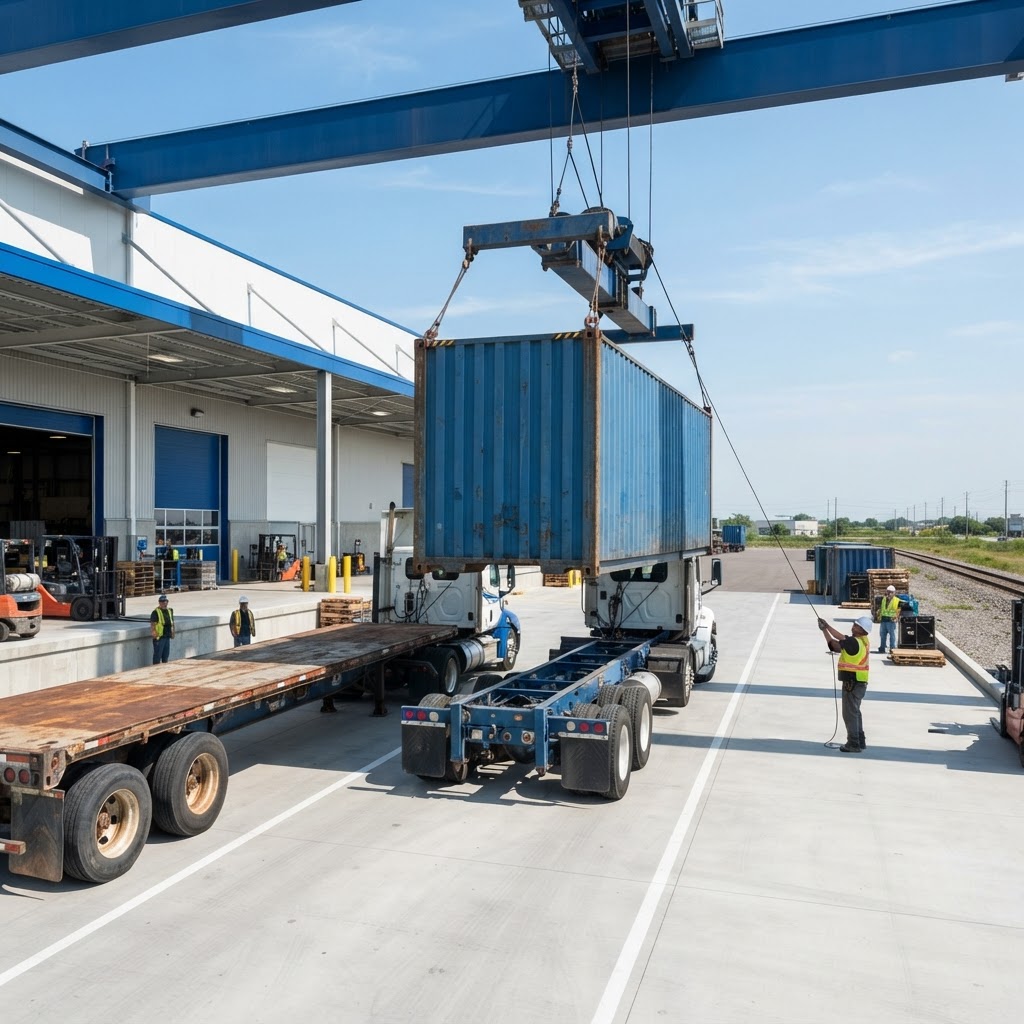
Intermodal moves goods inside standardized ISO containers, typically 20-foot or 40-foot units, that transfer between transport modes without repacking the cargo. A shipper loads the container at their facility, a drayage truck hauls it to a rail terminal, the container rides a flat car across the country, and a second drayage truck delivers it to the receiver. This container-first design is what separates intermodal from traditional freight, and it is why intermodal logistics scale so well across long Canadian lanes.
The Rail and Trucking Handoff
The handoff between rail and trucking is where intermodal succeeds or struggles. Canada's two Class I railroads, Canadian National and Canadian Pacific Kansas City, operate the major intermodal ramps in cities like Montreal, Toronto, Vancouver, and Calgary, and drayage carriers handle the short truck legs on either end. A well-run intermodal container transfer can take under an hour, but delays at congested ramps, missed rail cut-off times, or drayage capacity shortages can add days.
Drayage pickup: A local truck brings the empty container to your dock, waits for loading, then hauls the loaded container to the origin rail ramp.
Rail linehaul: The container rides a double-stacked flat car across the CN or CPKC network, covering the bulk of the distance.
Destination drayage: A second truck picks the container up at the destination ramp and delivers it to the receiver's dock.
Container return: After unloading, the drayage carrier returns the empty container to the ramp within a set free-time window.
When Intermodal Rail and Trucking Makes Sense
Intermodal rail and trucking works best on lanes over 800 kilometres where rail's fuel efficiency and lower per-kilometre cost outweigh the extra handling. For shipments moving from Ontario to Alberta or British Columbia, the math almost always favours intermodal on cost. Shorter lanes, urgent deliveries, or shipments requiring multiple stops usually stay with over-the-road trucking because the drayage and ramp handling erode the savings.

Comparing Intermodal to LTL and Truckload Shipping
The decision between intermodal, LTL, and truckload comes down to shipment size, distance, and time sensitivity. Each mode has a specific sweet spot, and understanding where they overlap helps SMB shippers avoid overspending or promising delivery windows they cannot hit.
Intermodal vs Truckload Shipping
On direct cost, intermodal vs truckload shipping typically shows 10 to 20 percent savings for intermodal on lanes over 1,000 kilometres, with the gap widening as distance grows. The tradeoff is transit time: a truckload shipment from Montreal to Vancouver runs about four to five days, while the same lane on intermodal takes six to eight days. For SMBs with steady replenishment cycles, that difference is manageable. For rush freight or perishables, it is not. Understanding the LTL versus FTL comparison gives useful context because intermodal sits alongside truckload as a container-level service, not a shared-space one.
Where LTL Still Wins
LTL remains the right call for shipments of one to eight pallets moving under 1,500 kilometres, especially within Ontario and Quebec. Intermodal requires enough volume to fill or nearly fill a container, and most SMB shipments do not reach that threshold on a single order. Running a proper LTL carrier rate comparison reviews exercise across a freight transport marketplace often reveals that consolidated LTL beats intermodal for shipments under about 6,000 kilograms.
Volume threshold: Intermodal makes sense when you can fill a 40-foot container, roughly 20 to 24 standard pallets.
Distance threshold: Rail economics kick in on lanes over 800 kilometres, and the advantage grows past 1,500 kilometres.
Time buffer: Your delivery window should tolerate one to three additional transit days versus truckload.
Ramp proximity: Both origin and destination should sit within reasonable drayage distance of a rail terminal, typically under 150 kilometres.
Product suitability: Non-perishable, non-time-critical, and non-hazardous freight fits best, though many hazmat classes are accepted with proper documentation.
Cost Structure Differences
Truckload pricing is usually a single all-in rate per lane. Intermodal pricing has three components: origin drayage, rail linehaul, and destination drayage, plus potential accessorial charges for chassis usage, container storage, and detention. Truxweb helps SMBs cut through this complexity by surfacing quotes from multiple LTL carriers in a single dashboard, so shippers can benchmark intermodal quotes from third-party providers against direct trucking rates before committing.
Costs, Transit Times, and Real-Time Freight Tracking
Understanding the true cost of intermodal requires looking past the linehaul rate. Drayage, chassis fees, and accessorials can shift a favourable quote into an expensive one, so shippers need visibility into every component before booking.
What Drives Intermodal Pricing
The base rail rate is calculated by container size, lane, and volume commitment, but the total invoice reflects several add-ons. Fuel surcharges track weekly indexes, chassis rentals apply when the drayage carrier does not own the equipment, and detention charges kick in when containers sit at shipper or receiver docks past the free time window, usually two hours for drayage and one to five days for the container itself. Building freight consolidation strategies into your planning helps you hit the volume needed to justify intermodal without paying for empty space.
Transit Time Reality
Published intermodal transit times assume everything runs on schedule, and most of the time it does. On a lane like Toronto to Calgary, expect five to six days door to door, versus three to four days on truckload. Weather events, rail congestion, and drayage capacity shortages can extend that, so building a two-day buffer into promised delivery dates is standard practice. A real-time freight tracking dashboard makes it possible to see where a container is at every step, from rail ramp scan to destination delivery, which reduces the operational anxiety of longer transit windows.

Canadian Regulations and Cross-Border Considerations
Intermodal freight in Canada operates under a specific regulatory framework that shippers need to understand before entering long-term contracts or moving cross-border. The rules cover rail service obligations, rate disputes, and customs handling, and they differ meaningfully from provincial trucking regulations.
The Canadian Transportation Agency Framework
The Canadian Transportation Agency oversees federally regulated rail carriers and provides the dispute resolution channels shippers can use when service or pricing issues arise. The agency's freight rail service guide outlines the level-of-service obligations railways owe to shippers, the process for filing complaints, and the mechanisms available for rate arbitration. For intermodal specifically, this framework matters because most linehaul disputes are resolved under rail rules rather than the trucking regulations that govern LTL and FTL contracts.
Cross-Border Intermodal to the United States
Intermodal is particularly common on Canada-US lanes because rail networks integrate seamlessly at the border. Containers move under bonded transit until they reach the destination customs facility, which simplifies border crossing compared to truck-based cross-border freight. Still, shippers need accurate commercial invoices, correct HS codes, and pre-arrival electronic manifests filed through the appropriate customs system. Getting cross-border freight strategies right upfront prevents holds at the rail ramp, which are often harder to resolve than truck-based customs issues.
Avoiding Common Delay Triggers
Intermodal shipments can face delays at the ramp, at the border, or during drayage. Missed rail cut-off times at origin are the most common culprit, followed by drayage capacity gaps at destination during peak weeks. Understanding Canada-US shipping delays and their root causes helps shippers build realistic timelines and choose carriers with strong drayage networks at the specific ramps they use.
Documentation and Compliance Essentials
Every intermodal shipment requires a bill of lading, a container seal record, and, for cross-border moves, customs documentation. Domestic Canadian intermodal is simpler but still demands accurate weight declarations and hazardous materials paperwork when applicable. Statistics Canada tracks intermodal container volumes as a leading indicator of trade activity, and the national freight data shows how central this mode has become to Canadian commerce.
Conclusion
Intermodal freight transport is a proven cost-saver for Canadian SMBs shipping full containers across long distances, but it is not a universal replacement for LTL or truckload. The right approach is mode-by-mode: intermodal for long-haul, container-scale volume with flexible delivery windows; LTL for regional shipments under eight pallets; truckload for time-sensitive full-truck moves. Building visibility, cost benchmarks, and carrier reliability into one workflow is what separates SMBs that consistently save on freight from those that overspend by default.
Want to compare LTL and intermodal options side by side without the back-and-forth? Get instant quotes with Truxweb and see which mode fits your next shipment before you commit.
Frequently Asked Questions (FAQs)
How does intermodal freight transport work?
Intermodal freight transport moves goods in standardized containers that transfer between trucks and rail without unpacking the cargo, using drayage for pickup and delivery and rail for the long-haul portion.
Is intermodal shipping cheaper than truckload?
Intermodal shipping is typically 10 to 20 percent cheaper than truckload on lanes over 1,000 kilometres, though the savings depend on drayage costs and container volume commitments.
What is the average transit time for intermodal shipments?
Intermodal shipments generally take one to three days longer than direct truckload on the same lane, with a Montreal to Vancouver move averaging six to eight days door to door.
What defines the difference between LTL and intermodal shipping?
LTL consolidates smaller shipments from multiple shippers onto a single truck, while intermodal moves a full container assigned to one shipper across rail and trucking modes.
What regulations apply to intermodal freight in Canada?
The Canadian Transportation Agency regulates federally chartered rail carriers and handles intermodal service and rate disputes, while trucking legs fall under provincial and federal transport rules.
How can shippers track intermodal freight effectively?
Shippers track intermodal freight through GPS-enabled containers, rail scan events, and drayage updates, ideally consolidated into a single dashboard for end-to-end visibility.
When should an SMB choose intermodal over LTL?
An SMB should choose intermodal when shipments regularly fill a 40-foot container, move over 1,000 kilometres, and have delivery windows that tolerate a few extra transit days.
About the Author
Daniel Park is a freight logistics analyst covering LTL shipping, carrier performance, and supply chain operations across Ontario and Quebec. His work focuses on freight pricing, carrier selection, and digital freight platforms serving Canadian small and medium-sized businesses.