

Introduction
If you're a small or medium-sized business shipping pallets across Ontario, you have probably dealt with the same frustrating cycle: call a broker, wait for a callback, receive a quote with no clear breakdown, and hope the carrier shows up on time. It doesn't have to work that way. LTL freight shipping in Ontario has gone fully digital, and shippers who take advantage of that shift are saving both money and hours every week.
This guide walks you through five concrete steps to book LTL freight online in Ontario, from preparing your shipment details to confirming a carrier and tracking your load. Whether you're moving one pallet or eight, the process is faster and more transparent than anything a traditional broker offers.

What Is LTL Freight and Why Ontario Shippers Use It
Less-Than-Truckload (LTL) shipping means your freight shares trailer space with other shippers' cargo. You pay only for the space your pallets occupy, rather than the cost of an entire truck. For businesses that don't consistently fill a full trailer, it's one of the most cost-effective ways to move goods across Ontario's major freight corridors.
Ontario is home to one of the most active freight networks in Canada. Routes connecting Toronto, Mississauga, Hamilton, Ottawa, and London see high freight volumes year-round, which means strong carrier competition and competitive pricing for shippers willing to compare their options online.
LTL vs. Full Truckload: Knowing When to Choose
The general rule is straightforward. If your shipment occupies fewer than 10 to 12 standard pallets, LTL is almost always more economical. Full truckload makes sense when volume is high, timing is critical, or the freight is fragile enough to avoid co-loading. For most Ontario SMEs, LTL freight rates per pallet are significantly lower than booking a dedicated truck for partial loads.

Prepare Your Shipment Details Before You Quote
The fastest way to get an accurate instant LTL freight quote is to have your shipment information ready before you open any platform. Incomplete or inaccurate details are the most common reason quotes change at pickup, and they can cause delays, surcharges, or carrier cancellations.
The Details You Need to Have Ready
Most digital freight platforms ask for the same core information. Gather the following before you start a quote request:
- Origin and destination postal codes: Accuracy here affects both the rate and transit time estimate.
- Freight dimensions and weight: Measure each pallet including height, and weigh the loaded pallet, not just the product.
- Freight class or NMFC code: If you're unsure, most platforms include a freight class tool or calculator.
- Number of pallets: Confirm whether pallets are stackable, as this can affect pricing on some carriers.
- Pickup and delivery requirements: Residential delivery, liftgate service, or appointment windows all trigger accessorial charges.
Use an Online Freight Marketplace to Request Multiple Quotes
Once your shipment details are ready, the next step is where the real time savings happen. Instead of calling carriers individually or waiting on a broker, an online freight booking platform sends your shipment request to multiple carriers at the same time. You receive competing quotes in one place without a single phone call.
What a Freight Marketplace Does Differently
Traditional freight brokers act as intermediaries. They receive your request, mark up the carrier's rate, and pass the inflated price back to you. A direct LTL freight marketplace in Ontario cuts that layer out entirely. You see carrier rates directly, compare them on your own terms, and book without a middleman inflating the final cost.
Platforms designed for LTL freight also present carrier information beyond just the price. Transit time, on-time performance, and customer ratings are often displayed side by side, giving you a more complete picture of what you're actually booking rather than just the cheapest number on a list.
How Fast Can You Actually Get Quotes?
On platforms built for LTL freight, the turnaround is measured in minutes rather than hours. Truxweb, for example, reports that 92% of carriers respond within 30 minutes during operating hours, which means you can realistically go from entering shipment details to confirming a booking within a single working session. That speed matters when shipment windows are tight and you can't afford to wait on callbacks.
What to Look for in a Freight Platform
Not all freight booking tools are built the same way. Before committing to a platform, check whether it shows top-rated LTL carriers with verified performance data, whether pricing is all-in or subject to hidden accessorial additions, and whether you can communicate directly with carrier dispatch without leaving the platform. Those three features alone separate useful tools from ones that just digitize the same old broker experience.
Compare LTL Freight Rates Across Carriers
Receiving multiple quotes is only useful if you know how to evaluate them properly. The lowest number isn't always the best option, and experienced shippers learn quickly that rate comparisons need to account for more than the base price.
What to Compare Beyond the Rate
When you compare LTL freight rates across carriers, the base rate is just the starting point. Transit time directly affects your customer commitments and inventory planning. A rate that saves you $40 but adds two days to delivery may not be worth it depending on your situation. Look at each carrier's estimated transit days alongside their price and factor in how that timeline affects your operation.
Carrier reliability ratings are equally important. A carrier with a strong on-time delivery record and a high satisfaction score is worth a modest premium over a cheaper option with inconsistent performance. Freight shipping for small business often means tighter margins and less tolerance for delays, so reliability should carry significant weight in your comparison.
Understanding Accessorial Charges
Accessorial charges are the add-on fees that apply when a shipment requires services beyond standard dock-to-dock delivery. Accessorial charges are set by individual carriers and can vary significantly across providers. Common accessorials include liftgate service, residential delivery, inside delivery, and fuel surcharges. When comparing quotes, confirm whether these charges are already included in the displayed rate or listed separately, because a rate that appears lower may still end up costing more after accessorials are applied.
Confirm Your Booking and Arrange Pickup
Once you've selected the right carrier based on rate, transit time, and performance, confirming the booking on a digital platform takes a matter of seconds. There is no paperwork to complete and no waiting on hold. One click locks in the shipment, and the carrier dispatch team is notified automatically.
What Happens After You Confirm
On a platform with integrated dispatch tools, confirmation triggers a chain of automated communications. You receive a booking confirmation with the carrier's details, a pickup reference number, and an estimated pickup window. The carrier receives your shipment details and origin address. If the platform includes automated dispatch alerts, you'll receive notifications at each stage of the shipment's progress without needing to chase anyone down for an update.
Preparing for Carrier Pickup
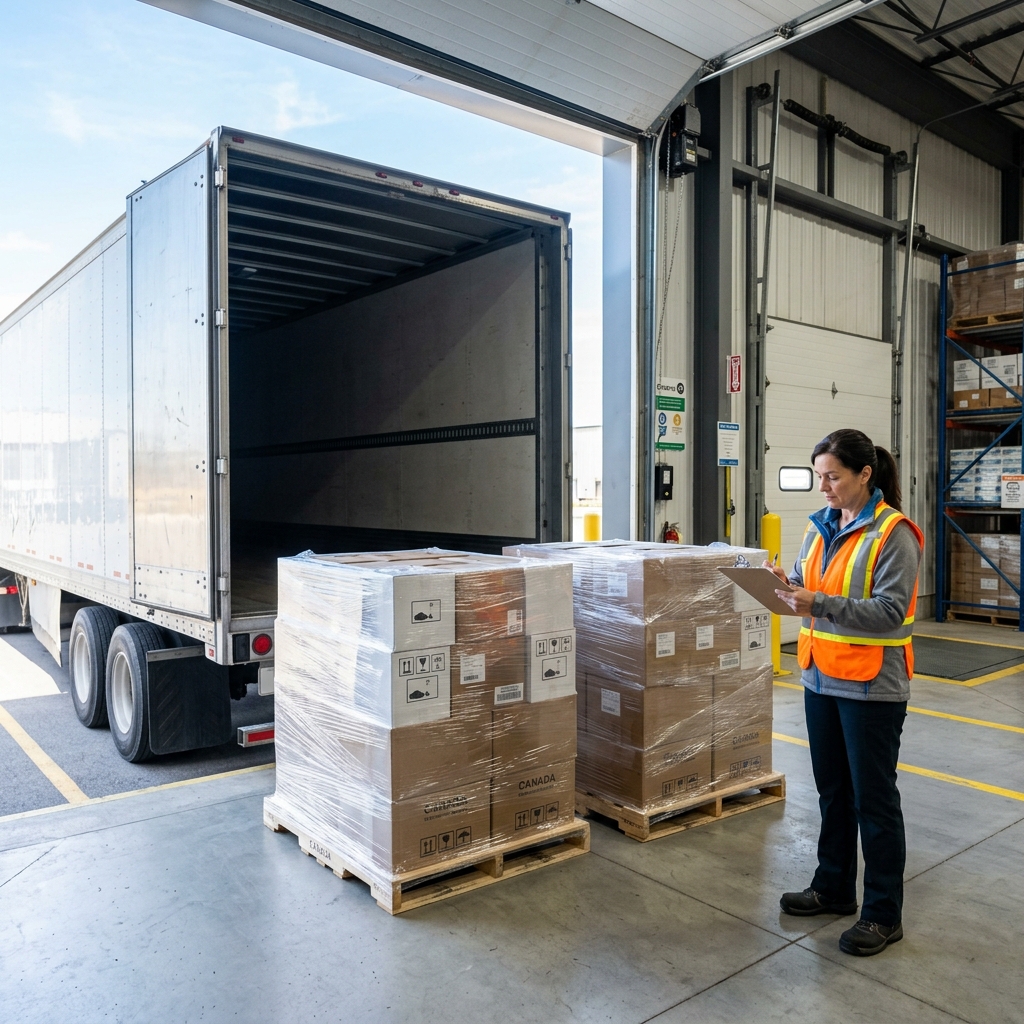
Freight pickup goes smoothly when your team is ready for it. Have the pallets staged and accessible at the confirmed pickup time, with the shipment reference number visible on the freight. If you arranged liftgate service, confirm with your facility that the loading dock or driveway can accommodate it. Delays at pickup can ripple into transit time, so preparation at the origin point is as important as the booking itself.
Why Digital Freight Booking Outperforms Traditional Brokers in Ontario
The traditional freight brokerage model was built around information asymmetry. Brokers knew which carriers were available and at what rates. Shippers did not. That information gap justified the broker's markup, and digital freight platforms have largely closed it, giving shippers direct access to the same carrier market that brokers have always operated in, without paying for the privilege of the introduction.
Transparency and Cost Savings
When you compare LTL freight rates in Canada through a marketplace, the prices you see are the prices carriers are actually offering. There's no markup layered on top for a broker's margin. For businesses shipping regularly, this kind of pricing transparency can translate into meaningful savings over time, especially when combined with the ability to quickly identify which carriers are consistently competitive on your most common lanes.
Time Savings That Compound Over Time
The operational time saved by moving to freight booking without phone calls adds up faster than most shippers expect. Eliminating the back-and-forth of traditional quoting, manual status follow-ups, and invoice reconciliation across carrier accounts frees up hours every week. That time would otherwise be absorbed by freight administration alone. For a small business owner or operations manager handling shipping alongside other responsibilities, that reclaimed time has real value.
Conclusion
Booking LTL freight in Ontario doesn't need to be complicated or time-consuming. By preparing accurate shipment details, using a digital freight marketplace to collect competitive quotes, comparing carriers on rate and performance, confirming your booking in a single click, and tracking the shipment through to delivery, you can manage your entire freight operation without a single phone call to a broker. Truxweb is built specifically for Ontario and Quebec businesses that want that kind of speed and transparency in their freight process. The combination of instant quotes, vetted carriers, and consolidated billing makes it a practical tool for any business shipping one to eight pallets at a time.
Ready to get your first instant LTL quote? Start your shipment on Truxweb and see competing carrier rates in minutes.
Frequently Asked Questions (FAQs)
How do I book LTL freight online in Canada?
You can book LTL freight online by entering your shipment details into a digital freight marketplace, which sends your request to multiple carriers simultaneously and returns competitive quotes within minutes. Once you select a carrier, the booking is confirmed digitally with no phone calls required.
How do I find reliable LTL carriers in Ontario?
The most effective way is to use a vetted freight marketplace that enforces carrier quality standards, such as minimum satisfaction ratings and active safety compliance monitoring. This removes the guesswork of sourcing carriers independently and ensures you're working with operators who have a verified performance record.
What is the cheapest way to ship pallets in Canada?
LTL freight is typically the most cost-effective option for businesses shipping one to eight pallets, since you pay only for the trailer space your shipment requires rather than booking a full truck. Using a freight marketplace to compare multiple carrier rates simultaneously ensures you're accessing the most competitive pricing available on your lane.
How fast can I get an LTL freight quote in Canada?
On modern freight platforms, quotes can arrive in as little as a few minutes after you submit your shipment details. Truxweb reports that 92% of carriers respond within 30 minutes during operating hours, making same-day booking entirely realistic for most Ontario shipments.
Can small businesses use LTL freight shipping?
Absolutely. LTL freight was designed for exactly this use case, allowing small businesses to ship commercially without needing to fill a full truck. Digital platforms have made it even more accessible by removing minimum volume requirements and reducing the administrative burden of booking and tracking.
How do I track my LTL shipment in real time?
Most digital freight platforms provide a shipment dashboard that updates as carriers scan your freight at each transit point. Some platforms also send automated email alerts at pickup, in-transit, and delivery stages so you stay informed without actively checking the dashboard.
What are typical LTL freight rates per pallet in Canada?
Rates vary based on freight class, distance, weight, and accessorial requirements, but Ontario shippers can generally expect to pay anywhere from $80 to $300 or more per pallet depending on the lane. Using a marketplace to compare rates across carriers is the most reliable way to benchmark what's competitive for your specific shipment.
Why should I use a freight marketplace instead of a broker?
A freight marketplace gives you direct access to carrier pricing without the markup a broker adds for acting as an intermediary. You see real rates, real carrier performance data, and confirm bookings without a third party involved, which typically results in lower costs and faster turnaround.
Is LTL freight cheaper than full truckload shipping?
For smaller shipments, yes. LTL is almost always more economical than booking a full truck when your freight occupies fewer than 10 to 12 pallets. Full truckload becomes cost-competitive only when your volume is large enough to justify the dedicated capacity.
How does Truxweb compare to traditional freight brokers?
Unlike traditional brokers who mark up carrier rates and operate as intermediaries, Truxweb connects shippers directly with carriers on a transparent marketplace, which eliminates brokerage fees and gives shippers full visibility into pricing, carrier ratings, and shipment status from a single platform.