


Introduction
Quick Answer
Freight consolidation combines multiple smaller shipments from different shippers into one full truckload, letting each business pay only for the space it uses instead of a premium partial-load rate. For SMBs moving 1 to 8 pallets, this typically cuts LTL costs by 20 to 40 percent while maintaining reliable transit times on dense lanes like Ontario and Quebec.
Shipping 3 pallets from Montreal to Toronto shouldn't cost the same per pallet as shipping 300, yet many small businesses in Canada pay inflated rates because they can't access the same volume pricing larger shippers negotiate. Freight consolidation is the mechanism that closes that gap, pooling small loads into shared trucks so carriers run full and shippers pay proportionally. The concept has existed for decades, but digital freight marketplaces have reshaped how quickly SMBs can tap into it, replacing brokered phone calls with instant multi-carrier quotes. Understanding how consolidation actually works, and where its real cost savings come from, is the difference between overpaying every quarter and building a repeatable logistics cost structure. The numbers below explain why the practice matters more in 2026 than ever before.
Key Takeaways:
Freight consolidation lets SMBs pay only for the pallet space they use, unlocking savings of 20 to 40 percent on typical LTL lanes.
Dense corridors like the Quebec City to Windsor stretch offer the strongest consolidation opportunities in Canada.
Digital freight marketplaces surface consolidated rates from multiple carriers in minutes, removing the pricing opacity of traditional brokers.
What Freight Consolidation Actually Means for Small Shippers
Freight consolidation is the process of combining shipments from multiple businesses into a single truck that shares one route, one driver, and one set of operating costs. Each shipper pays for the linear feet or pallet positions their goods occupy, not for the entire vehicle. This model is the operational backbone of the LTL industry, and it's why a 4-pallet shipment can travel from Mississauga to Laval for a fraction of a full truckload rate.
How the Consolidation Process Works
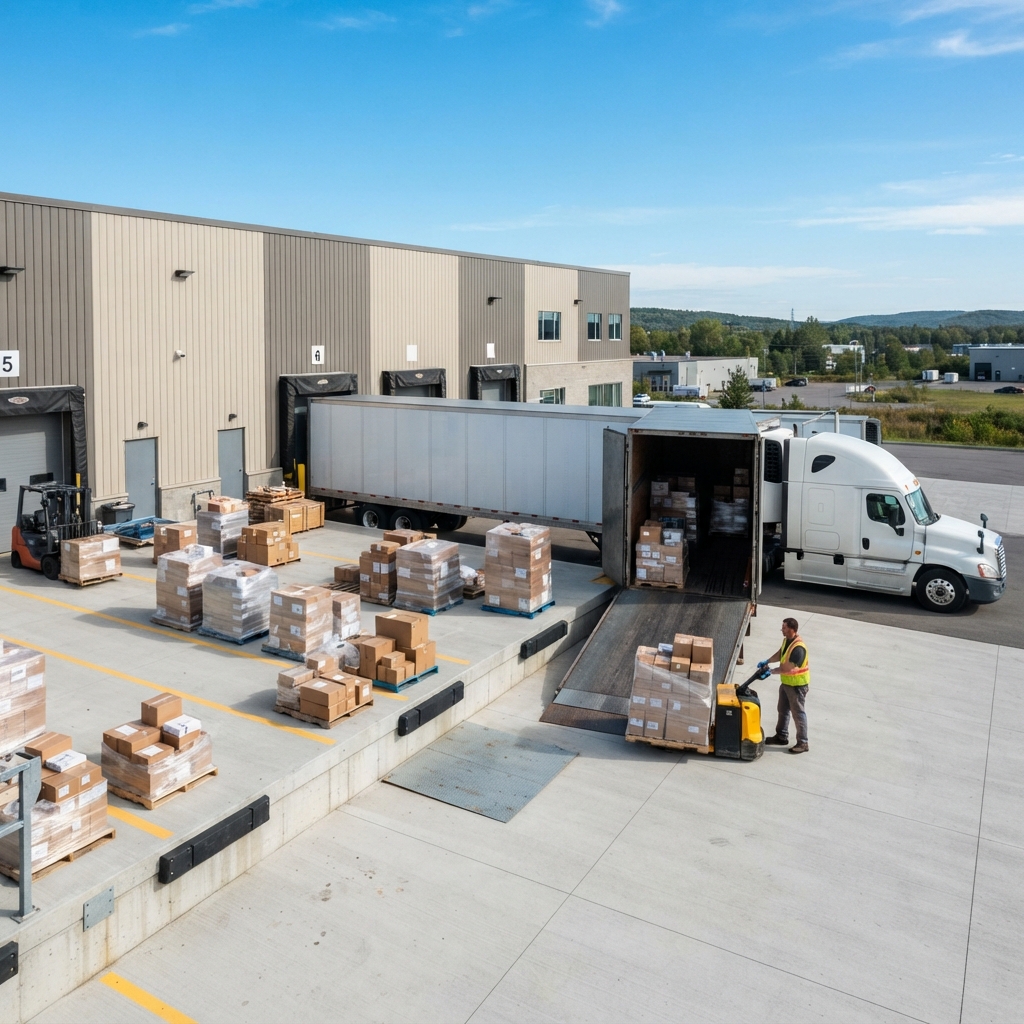
Carriers operate regional terminals where inbound freight is sorted, grouped by destination, and loaded onto outbound trailers heading to specific corridors. A shipment picked up in Ottawa on a Monday may spend a few hours at a Vaughan cross-dock before being loaded onto a trailer bound for Quebec City that afternoon. The whole system depends on lane density: the more shippers moving goods along the same route, the tighter the consolidation and the lower the per-pallet cost. According to Transport Canada's overview of the sector, trucking remains the dominant mode for domestic freight movement in Canada, which explains why terminal networks in Ontario and Quebec run at high frequency.
Where Consolidation Delivers the Most Value
The freight consolidation process for SMBs works best when volumes are predictable and lanes are dense. A supplier shipping 2 pallets twice a week from Brampton to Montreal fits the consolidation model almost perfectly. Full details on LTL consolidation mechanics show how carriers use hub-and-spoke networks to keep trailers above 85 percent utilization on major corridors.
Terminal networks: Regional cross-docks group freight by destination before loading outbound trailers.
Lane density: High-frequency corridors like Toronto to Montreal produce the strongest per-pallet economics.
Shipment size fit: 1 to 8 pallet shipping solutions map directly to standard LTL pricing tiers.
Predictable volumes: Recurring shipments help carriers plan capacity and offer better rates.
The Concrete Benefits of LTL Freight Consolidation
The LTL freight consolidation benefits SMBs care about aren't abstract. They show up on invoices, in delivery windows, and in the number of carriers willing to quote a lane. Businesses that shift from booking one-off partial loads to consolidated shipping typically see measurable improvements across three areas: price, reliability, and access to capacity.
Direct Cost Reduction
The most obvious benefit is price. Because a consolidated trailer serves multiple shippers, the fixed costs of the trip, fuel, driver, tolls, and equipment, are distributed across all the freight on board. A shipper occupying 4 pallet positions on a 26-pallet trailer pays roughly 15 percent of the trip cost instead of 100 percent. Businesses looking to consolidation cost reduction strategies typically report savings between 20 and 40 percent versus dedicated partial truckload pricing. For a company running 200 shipments a year, that's a five-figure operating expense reduction with no service tradeoff.
Better Service Reliability on Dense Lanes
Consolidation improves reliability because carriers running full trucks on scheduled lanes don't need to hold freight waiting for volume to justify the trip. On the Quebec City to Windsor corridor, consolidated shipments often move next-day between major cities, matching or beating dedicated LTL transit windows. Additional information on how shipment consolidation lanes perform reveals that reliability tends to correlate directly with lane volume.
Expanded Carrier Access
A single small shipper rarely gets a serious quote from a regional carrier running 100 trucks daily. But when that shipper joins a consolidation network through a freight shipping marketplace, they access the same carrier pool that services enterprise accounts. Truxweb, for example, connects over 1,000 Canadian businesses with top-rated carriers, letting a 3-pallet shipment ride on the same lanes as much larger loads. That expanded pool matters because consolidated shipping services Canada wide depend on carrier redundancy: when one carrier is capacity-constrained, another quotes the same corridor within minutes.
Comparing Freight Consolidators to Traditional Brokers
Not all consolidation is created equal. The gap between a freight consolidator working through a digital marketplace and a traditional broker managing spreadsheets is significant, both in pricing transparency and in operational speed. For logistics managers evaluating their options, understanding how each model handles rate discovery, carrier vetting, and shipment visibility is essential.
Rate Transparency and Speed
Traditional brokers typically add a markup between 15 and 25 percent on carrier rates, and shippers rarely see the underlying cost. The workflow involves emailing a broker, waiting hours for a quote, negotiating, and then booking without knowing whether the rate is competitive. Digital LTL shipping services flip that model: a shipper submits one request and receives multiple carrier quotes in minutes, with 92 percent of carriers on the Truxweb platform responding within 30 minutes during operating hours. For teams managing reduce freight costs initiatives, that visibility alone accelerates decision-making by an order of magnitude. Broader analysis of consolidation mechanics and tradeoffs confirms that digital rate discovery consistently outperforms manual brokerage on price and turnaround.
Quality Control and Visibility
Traditional brokers vary widely in how they vet carriers. Some check safety scores rigorously, others don't. A structured freight consolidator vs traditional brokers comparison usually surfaces the difference: platforms like Truxweb require every carrier to maintain a minimum 95 percent customer satisfaction rating and run daily SaferWatch compliance monitoring on both federal and provincial safety regulations. Add a 360-degree shipping dashboard for real-time tracking and an in-platform chat with carrier dispatch teams, and shippers gain visibility that most brokered arrangements simply don't provide. Regional freight data from Transport Canada highlights how much lane density in Ontario and Quebec supports this level of platform performance. For a deeper foundation on the mechanics, the guide to LTL freight explained covers the underlying pricing tiers and accessorial charges that separate a good consolidation partner from a mediocre one.
Total Cost of Booking, Not Just Rate
The rate on a bill of lading isn't the full cost of shipping. Time spent on the phone with brokers, chasing delivery confirmations, reconciling separate invoices, and resolving disputes all add operational overhead. Consolidated payment through a single monthly statement, automated dispatch and delivery alerts, and a dedicated 24/7 concierge team, features Truxweb built into its platform, remove much of that hidden cost. For an SMB shipping 1 to 8 pallets weekly, the labor savings often match or exceed the freight rate savings.
Conclusion
Freight consolidation is one of the highest-leverage logistics decisions a small business can make, especially when shipping between 1 and 8 pallets across dense Canadian corridors. The mechanics are straightforward, but the difference between traditional brokered consolidation and a modern digital marketplace shows up clearly in rates, transit reliability, and operational overhead. Choosing the right partner means looking beyond the sticker rate to carrier quality, visibility, and how quickly quotes actually arrive. For Ontario and Quebec shippers, the consolidation infrastructure already exists, the question is whether your current setup gives you access to it. As of 2026, digital platforms have made that access instant.
Ready to see what consolidated LTL rates look like for your lanes? Get instant multi-carrier quotes with Truxweb and compare rates, transit times, and carrier ratings in one place.
Frequently Asked Questions (FAQs)
What is freight consolidation?
Freight consolidation is the practice of combining smaller shipments from multiple businesses into one truck so each shipper pays only for the space their goods occupy.
How does freight consolidation save money?
Consolidation spreads the fixed trip costs of fuel, driver, and equipment across multiple shippers, typically cutting per-pallet rates by 20 to 40 percent compared to dedicated partial loads.
How can I ship multiple pallets cheaply?
Use an LTL freight shipping marketplace that compares consolidated carrier rates in real time, which is the fastest way to find competitive pricing for 1 to 8 pallet shipments.
Can small businesses benefit from freight consolidation?
Yes, SMBs are the biggest beneficiaries because consolidation gives them access to volume-based pricing and carrier networks previously reserved for large enterprise shippers.
Why should I choose a freight consolidator over a traditional broker?
A digital freight consolidator delivers transparent rates, faster quote turnaround, verified carrier quality, and consolidated invoicing, whereas traditional brokers typically add opaque markups and slower workflows.
Is LTL shipping cheaper than FTL?
LTL is cheaper than FTL when you're shipping less than roughly 12 pallets, because you only pay for the trailer space you use rather than the full truck.
How does freight consolidation work in Ontario and Quebec?
Ontario and Quebec have the highest lane density in Canada, meaning consolidated shipments on corridors like Toronto to Montreal move frequently and reliably, often with next-day transit between major cities.
About the Author
Daniel Park is a freight logistics analyst covering LTL shipping, carrier performance, and supply chain operations across Ontario and Quebec. His work focuses on how digital freight platforms are reshaping cost structures for small and mid-sized Canadian shippers. He writes with a focus on carrier data, pricing mechanics, and practical guidance for logistics managers.