


Quick Answer
Correct freight class and durable pallet packaging reduce reclassification charges, carrier refusals, and damage exposure on California-bound LTL freight. Confirm the NMFC item, measure the shipment after packaging, calculate density accurately, and secure every pallet for repeated terminal handling and a long cross-border route.
Introduction
California-bound LTL shipments need precise classification because carriers price freight based on density, stowability, handling, and liability. A freight class calculator is useful only when the dimensions, weight, packaging, and commodity description match the tendered shipment. For Ontario and Quebec shippers, long transit distance and multiple handling points make packaging quality as important as the quoted rate. A load that arrives with overhang, loose cartons, or inconsistent measurements can create a costly exception before it leaves the first terminal.
Key Takeaways:
Use final packaged dimensions and total weight to establish density before booking.
Match the commodity to its NMFC item instead of estimating from weight alone.
Prevent pallet movement, overhang, and label loss before cross-border pickup.
How a Freight Class Calculator Supports California-Bound LTL
Freight class is not a description of service speed or transit time. It is a pricing and handling framework that groups freight according to density, stowability, handling, and liability, so an accurate description protects both the carrier’s capacity planning and the shipper’s invoice.
Start with the NMFC Item and Final Shipment Measurements
Begin with the product’s NMFC classification guide, then validate any density-based class using the finished pallet, not the product carton alone. The NMFC item may set a fixed class, a density break, or packaging conditions, which is why two shipments with similar weights can receive different classes.
Commodity: Describe the actual product, not a broad category.
Packaging: Record cartons, crates, drums, or other outer protection.
Dimensions: Measure length, width, and height after wrapping.
Weight: Include pallet, dunnage, and all protective materials.
Condition: Note stackability, fragility, and hazardous characteristics where applicable.
Calculate Density Before You Request a Quote
To calculate LTL freight density, divide total shipment weight by cubic feet, using the outside dimensions of the completed handling unit. A freight density calculator can speed up the arithmetic, but the applicable NMFC item determines whether density applies and which packaging conditions are required. Review an explanation of how freight class is determined when density alone does not explain the result.
The difference between an accurate freight class and an estimated freight class can be material during an audit. Carriers can inspect a shipment, remeasure it, and reclassify it when the bill of lading does not match the freight presented for pickup.
Packaging Requirements for Long-Haul Cross-Border Freight
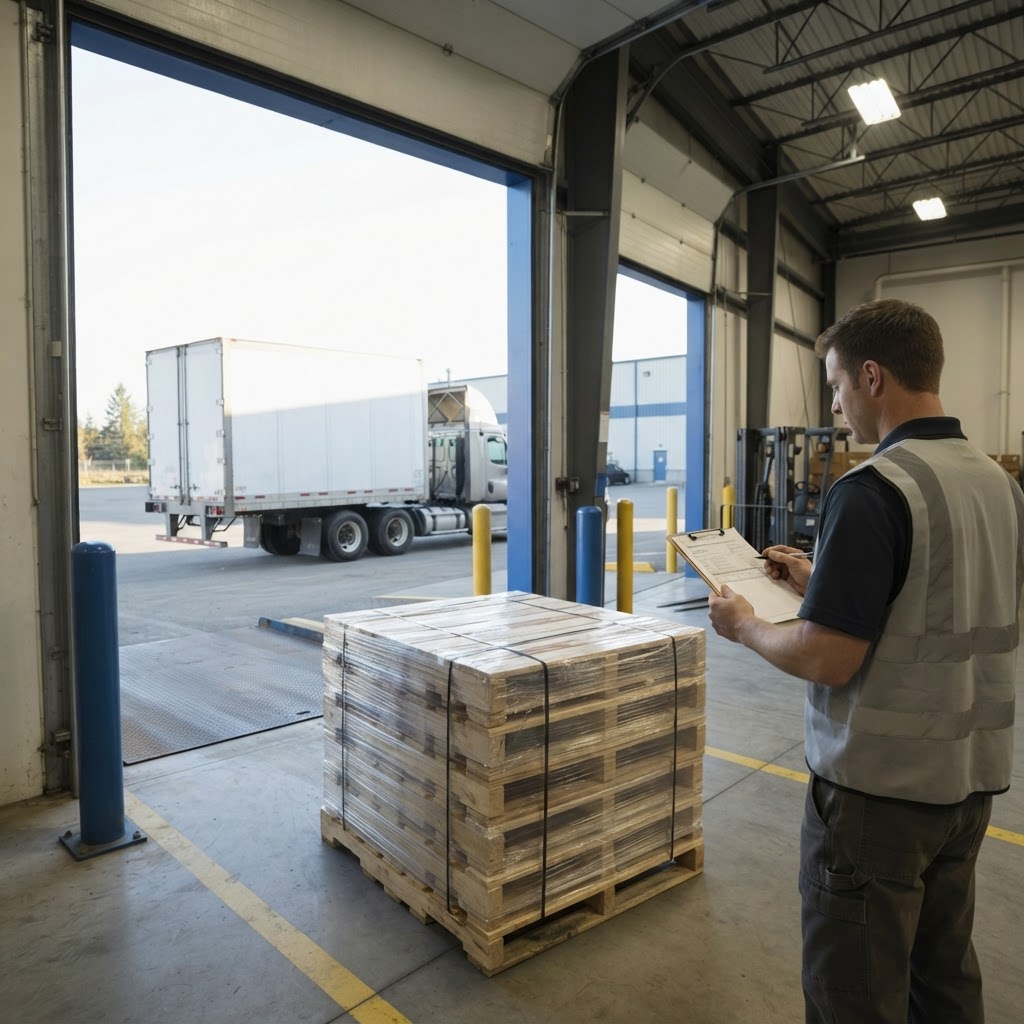
California lanes expose LTL freight to terminal transfers, trailer vibration, temperature changes, and extended dwell risk. Build the pallet as a stable handling unit that a forklift can lift, a terminal can stage, and a carrier can move without rebuilding it.
Build a Pallet That Can Survive Terminal Handling
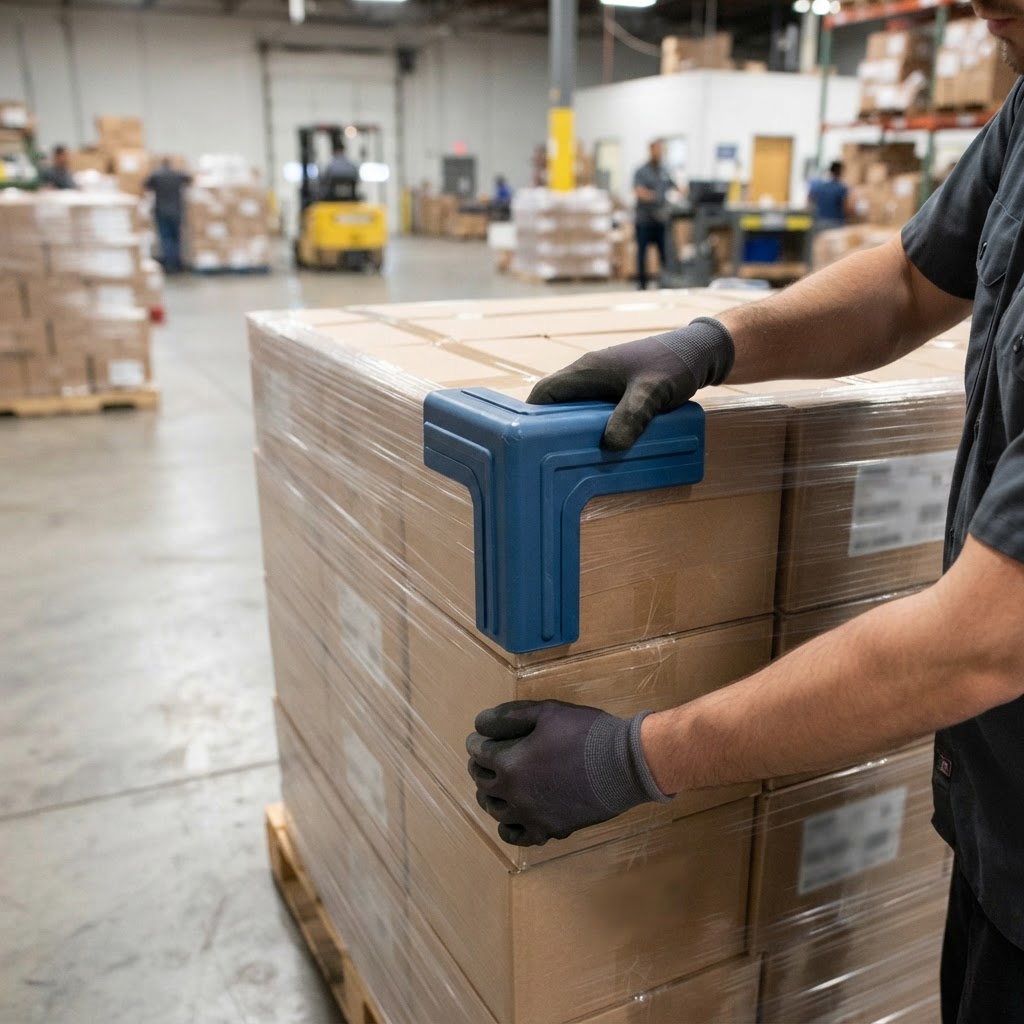
Use a sound pallet sized to keep every carton within its edges, then distribute weight evenly and lock cartons together with stretch wrap, banding, corner protection, or blocking as the product requires. Freight should not overhang the pallet edge, and packaging failures found at a terminal can lead to refusal or repackaging and handling charges under a carrier’s tariff. Review a cross-border packaging requirements checklist before releasing freight to the dock.
ISTA test procedures include Procedure 3B, which tests palletized freight for LTL shipment, so it works as a benchmark for pallet packaging. Photograph all sides of the wrapped, labeled pallet before pickup.
Use This Packaging Comparison Before Booking
The packaging method should match the shipment’s stability and sensitivity, not just its weight. This comparison focuses on practical controls that reduce exceptions during repeated LTL handling.
Packaging approach | Movement control | Appropriate freight condition | Operational risk |
|---|---|---|---|
Stretch wrap only | Holds cartons together | Stable, uniform cartons | Limited edge and compression protection |
Wrap with corner protection | Stabilizes load edges | Stacked cartons prone to crushing | Requires correct wrap tension |
Banding and blocking | Restrains heavy components | Dense or shifting freight | Must not damage product packaging |
Crating | Provides rigid protection | Fragile or irregular freight | Adds dimensions and weight |
More protection can change the final dimensions and density, so remeasure after crating, blocking, or adding edge protection rather than reusing an earlier estimate.

Documentation and Booking Controls That Prevent Exceptions
Cross-border LTL shipments from Canada need a complete paper trail because the carrier, customs broker, consignee, and shipper may each rely on the same shipment description. Keep the bill of lading, commercial invoice, product description, NMFC item, class, piece count, dimensions, weight, pickup contact, and delivery contact aligned.
Match the Bill of Lading to the Freight on the Dock
Enter the same final measurements on the bill of lading that the warehouse used to build the pallet, and make the commodity description specific enough to support the declared class. A customs broker processes trade documentation and applicable taxes or duties for standard business-to-business cross-border freight, and missing product details can delay the handoff.
For LTL shipments from Ontario to California, confirm appointment requirements and delivery-site constraints before booking. California receiving locations may refuse a pallet that cannot be safely unloaded or stored, even if the carrier accepted it at origin.
Compare Quotes Only After Classification Is Final
Quote comparison works when every carrier receives the same shipment facts. Truxweb lets SMEs compare carrier quotes, transit times, ratings, and booking fees side by side after providing lane and shipment details, helping operations teams avoid comparing rates built on different assumptions.
A useful freight class chart for LTL shipments can help validate a quoted class, but it does not replace the commodity-specific NMFC item. Keep photos, scale records, and dimension notes with the shipment file to support any invoice review or damage claim.
Conclusion
Correct classification starts with the commodity’s NMFC item and ends with final pallet measurements, including every protective material added at the dock. California-bound freight should be secured as a complete handling unit, with no pallet overhang and enough protection for terminal transfers. Match the bill of lading to the physical freight, retain condition photos, and resolve classification questions before pickup. For Quebec and Ontario SMEs that need side-by-side carrier choices with shipment details in one place, Truxweb is a practical marketplace for booking pallet freight.
Ready to make cross-border LTL booking more consistent? Compare freight options with Truxweb before your next California shipment.
Frequently Asked Questions (FAQs)
What is freight class in LTL shipping?
Freight class in LTL shipping is a carrier pricing category based on density, stowability, handling, and liability. Carriers use it to determine shipping cost based on shipment characteristics.
How do I calculate freight class for my shipment?
You calculate freight class for your shipment by identifying the applicable NMFC item, measuring the finished pallet, calculating density when required, and checking whether the item includes packaging or handling conditions.
Why does freight class matter for shipping costs?
Freight class matters for shipping costs because carriers use it to price the shipment’s space, handling demands, and risk, while an incorrect class can trigger an adjusted invoice after inspection.
Is freight class determined by weight or density?
Freight class depends on more than weight or density because the applicable NMFC item can also consider stowability, handling difficulty, liability exposure, and the packaging used to protect the commodity.
What is the difference between NMFC and freight class?
The difference between NMFC and freight class is that an NMFC item identifies and describes a commodity, while freight class is the pricing category assigned under that item’s applicable rules.
What happens if my freight class is wrong?
If your freight class is wrong, the carrier can remeasure or reinspect the freight, correct the classification, apply additional charges, and pause movement when packaging or documentation creates an operational concern.
What are the packaging requirements for California-bound LTL shipments?
Packaging requirements for California-bound LTL shipments include a stable pallet, freight contained within pallet edges, securement suited to the commodity, clear labels, and documentation that matches the completed handling unit.
About the Author
Daniel Park is a Freight Logistics Analyst covering LTL carrier performance, freight pricing, and cross-border operations across Ontario and Quebec. His analysis translates classification, packaging, and shipment visibility requirements into practical controls for SMB logistics teams.