


Introduction
Distribution logistics keeps goods flowing from warehouses to customers, but the entire chain depends on one often-overlooked element: carrier coordination. When communication between shippers and carriers breaks down, the consequences ripple outward through missed pickups, unpredictable costs, and frustrated end customers. For small and medium-sized businesses in Canada, particularly those shipping LTL freight across Ontario and Quebec, these coordination gaps are not hypothetical risks. They are daily operational realities that drain margins and erode service reliability, and the root cause is almost always a lack of centralized systems connecting shippers to the carriers who move their goods.
How Coordination Gaps Disrupt Transportation and Distribution
Carrier coordination is the connective tissue that holds distribution logistics together. Without it, even the most well-planned supply chain deteriorates into reactive firefighting. Understanding where these breakdowns originate is the first step toward fixing them.
Common Failure Points in Carrier Communication
Most coordination failures trace back to fragmented communication channels. When logistics teams juggle phone calls, scattered email threads, and manual spreadsheets to manage carrier relationships, critical information slips through the cracks. The result is a cascade of avoidable problems that compound over time.
- Missed pickups: Without confirmed dispatch notifications, shipments sit at docks while carriers arrive at wrong times or wrong locations
- Rate discrepancies: Verbal quotes and email-based pricing create confusion when invoiced amounts differ from what was originally communicated.
- Duplicate effort: Multiple team members contact the same carrier about the same shipment, wasting hours and creating conflicting instructions
- Delayed escalation: Problems go undetected until customers complain because there is no centralized dashboard tracking shipment status across carriers
- Inconsistent service levels: Without performance data, shippers keep booking underperforming carriers simply because they lack visibility into alternatives
Why Canadian SMBs Face Unique Coordination Challenges
The Canadian supply chain landscape presents distinct hurdles for smaller shippers. Businesses operating in Ontario and Quebec often ship across provincial boundaries with varying regulatory requirements, bilingual documentation needs, and a carrier market dominated by regional players who may not offer consistent digital booking capabilities. An LTL shipper in Montreal sending pallets to Toronto might deal with three different carriers in a single week, each with its own quoting process, tracking system, and invoicing format.
This patchwork approach forces logistics teams into a constant cycle of manual follow-ups. For companies shipping one to eight pallets at a time, the administrative overhead of managing each carrier relationship individually can consume more resources than the freight cost savings justify. The absence of a unified system turns freight management without visibility into a guessing game where every shipment is a standalone project.
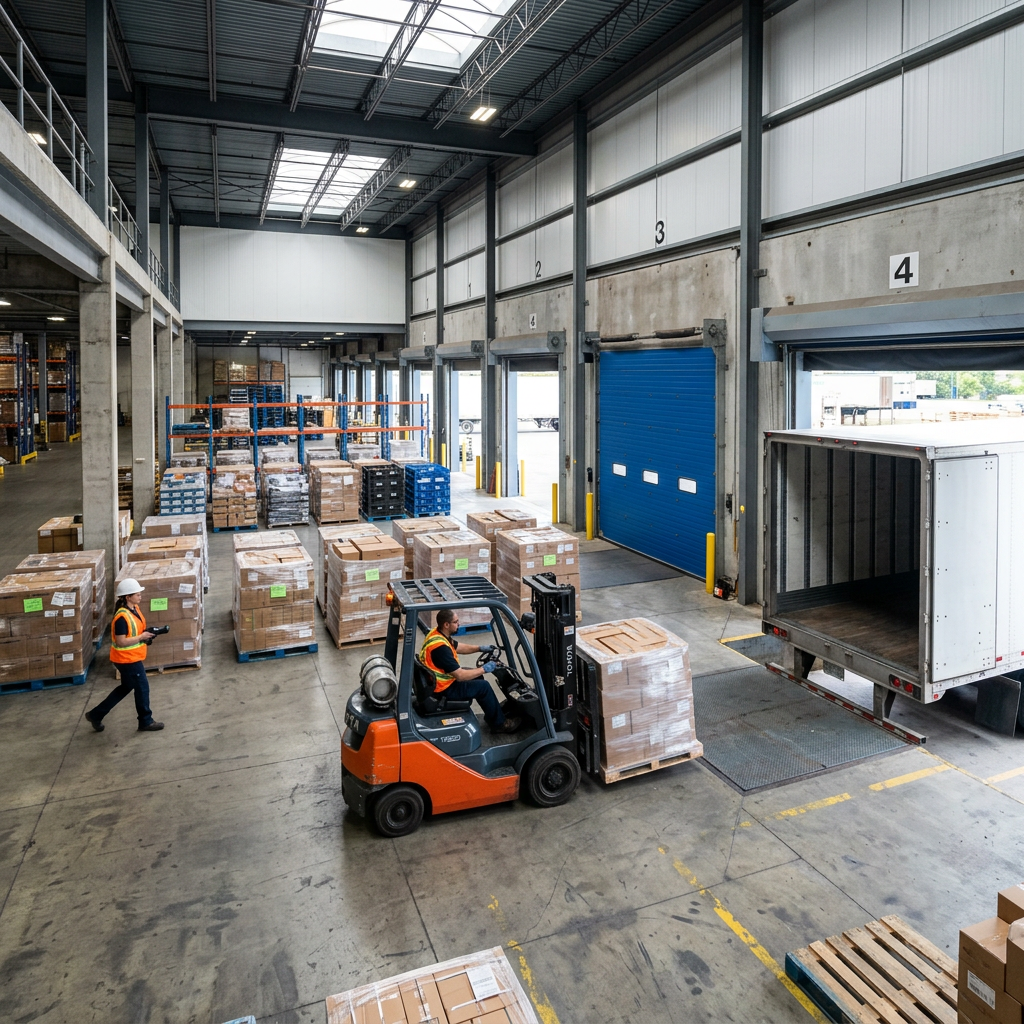
What Real-Time Visibility Actually Solves
Fixing logistics and distribution inefficiencies does not require hiring more staff or negotiating harder with carriers. It requires changing how shippers interact with their carrier network. Digital freight platforms have emerged as the practical solution for businesses that need to consolidate carrier communication, compare rates transparently, and gain real-time shipping visibility without the overhead of traditional brokerage.
The phrase "real-time visibility" gets used loosely in logistics marketing, but its operational impact is concrete. When a shipper can see the live status of every shipment on a single automated shipping dashboard, they stop making reactive phone calls. They stop wondering whether a pickup happened. They stop discovering delivery exceptions after a customer has already complained.
An effective supply chain visibility system replaces manual check-ins with automated alerts at each milestone: dispatch confirmed, pickup completed, in transit, delivered. This shift frees logistics coordinators to focus on exception management rather than routine status updates. For businesses running LTL shipping in Canada, where a single week might involve dozens of shipments across multiple carriers, this consolidation is transformative. Platforms that offer end-to-end freight visibility eliminate the information black holes that cause most coordination failures.
Freight Marketplace vs Broker: Choosing the Right Model
Businesses exploring better coordination options often face a fundamental choice: work with a traditional freight broker or use a digital freight marketplace. The distinction matters because each model handles carrier coordination differently. A broker acts as an intermediary, negotiating rates and managing carrier communication on the shipper's behalf, but this adds a layer of cost and removes direct shipper-carrier contact. A marketplace, by contrast, connects shippers directly with carriers while providing the freight marketplace tools needed to compare, book, and track shipments independently.
For SMBs seeking freight cost savings, the marketplace model often delivers more value. No brokering fees are inflating the price, and shippers maintain direct communication lines with carrier dispatch teams. Truxweb operates on this marketplace model, allowing businesses to request quotes from multiple LTL carriers simultaneously and receive competitive responses within minutes. The platform's instant comparison engine shows rates, transit times, and carrier ratings side by side, so shippers make informed decisions rather than defaulting to whichever carrier answered the phone first.
According to carrier management best practices, centralized platforms that consolidate quoting, booking, and tracking reduce administrative workload by eliminating the need for separate systems per carrier. This consolidation is precisely what separates modern logistics distribution companies from those still operating with disconnected workflows. When every carrier interaction flows through a single platform, coordination stops being a bottleneck and becomes a competitive advantage.
The difference is especially pronounced for businesses that ship across Ontario and Quebec. Regional LTL carriers in these provinces vary widely in digital readiness, and a digital freight marketplace that streamlines connections normalizes the experience. Whether a carrier offers sophisticated API tracking or basic email updates, the platform aggregates everything into one interface. Shippers in Montreal gain the same level of control as those in Toronto, regardless of which carriers serve their lanes.
Truxweb reinforces this with a dedicated concierge team available around the clock to intervene when issues arise, ensuring that logistics management never falls back into reactive mode. Combined with strict carrier quality standards requiring a minimum 95% satisfaction rating and daily compliance monitoring, the platform filters out underperformers before they ever affect a shipment. For businesses tired of guessing which LTL shipping providers will actually deliver consistent service, this kind of digital freight approach replaces hope with data.
Conclusion
Distribution logistics only works when carrier coordination works. The missed pickups, billing surprises, and communication black holes that plague Canadian SMBs are not inevitable costs of doing business. They are symptoms of outdated, fragmented workflows that digital platforms were designed to replace. By centralizing quoting, booking, tracking, and carrier communication into a single system, businesses regain control over their shipments and their costs. The path from reactive freight management to proactive logistics starts with choosing the right coordination tools.
Compare LTL rates from top-rated Canadian carriers and book your next shipment in minutes at Truxweb.
Frequently Asked Questions (FAQs)
How does poor carrier coordination affect distribution logistics?
Poor carrier coordination leads to missed pickups, delayed deliveries, billing discrepancies, and wasted administrative time that collectively drive up costs and reduce service reliability across the entire distribution chain.
What causes inefficiencies in distribution logistics?
Inefficiencies typically stem from fragmented communication channels, a lack of centralized tracking systems, manual quoting processes, and the absence of standardized performance data across multiple carriers.
How to improve carrier coordination in Canada?
Canadian businesses can improve carrier coordination by adopting digital freight platforms that consolidate quoting, booking, tracking, and carrier communication into a single dashboard with automated status alerts.
What is real-time shipping visibility, and why does it matter?
Real-time shipping visibility is the ability to track every shipment's status from dispatch through delivery on a centralized platform, which eliminates manual check-ins and allows teams to focus on resolving exceptions proactively.
How can small businesses fix distribution logistics problems?
Small businesses can fix distribution logistics problems by replacing manual email and phone-based carrier management with marketplace platforms that offer instant rate comparison, automated alerts, and direct carrier communication tools.