

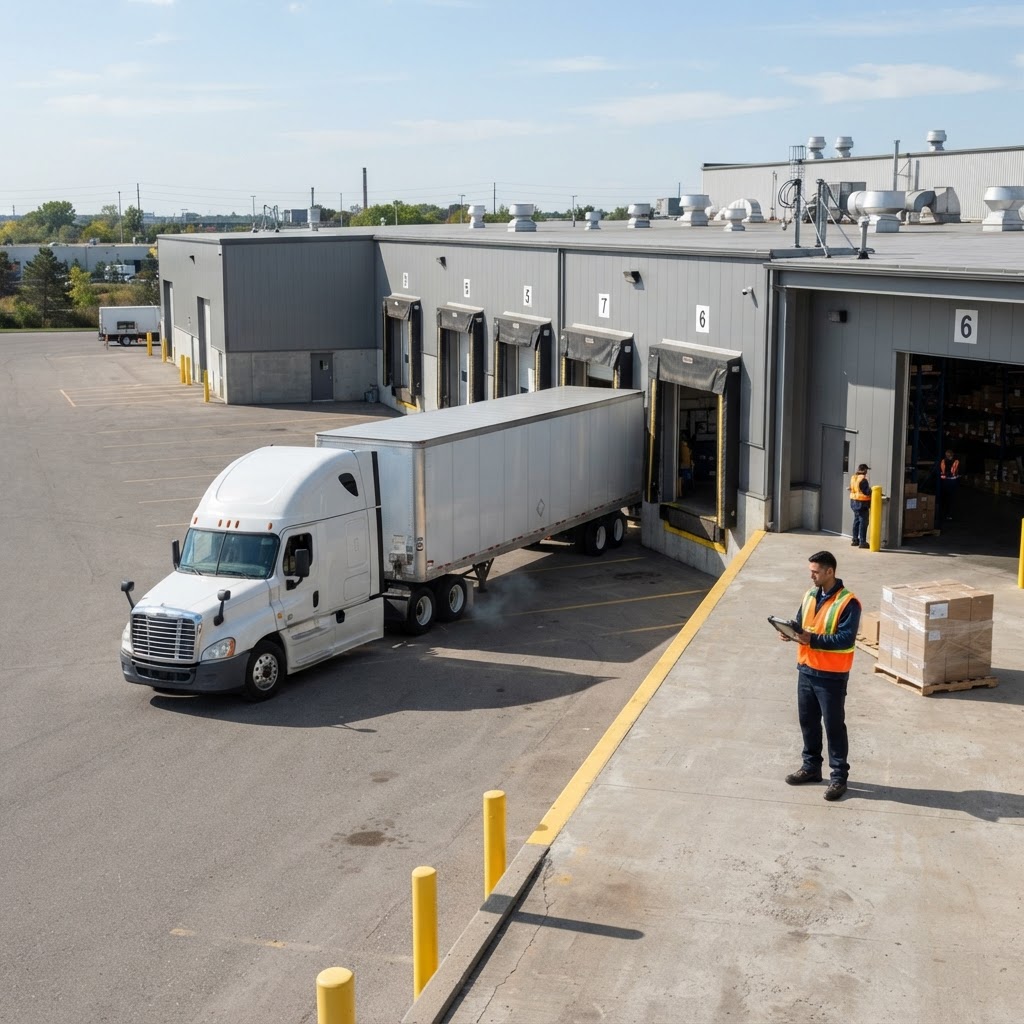
Introduction
New CDL regulations in 2026 are tightening carrier eligibility on both sides of the border, and Canadian shippers should expect a smaller pool of compliant cross-border drivers, longer transit windows on some lanes, and firmer pricing through the rest of the year. The FMCSA final rule that took effect on March 16, 2026 restricts non-domiciled CDL eligibility, Canadian provinces have aligned more closely on National Safety Code enforcement, and updated hours-of-service interpretations are changing how Ontario and Quebec fleets plan US runs. For small and medium-sized businesses moving LTL freight into Michigan, New York, Ohio, and the Northeast, these shifts are not abstract policy debates. They directly determine which carriers can legally cross, how often they can dispatch, and what shippers pay per pallet.
Key Takeaways:
The 2026 FMCSA CDL rule and stricter provincial enforcement have shrunk the compliant cross-border carrier pool, which affects capacity and rates.
Hours-of-service differences between Canada and the US still create transit variability, and shippers who plan around them see more predictable deliveries.
Verifying carrier safety ratings and National Safety Code standing before booking is now a core part of protecting cross-border shipments.
What Changed in CDL Regulations for 2026
The most consequential change of the year is the FMCSA final rule that took effect on March 16, 2026, which tightens non-domiciled CDL eligibility and adds new proof-of-status requirements at renewal. Existing licenses are grandfathered, but drivers cannot renew without meeting the updated criteria, and that has already removed a portion of cross-border capacity from the market. Layered on top are updated Canadian commercial driver license requirements, closer coordination between provinces on National Safety Code audits, and stricter documentation checks at high-volume ports of entry.
The FMCSA Final Rule and Its Ripple Effects
The FMCSA rule targets who can hold and renew a US CDL, and the practical result for shippers is fewer eligible drivers on cross-border lanes as renewal cycles come due through 2026 and into 2027. Fleets that historically leaned on non-domiciled drivers for Ontario-to-US and Quebec-to-US runs are now rebalancing their rosters, which has pushed some capacity out of the spot market. Industry reporting on the FMCSA final rule highlights that the impact is uneven across carriers, so shipper experience depends heavily on which fleet handles the freight.
Eligibility tightening: Non-domiciled CDL holders now face stricter proof requirements at renewal, reducing the pool of eligible cross-border drivers.
Grandfathering with a clock: Current licenses remain valid, but each renewal cycle removes drivers who cannot re-qualify under the new standard.
Capacity redistribution: Larger fleets with domiciled drivers are absorbing volume, while smaller carriers reliant on non-domiciled labor are pulling back from US lanes.
Pricing pressure: Reduced compliant capacity has firmed rates on Ontario-Michigan, Quebec-New York, and Toronto-Ohio lanes.
Compliance verification burden: Shippers cannot assume every carrier they used in 2024 is still fully cross-border ready in 2026.
Canadian Licensing and National Safety Code Alignment
On the Canadian side, commercial driver license requirements are still administered provincially, but National Safety Code standards continue to set the federal floor for carrier and driver performance. Ontario and Quebec regulators have leaned harder into audit-based enforcement in 2026, so a carrier's safety rating and CVOR or Quebec equivalent standing now moves faster in response to violations. Shippers who understand Canada-US border regulations and how they intersect with domestic licensing rules are better positioned to spot compliance risk before it disrupts a shipment.

How the New Rules Affect Cross-Border Freight
Regulatory change rarely shows up as a single, dramatic event on a bill of lading. It shows up as small frictions that add up: a carrier declining a lane it used to accept, a transit quote that runs half a day longer than it did last year, or a rate that jumps 6 to 9 percent between quotes on the same route. The 2026 CDL environment has produced exactly that pattern across Ontario and Quebec cross-border freight.
Capacity, Cost, and Carrier Availability
Compliant carrier capacity has tightened on high-volume corridors, and that shift is showing up in both spot and contract pricing. Industry coverage of freight capacity risks in 2026 shows major carriers reporting real operational impact from the CDL changes, not just forecasted risk. For LTL shippers moving 1 to 8 pallets, this environment rewards careful carrier selection decisions, because the cheapest quote is often coming from a fleet with the weakest compliance margin. Reviewing carrier performance metrics alongside price has become the practical way to avoid booking a shipment that gets stranded when a driver or unit fails a compliance check.
Hours-of-Service Rules and Transit Time Impact
Canadian and American hours-of-service regulations still diverge in meaningful ways in 2026, and that gap directly shapes transit times on cross-border runs. Canadian federal rules permit up to 13 hours of driving in a 14-hour work window, while US rules cap driving at 11 hours inside a 14-hour on-duty window with a required 30-minute break. A detailed hours-of-service comparison shows how these differences compound on longer runs, especially when a driver crosses the border mid-shift and switches which rule set applies. For shippers, the practical outcome is that a Montreal-to-Cleveland lane can legitimately vary by 6 to 12 hours depending on which fleet is running it, how they schedule rest, and whether they build in buffer for border wait times. Building realistic freight transit times planning into promises to end customers is now the difference between a reliable delivery program and constant service failures.
What Shippers Should Do Next
The good news is that Canadian shippers are not powerless in this environment. The 2026 CDL landscape rewards preparation, and the businesses that adjust their carrier vetting, documentation, and lane planning are already seeing steadier transit and more predictable costs than those still booking on price alone.
Verifying Carrier Compliance Before You Book
Before a shipment is tendered, a shipper should be able to answer three questions about the carrier: is their safety rating current, is their National Safety Code standing clean, and are their drivers eligible under the updated CDL rules for the specific lane being quoted. Transport Canada's overview of the National Safety Code framework is a useful reference for what "compliant" actually means at the federal level. This is where the Truxweb marketplace does structural work for shippers, because every carrier on the platform is monitored daily through SaferWatch for both federal and provincial safety compliance, and any carrier that drops below the 95 percent satisfaction threshold is removed. Comparing a Canadian LTL carriers comparison alongside live compliance data closes the gap between the carrier a shipper thinks they are booking and the one that actually shows up.
Building Cross-Border Plans That Absorb Regulatory Change
Beyond individual bookings, the shippers who navigate 2026 well are the ones treating regulatory change as a planning input, not a surprise. That means quoting earlier on cross-border lanes, keeping paperwork airtight to avoid customs clearance delays, and building 24 to 48 hours of buffer into promises for US destinations that used to run tighter. It also means using tools that surface transit variability upfront rather than after the fact. Truxweb's instant quote comparison and 360-degree dashboard let shippers see side-by-side rates, transit ranges, and carrier ratings before committing, which is far more actionable in a shifting regulatory environment than a broker phone call the next morning.

Conclusion
CDL regulations in 2026 have quietly redrawn the map of who can move Canadian freight into the US and at what price. The FMCSA final rule, tighter National Safety Code enforcement in Ontario and Quebec, and the ongoing hours-of-service gap between the two countries are all working in the same direction: rewarding shippers who verify carrier compliance and penalizing those who do not. The businesses staying ahead are treating carrier vetting and lane planning as core operational disciplines rather than back-office tasks. That shift, more than any single regulation, is what protects margin and delivery reliability through the rest of the year.
Ready to book cross-border LTL with carriers whose compliance is monitored every day? Compare vetted carriers on Truxweb and see live rates, transit windows, and safety standing before you tender your next shipment.
Frequently Asked Questions (FAQs)
What are the CDL requirements in Canada?
Canada does not issue a single national CDL; each province issues a Class 1 or Class A commercial license that meets National Safety Code driver standards, including medical fitness, road testing, and knowledge testing specific to commercial vehicles.
How do CDL regulations affect freight transit times?
Tighter CDL eligibility reduces the compliant driver pool on cross-border lanes, which can extend transit times when carriers reroute loads or wait for eligible drivers to become available.
What is the National Safety Code for commercial drivers?
The National Safety Code is a set of 16 standards developed by Canadian jurisdictions through the CCMTA that define minimum performance requirements for commercial carriers, vehicles, and drivers operating across provinces and international borders.
How can shippers check a carrier's safety rating in Ontario?
Ontario shippers can review a carrier's CVOR (Commercial Vehicle Operator's Registration) rating through the Ministry of Transportation, and cross-reference it with federal safety data or a platform that monitors compliance daily.
Are CDL laws different between Quebec and Ontario?
Yes, licensing is administered separately in Quebec by the SAAQ and in Ontario by the MTO, but both provinces align their commercial driver standards to the National Safety Code so cross-border and interprovincial operations remain consistent.
Can you explain hours-of-service rules for cross-border truck drivers?
Canadian rules allow up to 13 hours of driving in a 14-hour window, while US rules cap driving at 11 hours in a 14-hour on-duty window with a mandatory 30-minute break, so drivers must follow the rules of the country they are operating in at any given time.
Why choose a platform that enforces CDL and safety compliance?
Booking through a platform that verifies safety ratings and CDL compliance daily reduces the risk of shipment disruption, roadside failures, and delivery delays caused by a carrier falling out of good standing mid-transit.