


Introduction
Every delayed shipment has a backstory, and it rarely starts on the road. For most small and medium-sized businesses handling LTL shipping in Canada, the real slowdowns happen long before a truck leaves the dock: during quoting, carrier coordination, dispatch confirmation, and payment reconciliation. These shipping workflow breakdowns compound silently, adding hours or even days to freight cycles while inflating costs that never show up on a single invoice. When businesses in Ontario and Quebec trace their rising logistics expenses back to the source, the culprit is almost always a fragmented process rather than a carrier performance issue.
Key Takeaway: The biggest drags on freight operations are not transit delays but workflow bottlenecks in quoting, communication, visibility, and payment, all of which can be eliminated by moving to a centralized digital freight booking platform.
Quoting Delays and Carrier Communication Gaps
The first half of a freight cycle, from requesting a quote to confirming a carrier, is where most shipping workflow problems take root. Businesses that still rely on phone calls and email chains to gather rates are spending hours on a task that should take minutes. The ripple effect of that lost time touches every downstream step, from warehouse scheduling to final delivery windows.
Slow Quote Turnaround Drains Productivity
When a logistics coordinator sends rate requests to three or four carriers individually, the response timeline is unpredictable. Some carriers reply within the hour, others take a full business day, and a few never respond at all. The coordinator is left refreshing inboxes, making follow-up calls, and manually comparing rates in a spreadsheet before a booking can even begin.
- Scattered communication: Quotes arrive across email, voicemail, and text, making side-by-side comparison nearly impossible
- Inconsistent formatting: Each carrier presents rates differently, forcing manual data entry and increasing the risk of errors
- Delayed decisions: Waiting on the slowest carrier response holds up the entire booking, even when faster options are available
- Lost negotiation leverage: Without seeing all rates simultaneously, shippers accept the first reasonable price instead of the best one
These freight booking inefficiencies are not minor inconveniences. For a business shipping several pallets per week, even a two-hour delay per booking adds up to dozens of lost hours each month. That time translates directly into higher labor costs and missed pickup windows.
Poor Carrier Dispatch Communication Creates Blind Spots
Once a booking is confirmed, the next failure point is the handoff between the shipper and the carrier's dispatch team. In a traditional workflow, this handoff happens over email or phone, with no centralized record of what was communicated. If a pickup time changes, a dock restriction applies, or special handling is required, that information can easily get lost between the booking agent and the driver.
The result is a truck arriving at the wrong time, at the wrong door, or without the right equipment. Each of these carrier dispatch communication failures triggers a cascade: rescheduled pickups, warehouse overtime, and frustrated customers waiting on deliveries that were supposed to arrive yesterday. Businesses that lack a direct, documented line to dispatch teams are essentially operating on trust and hope, neither of which scales well.
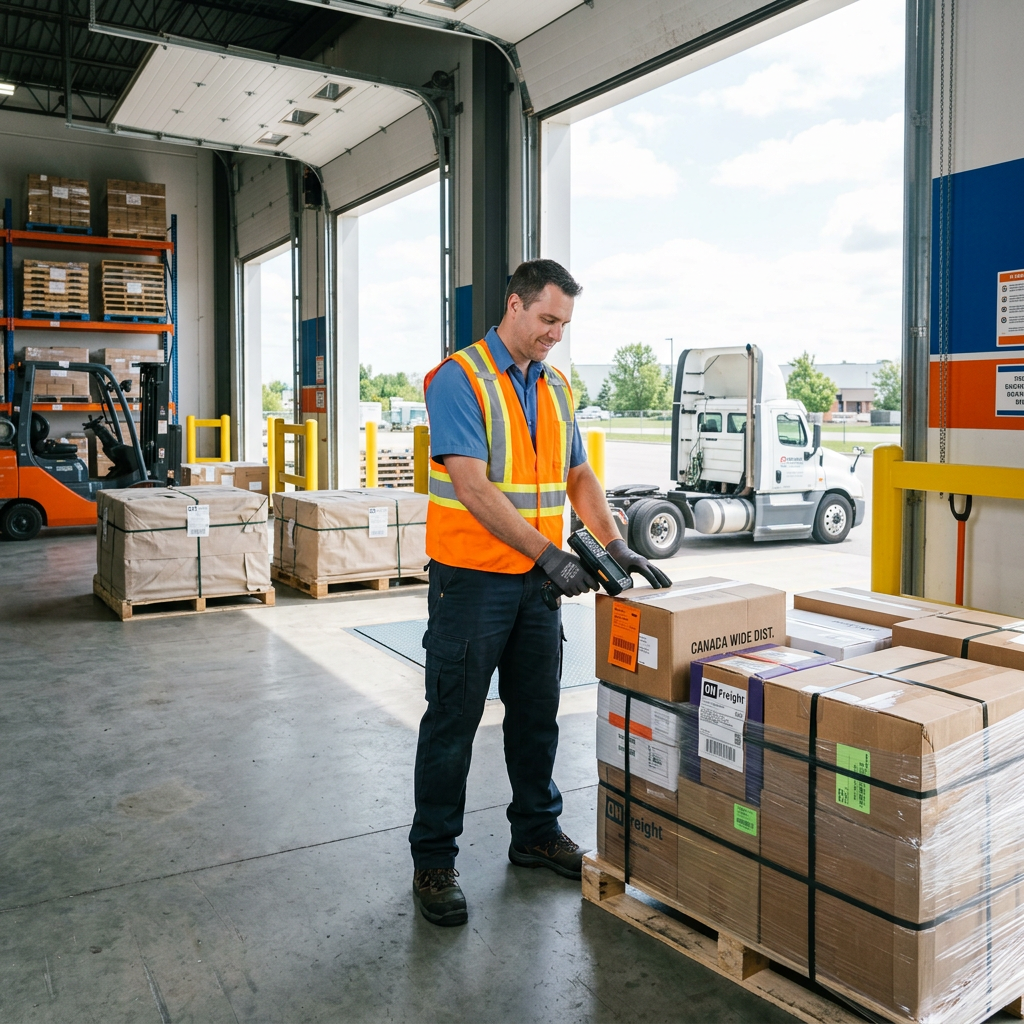
Visibility Gaps and Fragmented Payment Processes
Even after a shipment is booked and picked up, the workflow problems do not stop. The second half of the freight cycle, covering tracking, exception management, and invoicing, is where many businesses lose control entirely. Without a real-time shipping dashboard, logistics teams are left chasing updates instead of managing operations proactively.
Lack of Real-Time Freight Visibility
When shipment status depends on calling a carrier or waiting for an emailed update, the information is always stale by the time it arrives. A logistics manager checking on a shipment at 2 PM might learn it missed its morning connection, but only after the receiving warehouse has already been staffed and waiting for hours. This reactive approach to freight visibility tracking turns every shipment into a guessing game.
The cost goes beyond wasted labor. When a business cannot see where its freight is in real time, it cannot proactively notify customers about delays, reroute shipments around disruptions, or adjust warehouse receiving schedules. According to research on manual logistics inefficiencies, these blind spots are among the leading causes of costly backlogs for growing freight operations. Businesses in Ontario and Quebec shipping LTL volumes are especially vulnerable because regional carrier networks often lack the integrated tracking portals that national carriers offer. The gap between what shippers need to know and what they can actually see creates a freight visibility problem that compounds with every additional shipment in the pipeline.
Fragmented Invoicing and Payment Reconciliation
The final bottleneck in most manual shipping workflows is payment. When a business uses multiple carriers, each one sends a separate invoice with different terms, formats, and due dates. The accounts payable team then spends hours matching invoices to purchase orders, verifying accessorial charges, and chasing discrepancies. For SMB shipping solutions, this fragmentation is particularly painful because smaller teams simply do not have the bandwidth to manage it efficiently.
Disputed charges are another hidden drain. A carrier might bill for a liftgate service that was never requested, or apply a residential delivery surcharge to a commercial address. Without a centralized record of what was booked versus what was billed, resolving these disputes takes days of back-and-forth. Every unresolved discrepancy is money leaking out of the operation. Platforms like Truxweb address this directly by consolidating all carrier payments into a single statement, eliminating the need to reconcile dozens of separate invoices each month. That consolidation alone can recover significant administrative hours for businesses managing shipment management across fragmented systems.
Building a Digital-First Freight Workflow
Identifying workflow problems is only useful if it leads to a structural fix. The pattern across every bottleneck described above is the same: disconnected tools, manual handoffs, and a lack of centralized data. A digital freight booking approach replaces each of these failure points with a single, integrated process that moves at the speed the business actually needs.
What a Streamlined Freight Operation Looks Like
In a digital-first workflow, a shipper enters shipment details once and receives competitive quotes from multiple vetted carriers within minutes, not hours. Rates, transit times, and carrier ratings appear side by side, so the decision is informed and immediate. Once a booking is confirmed, dispatch communication happens through a centralized platform where every message is logged and accessible to both parties. There is no lost email, no missed voicemail, no ambiguity about pickup instructions.
After pickup, a real-time dashboard shows the shipment's status at every stage, with automated alerts for dispatch, pickup, and delivery milestones. The shipper does not need to call anyone for an update. The receiving team knows exactly when to expect the freight. And when the shipment delivers, the invoice matches the booking because both live in the same system. Research from the National Freight Facilitation Initiative confirms that this kind of process integration is what separates efficient transportation management from the costly manual alternatives that most SMBs still rely on. Truxweb was built specifically to deliver this end-to-end experience for businesses shipping LTL volumes across Canada, with digital freight platforms replacing every manual step from quote to payment.
Why the Shift Matters Now
Canadian freight volumes continue to grow, and carrier capacity in key corridors between Ontario and Quebec tightens seasonally. Businesses that still operate on manual workflows will feel that pressure more acutely with every passing quarter. The companies that have already moved to digital booking are not just saving time on individual shipments; they are building operational data that helps them forecast costs, identify their best-performing carriers, and negotiate better rates over time.
The gap between a freight workflow that improves shipping efficiency and one that drags it down is not a matter of scale or budget. It is a matter of process design. Every hour spent chasing a quote, calling for a status update, or reconciling a mismatched invoice is an hour that could be spent growing the business. According to a recent logistics industry analysis, driving greater efficiency in the face of unprecedented challenges requires exactly this kind of structural shift, moving from reactive, fragmented processes to centralized freight data systems that give shippers control over every stage of the cycle.
Conclusion
Shipping workflow problems rarely announce themselves with a single catastrophic failure. They accumulate quietly in the form of slow quotes, missed pickups, invisible shipments, and invoices that never quite match the booking. For Canadian SMBs handling LTL freight, these inefficiencies represent one of the largest controllable cost centers in the entire operation. The fix is not working harder within a broken process; it is replacing that process with a digital freight booking platform that eliminates manual handoffs, centralizes communication, and gives every stakeholder real-time visibility from quote to delivery.
Start streamlining your freight operations with Truxweb's digital booking platform today.
Frequently Asked Questions (FAQs)
What causes delays in a shipping workflow?
Delays most often stem from slow quote turnaround, poor carrier dispatch communication, and a lack of real-time shipment visibility rather than actual transit problems.
How do freight booking inefficiencies increase costs?
Manual quoting, scattered communication, and fragmented invoicing add labor hours, missed pickup windows, and billing disputes that compound into significant hidden expenses each month.
What is the biggest problem with manual freight operations?
The biggest problem is the absence of a centralized system, which forces every handoff between quoting, booking, tracking, and payment to rely on disconnected tools prone to errors and delays.
How does a digital freight platform fix shipping workflow problems?
A digital platform consolidates quoting, carrier communication, real-time tracking, and payment into a single interface, eliminating the manual handoffs where most delays and errors occur.
What are common LTL shipping workflow bottlenecks in Ontario?
Ontario shippers frequently encounter slow multi-carrier quote comparisons, missed pickup windows due to dispatch miscommunication, and invoice discrepancies from using multiple carriers without a unified billing system.
Why do shipping workflows slow down in Quebec freight operations?
Quebec freight operations often slow down because regional carrier networks lack integrated tracking portals, and bilingual communication requirements add complexity to manual email and phone-based coordination.
Is digital freight booking better than using a traditional broker?
Digital freight booking typically offers faster quote turnaround, transparent rate comparisons without brokering fees, and direct carrier communication, making it more efficient and cost-effective than traditional brokerage for most SMB shippers.