

Quick Answer
Shipping insurance protects the declared financial value of high-value freight when loss or damage occurs in transit, while carrier liability may be limited by a carrier's terms and the shipment's characteristics. For LTL freight moving through multiple terminals or across the Canada-U.S. border, confirm protection before pickup and retain complete shipment records.
Introduction
For a growing business, shipping insurance is a practical control against a loss that could erase the margin on an entire order. High-value pallets face more handling points in LTL networks, and a damage event can create both replacement costs and customer-service pressure. The right coverage starts with an accurate value, sound packaging, and documentation that connects the goods to the booking. A missing signature, incomplete waybill, or unclear condition report can complicate recovery even when a shipment was protected.
Key Takeaways:
Carrier liability and dedicated coverage address different financial risks.
Accurate declared value and shipment records support faster claim review.
Cross-border freight requires attention to both transit protection and customs documentation.
What Protection Applies to High-Value Freight?
Freight insurance is a dedicated policy or shipment-specific protection arrangement designed to reimburse a covered financial loss, subject to its terms, exclusions, deductible, and declared value. Carrier liability is the carrier's contractual responsibility for cargo in its custody, which is not automatically equivalent to the commercial value of your goods.
Why Carrier Liability Is Not the Same as Insurance
The carrier, shipper, consignee, and insurer can each have different responsibilities during transit, so the key question is who bears the loss if cargo arrives damaged or never arrives. cargo shipment insurance exists to address that financial exposure separately from the carrier's obligation.
Carrier liability: Applies under the carrier's governing terms and may require proof that the carrier was responsible.
Dedicated coverage: Can respond to covered physical loss or damage based on the policy wording.
Declared value: Gives the provider a stated basis for assessing the shipment's value and available protection.
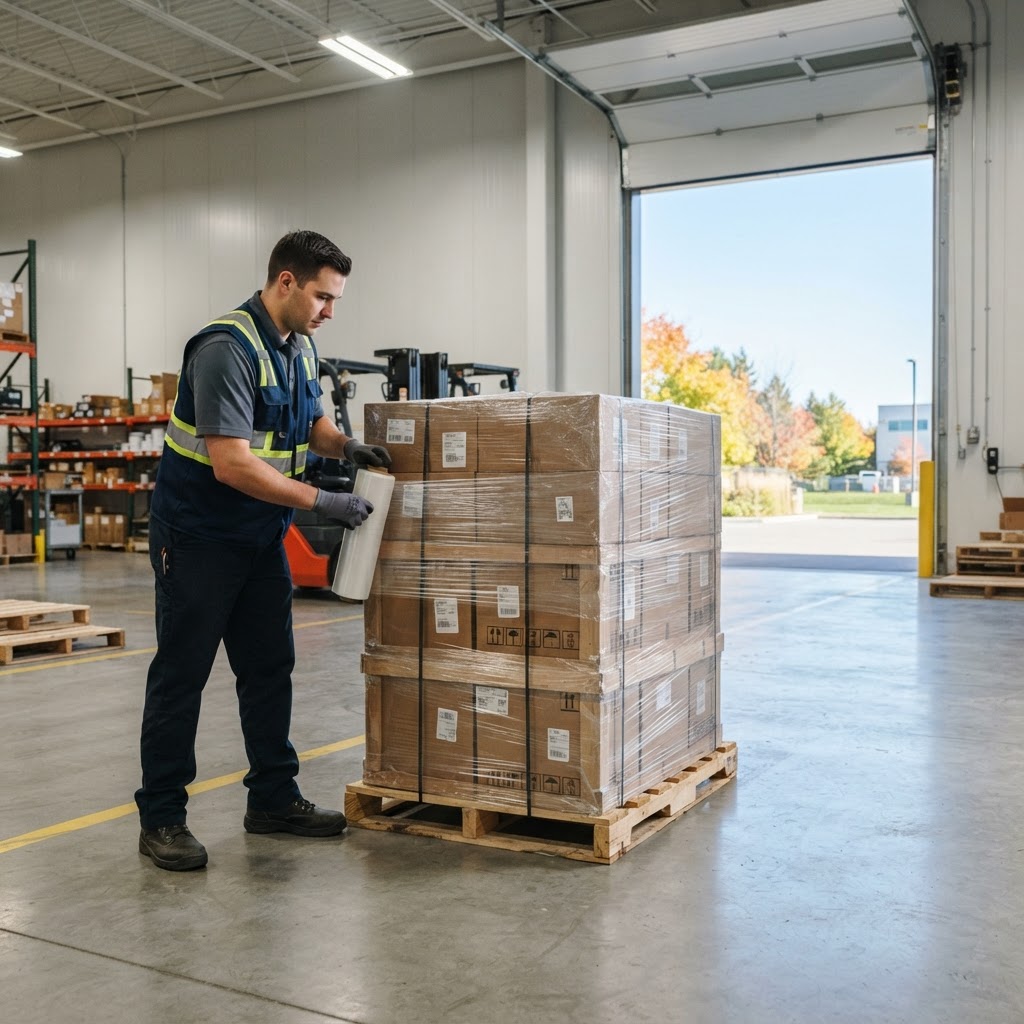
Packaging condition: Proper palletization and secure wrapping reduce preventable disputes about transit damage.
Where High-Value LTL Risk Builds Up
In LTL shipping, a pallet may be collected, consolidated, transferred, unloaded, and delivered by different teams, creating more opportunities for misrouting, impact, or moisture exposure. The risk is not a reason to avoid LTL, but it is a reason to match freight loss and damage insurance to the product value, packaging, lane, and handling profile.

How to Choose Adequate Coverage Before Pickup
Choose coverage by identifying what it would cost the business to restore the customer order after a covered loss, then verify how the chosen option treats deductibles, exclusions, damaged goods, and supporting evidence. A low premium is not useful if the stated value is too low or if the shipment description does not match the actual commodity.
Declared Value Versus Shipping Insurance
Declared value vs shipping insurance is an important distinction because a declared value communicates what the goods are worth, while insurance establishes the terms under which a covered loss may be paid. Include product invoices, packing lists, photographs of the loaded pallet, and a clear description of the commodity before the truck arrives.
The comparison below helps logistics managers decide which protection questions to ask before confirming an LTL booking.
Protection approach | Primary purpose | What to confirm | Useful documentation |
|---|---|---|---|
Carrier liability | Addresses the carrier's responsibility under its terms | Liability limits, claim conditions, and commodity restrictions | Bill of lading, delivery records, condition notes |
Shipment-specific insurance | Protects covered financial loss beyond basic carrier liability | Declared value, exclusions, deductible, and covered events | Invoice, packing list, photos, waybill |
Annual commercial freight insurance | Provides recurring protection for regular shipping activity | Eligible lanes, policy limits, reporting requirements, and claims process | Booking history, invoices, and shipment records |
For cargo protection for SMEs, the practical choice is the option that reflects the value at risk and can be documented consistently by the warehouse and receiving team.
Build a Claim-Ready Shipment File
Create the file before dispatch, not after an exception occurs. Keep the Canadian bill of lading, commercial invoice, packing details, pre-pickup photographs, carrier booking confirmation, and any handling instructions together so the shipment can be traced from dock to delivery.
At delivery, require the receiver to inspect visible condition before signing and record any shortage, crushed packaging, wetness, or breakage on the delivery record. A signed proof of delivery with accurate exceptions is more useful than a later verbal report because it records the condition at handoff.
Cost and Cross-Border Considerations
Shipping insurance for small business freight is priced according to the risk the insurer accepts, including commodity type, declared value, route, packaging, claims history, and requested coverage terms. Ask for the deductible and exclusions in writing, because the premium alone does not show what the business would pay after a covered incident.
What Changes on Canada-U.S. Lanes
Canada-U.S. shipments add customs documents, border timing, and additional custody events to the transit process. The CBSA explains that transportation costs can affect value-for-duty treatment, so keep freight and insurance information aligned with the commercial documents used for importation.
Use cross-border freight insurance discussions to clarify who arranges coverage, which party receives claim proceeds, and what evidence is needed if cargo is delayed, damaged, or lost outside Canada. Consistent shipment descriptions across the invoice, bill of lading, booking, and insurance request reduce avoidable questions during a claim.
How to Handle Damage or Loss Without Losing Time
Report a suspected issue promptly, preserve the packaging and cargo where safe, take dated photos, and notify the carrier and protection provider according to their instructions. A provider may require the waybill and other shipment information, and a documented freight damage claim gives all parties a clearer basis for investigating responsibility and reimbursement.
For shipments involving a border crossing, retain customs documents alongside the damage evidence and coordinate cross-border freight claims with the carrier, customs broker, consignee, and insurer as applicable. Do not dispose of damaged goods or packaging until the relevant parties confirm that inspection or salvage decisions are complete.
Conclusion
Protecting high-value freight starts before the pickup appointment, with accurate declared value, appropriate freight insurance, resilient packaging, and a complete document trail. Treat carrier liability as a separate consideration rather than assuming it will replace the value of an order. For SMEs comparing LTL options, Truxweb provides a way to compare carrier quotes, transit information, and booking details in one place while keeping shipment decisions visible. Review the protection available for each lane before confirming the next high-value pallet.
Need a clearer process for protected pallet freight? Explore Truxweb for your next LTL booking.
Frequently Asked Questions (FAQs)
What is shipping insurance for LTL freight?
Shipping insurance for LTL freight is coverage arranged for a shipment that can reimburse covered loss or damage based on the policy terms, declared value, exclusions, and deductible rather than relying only on a carrier's contractual liability.
How does freight insurance protect my business?
Freight insurance protects your business by transferring part of the financial impact of a covered cargo loss to the insurer, helping preserve cash flow when replacement inventory, customer commitments, and freight-related records must be managed quickly.
Does standard carrier liability cover my shipment?
Standard carrier liability may cover a shipment under the carrier's terms, but it is not a guarantee that the full commercial value will be reimbursed because eligibility, responsibility, limitations, and supporting documentation can affect the outcome.
What does freight insurance cover during transit?
Freight insurance can cover specified physical loss or damage during transit, but the exact events, commodities, geographic scope, exclusions, deductible, and settlement basis depend on the coverage wording selected before the shipment moves.
How to file a claim for damaged freight?
To file a claim for damaged freight, notify the carrier and coverage provider promptly, document the condition with photographs and delivery notes, preserve the packaging, and submit the booking, invoice, waybill, and other requested shipment evidence.
Do I need cargo insurance for Canada to US shipping?
Cargo insurance for Canada to U.S. shipping is worth considering when the financial value at risk exceeds what the business can comfortably absorb, particularly because border documents, multiple handoffs, and differing parties can complicate recovery after an incident.
About the Author
Sarah Bennett is a Cross-Border Trade & Customs Specialist focused on freight compliance, customs clearance, and Canada-U.S. shipping for businesses in Ontario and Quebec. Her work emphasizes practical documentation and risk controls that help shippers move freight with greater operational confidence.