


Introduction
If you have ever waited two days for a freight quote only to miss your shipping window, you already understand the problem. Traditional LTL freight quotes come through phone calls, email chains, and broker middlemen who add time, markup, and opacity to a process that should be straightforward. For logistics coordinators and operations managers shipping freight across Canada, that delay is not just frustrating. It is a real operational cost.
The good news is that getting an instant freight quote no longer requires a broker on speed dial or a stack of carrier rate cards. Digital freight platforms have changed the game entirely, and this guide will walk you through exactly how to get a competitive LTL freight quote in under five minutes, what information you need ready before you start, and how to evaluate what comes back so you can book with confidence.
What LTL Shipping Actually Involves
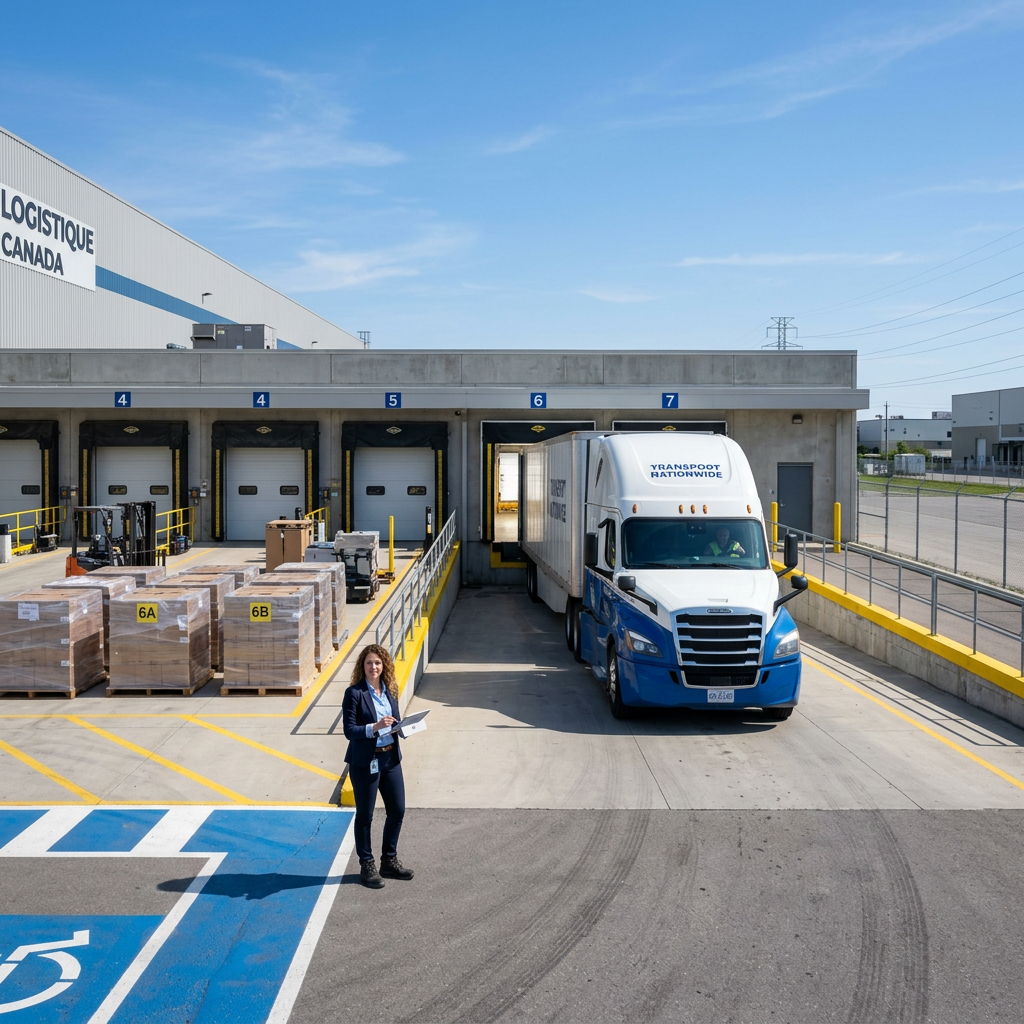
Before you can request a quote intelligently, it helps to understand what carriers are actually pricing. Less-Than-Truckload shipping means your freight shares trailer space with other shippers' goods. You pay only for the space your shipment occupies rather than the full trailer. That pricing model makes LTL shipping for SMEs a cost-effective choice for businesses shipping anywhere from one to eight pallets at a time. Statistics Canada data shows that freight transportation plays a critical role in supporting business operations and interprovincial trade.
Carriers calculate LTL shipping rates based on a combination of factors specific to your shipment. Knowing which factors drive cost gives you more control over what you pay and how quickly you get an accurate quote back.
The Core Pricing Factors Carriers Evaluate
Every carrier feeding into a freight quotation system uses the same foundational data points to generate a rate. Missing or inaccurate information on any of these will either delay your quote or result in pricing adjustments after pickup, which nobody wants.
- Freight class: A standardized classification system (classes 50 to 500) based on density, stowability, handling difficulty, and liability.
- Weight and dimensions: Total shipment weight and the length, width, and height of each pallet or piece.
- Origin and destination: Full postal codes for pickup and delivery, including whether either location is a residential address or requires a liftgate.
- Accessorial services: Any special handling requirements such as inside delivery, appointment scheduling, or hazardous material designations.
- Commodity description: A clear, specific description of the goods being shipped, which affects both class assignment and liability coverage.
- Pickup date: Requested pickup timing, which affects transit time estimates and carrier availability windows.
Why Freight Class Matters More Than Most Shippers Realize
Freight class is the single most common source of billing disputes in LTL shipping. Carriers can and do re-weigh and re-measure shipments at the dock. If your declared class does not match what they find, expect a reclassification charge on your final invoice. The safest approach is to use a freight cost calculator that incorporates National Motor Freight Classification (NMFC) guidelines, or confirm your class with your carrier directly before submitting a shipment.
For dense, uniform items like machinery parts or packaged food, class 50 to 85 is typical and translates to lower per-hundredweight rates. For lightweight or bulky goods, you may land in class 125 or higher, where rates climb significantly. Getting this right upfront is what separates a clean invoice from an unpleasant surprise.
Residential vs. Commercial Pickup and Delivery
Many businesses overlook the impact of accessorial fees on their quoted rate. A residential delivery, for example, typically adds $50 to $150 or more to the base rate depending on the carrier. Liftgate requirements at either end of the shipment add cost as well. When you are comparing quotes side by side, always verify whether the rates shown include these fees or whether they appear as separate line items. Transparent platforms will display accessorials clearly; traditional brokers often bury them.

How to Get a Freight Quote Online in Under 5 Minutes
The difference between a traditional freight quote request and a digital one is not just speed, it is the entire experience. Instead of calling three carriers, waiting for callbacks, and manually comparing PDFs, an online freight booking platform lets you enter your shipment details once and receive multiple competitive responses simultaneously. Here is the exact process, step by step.
Step 1: Gather Your Shipment Details Before You Open the Platform
The five-minute window assumes you have your information ready before you begin. Take two minutes beforehand to confirm your shipment weight, pallet dimensions, postal codes for origin and destination, freight class or commodity type, and any accessorial requirements. If you are a repeat shipper, most digital platforms will store previous shipment templates so you can pull from a saved profile rather than re-entering everything from scratch. That alone can cut your quote time in half.
Step 2: Enter Your Shipment Information Into the Quote Form
On a digital freight platform, quote requests are submitted through a structured online form. You will typically move through three to four screens covering shipment details, pickup and delivery addresses, service requirements, and confirmation. The structure is designed to collect exactly what carriers need to generate an accurate rate, nothing more, nothing less. This is where having your information ready pays off. The whole form takes under two minutes to complete when you are not hunting for details mid-entry.
Pay close attention to the accessorial options screen. Selecting or deselecting the wrong options is a common mistake that results in either overquoting or unexpected charges on delivery. If you are unsure whether a fee applies, it is better to include it and confirm with the carrier than to leave it off and absorb the charge later.
Step 3: Receive and Compare Multiple Carrier Rates
Once submitted, your request is distributed to multiple LTL freight carriers in Canada simultaneously. On a well-built platform, you should start seeing responses within minutes. You should not focus only on the lowest number on the screen. A proper freight rate comparison should evaluate three things: base rate, transit time, and carrier performance history.
Some carriers will offer the lowest rate but the longest transit window. Others may charge slightly more and deliver a day faster with a stronger on-time delivery record. Depending on what your customer needs, either option might be the right call. The point is that a side-by-side view makes that tradeoff visible immediately, rather than requiring you to manually extract data from three separate email threads.
Step 4: Book the Shipment in a Single Confirmation
Once you have selected your preferred carrier, booking should require nothing more than a single confirmation click. No paperwork, no phone call to a dispatcher, no back-and-forth over pickup windows. A well-designed platform will generate your bill of lading automatically and trigger dispatch notifications to the carrier in real time. Your shipment is booked, documented, and in motion, all within the same session where you requested the quote.
Comparing Digital Platforms vs. Traditional Freight Brokers
For businesses that have been using traditional freight brokers for years, the switch to a digital platform can feel like a significant change. But the operational differences are worth understanding clearly, especially when margins are tight and shipment frequency is high.
Speed and Transparency
Traditional freight brokers operate as intermediaries between shippers and carriers. That means your quote request goes to a broker, the broker contacts carriers, carriers respond to the broker, and the broker relays information back to you, with a markup added at each handoff. That process often takes 24 to 48 hours, and sometimes longer for complex shipments. Digital platforms eliminate the intermediary layer entirely. When you request a freight quote online, your request reaches carriers directly, and responses come back on the same timeline they use internally.
Transparency is the other major distinction. With a broker, you often do not know what the carrier is actually charging versus what the broker is billing you. On a direct platform, the rate you see is the rate the carrier set, with no brokering fees added on top. What you compare is what you pay.
Is a Digital Platform Right for Every Shipment?
Digital platforms work extremely well for standard LTL shipments with predictable dimensions, well-classified commodities, and straightforward pickup and delivery locations. For highly specialized freight such as temperature-controlled goods, oversized industrial equipment, or cross-border shipments with complex customs requirements, you may need a more consultative approach. That said, many modern platforms now handle a broad range of shipment types with carrier-specific filters, so it is worth testing before assuming your shipment requires manual brokering.
Evaluating Carrier Quality, Not Just Rate
One legitimate concern shippers have about digital platforms is whether lower-cost carriers cut corners on service quality. This is a fair point, and it is one reason why carrier ratings and compliance data matter as much as price when you compare LTL freight rates. Platforms that enforce minimum satisfaction thresholds and monitor safety compliance give you a layer of protection that a low-cost broker rate sheet simply does not provide. When evaluating any platform, ask directly how carriers are vetted and what happens if a delivery goes wrong.
Truxweb, for example, requires all carriers on its platform to maintain a 95% minimum customer satisfaction rating, with daily safety compliance monitoring through SaferWatch. That standard is built into the platform's carrier network instead of being left to the shipper to evaluate independently. For businesses in Quebec and Ontario shipping on tight timelines, that kind of built-in accountability matters.
Tips for Getting the Most Accurate Quote Every Time
Even with a fast digital platform, the quality of the quote you receive is directly proportional to the accuracy of the information you provide. A few practical habits will consistently produce cleaner quotes, fewer billing adjustments, and smoother shipments overall.
Habits That Improve Quote Accuracy
Shippers who consistently receive accurate quotes and clean invoices tend to follow the same set of practices. These are not complicated, but they require discipline, especially in high-volume shipping environments where it is tempting to estimate rather than measure.
- Measure every time: Do not rely on historical dimensions for recurring shipments. Product packaging and pallet configurations change, and even small variations affect class and rate.
- Use the NMFC directory: When in doubt about freight class, look it up rather than guessing. One class difference can mean a 20% to 30% rate change.
- Disclose all accessorials upfront: Liftgates, residential deliveries, and appointment requirements should always be declared, not added after the fact.
- Confirm postal codes: A single wrong digit in a destination postal code can route your shipment to the wrong service zone entirely.
- Save shipment templates: For recurring lanes, store your shipment profiles so future freight booking requests take seconds rather than minutes.
How to Read a Quote Before You Book It
A quote is not just a number. Before confirming any booking, review the full rate breakdown to confirm that the base rate, accessorial charges, and fuel surcharge are all itemized clearly. Fuel surcharges on LTL shipments in Canada typically range from 15% to 35% of the base rate, depending on the carrier and current fuel index, and they are applied on top of the quoted line haul rate. Hidden fees discovered after delivery are far more disruptive than a slightly higher rate discovered at the quote stage.
What Actually Eats Up Time in a Freight Quote
The "under 5 minutes" claim assumes the request goes through cleanly the first time. In practice, most of the delay shippers experience comes from a handful of avoidable snags rather than the platform itself. Missing or estimated dimensions force a carrier to hold the quote for manual review. A freight class left blank or guessed at defaults to the platform asking clarifying questions before it can return a rate. Entering a business address without noting a lack of a loading dock or forklift is another common one, since that changes which carriers can even service the lane. Shippers who keep a standard shipment profile on hand, saved dimensions, weight, freight class, and accessorial needs for their recurring lanes, consistently get quotes back in the timeframe the platform promises, while those re-entering details from memory each time are the ones who end up waiting.
Conclusion
Getting an accurate LTL freight quote no longer requires a broker, a phone call, or a 48-hour wait. With the right information in hand and a digital freight platform that connects you directly to carriers, the entire process from quote request to booking confirmation can realistically be completed in under five minutes. The key is preparation: knowing your shipment dimensions, freight class, and accessorial requirements before you open the form. From there, comparing rates, transit times, and carrier performance side by side gives you the clarity to make a fast, confident decision without second-guessing the invoice later. Whether you are shipping freight quotes in Quebec or booking lanes across Ontario, the tools to do it efficiently are available right now.
Ready to see how fast the process actually is? Request your first instant LTL freight quote on Truxweb and compare live carrier rates in minutes.
Frequently Asked Questions (FAQs)
How do I get instant freight quotes without calling a broker?
Submit your shipment details through a digital freight platform that distributes your request to multiple carriers simultaneously. Responses typically come back within minutes during carrier operating hours, with no broker intermediary involved.
What information is needed for a freight quote?
You will need your shipment weight, pallet dimensions, origin and destination postal codes, freight class or commodity description, pickup date, and any accessorial requirements such as liftgate service or residential delivery.
How do I compare freight rates effectively?
Look beyond the base rate and evaluate transit time and carrier performance ratings alongside price. A slightly higher rate with faster transit and a stronger on-time record may be the better operational choice depending on your customer's deadline.
How much does LTL shipping cost in Canada?
LTL shipping costs vary widely based on freight class, shipment weight, lane distance, and accessorial fees, but most standard pallet shipments within Ontario or Quebec range from $150 to $600 or more. Fuel surcharges of 15% to 35% are typically added on top of the base rate.
How long does LTL shipping take?
Transit times for LTL shipments within Canada typically range from one to five business days depending on the origin-destination lane and the carrier's service network. Cross-provincial shipments may take longer during peak freight periods.
Can you track LTL shipments in real time?
Yes. Most modern freight platforms and carriers provide shipment tracking through a dashboard or automated email alerts at key milestones including dispatch, pickup, and delivery confirmation.
How do I get freight quotes in Quebec for local carriers?
Use a digital freight platform that includes regional LTL carriers serving Quebec specifically. Entering your origin postal code will filter available carriers by service coverage, ensuring you receive rates from providers that actually serve your lane.
How do I get freight quotes in Ontario for small businesses?
Small businesses in Ontario can request quotes through digital freight marketplaces that connect them directly to carriers without requiring a minimum shipment volume or long-term contract. Many platforms allow single-shipment bookings with no account setup fees.
What are the best freight quotes online for Canadian shippers?
The best online freight quotes come from platforms that display multiple carrier rates side by side with full breakdowns including accessorials and fuel surcharges, so you are comparing total costs rather than base rates alone.
What is the cheapest LTL shipping option for small businesses?
The cheapest option depends on your specific lane, freight class, and service requirements. Using a platform that lets you compare multiple carriers simultaneously gives you the best chance of finding competitive rates without compromising on service reliability.