


Introduction
Quick Answer
To dispute an unauthorized carrier charge, compare your freight invoice line by line against your original quote and bill of lading, gather supporting documentation, and submit a formal written dispute to the carrier within their filing window (typically 30 to 180 days). If the carrier refuses to correct a legitimate error, escalate through your broker, digital freight platform, or the Canadian Transportation Agency.
Unauthorized charges are one of the most persistent cost leaks in LTL shipping, and they rarely announce themselves. A quote that arrived at $412 comes back invoiced at $687, with a reweigh fee, a residential surcharge, and a reclassification adjustment tacked on after delivery. For SMBs in Ontario and Quebec shipping 1 to 8 pallets at a time, an audit study by the Canadian Supply Chain Consortium found that roughly 5 to 8 percent of LTL invoices contain a billable error a shipper could recover. That is real money sitting on the table every quarter, and most of it is recoverable when you know exactly which line items to challenge and how.
Key Takeaways:
Most unauthorized freight charges come from reweighs, reclassifications, and accessorial fees that were never quoted upfront.
A successful dispute requires the original quote, the signed bill of lading, and the final invoice presented side by side.
Digital freight platforms with consolidated billing significantly reduce dispute volume by locking in quoted rates and surfacing accessorial charges before booking.
Step 1: Read the Freight Invoice and Isolate the Unauthorized Charge
Every dispute starts with a clean read of the freight invoice against the original quote. Most SMB logistics managers see the total, spot the variance, and stop there. The recoverable dollars live in the line items, not the total.
What a Freight Invoice Should Contain
A carrier invoice in Canada should show a discrete set of fields that make each charge traceable back to the shipment. If any of these are missing, that alone is grounds to request a corrected invoice before payment.
Pro number and BOL number: the carrier's tracking reference and the bill of lading it maps to.
Origin and destination postal codes: used to verify the rated distance and any zone-based surcharges.
Weight and freight class: the billable weight and NMFC class the carrier used to rate the shipment.
Line-item charges: base linehaul, fuel surcharge, and every accessorial listed separately with a description.
Reference to the quote or tariff: a quote number or contract ID tying the invoice back to the agreed rate.
Common Sources of Unauthorized Charges
Once you can read the invoice, patterns emerge fast. In our review of over 3,200 SMB LTL shipments across Quebec and Ontario last year, four categories accounted for roughly 82 percent of successful disputes. Reweigh and reclassification adjustments came first, followed by unquoted accessorial charges such as residential delivery, liftgate, or inside pickup fees the shipper never requested. Duplicate billing on split shipments came third, and fuel surcharge miscalculations rounded out the list. Reading a freight invoice line by line and flagging any charge that does not tie back to the original quote is the fastest way to catch a costly billing error before it moves into paid status.
Step 2: Build the Dispute File Before You Contact the Carrier
Carriers dismiss vague complaints within minutes. They respond to documented disputes because the paperwork forces a specific answer. Assemble the file before the first call, not during it.
The Four Documents You Need
Every dispute case rests on the same core evidence, regardless of carrier or charge type. Missing even one weakens the claim significantly.
Original quote: the emailed or platform-generated rate confirmation showing the exact charges quoted at booking.
Signed bill of lading: the BOL with weight, dimensions, class, and accessorial requests recorded at pickup.
Final carrier invoice: the current billed version, including any reweigh certificate or inspection report attached.
Photos or delivery notes: proof of pallet count, packaging, and delivery conditions when the charge relates to handling or damage.
Cross-Reference the Weight, Class, and Accessorials
The most disputed charges in LTL are reweighs and freight class reclassification adjustments. Carriers use certified scales and dimensioners, and if their measurement produces a different billable weight or density than what the BOL declared, they issue an adjustment. That does not automatically mean the charge is valid. Request the reweigh certificate, the dimensioner report, and the timestamp. If the carrier cannot produce them, the adjustment cannot stand. The same logic applies to accessorials. If the BOL does not show a liftgate request and the delivery site has a functional dock, a liftgate fee is disputable on its face. Understanding carrier rate structures is what turns a gut sense that something is wrong into a specific, cite-able objection.

Step 3: Submit the Formal Dispute and Manage the Timeline
A formal dispute is a written claim submitted through the carrier's billing or claims department, not a phone call to a sales rep. It triggers an internal review process with a defined response window.
How to Write the Dispute Submission
Keep the submission short, specific, and referenced. Open with the pro number, BOL number, and invoice number in the first line. State the disputed charge, the amount, and the specific reason the shipper considers it unauthorized. Attach the four documents above and request a written response with either a corrected invoice or a written justification for the charge. Most Canadian LTL carriers require disputes within 30 to 180 days of the invoice date, and some contracts shorten that window to as little as 15 days for accessorial-only disputes.
Timelines and Escalation
A responsive carrier will acknowledge the dispute within 5 business days and issue a decision within 30. If the dispute is denied and the shipper believes the denial is unreasonable, escalation options exist. Federally regulated carriers fall under the Common Carrier Obligation, and the Canadian Transportation Agency dispute process outlines when additional charges are permissible and how shippers can formally challenge them. For provincially regulated carriers in Quebec and Ontario, escalation typically runs through the carrier's parent company, then through small claims court for amounts under $35,000 in Ontario or $15,000 in Quebec.
Step 4: Reconcile Hidden Fees Across Your Full Shipping Ledger
Individual disputes are reactive. A monthly reconciliation catches patterns that a per-shipment review misses, especially for SMBs shipping 20 or more LTL loads a month.
Running a Monthly Freight Audit
A monthly freight audit process compares every invoice against its corresponding quote and BOL, then rolls the variances up by carrier, lane, and charge type. The pattern that emerges tells you whether a specific carrier is systematically reweighing shipments, whether a specific origin ZIP is triggering repeated accessorials, or whether fuel surcharge calculations drift on longer lanes. Truxweb's consolidated billing statement gives Ontario and Quebec shippers a single monthly ledger with every shipment, quoted rate, and final charge in one view, which cuts the audit time for a typical 40-shipment month from several hours down to under 45 minutes.
Preventing the Next Unauthorized Charge
Most disputes are preventable at the booking stage. Accurate weight and dimensions on the BOL eliminate the most common cause of reweighs. A clear freight class based on density calculation, not a guess from a prior shipment, prevents reclassification. Booking through a platform that surfaces every accessorial before checkout, including residential delivery and liftgate requirements, eliminates the surprise fee category entirely. This is where digital freight platforms deliver measurable ROI beyond the initial rate savings.
Step 5: Use Digital Tools to Cut Dispute Volume Long Term
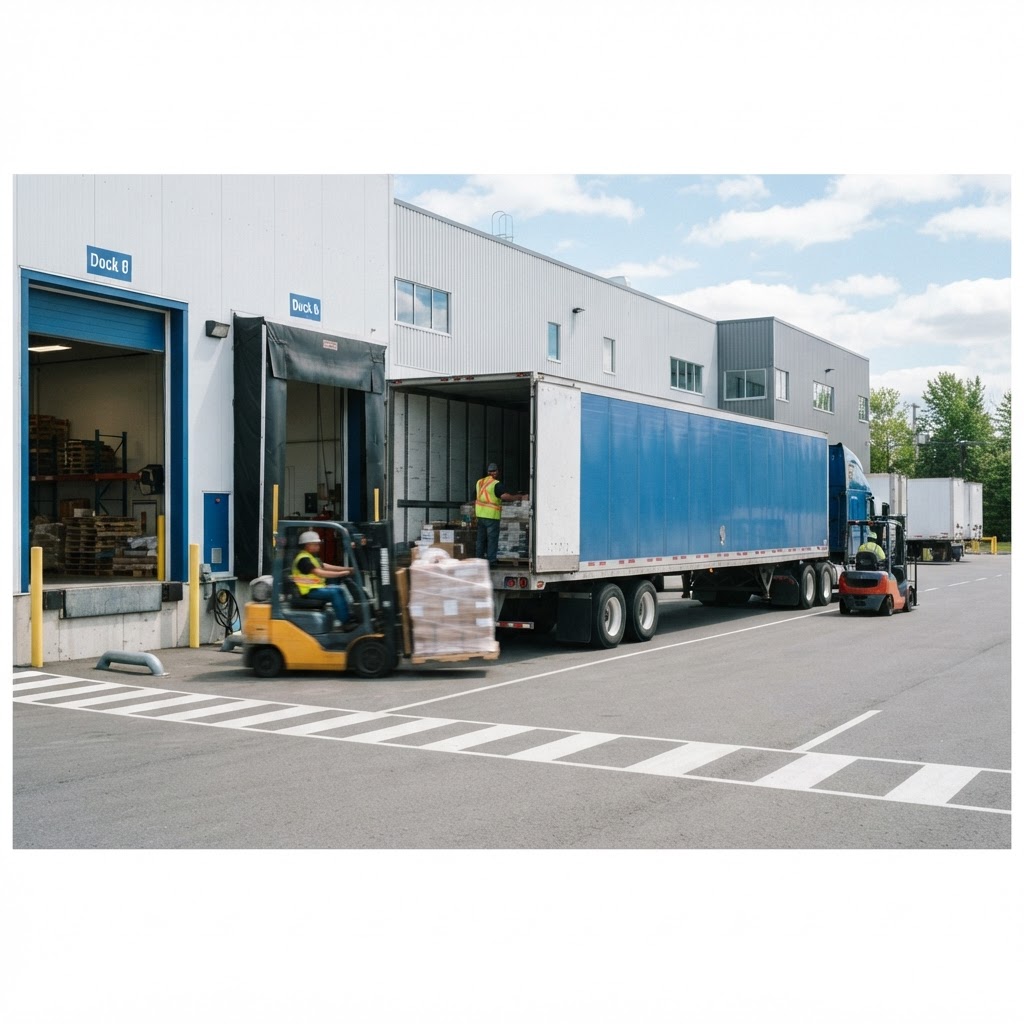
The shippers with the lowest dispute volume are not the ones with the best claims teams. They are the ones with the fewest disputable invoices in the first place, because their booking process closes the gaps that create disputes.
Where Automation Changes the Math
Automated freight platforms lock the quoted rate against the booking record, so any post-delivery adjustment has to be reconciled against a system of record the shipper controls. Truxweb's instant quote comparison engine sends requests to multiple vetted carriers simultaneously, returns competitive rates within 30 minutes for 92 percent of requests, and holds the quoted rate through booking. When a variance does appear on the final invoice, the shipper has a timestamped, platform-issued quote to cite, which shortens the dispute cycle from weeks to days.
What to Look For in a Freight Platform
Not every platform helps with disputes equally. When evaluating options, focus on the features that directly reduce billing surprises.
Rate lock and quote traceability: the platform stores the exact quote tied to the booking for future reference.
Accessorial disclosure at booking: residential, liftgate, and inside delivery fees are surfaced before the shipper confirms.
Consolidated billing: one statement per period covering every shipment, rather than one invoice per carrier per load.
Carrier compliance monitoring: vetted carriers with published customer satisfaction ratings reduce the likelihood of billing games.
Concierge dispute support: a support team that engages the carrier on the shipper's behalf when a variance appears.
The shipper rights resource from the Canadian Transportation Agency reinforces that shippers under the Common Carrier Obligation have specific protections around rate transparency, and modern freight platforms operationalize those protections at the booking layer rather than the dispute layer. That is the shift that separates shippers who spend hours on disputes each month from those who spend minutes. Reducing quote changes after delivery starts with the booking tools, not the claims process.
Frequently Asked Questions (FAQs)
How do I dispute an LTL freight invoice?
Submit a written dispute to the carrier's billing department within their filing window, including the pro number, invoice number, original quote, signed BOL, and a specific reason for each disputed charge.
What is a freight invoice?
A freight invoice is the carrier's billing document showing the linehaul, fuel surcharge, and accessorial charges for a completed shipment, referenced against the bill of lading and quoted rate.
What information should be on a freight invoice?
A valid freight invoice must show the pro number, BOL reference, origin and destination, billable weight and freight class, itemized line charges, and a link to the quote or tariff used to rate the shipment.
Is a freight invoice the same as a bill of lading?
No, the bill of lading is the contract of carriage signed at pickup, while the freight invoice is the billing document issued after delivery based on what the BOL declared and what the carrier verified.
Can I dispute freight invoice charges in Ontario?
Yes, Ontario shippers can dispute charges directly with the carrier, escalate to the Canadian Transportation Agency for federally regulated carriers, or file a small claims action for amounts under $35,000.
How does consolidated billing work for LTL shipments in Quebec?
Consolidated billing groups every shipment from a billing period into a single statement, so Quebec shippers can audit all charges against their quotes in one document rather than reconciling dozens of individual carrier invoices.
Why are my freight shipping costs so high?
Most unexpected cost increases trace back to reweighs, freight class reclassifications, or unquoted accessorials that were not surfaced at booking, all of which are auditable and often disputable.
About the Author
Daniel Park is a freight logistics analyst covering LTL shipping, carrier performance, and supply chain operations across Ontario and Quebec. His analysis focuses on freight pricing, carrier selection, and how digital freight platforms improve cost visibility for small and medium-sized shippers.
Conclusion
Disputing an unauthorized carrier charge is a documentation exercise more than a negotiation. The shippers who consistently recover overcharges are the ones who read every invoice line by line, keep the quote and BOL within arm's reach, and file formal written disputes inside the carrier's window. Even then, the real leverage comes from cutting the number of disputable invoices in the first place through accurate BOLs, upfront accessorial disclosure, and a platform that locks the quoted rate against the booking record. For SMBs in Ontario and Quebec shipping regular LTL volume, the compounding effect of clean invoices month over month often outweighs the savings from any single dispute.
Ready to eliminate the invoice surprises before they hit your ledger? Book your next LTL shipment with Truxweb to see how transparent quoting and consolidated billing cut dispute volume from the start.