


Introduction
Quick Answer
Canadian LTL freight moving to Florida requires a Bill of Lading (BOL), a Commercial Invoice, a Certificate of Origin or USMCA declaration when claiming preferential duty, and a Packing List, along with a PARS/PAPS number issued by a licensed customs broker. Missing or inconsistent details across these documents are the single largest cause of border holds on Canada-to-US LTL shipments.
Sending a pallet from Toronto or Montreal to Miami looks straightforward on a map, but the paperwork is where most Canadian shippers lose time and money. A BOL with the wrong weight, an invoice missing an HS code, or a broker reference not filed before the truck reaches Fort Erie can freeze a shipment for hours or days. Florida-bound freight also tends to move through high-volume crossings like the Ambassador Bridge and the Peace Bridge, where CBP officers process thousands of PAPS entries daily and have zero tolerance for mismatched numbers. Getting the documents right the first time is the difference between a two-day transit and a five-day one.
Key Takeaways:
Four documents are non-negotiable for Canada-to-Florida LTL freight: BOL, Commercial Invoice, Certificate of Origin or USMCA declaration, and Packing List.
Every reference number, weight, and value must match across all documents or the shipment will be held at the border.
Digital platforms cut documentation errors by pre-filling shipper data and syncing details across every form in real time.
The Mandatory Shipping Documents for Canada-to-Florida LTL Freight
Every LTL shipment crossing from Canada into the United States needs a specific paper trail that satisfies both the Canada Border Services Agency on export and US Customs and Border Protection on import. Florida-bound freight is no different from any other US destination at the border itself, but the long transit distance means any documentation error compounds into much larger delivery delays. Here is exactly what needs to be in the driver's hand or in the carrier's system before the truck rolls south.
The four documents every shipper must prepare
These are the core cross-border freight documents that must accompany every Canada-to-Florida LTL load, no exceptions.
- Bill of Lading (BOL): The contract of carriage between shipper, carrier, and consignee. It lists piece count, weight, freight class, commodity description, and pickup and delivery addresses.
- Commercial Invoice: The document CBP uses to assess duty. It states the seller, buyer, HS tariff codes, unit values, country of origin, and Incoterms.
- Certificate of Origin or USMCA Certification: Required when claiming duty-free treatment under the Canada-US-Mexico Agreement. Without it, standard duty rates apply.
- Packing List: An itemized breakdown of what is inside each carton or pallet, referenced against the invoice for CBP verification.
The broker-issued reference numbers that unlock the border
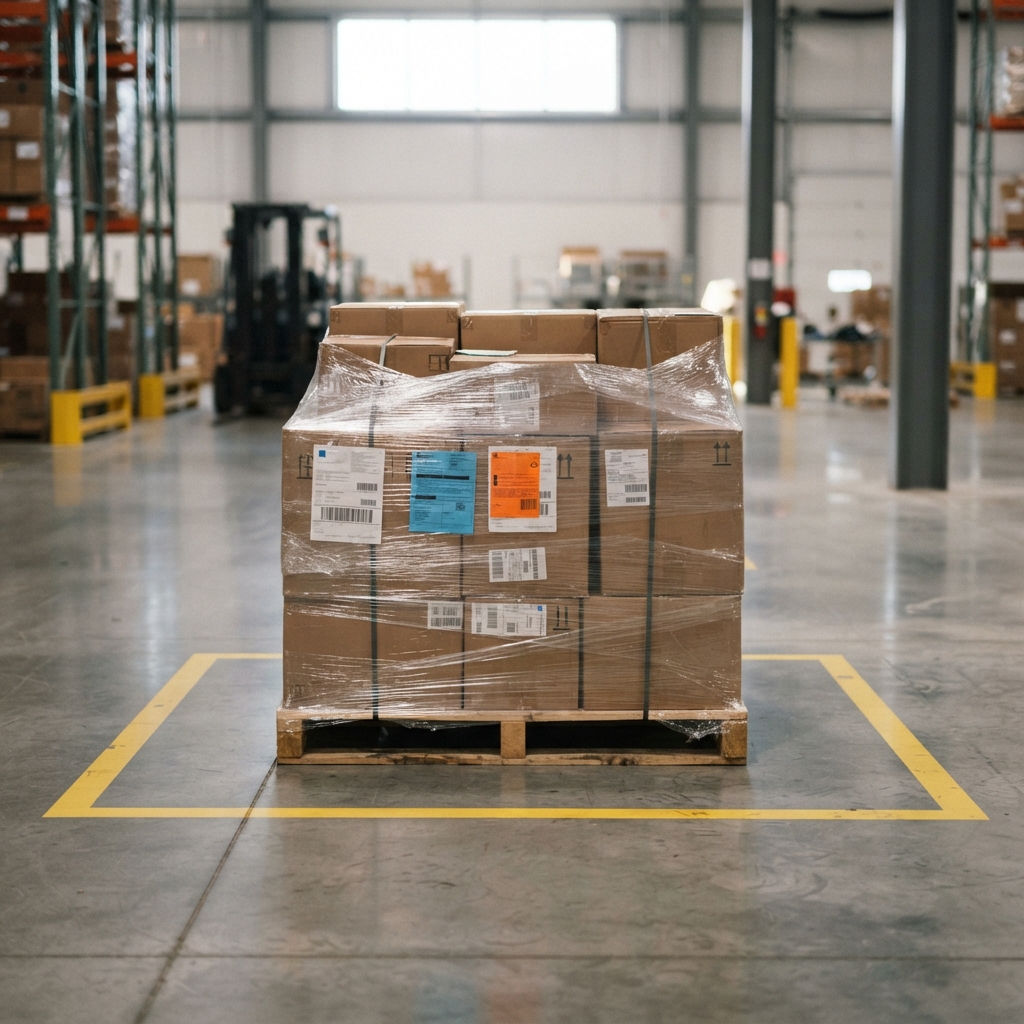
Documents alone are not enough. Your licensed customs broker must file a Pre-Arrival Processing System (PAPS) barcode or a Pre-Arrival Review System (PARS) number, and that reference must appear on the BOL. The carrier scans it at the primary inspection booth, and CBP releases the shipment electronically if the invoice data on file matches. Florida-bound freight typically clears at the border crossing, not at destination, so a PAPS mismatch means the entire truck sits until the broker corrects the entry. Reviewing the CBSA commercial import portal is worth the fifteen minutes it takes any shipper new to the lane.
How to Prepare a Bill of Lading and Commercial Invoice Correctly
The BOL and the Commercial Invoice do most of the heavy lifting at the border, and they are also where the majority of errors originate. Preparing them accurately is less about freight expertise and more about disciplined data entry, because CBP and CBSA both cross-reference every field against the broker's electronic filing. A single mismatched weight or value will trigger a hold.
Filling out the Bill of Lading step by step
Start with the shipper and consignee blocks, using the exact legal names and addresses that appear on the invoice. Then work through the freight description, keeping the language specific enough that a customs officer can identify the commodity without opening the pallet. The Canadian Board of Marine Underwriters guidance is a useful reference for what constitutes an acceptable commodity description.
Piece count and packaging type: State the exact number of pallets, skids, or cartons and the packaging type (e.g., "4 pallets STC 96 cartons").
Actual weight: Weigh the freight on a certified scale. Estimated weights are the top source of reweigh charges on LTL pallet shipping documentation.
Freight class: Determined by density, stowability, handling, and liability. An incorrect class is the second-most common accessorial charge trigger.
PAPS barcode: Attach the broker-supplied label so it is visible on the BOL and on the outside of at least one pallet.
Special instructions: Note liftgate needs, appointment requirements, or residential delivery at the Florida address.
Building a Commercial Invoice that clears customs the first time
The Commercial Invoice must include the seller and buyer, a full description of goods, quantity, unit price, total value in the currency of sale, country of origin for each line item, HS tariff code to six digits at minimum, and Incoterms such as FOB or DAP. If any of these are missing or contradict the BOL, CBP will issue a request for information, and the truck waits. Businesses shipping regularly through customs documentation errors know that consistency across every field is what separates a smooth clearance from a two-day hold. The US Department of Commerce publishes a helpful Canada customs regulations guide that covers commercial invoice requirements in detail.

Common Documentation Errors and Digital vs Manual Approaches
Even shippers who have moved freight to Florida for years still lose loads to preventable paperwork mistakes. Understanding where those errors originate, and how digital tools eliminate most of them, is the fastest way to improve on-time delivery on this lane.
The five errors that cause the most border delays
These five issues account for the majority of customs clearance mistakes on Canada-to-US LTL lanes.
Weight mismatches: BOL weight does not match invoice weight or the carrier's reweigh at the terminal. Result: reweigh fees and a customs query.
Missing HS codes: An invoice without tariff codes cannot be filed electronically, so the broker cannot obtain release.
Address discrepancies: The consignee name or Florida delivery address differs between BOL and invoice, which CBP treats as a potential misdeclaration.
No USMCA certification when duty-free is claimed: The shipment clears but at full duty, creating an unexpected bill and a refund process that can take months.
Unsigned BOLs: An unsigned BOL is not a legal contract, and some carriers will refuse pickup outright.
Manual paperwork versus digital shipping documentation
Manual documentation typically means retyping the same shipper, consignee, and commodity data into a BOL template, then again into the invoice, then again into an email to the broker. Every re-entry is a chance for a typo, and small errors compound across three or four documents. Digital shipping documentation for freight solves this by storing shipper profiles, consignee records, and commodity libraries once, then populating every document from the same source of truth. Platforms like Truxweb generate the BOL directly from the booking, sync the details with the carrier's system, and give the shipper a downloadable PDF that matches what the driver receives, eliminating the version-control problems that plague email-based workflows.
When digital documentation pays for itself
For a shipper moving one pallet a month, manual paperwork is manageable. For a shipper moving five to twenty pallets a week from Ontario or Quebec to Florida, the math changes fast. A single held load can cost several hundred dollars in detention, storage, and expedited re-delivery, plus the intangible cost of a missed customer commitment. Reviewing the full list of required shipping documents and moving them into a digital workflow typically pays back within the first two or three avoided delays. Understanding the broader Canada-US border regulations that govern the lane also helps shippers anticipate which documents each specific commodity will require.
Conclusion
Canada-to-Florida LTL freight succeeds or fails on documentation discipline. The BOL, Commercial Invoice, USMCA certification, and Packing List all need to tell the same story, and the broker's PAPS number needs to be filed before the truck reaches the border. Shippers who move this lane regularly find that the switch from manual templates to a digital booking platform is the single change that removes the most friction, because the same data flows into every document automatically. Consistency across paperwork is what turns a stressful cross-border shipment into a predictable one.
Ready to move your Ontario or Quebec freight to Florida without the paperwork headaches? Book your next LTL shipment with Truxweb and get carrier quotes, a compliant BOL, and full shipment visibility from one dashboard.
Frequently Asked Questions (FAQs)
What documents are required for LTL shipping to the US?
Cross-border LTL to the US requires a Bill of Lading, a Commercial Invoice, a USMCA certification or Certificate of Origin when claiming preferential duty, a Packing List, and a broker-issued PAPS or PARS reference number on the BOL.
How do I prepare a bill of lading for cross-border freight?
Prepare a BOL by entering the exact legal shipper and consignee names and addresses, actual weighed weight, piece count, freight class, a specific commodity description, the broker's PAPS barcode, and any special handling instructions, then sign it before the carrier arrives.
What is the difference between a BOL and a packing slip?
The BOL is a legal contract of carriage between shipper, carrier, and consignee that governs liability and payment, while the packing slip is an itemized list of what is inside each carton or pallet used for receiving verification and customs cross-checks.
How do I correct errors on shipping documents after pickup?
Contact the carrier and broker immediately with the corrected data and issue a revised BOL or invoice referencing the original document number, because uncorrected errors will surface at the border and hold the shipment.
Is a packing list required for LTL shipments to Florida?
Yes, a packing list is required for any commercial cross-border LTL shipment because CBP uses it to verify that the physical contents match the commercial invoice and BOL.
How does documentation differ for Ontario and Quebec freight to Florida?
The required documents are identical for Ontario and Quebec shippers, but Quebec exporters should ensure invoices and BOLs are prepared in English or bilingually since US carriers and CBP officers work in English only.
About the Author
Daniel Park is a freight logistics analyst covering LTL shipping, carrier performance, and supply chain operations across Ontario and Quebec. His work focuses on translating technical freight concepts, from carrier compliance to cross-border documentation, into practical guidance for small and medium-sized shippers. He writes with a data-driven lens grounded in real carrier and platform performance metrics.