

Quick Answer
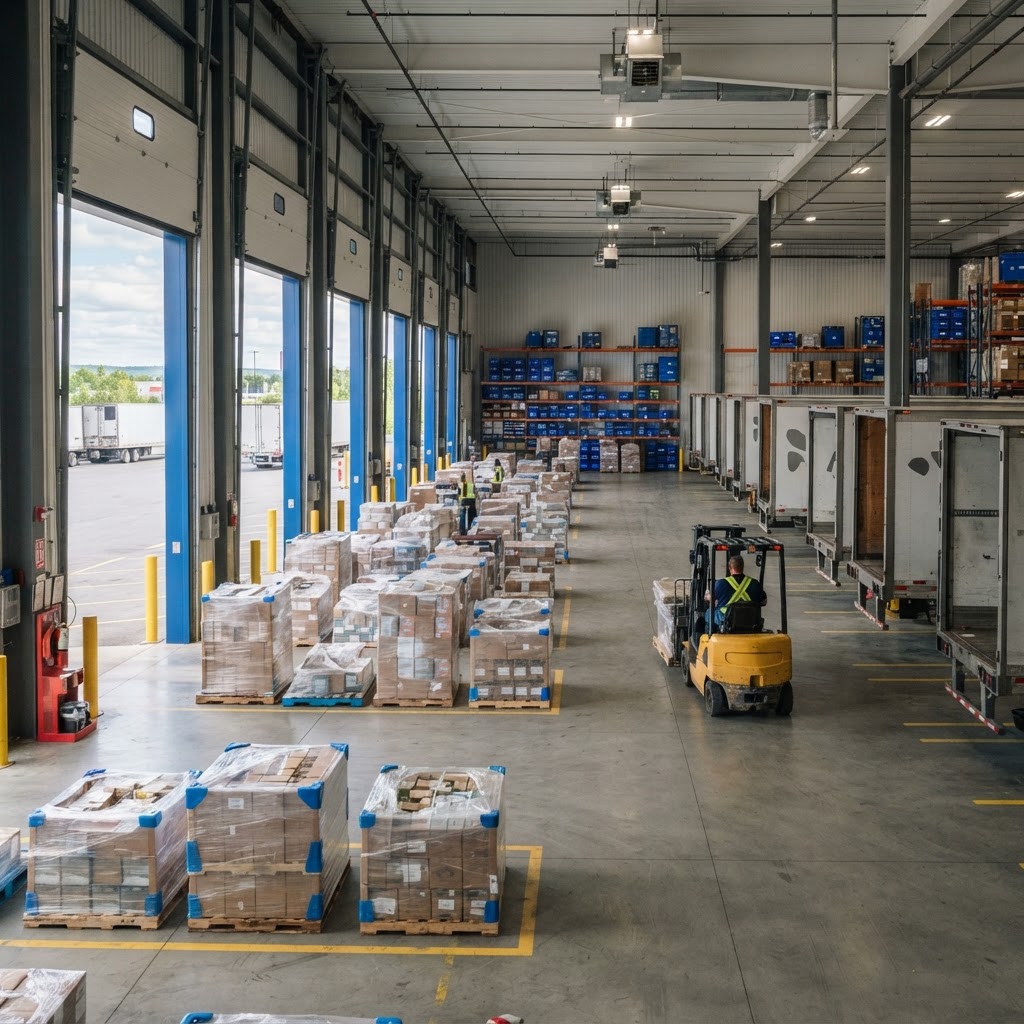
Freight terminals are transfer points where LTL freight shipping is unloaded, sorted by destination, consolidated with compatible shipments, and loaded onto the next truck. A pallet may pass through several terminals before delivery, so tracking updates and transit time depend on the lane, the number of transfers, shipment readiness, and border requirements.
Introduction
For SMEs moving one to eight pallets, LTL freight shipping provides access to truck capacity without paying for an entire trailer. The tradeoff is handling: your freight shares a network with other shipments and may be transferred between local pickup trucks, regional linehaul equipment, and final-delivery vehicles. This is normal network activity, not automatically a sign that something has gone wrong. The most important control is providing accurate shipment details before pickup, because a wrong weight, classification, address, or document can stop freight at a terminal.
Key Takeaways:
Terminals sort pallets into the next route or delivery area.
More terminal transfers usually mean longer transit times.
Accurate labels and documents reduce preventable terminal holds.

How LTL Freight Shipping Moves Through a Terminal Network
An LTL terminal is a working freight facility, not a storage destination. Carriers use terminals to collect local pickups, break down inbound trailers, group freight by outbound lane, and dispatch equipment toward the next terminal or consignee. Understanding how LTL shipping works makes tracking scans easier to interpret: a terminal arrival often means the pallet is progressing through its planned route.
From pickup to the origin terminal
The journey starts when a local driver collects your pallet and checks that the bill of lading, labels, piece count, and visible condition match the booking. The freight is then brought to an origin terminal, where dock staff identify its route and place it in the outbound loading plan. This network model lets businesses access shared capacity, and shared truck capacity can cost a fraction of an exclusive truck and trailer. Businesses can also consider the benefits of consolidating compatible shipments.
Pickup scan: Confirms the carrier has received the pallet.
Origin terminal: Sorts freight into outbound destination lanes.
Cross-docking: Moves freight between inbound and outbound trailers.
Linehaul departure: Starts the longer inter-terminal movement.
Sorting, consolidation, and linehaul transfers
At each terminal, dock teams scan the shipment, unload it, and load it onto the trailer assigned to its next movement. This is LTL freight consolidation: compatible pallets from many shippers are combined to use trailer space efficiently. Freight that is picked up and delivered through the same terminal, or sorted only once, may arrive on the next business day, while multiple sorts or linehauls increase transit time.
What Terminal Stops Mean for Transit Time and Cost
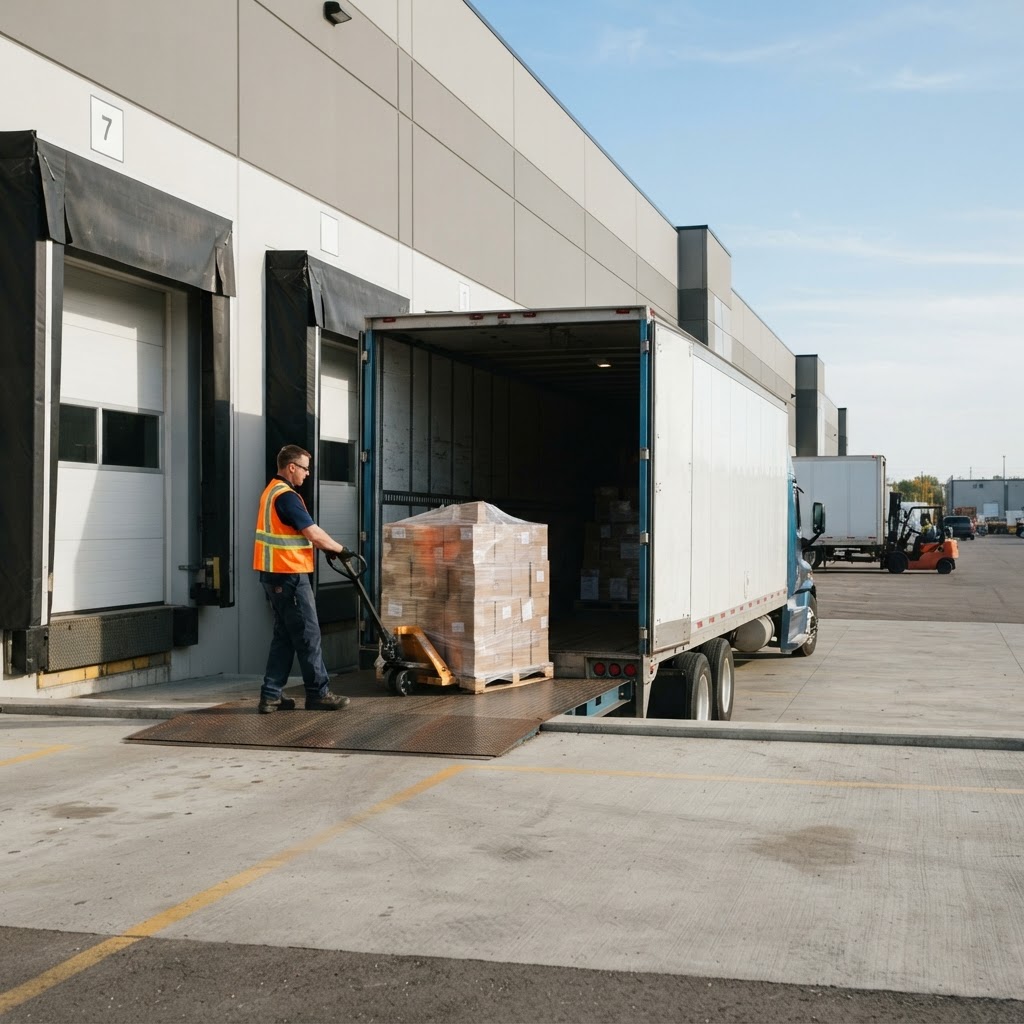
Terminal activity explains why a delivery estimate is a window rather than a guaranteed clock time. LTL shipments average between one and five days for delivery, but actual timing reflects distance, network design, terminal cutoffs, available linehaul capacity, weather, appointment requirements, and cross-border clearance. For freight moving from Quebec to Ontario, a direct regional lane may require fewer handoffs than a shipment moving through several network regions.
Why an LTL shipment may wait at a terminal
A terminal hold is often operational rather than exceptional. Freight can wait for the scheduled outbound trailer, a delivery appointment, corrected address information, a reweigh or reclassification review, or instructions for a damaged pallet. Because LTL shipments are sorted and consolidated at hubs and distribution centres, a missed scheduled departure can move freight to the next available movement.
Packaging matters because LTL freight is handled several times, often by different carriers. The freight classification standard also sets minimum packaging requirements intended to make goods reasonably safe to handle and stow in the motor carrier environment.
Terminal process compared with direct truckload movement
LTL and truckload are different operating models. A full truckload generally remains on equipment assigned to one shipment, while LTL truck freight is intentionally routed through terminals so several customers can share capacity. The comparison below shows why handling, tracking events, and delivery timing look different.
Operating factor | LTL network | Full truckload |
|---|---|---|
Trailer space | Shared by multiple shippers | Assigned to one shipment |
Terminal handling | May be unloaded and reloaded | Usually stays on assigned equipment |
Tracking pattern | Pickup, terminal, transfer, delivery scans | Fewer transfer-related scans |
Transit timing | Depends on routing and connections | Depends mainly on trip movement |
The practical takeaway is simple: more handling creates more visibility events and more opportunities for a timing change, while shared capacity can make smaller pallet shipments economically workable.
Cross-border terminal checks require complete paperwork
For Canada-U.S. freight, a terminal may hold a shipment until the paperwork supports customs processing and the carrier has clear release instructions. Dangerous goods require special attention: where a shipping document is required, the consignor, carrier, and Canadian importer must keep copies for at least two years. Keep product descriptions, consignee details, commercial documents, and shipment labels consistent, because mismatched information can create a preventable stop before the freight reaches the border.
How to Manage Pallet Shipping Services With Better Visibility
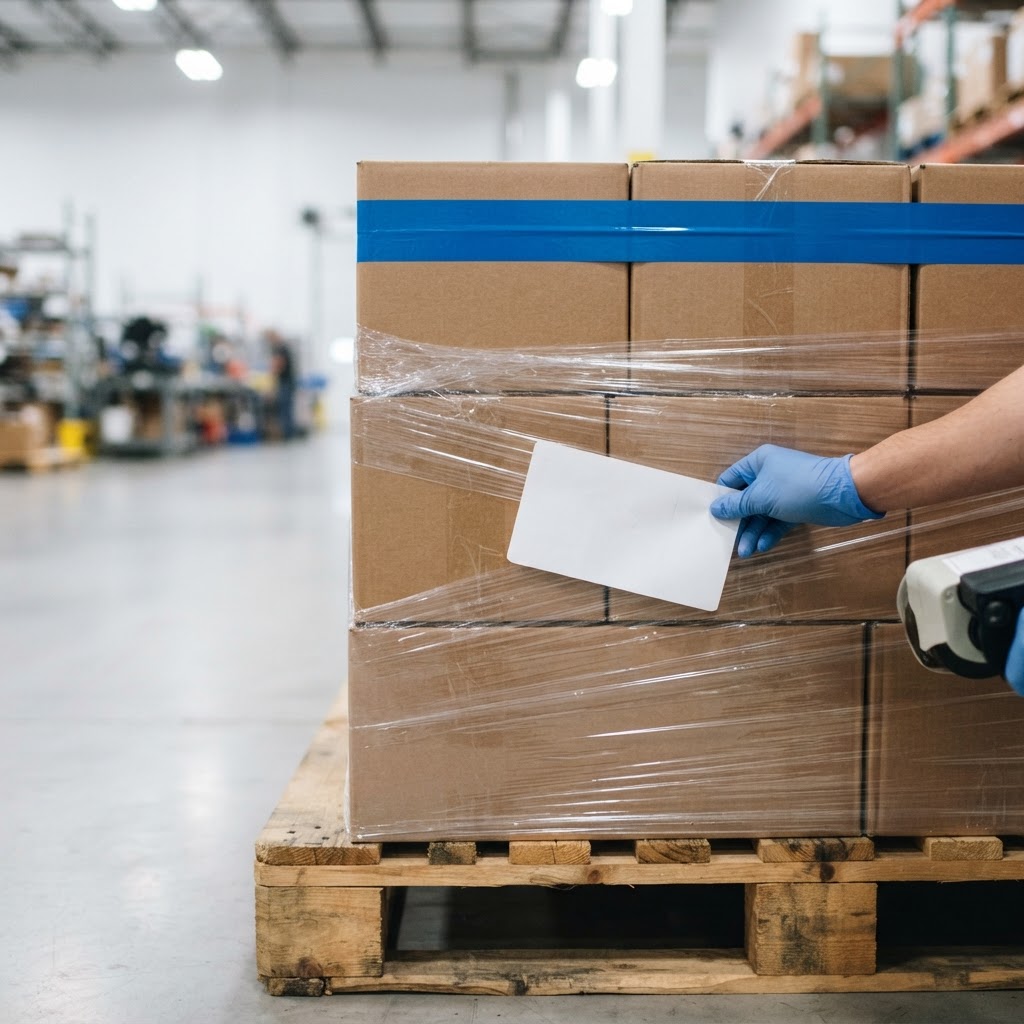
Shippers cannot eliminate terminal transfers from an LTL network, but they can reduce uncertainty before freight leaves the dock. Start with measured dimensions, confirmed weight, complete pickup and delivery contacts, accurate accessorial requirements, and a legible label on each pallet. These details support smoother LTL shipping and reduce the risk that a carrier must pause freight for clarification.
Use tracking updates as operational signals
Consider how terminal operations can affect delivery speed when reviewing updates.
Read each update in sequence rather than judging a shipment by one terminal scan. Pickup confirms possession, an origin-terminal event indicates intake, linehaul movement shows the freight has left a facility, and a destination-terminal update means final delivery planning is underway. If a scan has not changed when the expected delivery window approaches, ask whether the freight is awaiting a scheduled departure, an appointment, a document, or a physical inspection.
Compare carriers before the pallet enters the network
A carrier quote should be evaluated beyond the base charge, including transit expectation, carrier rating, detailed fees, pickup capability, and coverage for the lane. Through Truxweb, SMEs can send one request to carriers servicing their lane and compare rates, transit times, carrier ratings, and booking fees before confirming. That comparison helps businesses choose freight transportation services with a routing plan that matches the delivery requirement instead of relying on an opaque handoff.
Conclusion
Freight terminals keep LTL networks moving by sorting, consolidating, and transferring pallets toward their delivery region. A terminal scan is usually a normal milestone, but extra transfers, incomplete shipment details, missed connections, and border documentation can extend the delivery window. Build reliable business freight shipping practices around accurate booking data, durable packaging, readable labels, and early follow-up when tracking stops moving. For Quebec and Ontario shippers, Truxweb provides a way to compare carrier information before a pallet begins its terminal journey.
Need clearer carrier options for your next pallet shipment? Compare freight options with Truxweb before you book.
Frequently Asked Questions (FAQs)
What is LTL shipping and how does it work?
LTL shipping works by combining freight from multiple shippers in shared trailers, then routing pallets through pickup, terminal sorting, linehaul, and final-delivery stages instead of dedicating an entire truck to one shipment.
How do I track a pallet shipment in real time?
You track a pallet shipment in real time by using the carrier or booking platform reference number and reading scans in order, since each update can show pickup, terminal intake, inter-terminal movement, destination arrival, or delivery status.
What is the difference between LTL and truckload?
The difference between LTL and truckload is that LTL combines several shippers’ freight and may involve terminal transfers, while truckload assigns trailer capacity to a single shipment and generally has fewer handling points.
Why do freight terminal delays happen?
Freight terminal delays happen when freight misses a planned outbound connection, needs corrected shipment information, awaits an appointment, requires a reweigh or inspection, or cannot proceed until cross-border documentation is complete.
How can I ship goods from Quebec to the United States?
You can ship goods from Quebec to the United States by booking a carrier that serves the lane and ensuring commercial details, consignee information, product descriptions, and any required shipping documents are complete before pickup.
Is online freight booking secure for my business?
Online freight booking can be secure for your business when the platform clearly identifies carrier options, booking fees, payment steps, shipment records, and the operational contacts responsible for addressing exceptions during transit.
About the Author
Sarah Bennett is a Cross-Border Trade & Customs Specialist focused on freight compliance and Canada-U.S. shipping between Quebec, Ontario, and key U.S. markets. Her work emphasizes practical documentation, customs clearance awareness, and operational steps that help businesses avoid preventable freight disruptions.