

Quick Answer
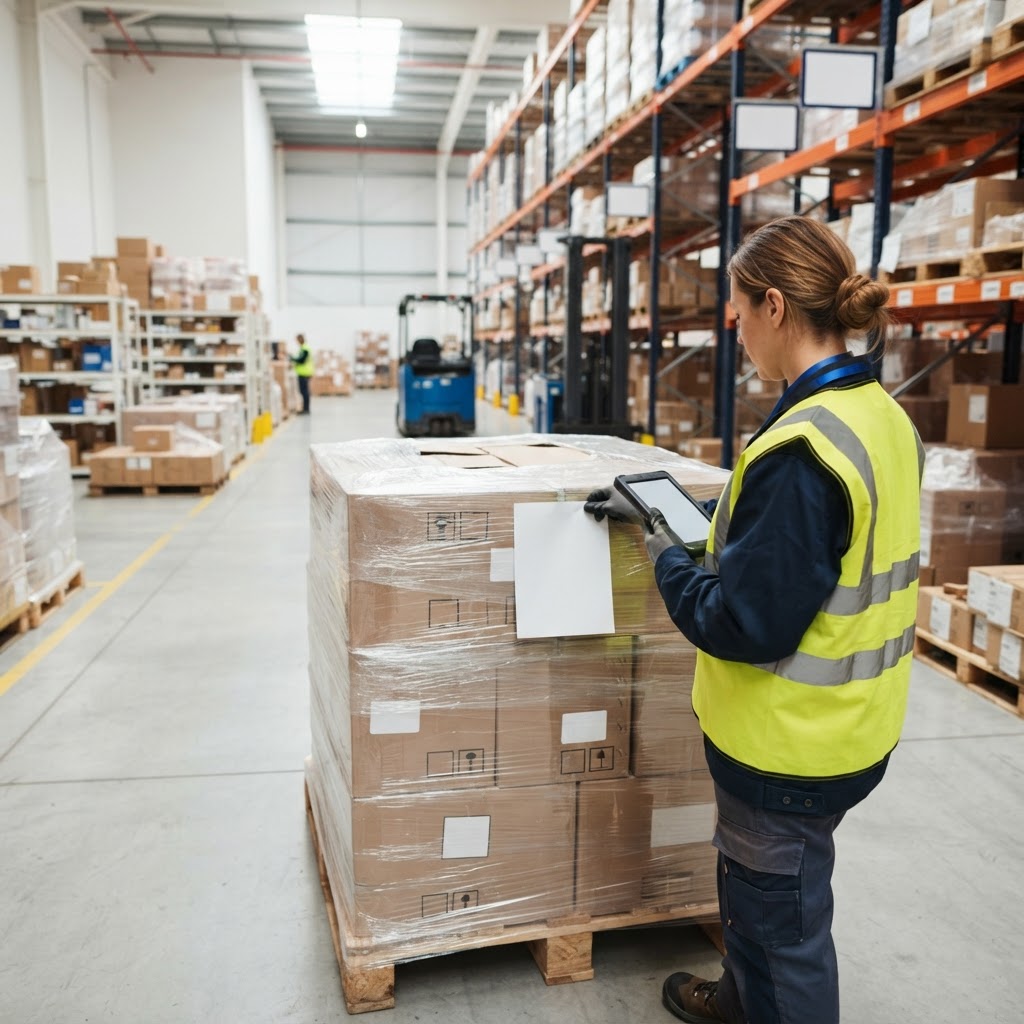
Efficient shipping labels identify each pallet clearly, match the bill of lading and booking details, and remain readable from pickup through delivery. For Canada-U.S. freight, labels support handling and identification, but customs release also depends on complete commercial documentation.
Introduction
Shipping labels prevent avoidable freight errors when they are accurate, durable, and created from the same data used to book the shipment. For small and medium-sized shippers, a consistent process for shipping labels for business reduces relabeling, missed pickups, and delivery disputes. A pallet can move through several terminals where staff need to identify its destination without opening the freight. The most expensive mistakes often begin with a label that is incomplete, detached, or inconsistent with the documents.
Key Takeaways:
Every pallet needs a legible label that matches the booked shipment details.
Digital label creation reduces transcription errors and keeps documents aligned.
Cross-border loads require commercial documents that support the information shown on freight labels.
What Every Pallet Shipping Label Must Show
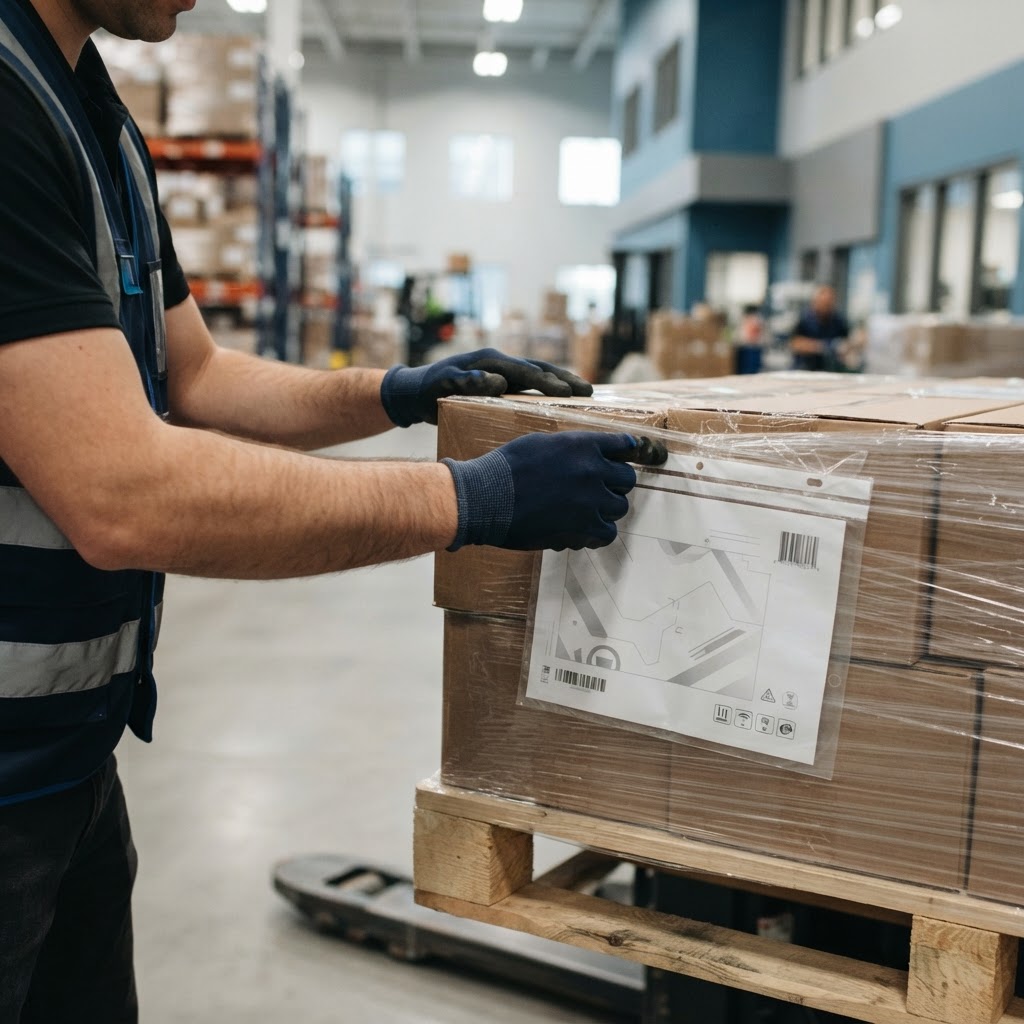
A freight label should let a dock worker identify the shipment, the individual handling unit, and its destination at a glance. Use the exact names, addresses, contact details, reference numbers, and piece counts that appear in the booking, because a mismatch can interrupt sorting or trigger a delivery exception.
Use a repeatable pallet-label checklist
LTL pallet shipping labels work best when the same required fields are drawn from a single shipment record rather than typed repeatedly. Place the label on a clean, flat, visible surface and protect it from moisture, abrasion, and stretch-wrap glare.
Consignee details: Include the receiving business, full delivery address, and a reachable contact number.
Shipper details: Show the origin business name, pickup address, and contact information.
Shipment reference: Include the booking, purchase order, or customer reference used to trace the load.
Pallet sequence: Mark each unit as part of the total shipment, such as pallet one of the full count.
Handling information: Add clear handling instructions only when they accurately reflect the freight and carrier requirements.
Keep labels separate from freight documents
A label identifies the physical pallet, while a Canadian bill of lading records the shipment terms, parties, freight description, and carrier receipt. The bill of lading should travel with the shipment according to the carrier’s process, while a duplicate label should be applied to each pallet so identification remains available if paperwork is separated at a terminal.
How to Create Labels Without Re-entering Freight Data
The most reliable workflow starts after freight dimensions, weights, addresses, and commodity descriptions have been checked for the booking. A shipping label printing solution should pull those approved details into the label and related documents, so warehouse staff are not working from a separate spreadsheet or handwritten template.
Choose manual printing or automated generation deliberately
Manual templates can work for occasional, simple shipments, but they create more opportunities for duplicate entry and outdated information. Automated shipping label generation is more useful when the business ships regularly, sends multi-pallet orders, or needs printable freight bills of lading from the same confirmed record.
This comparison highlights the operational tradeoff between a disconnected template process and a connected booking workflow.
Workflow | Data entry | Document consistency | Practical use |
|---|---|---|---|
Manual template | Details entered separately | Requires staff verification | Occasional, straightforward shipments |
Carrier-specific portal | Entered within one carrier’s system | Aligned with that carrier booking | Freight routed through one carrier |
Digital freight marketplace | Booking information can populate shipment records | Centralizes booking and dispatch information | Businesses comparing multiple carrier options |
The safer choice is the workflow that creates documents from the approved booking record, because it removes the gap between what was sold, booked, labeled, and tendered to the carrier.
Verify the shipment before anything is printed
Before staff print shipping labels, compare the consignee, postal or ZIP code, pallet count, commodity description, and references against the order and carrier booking. Businesses using Truxweb’s LTL marketplace can compare carrier quotes and booking details in one place, which helps teams establish a final record before warehouse documents are produced.
Label Management for Canadian and Cross-Border Freight
Label control is a warehouse discipline, not merely a printing task. Keep a final digital copy with the shipment record, issue labels only after the booking is confirmed, and quarantine superseded labels so an earlier destination or reference cannot be applied by mistake.
Match Canadian labels to the supporting document set
Domestic shipments still require coordinated records, especially when carriers ask for paperwork at pickup or a receiver disputes a reference. A practical LTL documentation checklist helps staff verify that labels, bills of lading, invoices, and shipment references describe the same goods before the driver arrives.
For Canada-U.S. freight, labels do not replace customs records. Commercial shipments entering Canada generally require invoice information in English or French, and the commercial invoice requirements allow simplified documentation in certain circumstances when the value for duty does not exceed CAD$2,500.
Put customs and safety marks in the right place
Use labels to show pallet identity and destination, then ensure the commercial invoice carries the applicable package marks, package numbers, commodity specifications, conditions of sale, and invoice reference. Reviewing Canada Customs Invoice fields before tendering freight helps prevent an invoice from contradicting the marks visible on the load.
Dangerous goods require an additional compliance check. Appropriate dangerous goods safety marks are required when goods are regulated and not exempt, and the required label or placard depends on the classification and the containment size; consult the applicable dangerous goods safety marks requirements before loading.
How to Prevent Misrouted and Refused Pallets
Most label failures are preventable through a final physical inspection at pickup. Confirm that every pallet has the correct sequence label on a visible side, that the barcode or reference is unobstructed, and that old carrier labels, routing stickers, and destination marks have been removed or covered.
Build a handoff process between office and warehouse
The person who books freight should release one final shipment record to the warehouse, rather than sending corrections by informal messages. That record should include the required shipping documents, print status, pallet count, pickup instructions, and any receiver appointment information.
For cross-border freight, warehouse staff should also confirm that the physical count and package marks match the invoice before pickup. This is especially important when several customer orders are consolidated, because a correct address label cannot resolve an invoice that describes different packages or quantities.
Use packaging as part of label protection
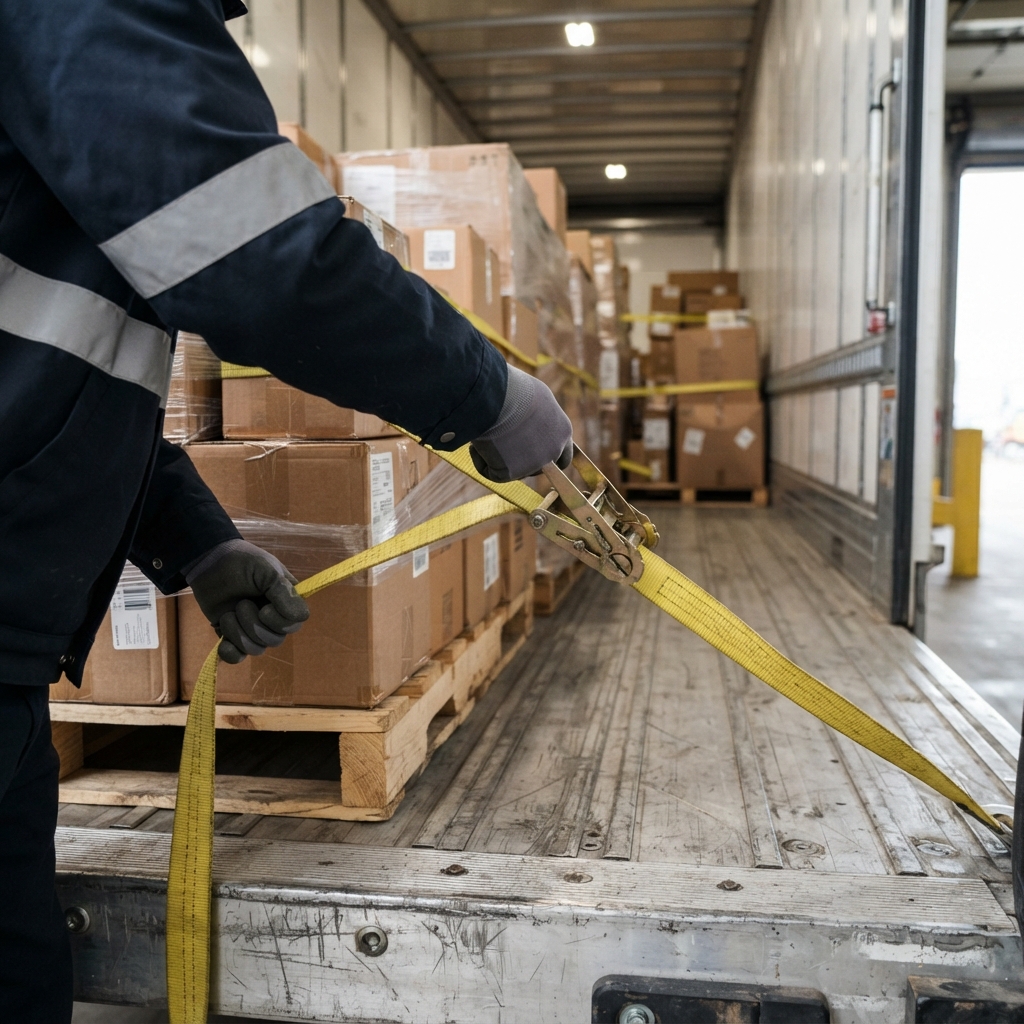
Secure freight first, then apply labels where stretch wrap, straps, corner protection, or forklift contact will not obscure them. A packaging requirements checklist is useful because damaged wrapping can remove both the shipment identifier and the markings customs or receiving staff need to inspect.
Conclusion
Accurate shipping labels turn a pallet into a traceable unit that carriers, terminal teams, receivers, and customs personnel can identify quickly. Create labels from verified booking data, apply one to every pallet, and keep the label details aligned with the bill of lading, commercial invoice, and physical package marks. For regular LTL shipping, a connected digital workflow reduces manual entry and gives staff a dependable release process. Truxweb combines carrier comparison, booking records, and shipment visibility for Quebec and Ontario businesses managing freight without a large logistics department.
Ready to reduce document rework on your next shipment? Explore freight booking with Truxweb and keep your shipment information organized from quote to delivery.
Frequently Asked Questions (FAQs)
How to print shipping labels for freight?
To print shipping labels for freight, confirm the carrier booking and shipment details first, generate labels from that final record, and print durable copies that remain readable after handling, wrapping, and terminal transfers.
What information should be on a shipping label?
A shipping label should include shipper and consignee details, origin and destination addresses, a shipment reference, pallet sequence, and any accurate handling information needed for safe identification during transit.
How to create a bill of lading for LTL shipments?
To create a bill of lading for LTL shipments, use the confirmed booking information to record the shipper, consignee, carrier, commodity description, handling units, and references consistently with the physical freight.
Why are shipping labels important for pallet freight?
Shipping labels are important for pallet freight because terminals and receivers use visible pallet identifiers to route, verify, and separate freight without relying solely on paperwork that may travel separately.
How do I label pallets for cross-border shipping?
To label pallets for cross-border shipping, apply clear pallet identifiers that match the commercial invoice and bill of lading, while ensuring the complete customs document set supports the declared goods and package marks.
What is the standard format for LTL shipping labels?
The standard format for LTL shipping labels varies by carrier, but a useful format presents destination details, shipment references, pallet sequencing, and handling information clearly enough for dock staff to identify each unit quickly.
About the Author
Sarah Bennett is a Cross-Border Trade & Customs Specialist focused on customs clearance, freight compliance, and Canada-U.S. shipping. Her work helps Ontario and Quebec shippers build practical documentation and handling processes that reduce border and transit disruption.