Introduction
Quick Answer
Winter weather disrupts Canada-US cross-border LTL shipping by slowing highway speeds, reducing carrier capacity, extending terminal dwell times, and delaying customs processing at northern border crossings. For Ontario and Quebec shippers, this typically adds 1 to 3 business days to standard transit times between December and March, with the worst delays tied to major snowstorms across the Great Lakes and Northeast corridors.
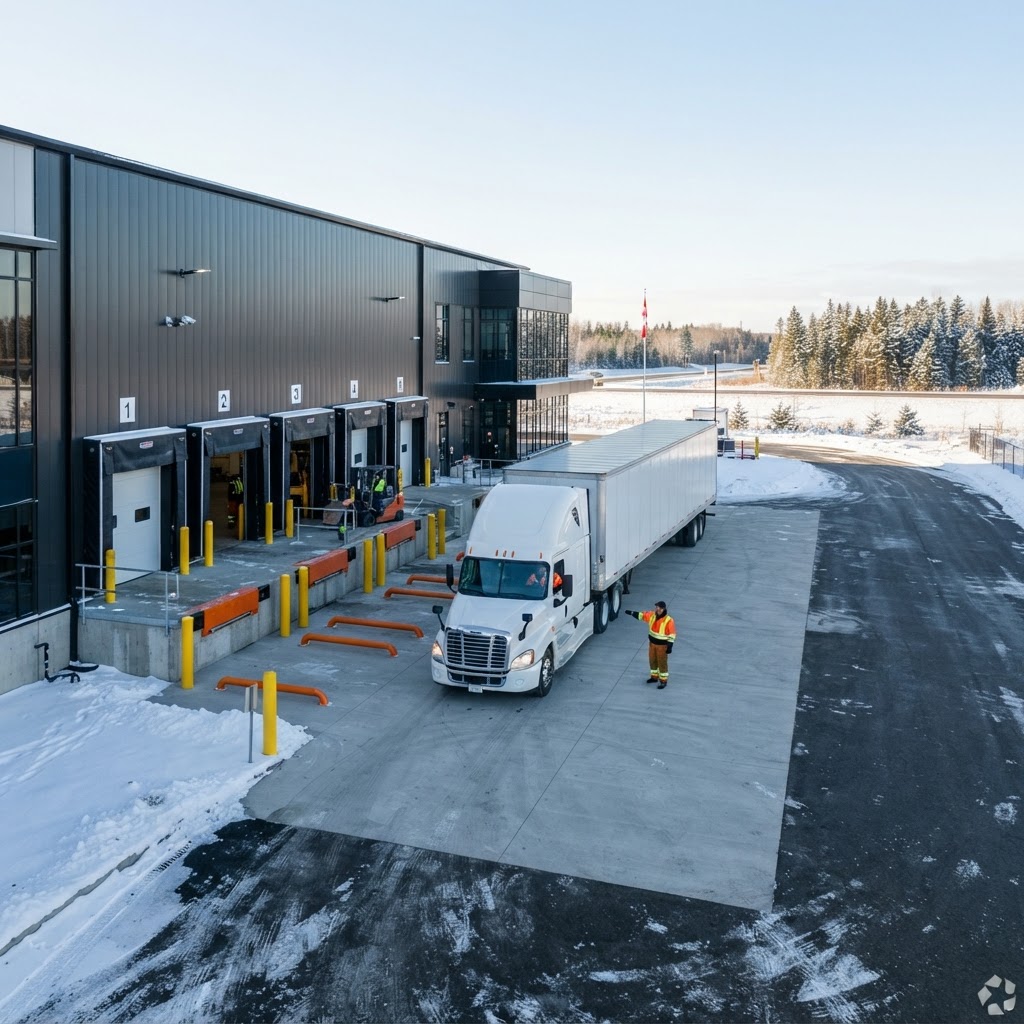
If your freight moves between Ontario or Quebec and the northeastern United States, winter is not a minor inconvenience, it is a structural change in how the network operates. Carriers throttle capacity, terminals slow down as staff and equipment fight the cold, and border crossings that run smoothly in July can back up for hours after a single overnight snow event. What looks on paper like a routine 2-day shipment from Montreal to Buffalo can quietly become a 4-day shipment before anyone updates a tracking screen. The shippers who handle winter well are the ones who accept this reality early, adjust their booking windows, and choose carriers based on cold-weather performance rather than headline rates alone.
Key Takeaways:
Winter adds 1 to 3 business days to typical Ontario and Quebec cross-border LTL transit times.
Most winter delays begin before customs, driven by highway conditions, terminal slowdowns, and reduced carrier capacity.
Booking earlier and selecting carriers with strong winter track records is the most reliable way to protect delivery timelines.
Where Winter Weather Actually Slows LTL Freight Down
Winter delays rarely come from a single cause. They stack, one on top of another, from the moment freight leaves your dock until it clears the receiver's door. Understanding this chain is what separates shippers who plan around winter from those who react to it.
The Real Chokepoints in the Network
Most Canadian SMBs assume the border is the bottleneck. In practice, the border is often the last place a shipment loses time. The bigger issues sit upstream, in linehaul lanes and terminal yards where snow, ice, and cold slow every step of handling.
Highway speed reductions: Snow and ice cut safe operating speeds on major corridors like the 401, I-90, and I-87, pushing carriers past their hours-of-service windows and delaying scheduled dock arrivals.
Terminal congestion: Freight arriving late from linehaul misses cross-dock cutoffs, sits an extra shift, and cascades delays into the next day's outbound trailers.
Equipment failures: Diesel gelling, dead batteries, and frozen air lines pull tractors out of service during the coldest stretches, tightening capacity across the network.
Driver availability: Fewer drivers accept marginal weather runs, and those who do often deadhead back sooner, reducing lane frequency.
Customs staffing and inspection pace: CBP and CBSA officers work slower in blizzard conditions, and secondary inspection queues grow when inbound volume backs up behind weather closures.
These issues are covered in more depth in this breakdown of delays before customs clearance, which explains why the border itself is often mislabelled as the root cause.
How Ontario and Quebec Shippers Feel It First
Ontario and Quebec sit at the front line of every major eastern winter storm system, and freight leaving Toronto, Mississauga, Montreal, or Quebec City often faces snow on both sides of the border. Lanes into New York, Vermont, Michigan, Ohio, and Pennsylvania are especially exposed because they cross the Great Lakes snowbelt, where lake-effect events can dump 30 to 60 centimetres in a single 24-hour window. When that happens, the entire eastern LTL network resets its schedule, and freight tendered on a Wednesday may not actually roll until Friday. Cross-border shipping Quebec New York winter lanes are among the most affected because they combine tight transit expectations with some of the most volatile weather on the continent.

How Border Crossings, Customs, and Capacity Shift in Winter
The border does not stop working in winter, but almost every process that touches it runs slower. Documentation errors that would have been quickly resolved in July can hold freight for a full extra day in January simply because inspection lanes are running at reduced throughput.
Customs Clearance Slows Even With Perfect Paperwork
Customs clearance delays winter conditions produce are less about paperwork and more about physical throughput. When roads into Champlain, Lansdowne, Windsor, or Sarnia crossings are covered in snow, inbound trucks bunch up behind reduced-speed convoys, and the arrival pattern that customs officers rely on falls apart. A carrier that would normally clear PARS in 20 minutes may sit for 90 while officers work through a queue that arrived all at once. Research from the Federal Highway Administration shows that snow and ice reduce pavement friction enough to force sustained speed reductions across more than 70% of US roadways, and those slowdowns feed directly into border wait times.
Shippers who understand this stop treating customs as a fixed 30-minute step and start budgeting a variable window instead. The paperwork still has to be flawless, but the real defence against winter customs slowdowns is giving the carrier more room to absorb an unexpected queue without missing the next terminal cutoff.
Capacity Tightens and Rates Move With It
Freight capacity winter surge is a real phenomenon on eastern lanes. Between December retail volume, year-end manufacturing pushes, and reduced effective fleet size from weather-related downtime, LTL carriers routinely run at 90%+ utilization from mid-November through February. When that happens, three things change at once.
Rates firm up: Discounts shrink and freight rate increases winter season quotes become the norm, especially on high-demand lanes into the US Northeast.
Booking windows shorten: Preferred pickup days fill 2 to 3 days in advance instead of the same-day or next-day slots common in summer.
Accessorials climb: Waiting time, redelivery, and inside-delivery charges appear more frequently as receivers struggle with snow-covered docks and staff shortages.
For a broader look at how rate structures shift across seasons, this analysis of Ontario Quebec cross-border rates is a useful reference point. Peer-reviewed research on weather-related supply chain disruptions reinforces the same pattern: extreme weather events consistently compress capacity and inflate landed cost across regional freight networks.
LTL Delays Behave Differently Than Truckload Delays
One question that comes up constantly is LTL shipping delays vs FTL delays, and the honest answer is that LTL is more exposed. A truckload shipment has one origin, one destination, and one driver, so a snowstorm delays it once. An LTL shipment passes through multiple terminals, gets reloaded onto different linehaul trailers, and touches multiple drivers. Each of those handoffs is a place where a winter delay can compound. That is not a reason to avoid LTL, it is a reason to build a slightly larger buffer into LTL freight transit times during winter months and to choose carriers whose terminal network is genuinely built for it.
Practical Ways Canadian Shippers Can Reduce Winter Disruption
Winter delays are unavoidable at some level, but the gap between shippers who handle them well and those who get burned is huge. The good news is that the strategies that work are not complicated, they just require earlier decisions and better carrier selection.
Book Earlier and Build Realistic Buffers
The single most effective change is moving pickup requests forward by 24 to 48 hours during the winter months. This gives carriers room to absorb weather-driven schedule shifts without pushing your freight to the back of the queue. Communicating a realistic delivery window to your customer, one that already accounts for a possible 1 to 2 day weather delay, protects the relationship far better than promising a summertime transit and then apologizing for missing it. The common causes of shipping delays across Canada-US lanes overlap heavily with the winter drivers described here, and the mitigation strategies are similar year-round.
Choose Carriers Based on Winter Track Record, Not Just Rate
The best carriers for winter freight are not always the cheapest ones in July. They are the ones with dense terminal networks in snowbelt regions, well-maintained equipment rated for extreme cold, and drivers experienced on the specific lanes you use. When evaluating options, look at on-time percentage during December through February specifically, not annual averages that mask winter performance. Reviewing carrier performance metrics segmented by season is one of the fastest ways to spot which carriers actually deliver in bad weather versus those that only look good on paper. Platforms like Truxweb make this easier by surfacing carrier ratings, historical transit performance, and side-by-side comparisons before you book, so cold-weather reliability becomes part of the initial decision rather than a lesson learned in February.
Communicate Actively With Carriers and Receivers
Winter is when passive shipping breaks down. Confirm pickup the day before, verify that the receiver's dock will be plowed and staffed, and stay in contact with dispatch during active weather events. According to the Federal Highway Administration, weather-related delays cost the trucking industry between $8 and $9 billion annually, and a meaningful share of that cost lands on shippers who found out about a problem too late to reroute or reschedule. Building the habit of a quick morning check-in with your carrier during storm weeks is one of the highest-return operational changes any SMB shipper can make. Shippers looking for a broader operational foundation may want to review cross-border freight fundamentals that apply throughout the year.
Conclusion
Winter will always add friction to cross-border LTL shipping between Canada and the United States, but the shippers who plan around it protect their transit times, their margins, and their customer relationships far better than those who treat every storm as a surprise. The pattern is predictable: capacity tightens, terminals slow, customs queues grow, and last-mile delivery gets harder. Recognizing that pattern early and adjusting booking windows, carrier selection, and communication routines is the difference between a manageable winter and a chaotic one. Cross-border freight Ontario Quebec shippers who invest in these habits consistently outperform the market from December through March.
Ready to move freight with a network built for Canadian winters? Book smarter with Truxweb and compare carriers based on real winter performance, not just summer rates.
Frequently Asked Questions (FAQs)
Why does winter weather cause LTL shipping delays?
Snow, ice, and extreme cold reduce highway speeds, slow terminal handling, tighten carrier capacity, and stretch customs processing, and every one of those steps compounds across the multi-stop nature of LTL freight.
How long are cross-border freight delays in winter?
Most Ontario and Quebec cross-border LTL shipments see an added 1 to 3 business days during winter months, with larger delays during major storm events across the Great Lakes and Northeast corridors.
What causes Canada-US shipping delays in winter beyond the weather itself?
Reduced fleet availability from equipment failures, driver shortages on marginal-weather routes, terminal congestion from missed cutoffs, and slower customs throughput all contribute alongside the road conditions themselves.
How can shippers prevent winter freight delays?
Book pickups 24 to 48 hours earlier than usual, choose carriers with strong winter performance records, and build realistic buffers into the delivery windows you communicate to customers.
Which carriers handle winter delays best?
Carriers with dense terminal coverage in snowbelt regions, well-maintained cold-weather equipment, and consistent December through February on-time performance handle winter conditions most reliably.
Is LTL shipping slower in winter than FTL?
Yes, because LTL freight passes through multiple terminals and handoffs, each of which is a potential point where winter conditions can add delay, while FTL is typically only slowed once.
How does snow affect border crossing times?
Snow slows inbound truck flow into a bunched-up pattern that overwhelms customs inspection lanes, extending clearance times well beyond normal even when documentation is perfect.
About the Author
Sarah Bennett is a Cross-Border Trade and Customs Specialist focused on Canada-US freight movements between Ontario, Quebec, and key US markets. She writes about customs clearance, freight compliance, and the operational realities of moving LTL shipments across the northern border. Her work translates complex trade requirements into practical guidance for SMB shippers navigating day-to-day logistics decisions.