


Quick Answer
Shipping freight from Pennsylvania to Quebec requires accurate commercial documentation, a Canadian importer of record, and a carrier that can move the shipment through cross-border clearance without disrupting pickup or delivery. Prepare the shipment details before requesting rates, validate CUSMA eligibility where applicable, and compare total booking charges rather than judging an LTL quote on linehaul alone.
Introduction
For commercial freight importers, this lane is manageable when customs readiness and carrier selection happen before the freight reaches the dock. Freight shipments from the U.S. to Canada can be delayed when the invoice, commodity description, importer information, or origin support does not match the shipment. A Pennsylvania pickup may be close to the border, but clearance obligations remain with the importer and can create charges or delivery delays after the truck is booked. The most expensive problems usually begin with a detail that looked minor at pickup.
Key Takeaways:
Confirm importer, invoice, commodity, and origin details before the carrier collects freight.
Compare accessorial charges, transit expectations, and carrier service details before booking.
Keep origin records when claiming preferential treatment under CUSMA.

Cross-border freight services: prepare the shipment before pickup
Start each Pennsylvania-to-Quebec shipment by identifying the Canadian importer of record, the consignee, the commodity, the declared value, and the party responsible for duties and taxes. The importer of record shown on Canada Border Services Agency accounting documents can be jointly liable for duties, including reassessed amounts after final accounting, so names and account details must be deliberate rather than copied from an old shipment.
Build a customs-ready document package
A carrier cannot correct missing commercial details at the border without slowing the movement. Your invoice and bill of lading should describe what is being shipped in plain commercial terms, show quantities and value, identify the country of origin where relevant, and match the physical freight and booking record. For deeper process guidance, review cross-border customs clearance procedures before a first shipment on the lane.
Business number: Use a Canadian BN with an RM import-export account.
Commercial invoice: Match product descriptions, values, seller, buyer, and currency.
Bill of lading: List pallet count, weight, dimensions, and handling requirements.
Importer authorization: Confirm the broker can act for the importer of record.
Origin support: Retain records supporting any preferential tariff claim.
Apply CUSMA only when the goods qualify
CUSMA can provide preferential, duty-free treatment on over 98% of tariff lines and over 99.9% of bilateral Canada-U.S. trade, but it does not apply merely because the truck starts in Pennsylvania. Origin depends on the product and its inputs, and importers should keep supporting records for at least six years after exportation. A CUSMA origin claim should be reassessed if suppliers, inputs, or manufacturing processes change.
A broker's request for a certificate of origin is not a substitute for understanding the origin basis. Give the broker complete product data early, especially if a supplier has changed or goods contain non-originating materials. Importers handling repeat movements should document CUSMA compliance requirements as part of the product file, not as a last-minute shipping task. They should also confirm customs bond requirements when establishing their import process.
Choose an LTL carrier and compare the full landed cost
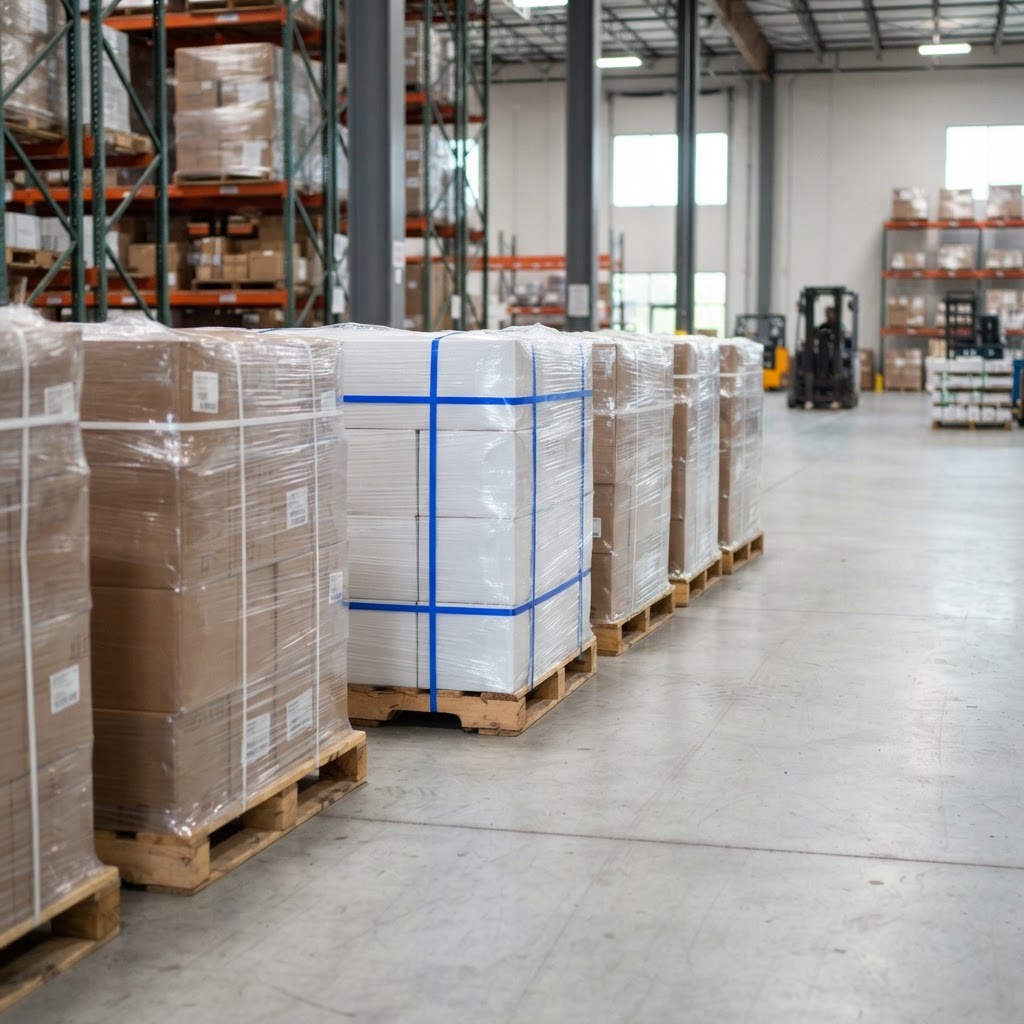
Cross-border freight services for a Pennsylvania-to-Quebec LTL booking are not just a question of which truck has space. The carrier must accept the freight type, serve both postal areas, coordinate with the customs process, and price the actual dimensions and service needs shown on the bill of lading. This is why SMEs benefit from a repeatable quotation checklist rather than an email asking for a quick rate.
What changes the rate and transit plan
Weight, dimensions, freight class, pickup and delivery access, and extra services all affect the quote. LTL pricing is also shaped by how easily freight moves in a shared trailer: special-handling freight can receive a higher class, while stackable freight allows better trailer utilization. Trucks remain the dominant mode for U.S. freight movement, and pallets remain central to that network, making correct pallet measurements essential.
Ask whether the shipment needs a liftgate, appointment, residential service, limited-access pickup, inside delivery, temperature control, or non-stackable handling. A non-stackable pallet uses additional trailer space, and inaccurate descriptions can produce a reweigh or reclassification charge. According to ODFL's tariff, the carrier imposes a $25 fee when an inaccurate bill of lading description requires reweighing or reclassification, which illustrates why shipment data should be verified before tendering.
Compare booking paths before confirming freight
The table below separates the operational differences between a direct-to-carrier marketplace and a traditional broker process. Exact pricing remains custom because carriers price each shipment using its freight details, service requirements, and lane conditions.
Decision factor | Truxweb marketplace | Traditional freight broker |
|---|---|---|
Quote collection | One request is broadcast to participating carriers. | Quotes are commonly gathered through broker outreach. |
Rate visibility | Rates, transit times, ratings, and booking fees appear side by side. | Fee structure and carrier options vary by broker. |
Carrier contact | In-platform chat connects the shipper with carrier dispatch. | Communication generally routes through the broker. |
Operational support | 24/7 concierge team assists with shipment issues. | Support model varies by brokerage. |
Booking method | Booking can be confirmed online after comparison. | Booking process varies by brokerage workflow. |
The useful comparison is not a generic promise of savings. It is whether the quote shows the actual carrier, transit expectation, booking fees, and service assumptions before the importer commits the freight.
For a rate-shopping workflow, Truxweb lets SMEs submit one request to carriers servicing the lane and compare rates, transit times, carrier ratings, and detailed booking fees. For lane-specific preparation, review U.S.-Canada LTL shipping guidance before requesting quotes.
The platform reports that 92% of carriers respond within 30 minutes during business hours, which can reduce the delay caused by collecting carrier responses separately.
Match the shipment profile to the carrier service
A reliable LTL carrier network should be evaluated against the pickup and delivery locations, commodity restrictions, pallet footprint, freight class, and border workflow, not a carrier name alone. Standard LTL shipments commonly fall between 100 and 10,000 pounds, although some carriers use higher thresholds before volume or truckload pricing applies; once a shipment exceeds six pallets or reaches a carrier-specific threshold, ask for volume LTL or partial truckload pricing as well. A pallet profile should include confirmed dimensions because dimensions affect how carriers price and route freight.
Avoid border delays, reclassifications, and hidden freight costs
Most avoidable delays come from an incomplete import setup, a vague bill of lading, or a shipment that differs from the quote request. Treat each booking as a controlled handoff: the shipper provides correct physical and commercial details, the customs broker prepares the entry, and the carrier receives instructions that match both records.
Clarify customs responsibility before freight moves
Canada requires importers and owners to account for goods imported into the country, and commercial entities need a BN with an RM account to transact business with the CBSA. A customs broker can prepare and transmit entries, but the importer still needs to understand its responsibility for declarations, duties, and later adjustments. Use a documented customs broker selection process that confirms authority, commodity familiarity, document timing, and escalation contacts.
The CBSA program streamlines customs processing for shipments valued at CAD $3,300 or less. The value threshold should not lead an importer to relax commercial documentation. The broker needs the same consistent commodity, value, and importer information to support the entry and resolve questions promptly.
Control accessorials with shipment-level discipline
Before pickup, confirm pallet count, gross weight, dimensions, freight class, stackability, dock access, and every special service. A freight rate comparison tool only produces a meaningful result when each carrier receives the same inputs, and a difference in declared dimensions or handling can make a low quote unusable after the carrier inspects the freight.
Conclusion
For Pennsylvania-to-Quebec freight, the practical sequence is clear: establish the importer and broker roles, prepare accurate commercial documents, validate origin support, and tender only after the pallet details are confirmed. Compare carrier quotes on transit, booking fees, accessorial assumptions, and service coverage rather than linehaul alone. For SMEs that need direct carrier comparisons and operational support, Truxweb is the appropriate choice because it displays carrier options and booking details in one workflow while keeping the shipper involved in the decision. Consistent documentation and disciplined quoting protect both clearance timing and landed cost.
Ready to simplify your next cross-border booking? Compare freight options with Truxweb for your Pennsylvania-to-Quebec shipment.
Frequently Asked Questions (FAQs)
What documents do importers need for Pennsylvania to Quebec shipping?
Importers need a commercial invoice, bill of lading, Canadian importer of record details, a BN with an RM import-export account, and origin support when claiming CUSMA treatment, while the customs broker may also require product-specific information to prepare the entry correctly.
Can small businesses save money on cross-border shipping?
Small businesses can save money on cross-border shipping by submitting complete shipment specifications, comparing equivalent carrier quotes, and preventing accessorial charges caused by incorrect weights, dimensions, freight class, or delivery-service requirements that were not disclosed before pickup.
How quickly can I get a freight quote for my business?
Freight quote timing depends on the lane, carrier availability, and completeness of the shipment details, while Truxweb reports that 92% of carriers in its network respond within 30 minutes during business hours after receiving a quote request.
Why are broker fees increasing costs for importers?
Broker fees can increase importer costs when a traditional intermediary adds compensation between the shipper and carrier, and Truxweb states that brokering fees can inflate a price by up to 40%, which makes fee visibility important before booking.
What defines a reliable freight importer service?
A reliable freight importer service provides accurate carrier capacity information, transparent booking charges, clear shipment communications, customs coordination, and a process for resolving exceptions, while the importer remains responsible for correct commercial declarations and supporting documents.
What are the best LTL carriers for Pennsylvania to Quebec shipments?
The best LTL carrier for a Pennsylvania-to-Quebec shipment is the one that accepts the commodity, serves the exact pickup and delivery points, can support the required border workflow, and prices the confirmed pallet dimensions and accessorial services without mismatched assumptions.
About the Author
Sarah Bennett is a Cross-Border Trade & Customs Specialist focused on customs clearance, freight compliance, and Canada-U.S. shipping. Her work centers on practical documentation and border-readiness processes for freight moving between Quebec, Ontario, and key U.S. markets.