

Introduction
Road freight transport remains the backbone of Canada's domestic supply chains. From retail replenishment to manufacturing distribution, trucks move the majority of goods between cities, regions, and provinces. As logistics operations grow more complex, businesses are increasingly turning to digital road freight platforms to simplify booking, improve visibility, and reduce manual coordination.
In 2026, road freight services in Canada are shaped by technology that enables faster quoting, real time shipment updates, and direct connections between shippers and carriers. Platforms such as Truxweb reflect this shift by focusing on simplifying LTL freight management for Canadian businesses that want clearer pricing and more control over their shipments.
What Is Road Freight Transport?
Road freight transport refers to the movement of goods using trucks and vans over public highways. It is the most flexible freight mode available, offering door to door delivery across urban, suburban, and rural locations. In Canada, road freight supports a wide range of shipments, from palletized consumer goods to industrial equipment.
Unlike rail or ocean freight, road transport adapts easily to changing delivery requirements and shorter lead times. This makes it especially valuable for time sensitive shipments and regional distribution. Dense carrier networks and established highway infrastructure allow Canadian shippers to respond quickly to demand changes, although rising fuel costs and congestion make efficiency increasingly important.
How Road Freight Booking Works
Road freight booking typically begins when a shipper enters shipment details such as origin, destination, pallet count, weight, and delivery requirements into a digital platform. Carriers can then respond with pricing or accept the shipment based on availability.
For full truckload shipments, booking focuses on securing a dedicated trailer that moves directly from pickup to delivery. For LTL road freight, smaller shipments are consolidated with others and routed through carrier terminal networks. Digital road freight platforms reduce the need for emails and phone calls by allowing shippers to compare options, confirm bookings, and manage documents online.
Modern systems also automate rate calculations and tendering, helping shippers move faster while reducing administrative work.
Why Choose Road Freight Services?
Road freight services are often the most practical choice for short to mid distance shipments within Canada. They provide faster transit times than rail for regional lanes and greater flexibility than fixed schedule modes.
LTL road freight allows businesses to ship smaller volumes without paying for unused trailer space, making it cost effective for frequent shipments. Full truckload offers simplicity and speed when volumes are high or delivery timelines are tight. Real time tracking further improves reliability by giving shippers visibility into shipment status and potential delays.
As fleets modernize, road freight is also becoming more sustainable, with improved fuel efficiency and the gradual adoption of lower emission vehicles.
Road Freight Platforms in 2026
Road freight platforms vary widely in focus and scale. Some prioritize high load volumes, while others emphasize shipment visibility, carrier vetting, or ease of use. In Canada, platforms that understand regional carrier networks and LTL shipping realities tend to deliver the most value for small and medium sized businesses.
Truxweb positions itself as a Canadian freight management platform designed to simplify LTL road freight shipping. Based in Montreal, it connects shippers with carriers, enables quote comparisons, and centralizes booking and shipment tracking in one dashboard. Rather than competing as a large international exchange, it focuses on helping Canadian businesses manage freight more efficiently within domestic lanes.
What Shippers Look for in Road Freight Services
When evaluating road freight services, shippers consistently prioritize reliability, transparency, and ease of use. Competitive pricing matters, but so does carrier quality and communication throughout the shipment lifecycle.
Common challenges include limited shipment visibility, billing discrepancies, and time spent coordinating with multiple carriers. Platforms that address these issues by offering real time updates, clear documentation, and vetted carrier access help reduce friction and improve day to day operations.
Road vs Rail and Mode Matching
Road Freight vs Rail Freight
Choosing between road and rail freight depends on shipment requirements. Road freight excels in flexibility and direct delivery, making it ideal for regional distribution and urgent shipments. Rail freight is better suited for bulk commodities moving long distances where timing is less critical.
In Canada, road freight continues to dominate for most commercial shipments due to ecommerce growth and the need for dependable last mile delivery. Many shippers rely on road transport either exclusively or in combination with other modes.
LTL vs FTL Road Freight
LTL and full truckload shipping serve different purposes. LTL road freight consolidates smaller shipments into shared trailers, making it suitable for businesses shipping a few pallets at a time. Full truckload dedicates an entire trailer to one shipper, reducing handling and often improving transit speed.
LTL is typically more economical for shipments under roughly 10 to 12 pallets, while FTL becomes more efficient as volume and urgency increase. Digital platforms increasingly help shippers choose the right mode by factoring in shipment size, timelines, and historical performance. Shippers can register to compare mode-specific historical performance.
Marketplaces, Digital Platforms, and Trucking Tools
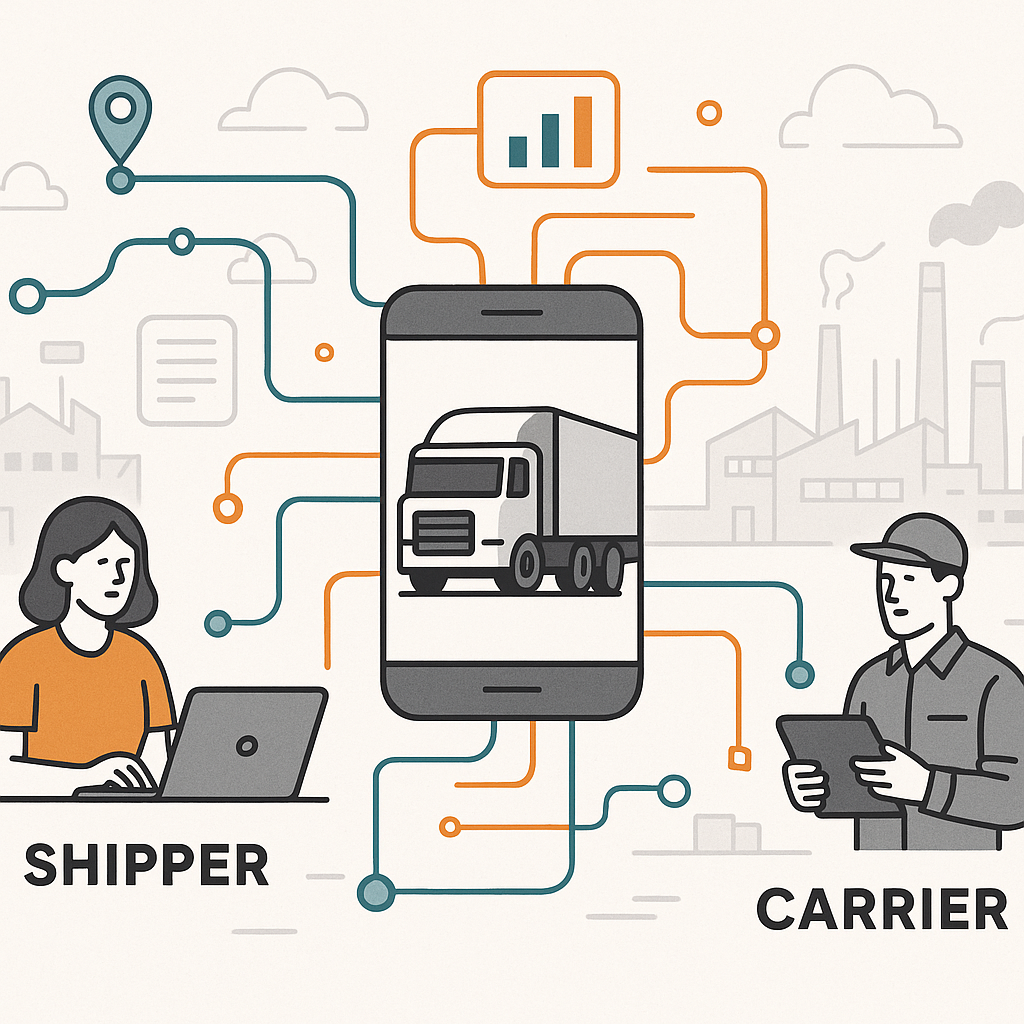
Modern road freight marketplaces connect shippers and carriers through centralized digital systems. Shippers post loads, carriers respond, and technology supports matching, documentation, and communication.
These platforms often include features such as automated paperwork, shipment tracking, and performance reporting. By reducing manual processes, they help businesses scale operations without expanding internal logistics teams.
Operational Considerations for 2026
Road freight rates in 2026 continue to fluctuate with fuel prices, capacity, and seasonality. Spot rates vary by lane, but competitive bidding through digital platforms helps shippers secure fair pricing.
Shipment tracking relies on GPS data, carrier status updates, and event-based tracking milestones. Finding reliable road freight carriers is easier through vetted digital networks that filter by insurance, ratings, and lane history. Dispatch automation reduces errors and improves coordination, particularly for high volume operations.
Road freight continues to grow, driven by ecommerce, nearshoring, and regional manufacturing. Digital platforms are scaling alongside this growth to support increased shipment volumes and complexity.
How to Run a Side-by-Side Pilot Between Two Road Freight Platforms
Feature lists only tell part of the story, since two platforms can look identical on paper and perform very differently on your actual lanes. A short pilot settles the question faster than another round of demos: pick two to three of your highest-volume lanes, run every shipment on both platforms for two to three weeks, and record quoted rate, actual invoiced rate, and time from booking to carrier confirmation for each. The gap between quoted and invoiced rate is usually the most revealing number, since that is where accessorial handling and rate transparency either hold up or fall apart under real shipments. Running the same lane through both platforms in parallel, rather than switching wholesale and hoping the numbers work out, is what actually de-risks a platform change.
Conclusion
Road freight transport remains essential to Canadian supply chains, particularly for businesses that value flexibility and dependable delivery. In 2026, managing road freight effectively requires more than carrier relationships alone. It depends on visibility, accurate pricing, and streamlined workflows.
Digital road freight platforms help Canadian shippers simplify LTL shipping, reduce administrative effort, and maintain control over daily operations. By choosing tools that align with regional carrier networks and domestic shipping needs, businesses can build road freight strategies that are resilient, scalable, and prepared for future growth.
Looking to simplify LTL road freight shipping in Canada?
Truxweb is a Canadian freight management platform based in Montreal that helps small and medium sized businesses compare LTL quotes, book shipments, and track freight online. Explore how Truxweb supports clearer pricing and more efficient road freight operations.
Frequently Asked Questions (FAQs)
What is road freight transport?
Road freight transport moves goods by truck and offers flexible, door to door delivery across regional and domestic lanes.
How does road freight booking work?
Shippers enter shipment details into a digital platform, carriers respond with pricing or acceptance, and booking and documentation are completed online.
Why choose road freight services?
Road freight offers speed, flexibility, and accessibility, especially for time sensitive and regional shipments.
Can I book road freight online?
Yes. Online booking is now standard and allows shippers to compare rates, select carriers, and manage shipments digitally.
Is road freight cost effective?
For short to mid distance shipments and partial loads, road freight is often the most economical option.
What is LTL road freight?
LTL road freight consolidates smaller shipments so shippers only pay for the space they use.
Why use digital road freight platforms?
They reduce manual work, improve visibility, and help businesses manage freight more efficiently as volumes grow.