


Quick Answer
Ontario and Quebec to Pennsylvania LTL shipping costs and transit times cannot be quoted responsibly as a fixed lane average because freight class, dimensions, pickup conditions, carrier capacity, fuel, and border clearance all change the final result. The practical approach is to submit complete shipment details, compare carrier-specific quotes, and build time into the delivery plan for customs processing.
Introduction
LTL shipping from Ontario or Quebec into Pennsylvania works well for palletized freight that does not require a full trailer, but the quote is only as accurate as the shipment data and border paperwork behind it. Canadian shippers need a carrier that can manage the crossing, a commercial invoice that matches the goods, and a delivery expectation based on the carrier’s actual service schedule. For LTL shipping rates, the largest avoidable surprises usually come from incorrect freight dimensions, unplanned accessorials, and incomplete importer information. A pallet that clears smoothly can still miss a receiving appointment if the consignee’s requirements were never included in the booking.
Key Takeaways:
Accurate dimensions, weight, freight class, and addresses produce usable carrier quotes.
Border documents must match the shipment before the freight reaches the crossing.
Comparing several carrier responses reveals different pricing and transit commitments.

LTL shipping rates for the Ontario-Quebec to Pennsylvania corridor
Rate comparisons on this corridor should begin with the full pickup and delivery profile, not a broad per-pallet estimate. Ontario origins can route through the Windsor-Detroit crossing, while Quebec freight may move through other carrier gateways, and each network has its own linehaul schedule, terminal handling pattern, and capacity position. Reviewing cross-border freight rates by lane helps separate a base freight charge from the services required to move a specific shipment.
What changes the quoted freight cost?
Freight classification, density, space occupied, handling needs, and service conditions all influence a carrier’s price. North American freight classification standards matter because freight class, density, and handling characteristics influence carrier rating.
Freight class: Density and handling characteristics affect carrier rating.
Pallet dimensions: Oversize freight consumes more trailer space.
Weight: Total shipment weight affects linehaul and handling.
Accessorials: Liftgates, appointments, and residential service add charges.
Fuel: Fuel surcharges can change independently of linehaul.
Why the all-in amount matters more than a base rate
A fuel surcharge is an add-on that recovers changing fuel costs, rather than a fixed part of linehaul. One industry example applies a 28.5% surcharge to a $320 base rate, producing $91.20 in fuel and $411.20 before other accessorials; the same source notes that a 2% surcharge swing can materially affect high-volume budgets. Ask for the booked total, including known border, pickup, and delivery services, then compare that figure against fuel surcharge calculations.
For a shipper moving one to eight pallets regularly, a quote should also identify any conditions that could create a post-shipment correction. This is particularly important for Toronto pallet-shipping operations, where a warehouse may load freight differently from the dimensions submitted at booking.
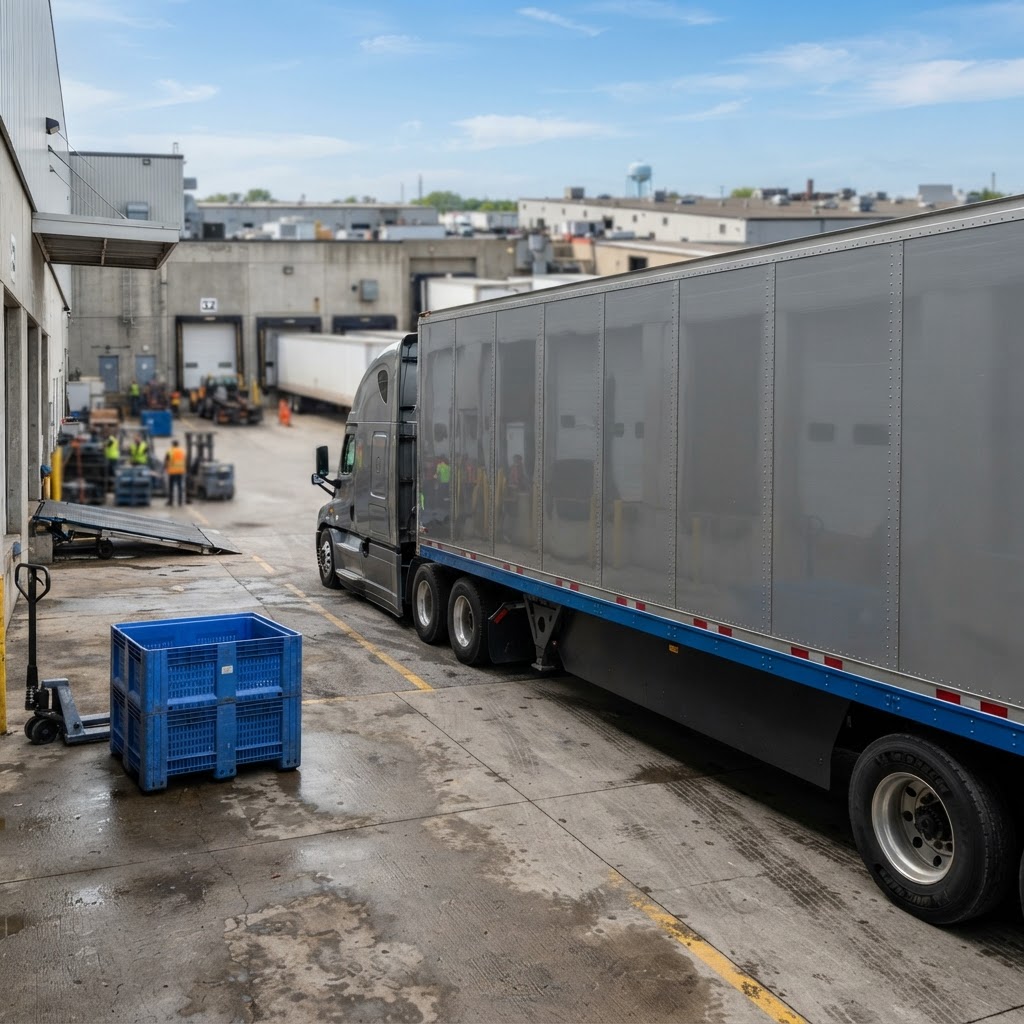
Cross-border LTL shipping Canada to USA: transit and compliance
Transit to Pennsylvania is determined by the selected carrier’s terminal network and departure schedule, plus the time needed to release the shipment at the border. A carrier’s stated transit window is not a customs guarantee, so logistics teams should treat border readiness as a separate operational requirement. The most reliable planning assumption is that freight moves only after the carrier has the documents and customs parties have the information needed to process the entry.
Documents that keep the shipment moving
Commercial documentation should describe the goods, value, origin, parties to the transaction, and shipment details consistently with the freight booking. For samples or demonstrations shipped without charge, the commercial documents must still show the retail value. Importers must register in the CARM Client Portal and provide financial security directly to CBSA; a 180-day transition period permits continued use of Release Prior to Payment, but after that period, unregistered importers risk freight being held at the border. Use the current import documentation requirements to verify the needed records.
LTL customs clearance is smoother when the shipper, importer, carrier, and customs representative receive identical information before pickup. A mismatch between the invoice, bill of lading, and actual cargo can delay release even when the truck arrives on schedule.
How to compare booking paths efficiently
A direct carrier relationship, a traditional broker, and a marketplace are different ways to source transportation, not identical products. The table shows what a shipper should compare before assigning freight.
Booking path | Quote source | Rate visibility | Operational consideration |
|---|---|---|---|
Truxweb marketplace | Carrier network responses | Rates, transit times, carrier ratings, and fees shown side by side | One request is broadcast across servicing carriers |
Direct carrier | One carrier | One carrier’s quoted price | Shipper coordinates each carrier relationship |
Traditional broker | Broker-sourced carrier options | Depends on the broker’s quote process | Broker remains between shipper and carrier |
The useful comparison is not simply between brokers and direct-to-carrier shipping. It is whether the shipper can see the operational details needed to choose a compliant, scheduled movement without repeating the same quote request across multiple contacts.
Canada-US LTL costs should be reviewed alongside transit commitments, and CUSMA freight requirements should be confirmed for the shipment, since the lowest linehaul figure may exclude services the receiving location requires.
Using a marketplace for lane-specific quotes
Truxweb lets shippers send one quote request that is broadcast to every carrier on the network servicing their lane, then displays rates, transit times, carrier ratings, and booking fees before confirmation. Truxweb reports that 92% of carriers reply within 30 minutes during business hours and provides real-time email alerts for dispatch, pickup, and delivery. That visibility is useful when LTL shipping Montreal freight must be coordinated with a Pennsylvania consignee’s receiving schedule.

Conclusion
Plan Ontario and Quebec to Pennsylvania freight around complete shipment data, all-in pricing, and customs-ready documents rather than a generic rate or promised delivery day. Confirm freight class, dimensions, accessorials, consignee hours, and importer responsibilities before tendering the shipment. For SMEs that need multiple comparable options without repeated phone calls, Truxweb is the practical choice because it presents carrier rates, transit commitments, and booking fees in one workflow. Use the selected carrier’s schedule as the delivery plan, while allowing operational room for border release and receiving requirements.
Need a lane-specific comparison? request a quote through Truxweb for your Pennsylvania shipment.
Frequently Asked Questions (FAQs)
What is LTL shipping?
LTL shipping is a freight service for shipments that occupy part of a trailer, allowing multiple shippers’ palletized cargo to move within the same network while each shipment is rated according to its characteristics and required services.
How do I get the best LTL shipping rates in Canada?
Getting the best LTL shipping rates in Canada starts with accurate weight, dimensions, freight class, addresses, and service requirements, then comparing all-in quotes that include fuel and known accessorial charges rather than comparing base linehaul alone.
Can I ship LTL from Ontario to the United States?
You can ship LTL from Ontario to the United States when the carrier can perform the cross-border movement and the shipper provides complete commercial records, while the importer fulfills the applicable customs registration and financial security obligations.
How long does it take to get an LTL quote?
How long it takes to get an LTL quote depends on carrier response and shipment completeness, while Truxweb reports that 92% of carriers respond within 30 minutes during business hours after receiving a request.
Is my pallet shipment compliant with cross-border regulations?
Your pallet shipment is compliant with cross-border regulations when its invoice, bill of lading, goods description, declared value, parties, and customs information align with the actual freight, including retail value for no-charge samples or demonstrations.
What determines LTL shipping costs?
LTL shipping costs are determined by freight class, density, weight, dimensions, distance, carrier network, fuel surcharge, and accessorial services, with fuel surcharge percentages changing separately from the base linehaul charge.
How does transit time compare for Ontario and Quebec to Pennsylvania shipments?
Transit time for Ontario and Quebec to Pennsylvania shipments varies by origin, carrier terminal network, departure schedule, border release, and final delivery conditions, so a carrier-specific commitment is more reliable than a generic corridor estimate.
About the Author
Sarah Bennett is a Cross-Border Trade & Customs Specialist focused on Canada-U.S. freight compliance, customs clearance, and shipping operations between Ontario, Quebec, and key U.S. markets. Her work emphasizes practical documentation controls that help shippers avoid preventable border delays and delivery disruptions.