
Introduction
Quick Answer
To manage return shipping on Canada-U.S. cross-border LTL freight, prepare a returns-specific commercial invoice and B3 or Section 321 declaration, generate a return shipping label tied to the original shipment, and compare multiple LTL carriers before dispatch to control cost. Using an LTL shipping marketplace consolidates quoting, documentation, and tracking so a return moves through the border as smoothly as an outbound load.
Return shipping on Canada-U.S. LTL lanes fails most often because shippers treat it as an afterthought instead of a distinct workflow with its own documentation, carrier requirements, and rate logic. The most reliable approach is to build a repeatable return process that mirrors your outbound one, with the right paperwork prepared before the pallet ever moves. Reverse flows carry higher risk of customs holds, unexpected duties, and damage claims than outbound freight, largely because return goods rarely match the commercial profile of a standard sale. Ontario and Quebec businesses that ship regularly into the U.S. lose margin every quarter to preventable return errors. The good news is that a small set of disciplined steps closes most of the gap.
Key Takeaways:
Cross-border LTL returns require different customs paperwork than outbound shipments and must be classified correctly to avoid duties on goods re-entering Canada.
Comparing multiple carrier quotes on every return, rather than defaulting to the original outbound carrier, typically reduces reverse logistics costs by 20 to 40 percent.
A digital LTL marketplace replaces manual broker coordination with instant quotes, unified tracking, and one-click booking for return shipments.
The Cross-Border LTL Return Process, Step by Step
A cross-border return is not simply an outbound shipment run in reverse. Goods crossing back into their country of origin, or into a third destination, trigger a different customs treatment, a different set of forms, and often a different carrier rate structure. Walking through the process in order prevents the delays that inflate pallet return shipping costs.
Authorize the return and classify the goods
Before anything moves, confirm the return authorization internally and classify what is actually coming back. The commodity code on the return must match how the goods will be treated at the border, whether that is Canadian goods returned, U.S. goods returned, or a warranty replacement. Getting this wrong is the single most common reason return freight sits in bond.
Return reason: defective, warranty, refused delivery, or overstock, since each has different duty implications.
Country of origin: determines whether goods qualify as Canadian goods returned or U.S. goods returned under CUSMA provisions.
HS code consistency: the return HS code should match the outbound HS code unless the physical goods have changed.
Declared value: use the original commercial value, not a nominal or zero value, to avoid customs re-appraisal.
Reference to outbound: include the original commercial invoice number and shipment date on all return paperwork.
Book the return lane and generate the label
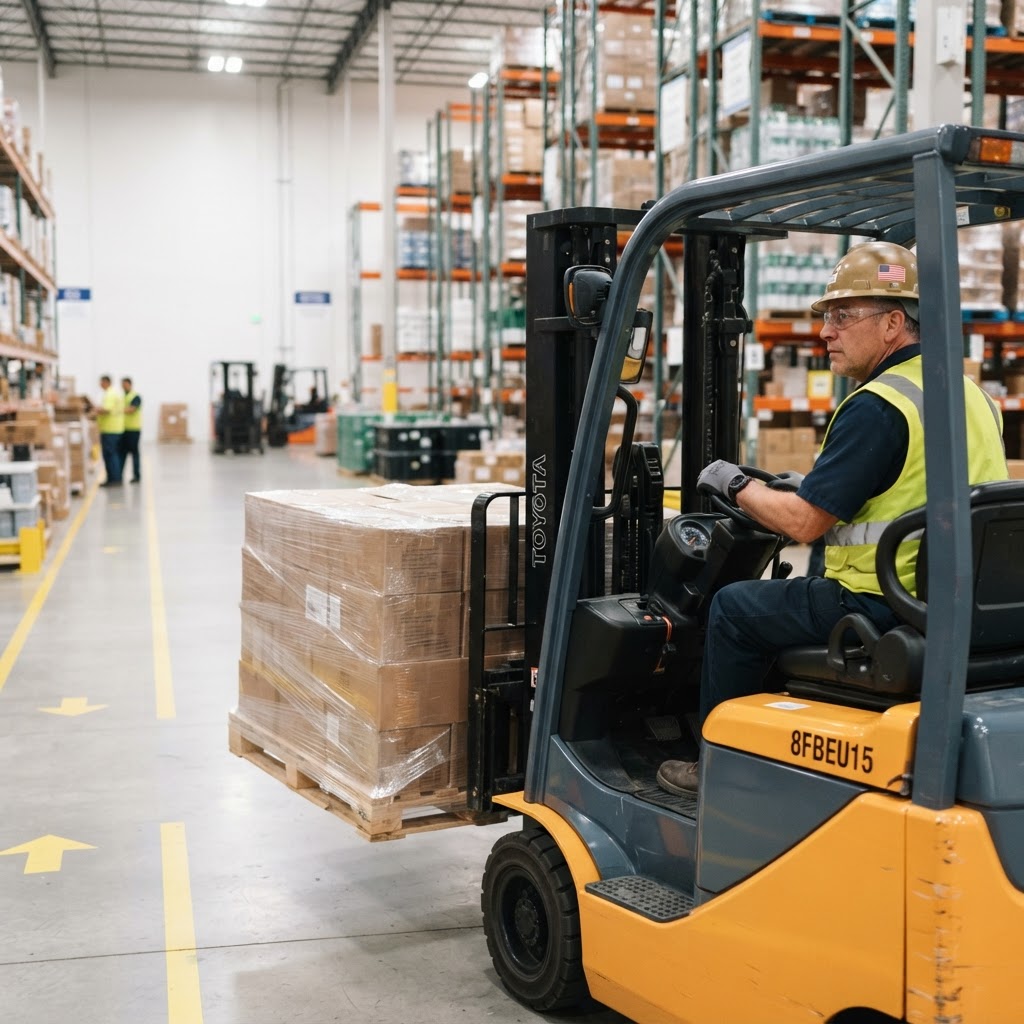
Once the shipment is classified, the next step is booking the lane and producing a compliant return shipping label. A proper return label references the original shipment, identifies the importer of record on the return leg, and includes the freight class and pallet dimensions the carrier needs to price the lane accurately. Manual, email-based booking is where most Ontario freight shipping marketplace users historically lost time, since a single return could involve four or five back-and-forth messages with a broker before a rate was even confirmed. A modern return shipping label generator for freight ties the label directly to the quote, the customs paperwork, and the carrier confirmation, eliminating the version-control problems that lead to mismatched documents at the border. This is also the point where the LTL shipping costs transit time tradeoff should be evaluated deliberately, since a two-day faster lane often costs less over the full return cycle when detention and rework are factored in.
Customs, Documentation, and Common Return Pitfalls
Documentation is where cross-border returns quietly break down. The paperwork that cleared the outbound shipment is not automatically valid on the return leg, and border officers on both sides treat returns with more scrutiny than new commercial shipments. Building a return-specific document pack, rather than recycling the outbound one, prevents most of the holds and reassessments that push return shipping over budget.
What paperwork a Canada-U.S. return actually needs
Every return crossing the Canada-U.S. border needs, at minimum, a commercial invoice marked clearly as a return, a bill of lading naming the correct importer of record, and a customs entry that reflects the return status of the goods. For goods originally exported from Canada, that typically means a Canadian Goods Returned declaration when re-entering Canada. For goods originally sold into the U.S. and now returning north, the U.S. export documentation and the Canadian import entry must line up on value, HS code, and origin. Guidance from customs brokers on how returns from Canada are treated is worth reviewing before your first cross-border reverse shipment, since the classification you use sets the tone for how the border treats every subsequent return. A checklist of cross-border freight documents should live alongside your return authorization workflow so nothing gets prepared from memory.
Where returns most often go wrong
Most return delays trace back to a small number of repeatable mistakes rather than exotic edge cases. Recognizing them upfront is faster than debugging them at the border. Reviewing common customs clearance mistakes before every return, especially for shippers newer to reverse logistics, is a low-cost habit with a real payoff.
Mismatched values: declaring a return at a nominal value when the outbound invoice showed the full commercial value, triggering a customs reassessment.
Wrong importer of record: listing the original consignee as the importer on the return leg when they are no longer taking title to the goods.
Missing return reason: failing to state whether the return is a warranty, refusal, or overstock, which forces the officer to assume the least favourable classification.
Incomplete origin proof: claiming Canadian Goods Returned without the original export documentation to support it.
Outdated HS codes: using a code that was updated between the outbound and return legs, especially across a tariff schedule change.
Duties, exemptions, and the cost of getting it wrong
Returns are not automatically duty-free. Whether duties apply depends on the goods' origin, how long they have been out of the country, and whether they have been altered or repaired abroad. Recent overviews of customs duty and exemptions on Canada-U.S. lanes make clear that goods returned in the same condition they were exported typically qualify for relief, but only when the paperwork supports the claim. When documentation is incomplete, the default is to assess full duties and taxes, which can wipe out the margin on the original sale. Reviewing recurring customs documentation errors against your own return files usually reveals two or three fixable patterns.
Cost Control and the Case for a Digital LTL Marketplace
Return freight rates are almost always negotiable, but only if you actually put the lane out for competitive quote. Defaulting to the outbound carrier for the return leg is convenient, and almost always more expensive than it needs to be. Reverse lanes have different capacity dynamics than outbound lanes, and the carrier best positioned to price your return is often not the one that ran the original shipment.
Where reverse logistics quietly inflates cost
Return costs balloon in predictable places: rushed bookings, single-source pricing, and the hidden fees that surface when a shipment is misclassified. Analyses of how e-commerce brands lose margin on ecommerce returns shipping apply equally to LTL shippers moving pallets rather than parcels. The pattern is the same: no rate comparison, no documentation discipline, and no visibility into where the return actually is at any given moment.
How a digital marketplace changes the math
An LTL carrier booking dashboard changes reverse logistics from a series of one-off phone calls into a repeatable, measurable process. Truxweb was built precisely for this shift, letting Ontario and Quebec shippers send a single return quote request to multiple vetted carriers, receive competitive rates back within minutes, and confirm the booking in one click. The same freight quote comparison Canada shippers rely on for outbound loads works identically for returns, with the same 24/7 concierge team on standby if a customs question comes up mid-transit. For LTL freight shipping in Quebec and Ontario specifically, this compresses what used to be a full afternoon of broker coordination into a task that fits between other work.
LTL vs FTL return shipping costs
For most SMB return volumes, LTL is the right mode. A typical return of one to eight pallets rarely justifies a full truckload, and the LTL vs FTL return shipping costs comparison usually favours LTL by a wide margin at those volumes. Automated return shipping solutions make the case even stronger, since the transaction cost of booking an LTL return drops close to zero when quoting, documentation, and tracking are consolidated in one place. Small businesses that historically avoided returns because the coordination overhead was punishing can now run the same LTL return process for small businesses that larger shippers use, without hiring a dedicated logistics coordinator.
Conclusion
Cross-border LTL returns reward preparation and punish improvisation. Building a repeatable process, keeping return-specific paperwork ready, and putting every return lane out for competitive quote turns a chaotic, expensive workflow into a predictable one. Shippers in Ontario and Quebec who treat returns with the same discipline as outbound freight are the ones who protect margin and keep customer relationships intact when things do not go to plan.
Ready to run cross-border returns without the broker back-and-forth? Start booking return freight with Truxweb and see how a digital LTL marketplace turns reverse logistics into a one-click workflow.
Frequently Asked Questions (FAQs)
How do I create a return shipping label for freight?
Generate a return label directly through your carrier or LTL marketplace by referencing the original shipment number, listing the correct importer of record for the return leg, and attaching the returns-specific commercial invoice before dispatch.
What is the process for returning LTL freight shipments across the border?
Authorize the return, classify the goods and their origin, prepare a return commercial invoice and customs entry, book the LTL lane through a compared quote, and track the shipment from pickup through customs clearance to final delivery.
Can small businesses actually save money on return shipping?
Yes, and the biggest lever is comparing multiple carrier quotes on every return rather than defaulting to the outbound carrier, which typically cuts pallet return shipping costs by 20 to 40 percent.
What documents are needed for Canada-U.S. freight returns?
At minimum, a returns-marked commercial invoice, a bill of lading naming the correct importer of record, the customs entry appropriate to the return type, and supporting proof of original export or import when claiming goods-returned relief.
How can I track a return freight shipment in real time?
Book the return through a platform with a unified dashboard so pickup, in-transit, customs, and delivery milestones all update automatically, rather than chasing status updates through separate carrier portals or email threads.
What factors affect freight return shipping rates?
Lane density, pallet dimensions and freight class, service speed, accessorial requirements at pickup or delivery, and how competitively the return has been quoted against multiple carriers rather than sourced from a single provider.
About the Author
Sarah Bennett is a cross-border trade and customs specialist focused on Canada-U.S. freight compliance between Ontario, Quebec, and key U.S. markets. She writes about customs clearance, freight documentation, and practical solutions for shippers navigating cross-border LTL and reverse logistics. Her work centers on turning regulatory complexity into repeatable operational workflows for small and mid-sized businesses.