Quick Answer
Freight transport costs reflect the lane, shipment density, freight class, service requirements, and charges created when pickup or delivery conditions differ from the original quote. Small businesses lower LTL shipping spend by supplying accurate shipment details, comparing like-for-like carrier options, and reviewing every added charge before approving payment.
Introduction
For businesses moving one to eight pallets, the lowest quoted price is not always the lowest final cost. A carrier needs enough detail to plan equipment, terminal handling, and delivery, so incomplete dimensions or site instructions often reappear as adjustments on the invoice. Shipping costs remain a meaningful business constraint in Canada, as shipping costs were among the barriers identified by Canadian businesses that export. A disciplined quote process turns a freight bill from a surprise into a controllable operating expense.
Key Takeaways:
Accurate weight, dimensions, class, and site details prevent many post-shipment adjustments.
Comparing equivalent carrier quotes exposes differences in transit, service terms, and total cost.
Consolidating routine shipments can improve planning without sacrificing delivery requirements.

What Makes Up a Freight Transport Quote
A freight quote begins with the carrier's cost to move cargo between origin and destination, then changes according to the shipment's physical profile and handling needs. Understanding the transportation cost breakdown helps a shipper separate the base linehaul from charges that depend on the actual pickup and delivery.
Shipment details that shape the base rate
Carriers price LTL freight around the space it occupies, the weight it adds, the class assigned to the commodity, and the lane being served. Freight class pricing can change when density, packaging, liability, or handling characteristics differ from the booking description, so verify the bill of lading before pickup.
Origin and destination: Postal codes determine the carrier network, terminal sequence, and distance.
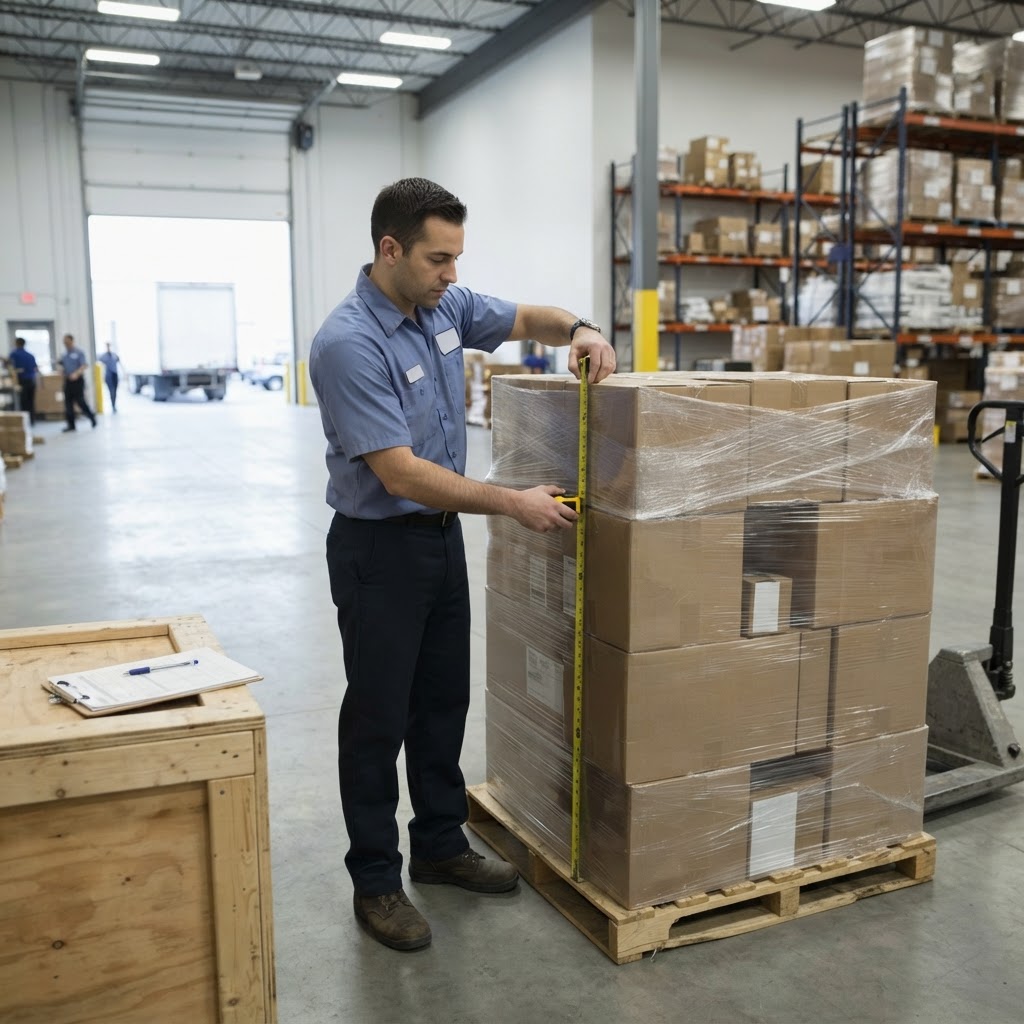
Dimensions: Measure each pallet after it is wrapped because overhang or added height affects trailer space.
Weight: Use the actual shipment weight rather than an estimate from a product catalogue.
Freight class: Confirm the classification against the commodity and packaging before requesting rates.
Why the base rate is only part of the bill
Fuel and capacity conditions can move independently of a shipper's own volume. Statistics Canada reported that general freight trucking prices decreased by 3.7% from March 2023 to March 2024, while rail intermodal container prices increased by 2.5% in July 2024 compared with July 2023, illustrating why rate conditions need regular review rather than a fixed annual assumption.
A useful quote record captures the carrier, service level, estimated transit, pickup requirements, and included fees. Those freight pricing factors make it possible to explain a price difference without treating every higher quote as an error.

How Accessorial Charges Change the Final Freight Bill
Accessorial charges arise when a shipment requires work, equipment, timing, or site conditions outside a standard dock-to-dock movement. They are legitimate when needed, but they become avoidable costs when the booking omits information that the driver or terminal later discovers.
Describe pickup and delivery sites before booking
Freight accessorial charges can apply when a driver needs a liftgate, an appointment, inside delivery, a residential stop, or assistance because a loading dock is unavailable. State those requirements at quote time, and make sure the consignee knows the expected delivery process.
Cross-border moves need the same level of preparation. The actual transportation cost of goods matters in customs value calculations, and documentation should identify the parties, goods, origin, and shipment terms consistently across commercial records.
Audit adjustments while the shipment is still fresh
When an invoice differs from a quote, compare the original booking details with the carrier's proof of service and adjustment reason. A weight or dimension correction may be valid, but an unexplained service charge deserves a prompt question while warehouse and delivery records remain available.
How to Control LTL Shipping Costs Without Cutting Service
Cost control works best when it improves the quality of shipment information and carrier selection, not when it simply chooses the cheapest line item. For freight shipping across Canada, build a repeatable workflow that groups similar lanes, captures final pallet measurements, and gives receiving teams clear instructions.
Compare equivalent carrier options
To compare LTL freight carriers in Canada fairly, request rates using the same freight class, weight, dimensions, accessorial needs, and pickup date. Then assess total landed freight cost alongside transit expectations and the carrier's ability to serve the required lane, rather than comparing an incomplete base rate against a complete quote.
Truxweb's digital LTL marketplace lets businesses compare carrier rates, transit speeds, and ratings in one place, which can reduce the email and phone work that often delays a booking decision. Its consolidated statement also gives finance teams a cleaner view of recurring shipping activity.
Build a practical shipment-control routine
Review recurring adjustments by lane, customer location, and reason code, then correct the operational source of the charge. Use freight class pricing guidance when product packaging or pallet configuration changes, and retain photographs or measurements when a reclassification could be disputed.
Freight logistics teams should also distinguish short-term market movement from an internal process problem. The Canadian Transportation Agency notes that railways must provide notice before increasing a tariff rate, while its guide describes the rate framework used in rail service, a reminder that formal pricing rules and day-to-day truckload or LTL quoting are not the same process.
Conclusion
Freight costs become manageable when each quote starts with accurate cargo and site information, and each invoice is checked against the service that was booked. The goal is not to eliminate every added charge, because some shipments genuinely need special handling. It is to identify which costs are necessary, which stem from incomplete instructions, and which require clarification. Truxweb can support that process by giving small and medium-sized shippers a direct way to compare eligible carrier options for pallet freight.
Ready to make freight decisions with clearer cost visibility? Compare freight options with Truxweb before confirming your next shipment.
Frequently Asked Questions (FAQs)
How can a small business save on freight costs?
A small business can save on freight costs by measuring and classifying every shipment accurately, sharing special site requirements before quoting, and tracking repeat invoice adjustments so the operational cause can be corrected on future bookings.
What is the difference between LTL and FTL shipping?
The difference between LTL and FTL shipping is that LTL combines freight from multiple shippers in a trailer, while FTL reserves the vehicle capacity for one shipment and follows a different pricing model.
Why should I compare multiple freight carrier rates?
Comparing multiple freight carrier rates helps a shipper identify differences in transit expectations, included services, and carrier coverage because a low base rate may exclude requirements that another quote already includes.
How do I get instant freight quotes for my business?
Instant freight quotes require complete origin and destination details, pallet dimensions, total weight, freight class, commodity description, ready date, and any pickup or delivery services that fall outside a standard dock appointment.
Is it cheaper to ship multiple pallets as LTL?
Shipping multiple pallets as LTL can be economical when the freight does not require a dedicated trailer, but the actual result depends on density, lane, class, service needs, and how much trailer space the shipment uses.
What documentation is needed for LTL shipping?
LTL shipping documentation generally includes a complete bill of lading with shipper and consignee details, commodity description, piece count, weight, freight class, handling instructions, and any required cross-border commercial records.
About the Author
Daniel Park is a Freight Logistics Analyst covering LTL shipping, carrier performance, and supply chain operations across Ontario and Quebec. His analysis focuses on making freight pricing, carrier selection, and shipment visibility practical for small and medium-sized businesses.
 7 min read