


Introduction
Every few years, the freight market shifts in ways that catch unprepared shippers off guard. Heading into 2026, freight capacity tightening is shaping up to be one of the most disruptive forces Canadian businesses will face. When carrier availability shrinks and shipping demand climbs, rates spike fast, lanes become harder to secure, and businesses that relied on informal carrier relationships suddenly find themselves scrambling for coverage.
For small and medium-sized businesses in Ontario and Quebec that depend on regular LTL shipments, the pressure is especially acute. This guide breaks down why capacity tightens, how it drives rate volatility, and what concrete steps you can take right now to protect your shipping costs and supply chain reliability heading into a constrained market.

Understanding Freight Capacity Tightening in Canada
Before building a strategy, you need to understand the mechanics behind a capacity crunch. LTL capacity tightening does not happen overnight. It is the result of several converging pressures that accumulate over months, and by the time most shippers notice the problem, rates are already moving.
The Canadian freight market is particularly vulnerable to regional imbalances. Corridors between major manufacturing hubs, distribution centres, and cross-border entry points can experience tightening well before national averages reflect the shift. Understanding where and why capacity shrinks gives you a meaningful head start.
What Drives a Capacity Crunch
Several factors commonly combine to produce a freight capacity crunch. Recognizing them early lets you adjust booking behavior before you are competing against every other shipper on the same lanes.
- Driver shortages: Canada's trucking industry faces a persistent and worsening driver shortage, which directly reduces available capacity even when equipment is abundant.
- Carrier consolidation: Smaller regional carriers exiting the market or merging reduces competition on specific lanes, leaving shippers with fewer options and less leverage.
- Demand surges: Seasonal peaks, post-disruption restocking cycles, and e-commerce growth all spike freight demand faster than carriers can scale operations.
- Regulatory compliance costs: Stricter emissions and ELD mandates increase operating costs for carriers, reducing their willingness to offer discounted rates in tight conditions.
- Fuel price volatility: Sustained increases in fuel costs compress carrier margins, which gets passed directly to shippers through fuel surcharges and rate increases.
How Tightening Hits LTL Shippers Hardest
Full truckload shippers have one advantage in a tight market: they can negotiate volume commitments that carriers value. LTL shippers do not have that leverage. When LTL shipping capacity tightens, carriers prioritize full loads first, pushing smaller shipments to longer transit windows or dropping lanes entirely. The result is that businesses shipping one to eight pallets at a time absorb disproportionate rate increases and face more frequent service failures.
This dynamic is already visible in the data tracked by Statistics Canada's transportation statistics, which show freight volumes and carrier activity trends that signal tightening cycles well in advance. Shippers who monitor these signals can adjust before rates spike.
The Ontario and Quebec Corridor Under Pressure
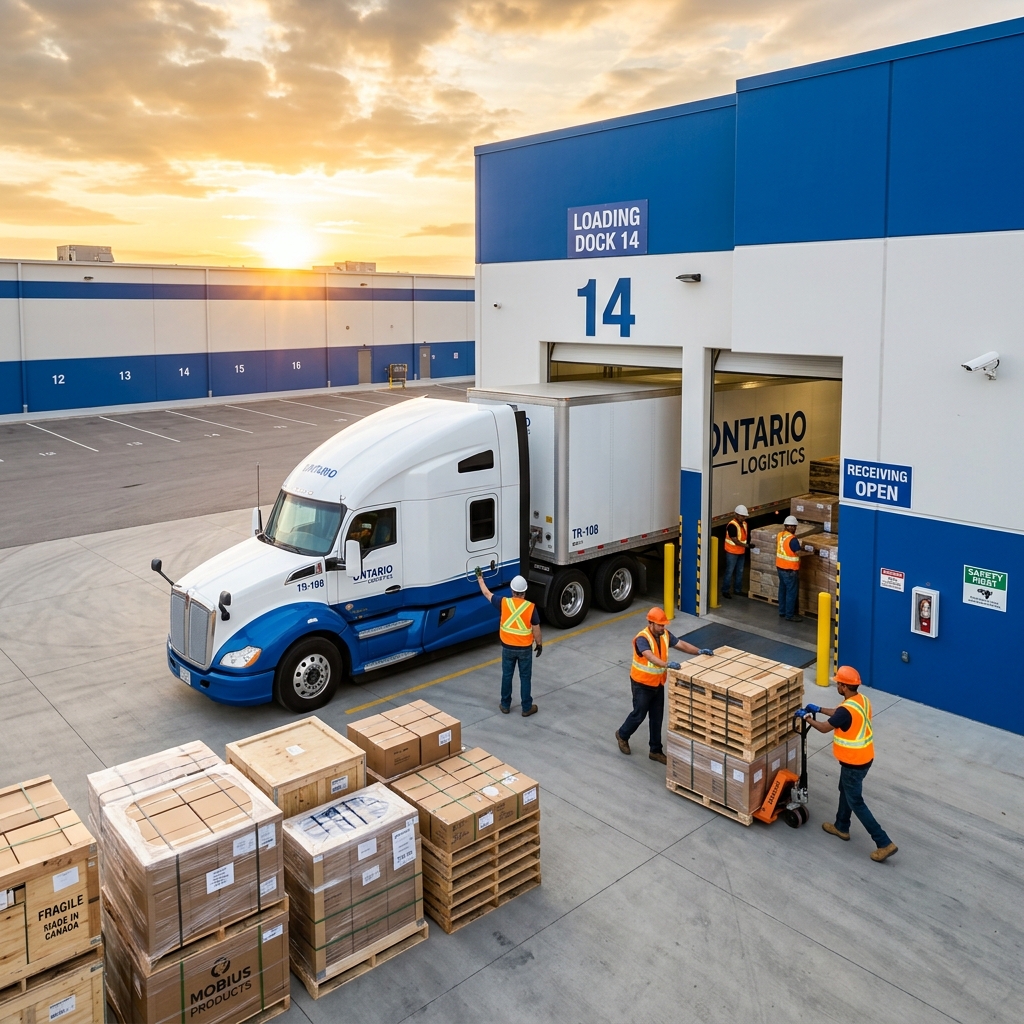
For businesses operating in central Canada, freight capacity tightening in Ontario and Quebec carries specific risks. The Montreal-Toronto corridor is one of the most active freight lanes in the country, and it is also one of the first to show strain when national capacity tightens. Cross-border lanes into the northeastern United States add further complexity, as US market conditions ripple into Canadian carrier availability. Regional tightening in these corridors can hit weeks or months before the broader national market reflects the same pressure.
How Capacity Tightening Translates Into Rate Volatility
Rate volatility is the most visible symptom of a tight freight market, but it is important to understand the mechanism behind it. Rates do not simply rise uniformly. They spike unevenly depending on lane, carrier, shipment size, and timing. A shipper on a well-served Toronto to Montreal lane may see modest increases, while a shipper moving freight on a thinner regional lane sees rates double.
The Cost of Inaction During a Capacity Crunch
Businesses that do not have a proactive rate strategy entering a capacity crunch end up paying a significant premium. Relying on a single carrier relationship means you have no benchmark to evaluate whether the rate you are being offered reflects the market or simply reflects that carrier's desire to improve their own margins. Without real-time visibility into what other carriers are quoting on the same lane, you are negotiating blind.
The hidden cost compounds quickly. LTL shipping rates during a capacity crunch can increase 20 to 40 percent within a single quarter on high-demand lanes, and spot rates on thinly covered corridors can be even more unpredictable. For a business shipping multiple times per week, those increases translate directly into margin erosion that is difficult to recover once it becomes embedded in operational budgets.
Why Traditional Broker Models Fail in Tight Markets
The traditional freight broker model, built on phone calls, email chains, and opaque pricing, is structurally misaligned with how a tight market behaves. When capacity tightens, brokers face the same scarcity as everyone else. But because they are acting as intermediaries, their fees remain or increase even as service levels decline. You end up paying more for less, while the broker's margin sits between you and the actual carrier rate. This is the core problem that makes the LTL marketplace vs freight broker question so relevant for 2026 planning.
Spot Rates Versus Contract Rates in a Tight Market
One of the most consequential decisions shippers face in a tightening market is how to balance spot rate exposure against contracted pricing. Spot rates give you flexibility but expose you to full market volatility. Contract rates provide predictability but require volume commitments that smaller shippers may struggle to meet. The shippers who navigate a truckload capacity tightening period most effectively are those who build a mixed strategy, securing contracts on their highest-volume lanes while maintaining access to competitive spot pricing for variable or overflow shipments.
Rate Recovery Strategies for Canadian Shippers
Rate recovery does not mean waiting for the market to ease. It means taking deliberate action to reduce what you pay relative to the market, regardless of where rates are trending. The following strategies are designed for businesses that ship LTL regularly and need to maintain cost efficiency under pressure.
Build Carrier Relationships Before You Need Them
One of the most effective strategies for securing LTL capacity in a tight freight market is establishing carrier relationships during periods of relative ease. Carriers prioritize shippers they know, whose freight characteristics they understand, and whose payment history is reliable. When capacity tightens, those relationships translate into access that spot-market shippers simply cannot buy at any price.
This does not mean locking yourself into a single carrier exclusively. The goal is a portfolio of two to four carriers with whom you have established history on your core lanes. When one carrier cannot cover a shipment, you have alternatives who already know your freight profile. Building this portfolio now, before the 2026 tightening cycle peaks, is one of the highest-return actions you can take.
Use Real-Time Rate Comparison to Benchmark Every Shipment
Even if you have established carrier relationships, benchmarking rates on every shipment is essential in a volatile market. A carrier you have worked with for two years may still quote you a rate that is 25 percent above what others on the same lane are offering. Without a freight rate comparison tool that surfaces competing quotes in real time, you have no way to know.
Digital freight marketplaces solve this problem by allowing you to send a single request to multiple carriers and receive responses within minutes. This kind of transparency is transformative in a tight market. It means every booking decision is informed by actual market pricing rather than a single carrier's assessment of what the lane is worth. Platforms like Truxweb connect shippers directly with vetted carriers and return competitive quotes within 30 minutes, giving you the benchmark data you need to negotiate confidently or confirm a booking without delay.
Technology as a Strategic Advantage in Tight Markets
The freight market of 2026 is not the same as it was in 2016. Digital tools have fundamentally changed what is possible for LTL shippers, and those tools matter most when the market is under stress. Shippers who have built digital freight workflows into their operations are structurally better positioned to respond to tightening than those still dependent on manual booking processes.
Why Digital Freight Platforms Outperform Traditional Booking in a Crunch
When capacity tightens, speed is a competitive advantage. A shipper who can compare rates across multiple carriers and confirm a booking in minutes has a material edge over one who needs to make five phone calls and wait for callbacks. Digital platforms cut LTL shipping costs not just through price transparency but through the operational efficiency they create. Every hour a booking sits unconfirmed during a tight market is an hour in which a carrier could fill that space with someone else's freight.
Beyond speed, digital platforms provide tight freight market shipping solutions that are simply unavailable through traditional channels. Real-time shipment tracking, automated alerts, in-platform carrier communication, and consolidated billing all reduce the administrative burden on operations teams who are already stretched thin during high-pressure periods. The supply chain resilience frameworks developed by leading international bodies consistently highlight technology adoption as a core resilience driver for businesses navigating disruption.
Comparing LTL Carrier Rates in Real Time
The ability to compare LTL carrier rates in real time is the single most powerful tool available to shippers in a tight market. It removes information asymmetry from the equation. When you can see what three or four carriers are offering on the same lane simultaneously, you know immediately whether you are being quoted a market rate or a premium. That knowledge gives you negotiating leverage you would not otherwise have.
This is particularly relevant for businesses in Quebec and Ontario, where freight capacity tightening in Quebec on key corridors can produce wide rate dispersion between carriers on the same lane. A carrier struggling to fill a northbound return run may offer significantly better pricing than one whose network is fully loaded. Real-time comparison surfaces those opportunities automatically.
Automation and Freight Booking Efficiency
Manual freight booking processes do not scale under pressure. When shipment volumes spike or carrier availability drops, an operations team running on email and spreadsheets faces a coordination failure. Freight booking automation addresses this by standardizing the quote-to-confirmation workflow, reducing the time each booking requires, and ensuring that rate and carrier data are captured consistently for analysis. Over time, that data becomes a strategic asset, showing you where you are systematically overpaying and which carriers perform most reliably on your highest-volume lanes.
Carrier Diversification and Lane-Level Strategy
No single strategy works across every lane, shipment type, or market condition. The most resilient shippers treat carrier management as a dynamic, lane-level discipline rather than a set-and-forget relationship. In a tightening market, lane-level thinking separates businesses that absorb rate increases from those that actively manage against them.
Building a Diversified Carrier Portfolio
Diversification is your primary hedge against both capacity shortages and rate volatility. A diversified carrier portfolio means having at least two confirmed options on every lane you ship regularly, with clear criteria for when you route to each. LTL carrier selection should be evaluated on transit time reliability, claims history, and lane-specific performance, not just rate. A carrier that offers the lowest rate but delivers late 30 percent of the time is not actually saving you money when you factor in the downstream operational cost of late deliveries.
The Role of Regional Carriers in a Tight National Market
When national carriers are overwhelmed, regional LTL carriers often provide the best combination of availability and competitive pricing. These carriers operate with deep route knowledge and asset optimization on specific lanes, and they are frequently more willing to negotiate on accessorial fees and minimum charges than large national networks. In a tight market, overlooking regional carriers because they are less familiar is a costly mistake. The key is having a platform or process that surfaces regional options alongside national ones so the comparison is complete.
Evaluating Carrier Performance During Tight Conditions
Capacity tightening often reveals service quality gaps that are invisible in a loose market. Carriers who were reliable when they had ample capacity may begin missing pickup windows, extending transit times, or increasing claims frequency as they run closer to full utilization. Monitoring carrier performance at the lane level during a tightening cycle is essential for making informed routing decisions. Shippers who track on-time delivery and claims rates by carrier can reassign volume away from underperforming providers before operational failures compound. Truxweb supports this kind of performance visibility through its 360-degree shipping dashboard, which consolidates shipment data across all active carriers in one place.
Conclusion
Freight capacity tightening in 2026 is not a condition to wait out. It is a challenge to actively manage. Shippers who understand the mechanics of a capacity crunch, build diversified carrier portfolios, benchmark rates in real time, and leverage digital platforms to move faster than the market are the ones who will protect their margins and maintain supply chain reliability. The strategies outlined here are not theoretical. They are the operational behaviors that separate businesses absorbing rate increases from those successfully recovering them. Start building these practices into your freight workflow now, before the next tightening cycle forces the decision for you.
If you're ready to compare LTL carrier rates in real time and take control of your freight costs heading into 2026, explore the Truxweb platform and see how fast competitive quotes can reach you.
Frequently Asked Questions (FAQs)
What causes LTL capacity tightening?
LTL capacity tightening is caused by a combination of driver shortages, carrier consolidation, rising demand, regulatory compliance costs, and fuel price increases. When these factors converge, the number of available carriers and trucks on key lanes drops faster than shippers can adjust their booking strategies.
What happens to freight rates when capacity tightens?
When capacity tightens, freight rates typically rise sharply, especially on high-demand corridors. Spot rates are the most volatile, while contract rates provide more stability but may still be renegotiated upward at renewal if market conditions have shifted significantly.
How to find LTL capacity during a freight crunch?
The most effective approach is using a digital freight marketplace that connects you with multiple carriers simultaneously, allowing you to receive competitive quotes quickly even when individual carriers are at or near capacity. Broadening your carrier portfolio before the crunch also gives you more fallback options when primary carriers are unavailable.
How to manage freight during a capacity shortage?
Managing freight during a capacity shortage requires consolidating shipments where possible, maintaining relationships with multiple carriers, using real-time rate comparison tools, and monitoring carrier performance closely. Flexible pickup windows and accurate freight classification also help secure coverage faster.
Can small businesses secure LTL capacity during tight freight markets?
Yes, though it requires more deliberate planning than in a loose market. Small businesses benefit most from using platforms that aggregate carrier access and provide rate transparency, since they lack the volume leverage to negotiate directly with carriers the way large shippers do.
Why is freight capacity tightening in Canada?
Canada is facing a convergence of structural driver shortages, aging carrier fleets, increased regulatory requirements, and growing freight demand driven by e-commerce and cross-border trade. These pressures are particularly acute in the Ontario and Quebec corridors where freight volume is highest.
How to save money on freight shipping in Ontario and Quebec?
Comparing rates across multiple carriers in real time, optimizing shipment density, consolidating freight volumes, and negotiating accessorial charges are the most direct ways to reduce costs in these high-traffic corridors. Using a digital freight marketplace removes broker fees and provides immediate access to competitive carrier pricing.
How does capacity tightening affect shipping rates?
Capacity tightening reduces carrier supply relative to demand, which gives carriers more pricing power. Rates increase on tight lanes, spot pricing becomes less predictable, and carriers become more selective about which freight they accept, often favoring higher-margin shipments.
Is LTL shipping cheaper than full truckload during a capacity crunch?
It depends on shipment size and lane. For shipments that do not fill a full trailer, LTL typically remains more cost-effective even in tight conditions. However, LTL shippers face disproportionate service disruptions during a crunch because carriers prioritize full loads, so cost comparisons should also account for transit time reliability.
How does Truxweb compare LTL carrier rates during tight freight markets?
Truxweb's platform sends a single quote request simultaneously to multiple vetted carriers and returns competitive responses within minutes, with 92% of carriers responding within 30 minutes during operating hours. This gives shippers immediate rate benchmarking across carriers so they can make fast, informed booking decisions even when the market is under stress.