
Free Bill of Lading Template for Canadian Freight Shippers
A field-by-field, ready-to-copy bill of lading layout showing Canadian LTL shippers exactly what belongs in every section of the BOL.
By Mathieu van Gent · 8 min read ·

Quick Answer
Use a complete, carrier-ready bill of lading template that identifies both parties, accurately describes every handling unit, and records classification, weight, instructions, and signatures. For Canadian LTL freight, mismatched dimensions, freight class, or NMFC details can trigger reclassification and billing corrections after pickup.
Introduction
A practical bill of lading basics reference starts with the information a carrier needs to accept, move, and deliver a shipment without guessing. This copy-ready layout gives Quebec and Ontario shippers a field sequence for a standard BOL form, whether the shipment travels within Canada or continues to the United States. Enter information from your packing list, order record, and carrier booking, then review the document against the freight on the dock. A clear document prevents a driver from receiving freight that does not match the paperwork.
Key Takeaways
- A BOL must match the freight presented for pickup.
- Classification details affect LTL rating and handling.
- Pickup signatures document carrier receipt of the shipment.
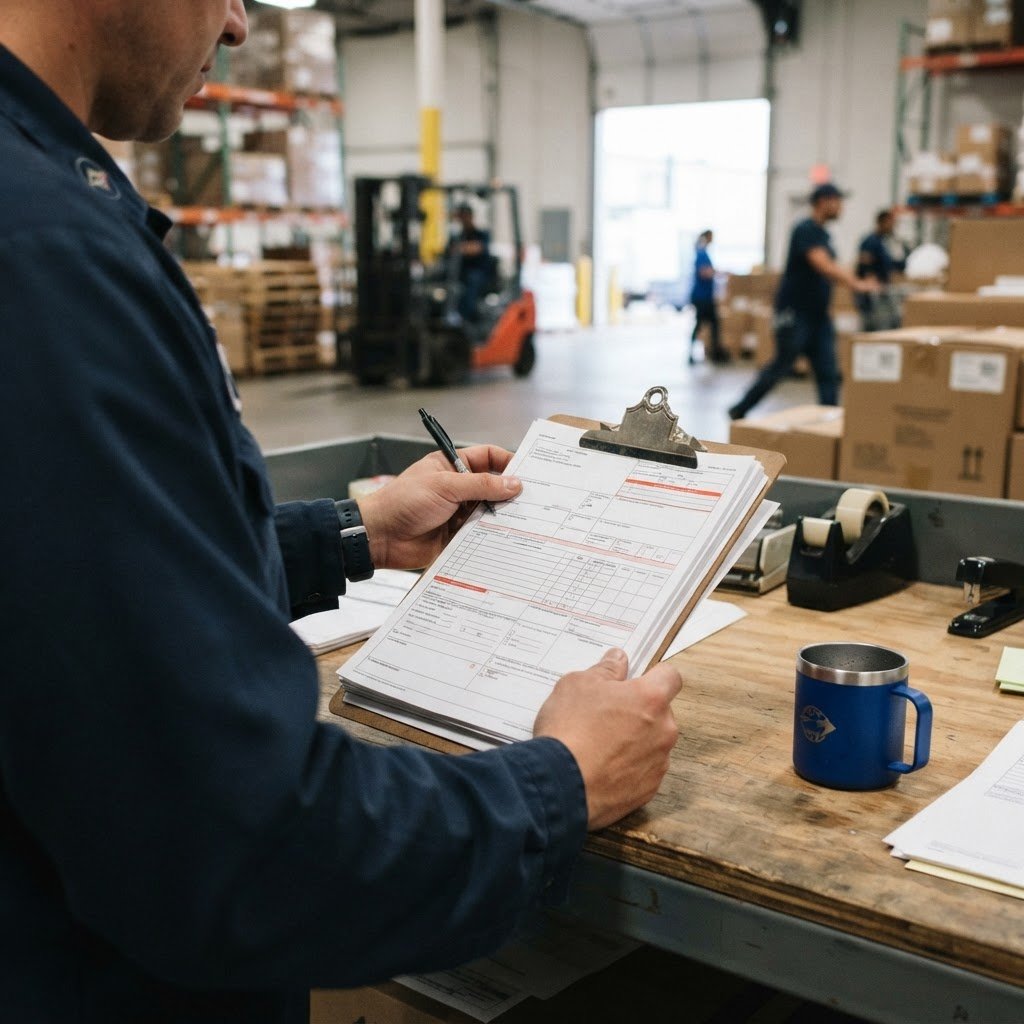
Bill of Lading Template Fields for Canadian LTL Freight
Copy the following layout into your shipping system or document template, then complete it before the truck arrives. A bill of lading for Canadian carriers should describe the actual shipment rather than a generic product category, because the carrier uses the document to identify, rate, and hand off the freight.
Shipper, consignee, and shipment reference fields
Start with the parties, locations, and references that tell the carrier where freight originates, where it must go, and who can resolve a delivery issue. For U.S. general for-hire non-exempt motor carriers hauling in interstate commerce, bills of lading require the consignor and consignee names, origin and destination points, package count, freight description, and weight or measurement used for rating; these core elements appear in motor carrier bill of lading requirements.[1]
- Shipper: Legal business name, pickup address, contact name, and phone number.
- Consignee: Receiving business, complete delivery address, contact, and phone number.
- Pickup date: The agreed ready date, not the date the document was drafted.
- Reference numbers: Purchase order, sales order, booking, or customer reference.
- Payment terms: State prepaid, collect, or third-party billing instructions.
Copy-ready BOL header layout
Use clear labels and leave room for a driver to verify the shipment at pickup. If your shipment has border-reporting information, keep its transport document number consistent with the booking record; for CSA purposes, CBSA requires CCNs, transport document numbers, and CRNs to remain unique for three years starting January 1 of the year following initial use after initial use.[2]
| Template field | What to enter | Why the carrier needs it |
|---|---|---|
| Shipper | [Legal name, address, contact, phone] | Confirms pickup party and contact point |
| Consignee | [Legal name, address, contact, phone] | Directs delivery and appointment communication |
| Origin / destination | [Full pickup and delivery addresses] | Matches the booked lane |
| Reference numbers | [PO, SO, booking, customer reference] | Connects freight to commercial records |
| Payment terms | [Prepaid, collect, or third-party] | Clarifies payment handling at delivery |
The most important control is consistency: the legal names, addresses, and booking reference should match the carrier confirmation and the shipment labels. For a broader pre-pickup review, use an LTL documentation checklist alongside the BOL.
How to Fill Out a BOL for Freight Classification and Handling
The freight-detail section determines how the carrier rates and handles your load. Complete one line for each distinct commodity, packing method, class, and NMFC item rather than combining unrelated goods under one vague description.
Commodity description, freight class, NMFC code, and weight
Write a specific plain-language description, such as "boxed aluminum fittings" or "plastic components on shrink-wrapped pallets," then enter the piece count, packaging type, class, NMFC code where applicable, and total weight. A freight class explained reference helps you assess density, handling, liability, and stowability before assigning a class.
Freight class is not a cosmetic field. Light, bulky freight and goods that are harder to handle, stow, or transport safely may fall into a higher class and cost more, which is why freight class and NMFC information must match the shipment's actual packaging and dimensions.
| BOL line item | Manual paperwork entry | Booking record check |
|---|---|---|
| Handling units | [Pallets, cartons, crates, or bundles] | Matches labels and dock count |
| Commodity description | [Specific product and packaging] | Matches invoice and packing list |
| Freight class | [Applicable class] | Matches rating details |
| NMFC code | [Applicable NMFC item] | Matches commodity classification |
| Weight | [Total weight by line item] | Matches scale or documented estimate |
Do not use a class copied from an old shipment unless the commodity, packaging, dimensions, and density remain the same. Consult an NMFC classification guide when a product description or packaging change could affect the rating.
Special instructions, accessorials, and signatures
Use the special-instructions area for facts the driver and terminal need to execute the shipment, including delivery appointments, limited-access locations, liftgate requirements, temperature instructions, or pickup contact restrictions. If regulated goods require a shipping paper, include the relevant hazard class or division number, because the shipping document must identify that classification for hazardous materials movements.
At pickup, the shipper or authorized dock representative should sign after the driver counts the freight and notes visible exceptions. The carrier representative should sign or acknowledge receipt, and the shipper should retain the signed copy with the booking confirmation, labels, and correspondence; CBSA notes that CSA carriers should not reuse a CSA identifier for another shipment until the original shipment has been released or otherwise accounted for.[2]

When to Use a Manual BOL Form or a Digital Workflow
Manual paperwork can work for an occasional shipment when one person controls the booking, packing list, labels, and pickup handoff. Digital workflows reduce transcription risk by keeping booking references, shipment specifications, and carrier communication in one place, but the printed or shared BOL still needs to match the freight that arrives at the dock.
Document controls that prevent billing disputes
Choose the workflow that makes verification easier, not merely faster. A manual form requires a disciplined handoff between sales, warehouse, and shipping staff, while digital BOL platforms differ mainly in how they preserve the shipment record and surface changes before pickup.
Truxweb lets SMEs compare carrier quotes, transit times, carrier ratings, and detailed booking fees before confirming an LTL shipment, which gives the shipper a reference point for validating the carrier and lane details entered on the BOL. The platform's booking dashboard and real-time dispatch alerts can also help the warehouse align the document with the confirmed pickup.
Cross-border fields need additional control
For Canada-to-U.S. trucking, use the carrier's instructions for commercial invoices, customs records, and transport references in addition to the BOL. Follow the booked carrier's instructions for any required electronic reporting and border documentation, so a cross-border BOL should never substitute for required customs reporting or commercial documentation.
Conclusion
A usable BOL form is specific, consistent, and signed at pickup. Match every field to the actual freight, especially handling units, commodity description, freight class, NMFC code, weight, and accessorial instructions. For Canadian SMEs moving pallet freight, Truxweb is a practical option for accessing carrier comparisons and booking details before preparing shipment paperwork. Keep the final signed document with the rest of your required shipping documents so your team can address delivery questions, claims, or billing adjustments with a complete record.
Need a clearer LTL booking record before you prepare your paperwork? Connect with Truxweb to compare carrier options and shipment details.
Frequently Asked Questions (FAQs)
What information must be included on a BOL form?
A BOL form must include the consignor and consignee, origin and destination, package count, freight description, and applicable weight, volume, or measurement, while payment terms and special handling details should be added when they affect delivery or rating.
How do I create a bill of lading for LTL freight?
Create a bill of lading for LTL freight by copying the carrier-ready field sequence, entering one line per commodity and packaging type, matching the shipment to the booking record, and obtaining carrier acknowledgment when the freight is collected.
Who is responsible for preparing the bill of lading?
The shipper is generally responsible for preparing accurate shipment information on the bill of lading, although the carrier may issue its own form and the driver verifies the freight received during the pickup handoff.
Can a bill of lading serve as a contract of carriage?
A bill of lading can serve as evidence of a contract of carriage because it records the shipment parties, freight description, route details, and delivery terms, but the carrier's tariff and booking terms may also govern the movement.[3]
Is a bill of lading required for cross-border trucking?
A bill of lading is commonly used for cross-border trucking, but it does not replace customs declarations, commercial invoices, or carrier reporting obligations that apply when freight enters Canada or the United States.
How do I correct errors on a bill of lading?
Correct bill of lading errors before pickup by issuing a revised document and notifying the carrier, then document any post-pickup correction in writing so the carrier, consignee, and billing record use the same shipment details.
Is the bill of lading considered a proof of delivery?
A bill of lading is not automatically proof of delivery because it primarily documents shipment tender and carrier receipt, while a signed delivery receipt or delivery confirmation records that the consignee accepted the freight.
Sources
- Bill Of Lading Primer – Types And Regulatory Requirements | Benesch Law — Benesch Law ↩
- Memorandum D23-2-1: Customs Self-Assessment Program for Carriers — cbsa-asfc.gc.ca ↩
- Bill of lading — Ministère des Transports du Québec ↩
About the author

 PAPS vs PARS: Which Border Code Does Your LTL Freight Need?
 Freight Class Explained: How It Affects Your Bill