


Quick Answer
Landed cost is the full cost of getting goods from a Canadian origin to a U.S. destination, not just the freight quote. Build it by combining freight, customs-related charges, brokerage, insurance, currency effects, and shipment-specific accessorials before you set a selling price or approve a booking.
Introduction
For cross-border shipping Canada to US, a low linehaul rate can still produce an expensive shipment when charges appear after pickup or at the border. A sound landed cost calculation formula assigns every predictable expense to the shipment and its goods before freight moves. This matters most for smaller shippers because an unplanned charge can erase margin across a modest pallet order. Classification, origin documentation, delivery conditions, and the accuracy of the shipment details all affect the final invoice.
Key Takeaways:
Use the full shipment cost, not the booked freight rate, when pricing cross-border goods.
Confirm customs, accessorial, and delivery requirements before a carrier is dispatched.
Direct carrier comparisons make cost assumptions easier to test before booking.
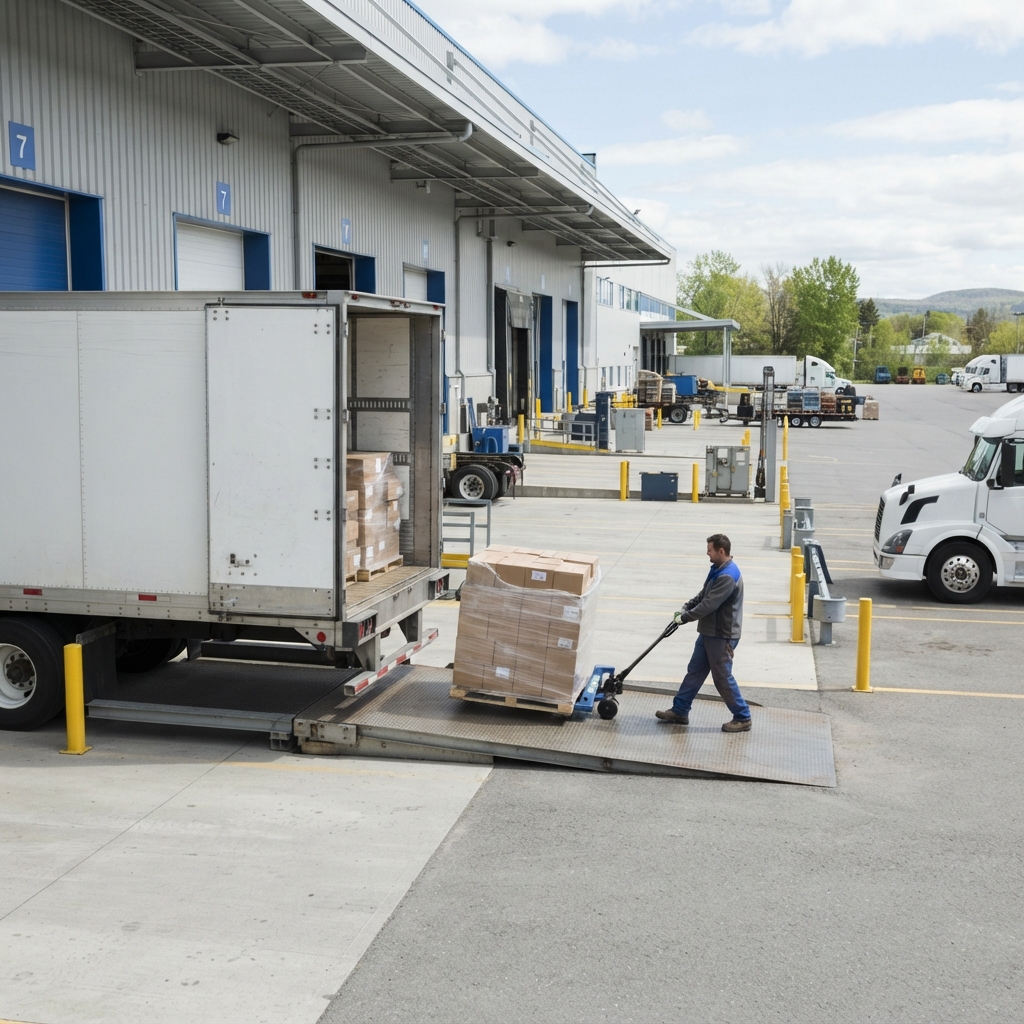
What Belongs in a Landed Cost Calculation
A practical total landed cost definition starts with the purchase value of the goods and adds every cost required to make them available to the U.S. buyer or receiving location. Keep a shipment-level worksheet, then allocate shared costs across the units, cartons, or pallets in that order. This gives finance and operations the same baseline instead of treating logistics as an after-the-fact variance.
Start With an Itemized Cost Formula
To calculate landed cost for international shipping, separate known charges from conditional charges that depend on the freight, customs entry, or delivery site. A clear formula makes assumptions visible, which is more useful than relying on a single all-in estimate.
Goods value: Record the invoiced product value and any supplier-side packing or handling costs.
Freight: Include pickup, linehaul, border movement, and final delivery charges shown in the booking.
Border charges: Add duties, tariffs, taxes where applicable, and fees connected to entry preparation.
Risk protection: Include cargo insurance or the cost of carrying the loss risk internally.
Conditional services: Reserve for accessorial freight charges, currency conversion, and corrections caused by inaccurate shipment details.
Classify Goods and Validate Trade Treatment Before Dispatch
Duties are tariffs or taxes imposed on goods transported across international borders, so product classification, declared value, and origin evidence should be checked before tendering freight. The customs duty information explains the basic function of duty, while the Customs Tariff legislation sets out tariff treatment rules, including value-for-duty provisions in certain return scenarios. Review Canada-U.S. tariffs as part of your pre-shipment review because tariff exposure changes with the goods and trade direction.

Where Cross-Border Freight Budgets Usually Break Down
Hidden shipping fees and surcharges usually arise from a mismatch between what was quoted and what the carrier actually handled. A booking should describe pallet count, dimensions, weight, commodity, pickup conditions, consignee requirements, and border documents with enough precision for the carrier to price the work correctly.
Compare a Freight Quote With the Final Cost Structure
The table below distinguishes costs that are commonly visible at booking from costs that must be confirmed through documentation and operating conditions. It is a planning tool, not a substitute for a customs or tax determination.
Cost component | Usually known before booking | What can change it | Control step |
|---|---|---|---|
Base freight | Yes, when shipment details are complete | Actual weight, dimensions, lane, and service needs | Measure and describe every pallet accurately |
Customs-related charges | Partly | Classification, origin, value, and entry requirements | Review documents before pickup |
Brokerage or entry support | Yes, if disclosed | Document corrections and clearance complexity | Confirm responsibility and fee treatment |
Accessorial services | Only when requested in advance | Liftgate, appointment, residential, limited-access, or re-delivery needs | Document site conditions in the order |
Currency effects | Partly | Billing currency and payment timing | Set an internal exchange-rate policy |
The key distinction is that the freight quote covers transportation under stated conditions, while final freight costs reflect the services and corrections that the shipment actually required. Review final freight costs against the original booking details after delivery to identify recurring preventable variances.
Control Brokerage, Documentation, and Site Charges
Shipping freight without a broker does not mean skipping border compliance. It means clarifying who prepares entry documents, who communicates with customs parties, and which fees are included before the shipment is released. For freight shipping from Quebec to USA, use commercial invoices that match the goods, confirm the importer of record, and follow the customs clearance process before the truck reaches the border.
Traditional arrangements can obscure freight broker fees within a broader price rather than separating carrier transportation from intermediary charges. The duty-and-tax estimator notes that Canada’s 25% surtax applies to specified U.S.-origin steel and aluminum products and auto imports, and that this surtax is not included in the estimator. That is a useful reminder to validate tariff treatment separately rather than assuming a general tool captures every trade measure.
How to Reduce Landed Cost Without Reducing Control
Supply chain landed cost reduction comes from preventing avoidable changes, choosing an appropriate service level, and making each cost owner visible. Start by tracking exceptions by reason, such as missing documents, inaccurate dimensions, delivery restrictions, or failed appointments, then correct the data source that creates the repeat issue.
Use Direct Comparison Before You Commit
Pallet shipping Ontario businesses can improve forecasting by comparing available carrier quotes alongside transit information and booking fees before selecting a service. On the Truxweb marketplace, shippers can compare carrier rates, transit times, ratings, and detailed booking fees in one workflow rather than relying on a chain of calls or emails. This supports freight cost optimization for SMEs because the selected option and its commercial assumptions are visible before the order is confirmed.
Do not choose solely on the lowest displayed price. Check whether the quoted service matches the pickup equipment, consignee hours, delivery appointment requirement, commodity, and customs preparation needed for the load. A rate is useful only when it covers the shipment you will actually tender.
Create a Shipment Closeout Routine
Close each shipment by matching the supplier invoice, freight booking, customs documents, delivery record, and final carrier statement. Record the reason for every variance and assign it to purchasing, warehouse operations, customer service, or logistics so the next shipment is cleaner. Truxweb’s consolidated statement and shipment dashboard can help an SME maintain this audit trail while keeping carrier communication accessible.
Conclusion
Landed cost becomes reliable when it is treated as an operational calculation, not an accounting adjustment after delivery. Include product value, transportation, border-related charges, insurance, currency exposure, and conditional services, then validate the assumptions before pickup. The most effective savings come from accurate shipment data, complete trade documents, and transparent quote comparisons. Repeating that discipline turns freight spend into a controllable input for pricing and customer commitments.
Want clearer visibility before your next cross-border shipment? Explore Truxweb shipping options for direct carrier comparisons and transparent booking details.
Frequently Asked Questions (FAQs)
What is landed cost in logistics?
Landed cost in logistics is the combined cost of purchasing, transporting, clearing, protecting, and delivering goods to their intended destination, which gives a business the cost basis needed to price inventory and measure shipment profitability accurately.
How to calculate landed cost for freight?
Calculate landed cost for freight by adding the goods value, freight invoice, customs-related expenses, brokerage or entry support, insurance, currency effects, and any delivery-specific service charges, then allocating shared shipment expenses across the goods carried.
Why is landed cost important for shipping?
Landed cost is important for shipping because it reveals the true expense behind a product sale, allowing purchasing and sales teams to protect margins instead of setting prices from a transportation quote that excludes later charges.
What factors increase landed cost?
Factors that increase landed cost include tariff treatment, inaccurate commodity or pallet details, documentation corrections, accessorial services, delivery constraints, currency movement, and insurance decisions, because each can add work or financial exposure beyond basic transportation.
What is the difference between freight rate and landed cost?
The difference between a freight rate and landed cost is that the freight rate prices transportation under defined conditions, while landed cost includes the product and every related expense required to place it at the receiving destination.
How to avoid surprise freight surcharges?
Avoid surprise freight surcharges by confirming shipment measurements, pickup and delivery constraints, required equipment, document responsibilities, billing currency, and special handling needs before booking, then reviewing delivery records against the final statement after completion.
Can I reduce landed cost without a broker?
You can reduce landed cost without a broker by comparing direct carrier options, separating transportation from border-support responsibilities, validating documents early, and selecting a service that matches the actual shipment conditions instead of relying on unclear bundled pricing.
About the Author
Sarah Bennett is a Cross-Border Trade & Customs Specialist focused on freight compliance, customs clearance, and Canada-U.S. shipping workflows. Her analysis emphasizes practical documentation controls and cost visibility for businesses moving freight between Quebec, Ontario, and U.S. markets.