


Quick Answer
CUSMA may support a preferential tariff claim when the importer confirms that the goods qualify under the applicable import requirements, but it does not replace accurate classification, origin analysis, or border-ready freight documents. For LTL shippers, the practical priority is proving eligibility before pickup so a tariff claim does not become a customs delay.
Introduction
The CUSMA agreement affects Canadian freight by setting the conditions under which goods can receive preferential tariff treatment in the United States. Canadian SMEs shipping pallets southbound need to match product origin, HS classification, commercial paperwork, and the customs entry details used by their importer or broker. CUSMA is not an automatic benefit based on a Canadian ship-from address. A product assembled in Canada may still require a closer review of its materials and production steps.
Key Takeaways:
CUSMA preference depends on whether the goods qualify as originating, not simply where they ship from.
A certification of origin can appear on an invoice or another document when it contains the required information.
Accurate product data and carrier instructions reduce avoidable delays in cross-border LTL moves.
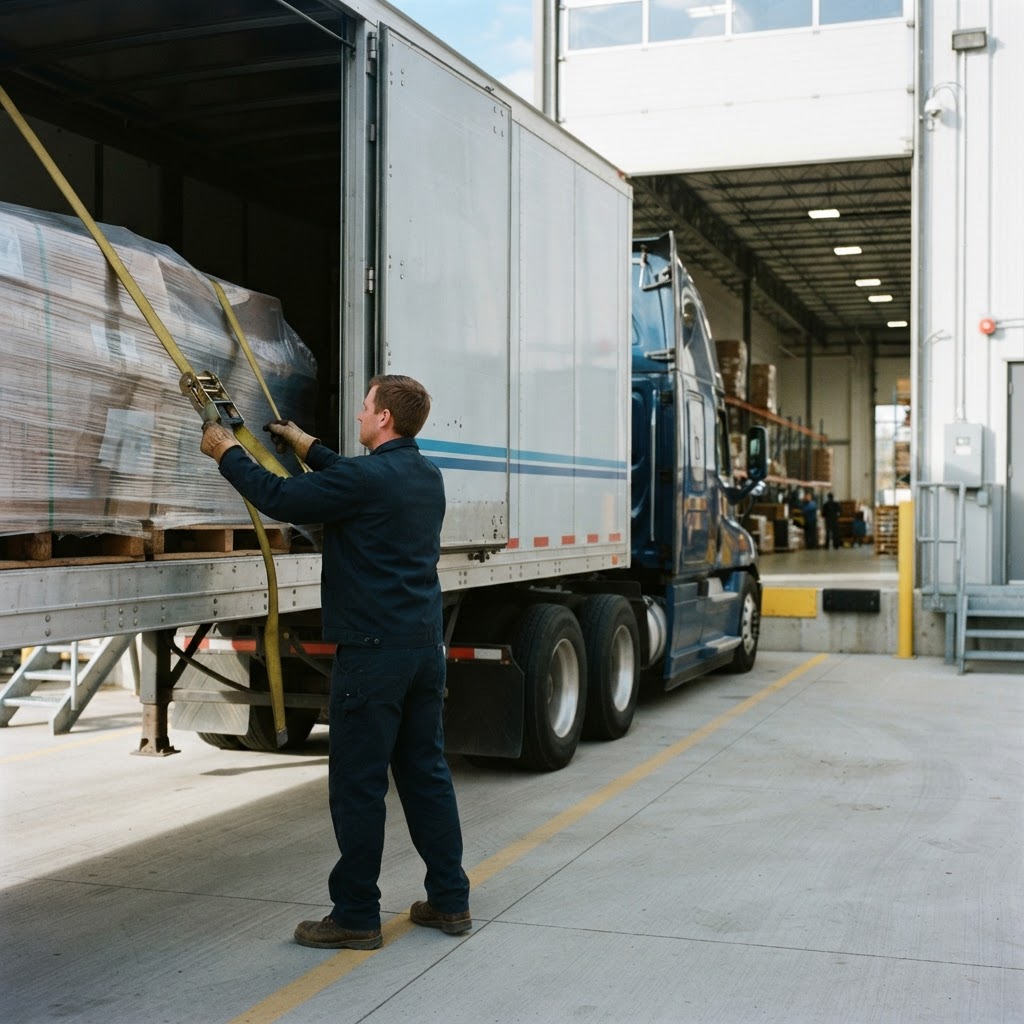
How CUSMA Changes Canada-U.S. LTL Freight Planning
CUSMA trade rules for Canadian exporters affect the commercial decisions made before freight is booked: whether to claim preference, who supports the claim, and which records travel with the shipment. A carrier can move the freight, but the exporter and importer must supply consistent product and transaction information for cross-border customs clearance.
Confirm origin, classification, and the party making the claim
Start each lane with product-level information rather than copying a prior shipment’s paperwork. The importer and customs broker should confirm how the preferential tariff claim will be made, while the exporter, producer, or importer may complete the certification when they can substantiate origin.
HS classification: Use correct HS codes that describe the product being exported.
Origin basis: Document why the good meets the applicable originating-goods requirement.
Certifier identity: State whether the exporter, producer, or importer is making the certification.
Product description: Make the invoice description specific enough to align with the classification and certification.
Record trail: Retain bills of lading, invoices, and customs-control documents that support the claim.
CUSMA replaced NAFTA, but freight teams still need a document workflow
The key CUSMA vs NAFTA key differences for daily shipping are operational: CUSMA does not require a prescribed certificate form, but it does require minimum data elements for a valid certification. The certification may be provided on an invoice or another document, and the required information should match the product, exporter, importer, producer, origin criterion, and certifier details. The CBSA explains the certification of origin requirement and the flexibility of its format.
For repeated identical goods, a blanket certification can cover shipments over a period of up to 12 months. That approach can reduce repetitive administration, but only when the goods and origin facts remain consistent across the covered shipments.

Build a CUSMA-Ready Shipment Before the Carrier Arrives
CUSMA shipping regulations work best when the sales, warehouse, freight, and customs teams use one controlled data set. This matters especially for Ontario to USA cross-border LTL freight, where a single pallet can carry several SKUs with different origin or classification outcomes.
Use the right documents for the shipment and the tariff claim
A commercial invoice and bill of lading support the freight move, while the origin certification supports a preferential tariff claim when one is required. Keep descriptions, quantities, shipper and consignee details, and product identifiers consistent across documents so the broker does not have to reconcile conflicting information after pickup.
The comparison below separates the documents by the decision they support, which helps smaller teams avoid treating every document as interchangeable.
Document or record | Primary purpose | Operational owner | Key control |
|---|---|---|---|
Commercial invoice | Identifies the sale and goods | Exporter | Match product descriptions to shipment data |
Bill of lading | Instructs and tracks the freight move | Shipper and carrier | Use accurate pickup, consignee, and pallet details |
CUSMA certification | Supports a preferential tariff claim | Exporter, producer, or importer | Include required minimum data elements |
Origin support records | Substantiate originating status | Certifier | Retain invoices, bills of lading, and customs documents |
The certification is not a substitute for the freight documents. It is evidence for the tariff claim, while the invoice and bill of lading establish what is moving, between whom, and under which transport instructions.
Canada’s guidance notes that commercial goods at or below CAD$3,300 may not require a certificate of origin when preferential treatment is claimed, although the CBSA may request one if shipments form a series that exceeds that threshold. The minimum information for a valid certification is set out in the origin declaration requirements.
Protect the evidence behind the preference claim
Good CUSMA compliant shipping documentation includes the proof behind the form, not merely the form itself. Canadian exporters, producers, and importers that certify originating status should retain the certification and related records required for their transaction. For teams managing Canadian imports as well as exports, CARM importer requirements should remain part of the broader compliance workflow.
Control Freight Cost and Transit Risk Without Guesswork
The impact of CUSMA on Canadian trucking is indirect but significant: a valid preference claim can affect duties, while poor data can create holds, corrections, and unplanned handling. Freight rate selection should therefore happen alongside, not ahead of, the compliance review.
Give carriers and brokers the details they need before pickup
Provide pallet count, dimensions, weight, commodity description, pickup and delivery contacts, and customs-broker instructions before dispatch. For shipping freight Canada to US CUSMA lanes, also identify whether preferential treatment will be claimed and who can answer origin questions if a broker requests support.
Canada-U.S. freight tariffs and transportation charges are separate cost categories, so quote comparisons should not be used as a proxy for tariff eligibility. A digital marketplace such as Truxweb can help Quebec and Ontario SMEs compare carrier rates, transit times, and booking fees while keeping shipment instructions centralized.
Escalate exceptions before they reach the border
Pause and review any shipment with changed sourcing, revised product construction, an unfamiliar HS code, or inconsistent invoice data. Origin eligibility depends on the applicable rules and the product's production facts, making originating goods rules more important than assumptions based on a supplier’s address.
Conclusion
CUSMA can support more predictable U.S. freight costs, but only when product origin, classification, certification, and shipment documents tell the same story. Build a repeatable review process for each SKU, use blanket certifications carefully for identical goods, and preserve the underlying evidence for the required retention period. For cross-border logistics for small businesses, carrier selection and customs readiness should be managed as one workflow. Truxweb gives SME shippers a practical way to compare LTL options while coordinating the details that carriers need.
Ready to organize your next cross-border pallet shipment? Compare freight options with Truxweb before you book.
Frequently Asked Questions (FAQs)
What is the CUSMA agreement?
CUSMA is the Canada-United States-Mexico Agreement, a trade framework that establishes rules for preferential tariff treatment and origin procedures among Canada, the United States, and Mexico, replacing the former NAFTA framework for qualifying cross-border goods.
How does CUSMA affect Canadian freight shipping?
CUSMA affects Canadian freight shipping by determining whether qualifying goods may receive preferential tariff treatment in the United States, while shippers still need accurate classification, commercial documents, freight instructions, and evidence that supports the origin claim.
Why is CUSMA important for Canadian SMEs?
CUSMA is important for Canadian SMEs because smaller shipping teams often lack dedicated trade specialists, so a repeatable product-data process helps prevent avoidable broker questions, border delays, and unsupported tariff claims on regular LTL shipments.
Can CUSMA simplify cross-border shipping?
CUSMA can simplify cross-border shipping because its certification has no prescribed form and may be included on an invoice or another document, provided the certification contains the required minimum data elements and the certifier can substantiate origin.
Is CUSMA the same as NAFTA?
CUSMA is not the same as NAFTA because it replaced NAFTA and uses its own origin procedures, tariff preference rules, and certification requirements, which means shippers should not rely on legacy forms or inherited documentation practices.
What documents are required for CUSMA compliance?
CUSMA compliance requires shipment documents such as a commercial invoice and bill of lading, plus a certification of origin when required for preferential treatment, supported by records that demonstrate why the goods qualify as originating.
About the Author
Daniel Park is a Freight Logistics Analyst covering LTL shipping, carrier performance, and supply chain operations across Ontario and Quebec. His work focuses on making freight pricing, carrier selection, and cross-border shipping processes more practical for SMB logistics teams.